 Anacortes Siding
 Asphalt Shingle Roofing Built for Old Town Anacortes
Old Town Anacortes sits close enough to the water that its homes take a different kind of weather beating than houses a few miles inland. Salt-laden air drifts up from the marina and Guemes Channel, rain comes in sideways off the Sound more often than it falls straight down, and the tree cover that gives the neighborhood its character also means shade, damp, and moss for a good chunk of the year. Asphalt shingle roofs handle all of that well when they're installed correctly for this specific environment — and they fail early when they're not.
We work on roofs in this neighborhood regularly, which matters more than it sounds like. A crew that mostly works drier, more sheltered parts of Skagit County will often spec a roof the same way no matter where the job is. A crew that knows Old Town's older lot layouts, mature tree canopy, and closer proximity to salt water builds in the extra protection this area actually needs — better underlayment, more attention to valleys and flashing, and ventilation that accounts for the shade.
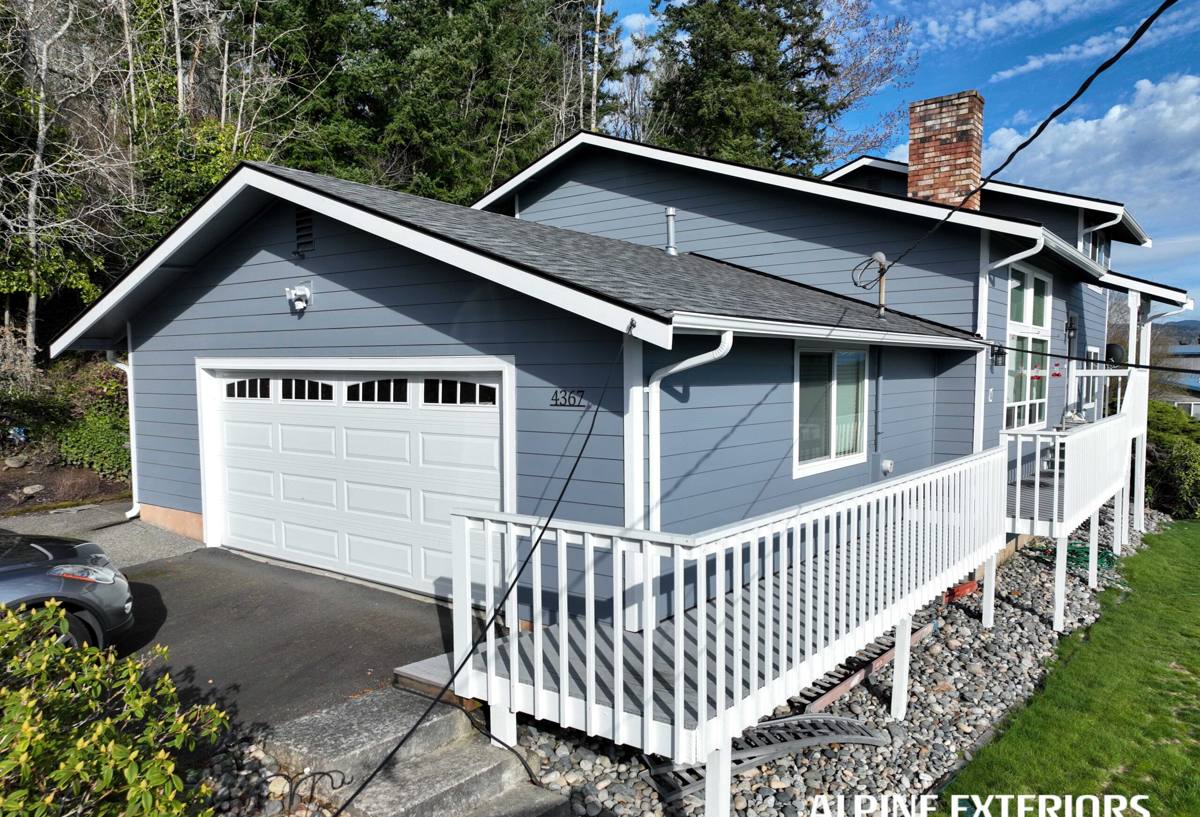
What the Local Climate Does to a Shingle Roof
Salt Air
Airborne salt from the marine environment accelerates corrosion on any exposed metal — nail heads, flashing, vent stacks, and gutter hardware. On a roof close to the water, standard fasteners and flashing can start showing rust years before they would inland. We spec corrosion-resistant fasteners and flashing on jobs in this area as a matter of course, not as an upsell.
Driving Rain
Wind-driven rain off the Sound doesn't just fall on a roof, it pushes sideways and works its way up under shingle tabs, around chimneys, and into valleys if those details aren't sealed properly. This is the single biggest cause of hidden leaks we find on older Old Town roofs — not worn-out shingles, but underlayment and flashing that weren't built to handle rain coming in at an angle.
Moss and Shade
Mature trees are part of what makes Old Town a nice place to live, but they also mean roofs here get less direct sun and more organic debris. Moss holds moisture against the shingle surface, and over a few seasons that moisture breaks down the granules that protect the shingle from UV and weather. Left unchecked, moss growth shortens the usable life of a roof significantly — often by years, not months.
Signs Your Old Town Roof Needs Attention
- Moss or dark streaking building up on north-facing slopes or shaded sections
- Granules collecting in gutters or at downspout outlets
- Shingle tabs that are curling, cupping, or lifting at the edges
- Rust staining around vent pipes, chimney flashing, or metal valleys
- Soft spots, sagging, or visible daylight in the attic near roof edges or valleys
- Interior water stains on ceilings after a wind-driven rain event
- Missing or damaged shingles after a windstorm off the water
Any one of these on its own isn't necessarily an emergency, but several together — especially moss plus granule loss — usually means the roof is past the point where cleaning and minor repair will buy much more time.
What a Correct Installation Looks Like Here
Underlayment
Given how much wind-driven rain this area sees, we don't treat underlayment as an afterthought. A synthetic underlayment with proper overlap, plus self-adhered ice-and-water membrane in valleys, around chimneys, and along eaves, gives the roof a real second line of defense if wind ever pushes water past the shingles themselves.
Flashing and Fasteners
All exposed metal — step flashing, valley flashing, drip edge, vent boots — should be a material rated to resist the corrosion this coastal air causes. Galvanized steel corrodes faster here than it would twenty miles inland; we typically move to a more corrosion-resistant option on homes this close to salt water. Fastener choice matters just as much, since a roof is only as good as the nails holding it down.
Ventilation
Shaded roofs stay damp longer after a rain, which means attic and roof-deck moisture management matters more here than on a roof that dries out fast in full sun. Balanced intake and exhaust ventilation helps the deck dry between rain events and reduces the conditions moss and rot need to take hold.
Shingle Selection
Not every asphalt shingle line is built the same. For homes in this neighborhood we generally favor products with algae-resistant granules — a real feature, not marketing, since it directly addresses the moss and staining issue this climate causes — along with a wind rating that matches what this area actually sees off the Sound.
Comparing Shingle Options for a Coastal, Shaded Lot
| Factor | 3-Tab Shingle | Architectural (Dimensional) Shingle |
|---|---|---|
| Wind resistance | Lower rating, more prone to lifting in gusts off the water | Higher rating, better fit for exposed or open lots |
| Moss/algae resistance options | Limited | Widely available with algae-resistant granules |
| Typical lifespan in this climate | Shorter, especially in shaded areas | Longer, holds up better under moss pressure |
| Upfront cost | Lower | Moderate |
| Appearance | Flat, uniform look | More dimension and shadow lines |
Both are legitimate products. For a shaded, coastal-adjacent lot like most in Old Town, the added durability of an architectural shingle usually pays for itself over the life of the roof, but a 3-tab shingle can still make sense on a budget-driven project or a secondary structure.
Repair, Recover, or Full Replacement?
Not every roof problem in this neighborhood means a full tear-off. What we recommend depends on the roof's age, how much of the deck is affected, and whether the damage is isolated or spread across the whole surface.
- Repair — makes sense for isolated issues: a damaged section after a windstorm, a single failed flashing point, or moss cleanup with minor granule loss on an otherwise sound roof.
- Recover — installing new shingles over sound existing decking — can work in limited situations, but we're conservative about recommending it on homes this close to the water, since it can trap moisture problems rather than solve them.
- Full replacement — the right call once you're seeing widespread granule loss, multiple leak points, deck damage, or a roof that's simply reached the end of its service life. Given what salt air and moss do to shingles here, that point often arrives sooner than the shingle's rated lifespan would suggest.
We'll tell you honestly which category your roof falls into rather than defaulting to the most expensive option.
Maintenance That Actually Extends Roof Life Here
A shingle roof in Old Town benefits from a maintenance rhythm that's a bit more active than what you'd need on a drier, sunnier lot elsewhere in the county.
- Have moss physically removed rather than just treated — chemical treatments help prevent regrowth but don't undo existing granule damage
- Keep gutters and valleys clear of needles and debris so water has a clean path off the roof
- Trim back tree limbs that overhang the roofline to cut down on shade, debris, and abrasion
- Have flashing points checked periodically, since that's where wind-driven rain finds its way in first
- Schedule a roof check after any significant windstorm off the Sound
Our Process for Old Town Roofing Jobs
We start with an on-site inspection, not a drive-by estimate — that means getting on the roof (or in the attic, when appropriate) to actually see deck condition, existing flashing, ventilation, and how much moss or granule loss is present. From there we give you a straightforward assessment of what the roof actually needs, whether that's a repair, a recover, or a full replacement, along with what it will cost and why.
If you move forward, we handle the details that matter most for this location: corrosion-resistant flashing and fasteners, proper underlayment and ice-and-water protection in vulnerable areas, ventilation sized for a shaded lot, and cleanup that leaves your property the way we found it. We're a local crew, not a traveling outfit passing through Skagit County — if something needs attention after the job is done, we're close by.
Why Local Experience Matters for This Job
Roofing looks like a standardized trade from the outside, but the right build spec changes block by block depending on exposure, tree cover, and how close a home sits to salt water. A crew that's worked Old Town Anacortes roofs before already knows which streets get hit hardest by wind off the channel, which lots hold onto moss the longest, and which older homes tend to have flashing details that need extra care during a tear-off. That local knowledge shows up in fewer surprises during the job and a roof that's actually built for the conditions it has to survive.
If your roof is showing moss, granule loss, or signs of a leak — or it's simply getting old enough that you want an honest read on how much life is left — we're happy to take a look. Reach out for a free, no-pressure estimate using the form below.