 Anacortes Siding
 Old Town Anacortes Decks Face a Tougher Environment Than Most
Old Town Anacortes sits close to the water, and that proximity shapes everything about how a deck ages here. Salt-laden air moves through the neighborhood year-round, driving rain comes in sideways off the strait for months at a time, and the long, damp Skagit County winters give moss and algae plenty of time to take hold on any surface that doesn't drain and dry properly. A deck built with generic, one-size-fits-all methods might look fine for a season or two, but the marine climate here finds every weak point eventually — the fastener that wasn't rated for salt exposure, the ledger board without proper flashing, the decking gap that was cut too tight to let water escape.
We build decks in this neighborhood the way the conditions actually demand, not the way a national how-to guide describes for a dry inland climate. That means different material choices, different fastener specs, and a different approach to drainage and airflow underneath the structure.
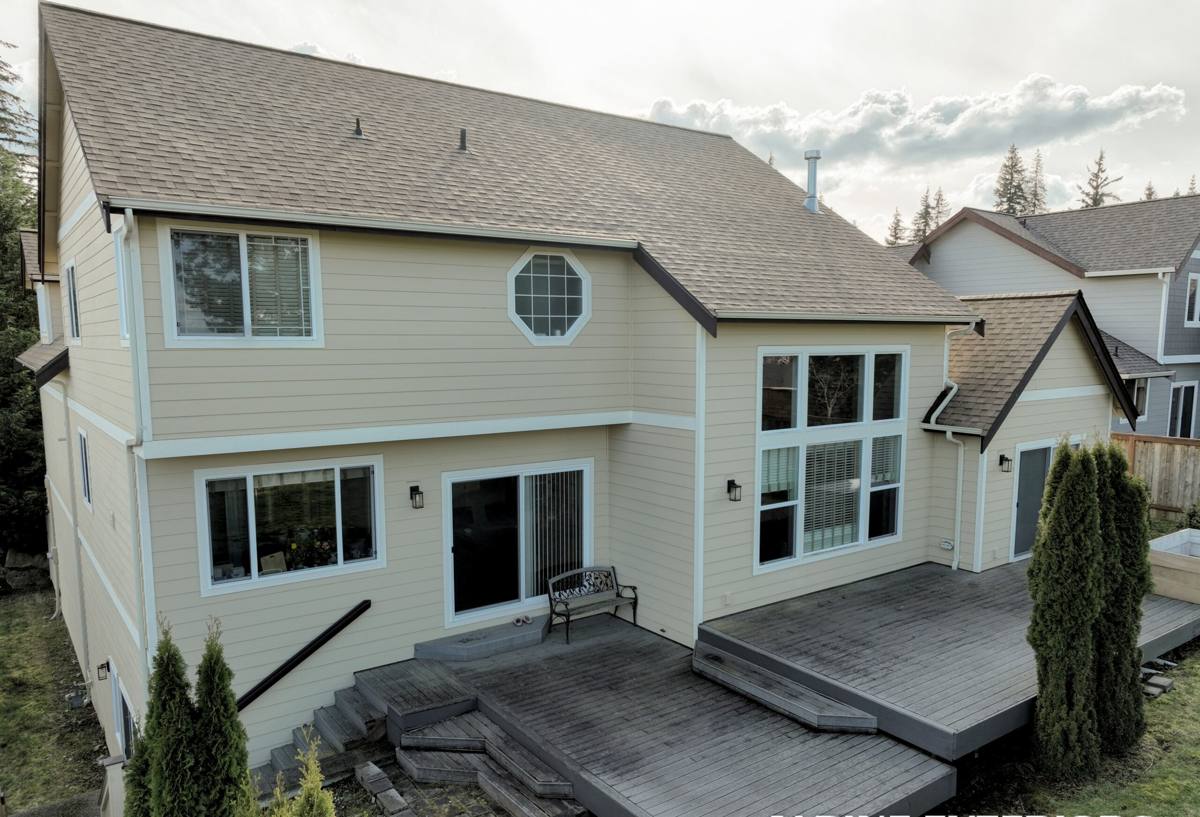
What Salt Air, Rain, and Moss Actually Do to a Deck
Salt Air and Metal Fasteners
Standard galvanized fasteners can start showing corrosion within a few years this close to salt water, especially on older Old Town Anacortes lots with open exposure toward the water. Corroding fasteners don't just look bad — they lose holding strength, and a deck's structural integrity depends on every joist hanger, ledger bolt, and screw doing its job for decades, not just until the finish looks worn.
Driving Rain and Water Intrusion
Rain that comes in at an angle finds its way into places vertical-only rain never would: behind ledger boards, under poorly flashed rim joists, into end grain on cut lumber that wasn't sealed. Once water gets into a structural connection and can't dry out between storms, rot follows — often invisibly, under decking boards, until a soft spot or a squeak gives it away.
Moss, Algae, and Surface Buildup
Anacortes' long wet season — often stretching from fall through spring with only brief drying windows — gives moss and algae a real head start on any deck surface that holds moisture. Shaded sides of the house, areas under tree cover, and decks without enough airflow underneath are the first to green over. Beyond looking neglected, a mossy deck surface gets slick and genuinely dangerous underfoot.
Decking Material: What Holds Up Here
There's no single "best" decking material for every home — it depends on budget, maintenance tolerance, and how much sun or shade the deck gets. Here's how the common options actually perform in this specific climate.
| Material | Moisture Performance | Maintenance | Typical Lifespan Here |
|---|---|---|---|
| Pressure-treated lumber | Good if properly sealed and re-sealed; end grain and cuts are vulnerable | Annual cleaning, re-sealing every 1-2 years | 15-20 years with upkeep |
| Cedar | Naturally rot- and insect-resistant, but still needs sealing against driving rain | Regular cleaning, periodic oiling or sealing | 15-25 years with upkeep |
| Composite decking | Excellent — doesn't absorb water or rot, resists mold better than wood | Occasional washing to keep moss/algae from gaining a foothold | 25-30+ years, manufacturer-dependent |
| PVC/capped composite | Best moisture resistance of the group; fully sealed surface | Lowest — periodic rinsing | 25-30+ years, manufacturer-dependent |
Composite and PVC decking cost more up front, but for homeowners in Old Town Anacortes who don't want to be out there sealing and scrubbing every year, the lower maintenance burden often pays for itself in saved labor and fewer moss problems. Wood decking is still a legitimate choice — it's less expensive and many homeowners prefer the natural look — but it only performs well here if the maintenance schedule actually happens. We'll walk through the honest trade-offs for your specific site, sun exposure, and budget rather than pushing one product.
Framing and Structure: Where Most Deck Failures Actually Start
The decking surface is what you see, but the framing underneath is what determines whether a deck lasts. In a climate this wet, a few details matter more than they would elsewhere:
- Ledger flashing: Where the deck attaches to the house, proper flashing (not just caulk) keeps driving rain from working its way behind the ledger board and into the house rim joist.
- Joist protection: Joist tape or a comparable barrier over the top of each joist keeps screw penetrations from becoming entry points for water, which is a common source of hidden rot.
- Fastener rating: Stainless steel or coated fasteners rated for coastal/marine exposure hold up far longer than standard galvanized hardware this close to salt air.
- Footings: Concrete footings set below frost depth and sized for the soil conditions on your lot keep the whole structure from shifting as the ground freezes, thaws, and saturates through the winter.
- Airflow underneath: Enough clearance and ventilation under the deck lets the structure dry out between storms instead of staying damp for months, which is one of the biggest factors in whether moss and rot take hold.
Drainage and Moss Prevention Built Into the Design
You can't stop Skagit County's rain, but you can build a deck that sheds and dries instead of holding water. That starts with slight surface slope away from the house, board spacing that lets water pass through instead of pooling, and enough space underneath for air to actually move. For decks close to grade or in shadier parts of a lot — common on older Old Town Anacortes properties with mature trees — we pay extra attention to grading and drainage below the deck so water doesn't just sit there feeding moss season after season.
For existing decks, a lot of the moss and slickness problem comes down to buildup that was never addressed rather than a design flaw. Periodic cleaning with the right method (not a pressure washer set too aggressively, which can gouge wood or damage composite surfaces) keeps organic growth from getting a foothold in the first place.
Permits, Setbacks, and Older Lots
Anacortes requires permits for most new deck construction and many significant deck rebuilds, and Old Town's older lots sometimes come with tighter setbacks or non-standard lot lines compared to newer subdivisions. We handle the permit process as part of the job — pulling the right permits, building to current code for railings, guard heights, and structural loads, and coordinating inspections so you're not left managing that paperwork yourself.
How We Approach a Custom Deck Project
- On-site assessment of your lot's sun/shade exposure, drainage, soil, and existing structure (for rebuilds)
- Honest material walkthrough based on your budget and how much upkeep you actually want to do
- Design and layout suited to how you'll use the space, not a generic template
- Permit pulling and code compliance handled on our end
- Framing built with marine-grade fasteners, proper flashing, and joist protection
- Decking installed with correct spacing and slope for drainage
- Final walkthrough covering maintenance expectations specific to the material you chose
Signs an Existing Deck Needs Attention
- Soft or spongy spots underfoot, especially near the house connection
- Persistent moss or dark staining that comes back quickly after cleaning
- Rust streaking around fasteners or hardware
- Gaps opening up between boards, or boards cupping/warping
- Railings that feel loose or flex when leaned on
- Standing water that doesn't drain within a few hours of rain stopping
Any of these are worth a look before they turn into a full rebuild. Sometimes it's a targeted repair — replacing a rotted ledger connection or a handful of boards — rather than starting over.
Why Local Deck-Building Experience Matters in Old Town Anacortes
A contractor who mostly works inland or in drier parts of the state can build a technically sound deck that still underperforms here, simply because the moisture load, salt exposure, and moss pressure are different from what they're used to specifying for. A crew that regularly works Old Town Anacortes and the surrounding Skagit County coastline knows which fastener grades actually hold up, which decking products handle this level of sustained dampness, and how much drainage margin to build in rather than guess at. That local pattern recognition is the difference between a deck that needs real attention again in five years and one that's still solid in twenty-five.
If you're planning a new deck or want an honest look at one that's showing its age, we're happy to come out, walk the site, and put together a straightforward estimate — no pressure, no upsell, just what your home actually needs. The form below gets you started.