 Anacortes Siding
 Why "Standard Size" Rarely Works in Old Town Anacortes
Old Town Anacortes is one of the older residential pockets in the city, and older housing stock comes with older window openings. Rough openings were framed by hand, to whatever dimension made sense at the time, long before window manufacturers agreed on standard sizing. When a window in one of these homes finally fails, ordering a stock replacement off a shelf often means a gap that has to be shimmed, trimmed, or built out — and every one of those workarounds is a place for water to eventually find its way in.
Custom windows solve that problem at the source. Instead of forcing a standard unit into a non-standard opening, the window is built to the opening's actual dimensions, so the seal around it is continuous and the exterior trim can be reinstalled cleanly. That matters everywhere, but it matters more here, because Anacortes sits right on the water and the building envelope doesn't get much of a break between storms.
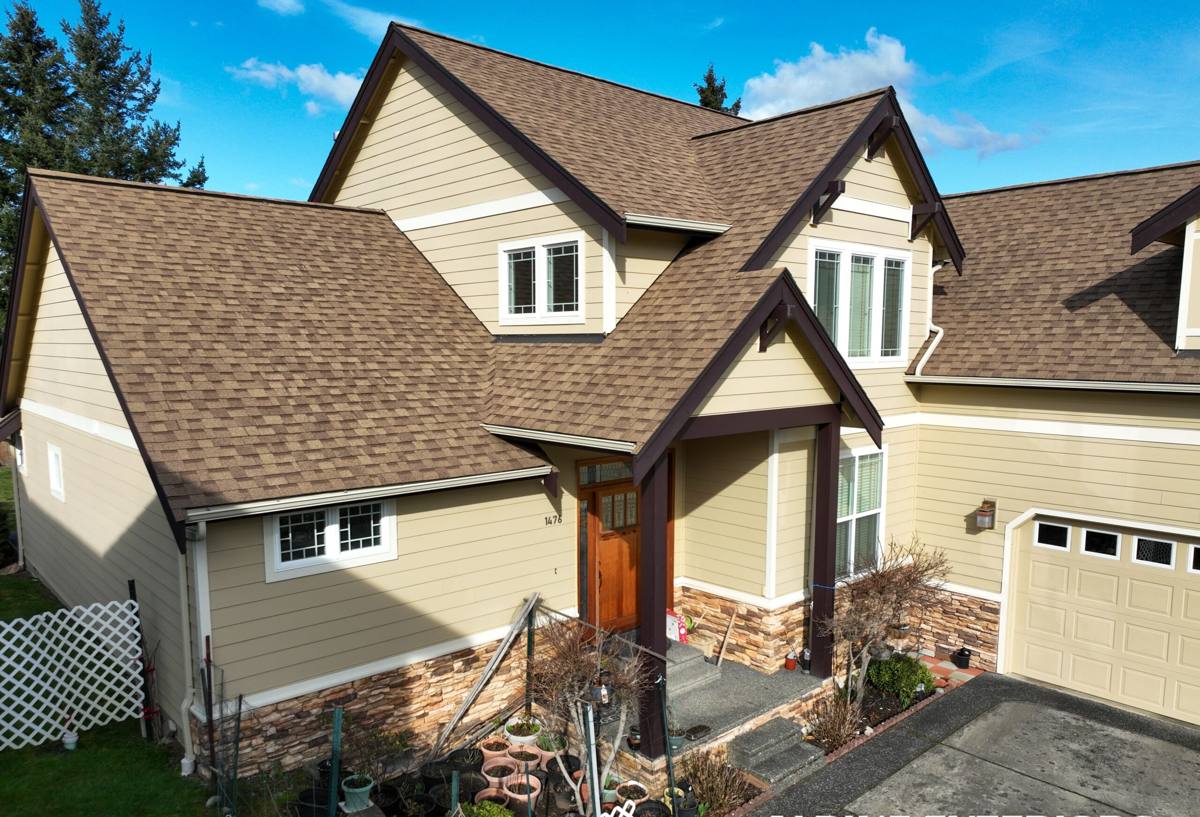
What the Local Climate Actually Does to Windows
Anacortes and the rest of Skagit County sit in a marine climate, and that shows up in three specific ways on a window assembly: salt-laden air, wind-driven rain, and a long, damp season that's ideal for moss and mildew growth. None of these are dramatic on their own. They're slow, cumulative problems, which is exactly why they get missed until a window is already failing.
Salt Air and Hardware Corrosion
Homes close to the water take on a fine film of salt air over time. It settles on window hardware — hinges, locks, balance systems, and any exposed fasteners — and accelerates corrosion compared to the same components inland. A window that operates smoothly for years in Sedro-Woolley can start sticking or pitting years sooner in a home closer to the Anacortes waterfront.
Wind-Driven Rain
Rain here doesn't just fall, it gets pushed sideways against west- and south-facing walls during winter storms. A window that relies only on a bead of caulk to stay dry will eventually let water past that seal. Correct flashing and drainage detailing around the opening matter as much as the window unit itself — arguably more.
Moss, Humidity, and Wood Rot
Skagit County's long wet season keeps humidity high for months at a stretch. Around older wood-framed windows, that moisture works into any exposed or unpainted wood, and moss and mildew take hold in the shaded, damp corners of a window's exterior casing. Left alone, that moisture eventually reaches the framing behind the trim, and by the time it's visible from inside, the wood repair involved is usually bigger than the window replacement itself.
Signs an Old Town Anacortes Home Needs Custom Windows
Most homeowners don't think about their windows until something goes wrong. Here's what we typically hear about, and what it usually means:
- Windows that are hard to open, close, or lock — often hardware corrosion or a frame that's swelled or warped
- Visible gaps, cracked glazing putty, or daylight around the frame — a sign the seal has already failed
- Soft or discolored wood on the exterior casing or sill — early rot, best caught before it spreads to the framing
- Fogging or moisture between panes on older double-pane units — a failed seal in the glass unit itself
- Persistent drafts near the window even with it fully closed — usually air leakage around a poor-fitting frame
- Noticeably higher heating bills in a home that hasn't otherwise changed — windows are a common culprit
- Windows that were clearly resized, patched, or built out at some point — a sign a past repair used the wrong-size unit
Any one of these is worth a look. Several at once usually means the whole window is past the point where repair makes sense.
What "Custom" Actually Means on the Job
Custom doesn't mean expensive for the sake of it — it means the window is built to match the opening and the house, not the other way around. In practice that covers a few things:
Exact opening dimensions. We measure the actual rough opening, not an assumed standard size, so the finished unit fits without packing shims or building out jamb extensions to fake a fit.
Non-standard shapes. Older homes sometimes have arched tops, unusual proportions, or openings that are slightly out of square from decades of settling. Custom manufacturing accounts for that instead of forcing a rectangle into it.
Matching the home's character. Older Anacortes homes often have a specific trim profile, grille pattern, or sash proportion that gives the house its look. A custom window can be specified to match that, where a stock replacement usually can't.
Material suited to the exposure. A window on the sheltered side of a house doesn't face the same conditions as one on the side that takes direct wind-driven rain. Custom orders let us match material and glazing to each window's actual exposure instead of using one spec for the whole house.
Frame Material Options for a Coastal Climate
There's no single "best" frame material for every situation — it depends on the window's exposure, the home's style, and the budget. Here's how the common options hold up under Anacortes conditions:
| Material | Performance in Salt Air / Wind-Driven Rain | Maintenance |
|---|---|---|
| Vinyl | Doesn't corrode; welded corners resist water intrusion well | Low — occasional cleaning |
| Fiberglass | Very stable in temperature swings and moisture; strong seal retention over time | Low |
| Aluminum-clad wood | Good weather-side protection, but cladding seams need attention near heavy salt exposure | Moderate |
| Painted wood | Best historic match for character homes; most vulnerable to moisture if not maintained | Higher — repainting and sealant checks needed |
For homes closer to the water or with west-facing exposure, we generally steer clients toward vinyl or fiberglass for the affected windows, since the maintenance burden of painted wood in that exposure adds up fast. On more sheltered elevations, or where matching an existing historic profile is the priority, wood or clad-wood can still make sense — it's a trade-off between appearance and upkeep, not a right-or-wrong answer.
How We Handle a Custom Window Job
Assessment
We start by looking at each opening individually — the framing condition behind the trim, the exposure to wind and rain, and whether there's existing moisture damage that needs to be addressed before a new window goes in. Installing a good window into a rotted opening just hides the problem.
Measuring and Ordering
Each opening is measured on its own; we don't assume openings that look similar are identical, especially in a home where windows may have been altered or repaired over the years. The order is built to those actual dimensions.
Removal and Prep
Old units are removed carefully to avoid unnecessary damage to surrounding siding or trim, and we check the sheathing and framing underneath for rot or moisture staining while it's exposed.
Flashing and Weatherproofing
This is the step that determines whether a window stays dry through an Anacortes winter. Proper flashing tape and drainage planes are installed so any water that gets past the exterior trim has a path back out, instead of a path into the wall.
Installation and Sealing
The window is set square and level, shimmed correctly (not packed to fake a bad fit), and sealed with materials rated for exterior, marine-climate exposure — not a generic caulk that will chalk and crack within a couple of seasons.
Trim and Finish
Exterior and interior trim is reinstalled or replaced to match the home, and everything is checked for smooth operation before we consider the job done.
What Drives the Cost
Custom window pricing varies more than stock replacement pricing, because each opening is its own project. The main factors are:
| Factor | Why It Matters |
|---|---|
| Opening size and shape | Larger or non-standard shapes cost more to manufacture and install |
| Frame material | Vinyl is typically the most economical; fiberglass and wood cost more |
| Condition of existing framing | Rot repair adds labor and material before the window can even go in |
| Number of windows | Doing multiple openings in one visit typically lowers the per-window cost |
| Access and elevation | Upper-story or hard-to-reach windows take more time to remove and install safely |
| Trim and historic matching | Custom profiles or matching existing casing adds labor over a plain trim-out |
We give a specific number after we've actually looked at the openings — anyone quoting a firm price sight unseen on a custom job is guessing.
Why Local Experience in Old Town Anacortes Matters
A crew that mostly works inland doesn't see the same problems every day that a crew working the Anacortes waterfront sees. Knowing which elevations in this specific area take the worst of the wind-driven rain, what condition to expect behind the trim on homes of a certain age, and how aggressively salt air affects hardware here versus a few miles inland all comes from doing the work in this exact area repeatedly — not from a general knowledge of window installation. That local pattern recognition is often the difference between a window that's sealed correctly the first time and one that needs a callback.
Maintaining Custom Windows in a Marine Climate
A well-installed window still needs some upkeep in this environment. A few habits go a long way:
- Rinse salt spray and grime off exterior frames and hardware a few times a year, especially on windows facing the water
- Check and clear weep holes so water draining out of the frame isn't blocked by debris or paint
- Look at exterior caulk lines each fall before the wet season sets in, and touch up anywhere it's cracked
- Keep moss and organic buildup wiped off frames and sills — it holds moisture against the surface
- Operate locks and hardware periodically, even on windows you don't open often, to keep moving parts from seizing
If you'd like a straightforward look at your windows — no pressure, no upsell — we're happy to come take a look and give you an honest read on what condition they're in and what your options are. The form below gets you a free estimate.