 Anacortes Siding
 New-Construction Windows in Old Town Anacortes
Old Town Anacortes sits close to the water, with older lot layouts, mixed housing ages, and the kind of marine exposure that doesn't forgive shortcuts. When a home here is being newly built, added onto, or fully re-sided down to the framing, the windows going in are almost always new-construction units — not replacement inserts. That distinction matters more than most homeowners realize, and it matters even more in a neighborhood where salt air, driving rain, and a long moss season are working against the building envelope every month of the year.
This page covers what new-construction window installation actually involves, what Old Town Anacortes' site conditions demand from that installation, and how we handle the work so the windows perform for decades instead of becoming a maintenance headache in five years.
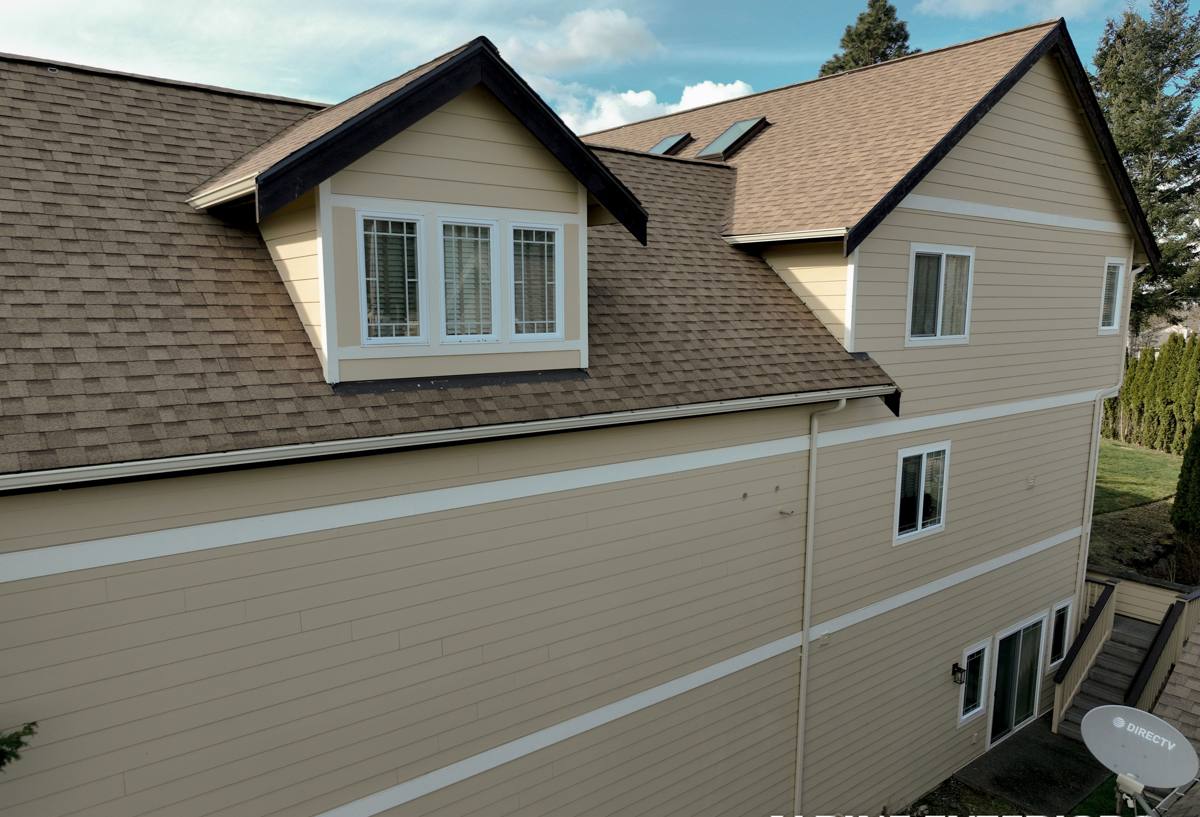
New-Construction Windows vs. Replacement Windows
These are two different products installed two different ways, and mixing them up leads to the wrong bid or the wrong window for the job.
Nail Fin Installation
A new-construction window has a nailing fin (sometimes called a flange) around the perimeter of the frame. It gets set directly into the rough framing opening, fastened through that fin into the wall structure, and then integrated with the weather-resistive barrier (WRB) and flashing before siding goes back on. This is the correct approach any time the wall is open — new builds, additions, or projects where siding is being fully removed and replaced.
Insert (Pocket) Windows
A replacement or insert window has no nailing fin. It's sized to fit inside an existing window frame that stays in place, with the old sashes removed and the new unit set into that pocket. It's faster and less invasive, but it depends on the existing frame and flashing already being sound — which isn't always the case on older Old Town homes. If your project doesn't have the wall open, replacement windows are usually the better call, and we'll say so rather than push a new-construction install you don't need.
Why Old Town Anacortes' Conditions Change How This Job Should Be Done
Anacortes sits at the water's edge of Skagit County, and Old Town's proximity to the Guemes Channel and Fidalgo Bay puts homes here squarely in the path of marine air and wind-driven rain. That combination shapes almost every decision we make on a window install.
Salt Air and Corrosion
Airborne salt accelerates corrosion on fasteners, flashing metal, and hardware faster than it would inland. We select nailing fin fasteners, flashing tape, and window hardware rated for coastal exposure, and we avoid mixing incompatible metals (like bare steel fasteners against aluminum flashing) that can set up galvanic corrosion over time.
Driving Rain and Wind-Driven Exposure
Wind off the water doesn't just drop rain straight down — it pushes it sideways and up under trim and siding laps. A window that's watertight in a still, dry climate can still leak here if the flashing sequence isn't built to shed water even when it's moving sideways. This is why sill pan flashing and proper head flashing overlap aren't optional details on this job — they're the difference between a dry wall cavity and a slow, hidden rot problem.
Moss, Shade, and Moisture Retention
Skagit County's long wet season, combined with mature tree cover common in older neighborhoods like Old Town, keeps moisture sitting on north-facing walls and trim longer than it would in a sunnier, more exposed location. Moss and algae growth on sills and trim isn't just cosmetic — it holds water against wood and painted surfaces, which shortens the life of anything that isn't detailed and finished correctly at install time.
What a Correct New-Construction Installation Involves
The window unit itself is only part of the job. The flashing and sequencing around it is what actually keeps water out, and it has to happen in the right order.
Sill Pan First
Every rough opening should get a sloped or flashed sill pan before the window ever goes in. This gives any water that gets past the window a way to drain back out instead of pooling on the sill and soaking into the framing.
WRB and Flashing Tape Integration
The weather-resistive barrier (housewrap or equivalent) has to be sequenced correctly with the window's nailing fin and flashing tape — WRB laps over the bottom flashing, and flashing tape laps over the WRB at the sides and top, so water is always shingled downward and outward, never into a seam.
Fastening and Shimming
Nailing fins get fastened per the manufacturer's spacing, and the frame is shimmed square and plumb at the jambs and head so the window operates smoothly and doesn't bind or sag over time — a real risk with wood-framed openings that see seasonal moisture swings.
Sealant as a Backup, Not the Only Line of Defense
Sealant matters, but it's the last line of defense, not the first. A window that relies on caulk alone to stay dry is a window that will eventually leak. We treat sealant as backup to correctly lapped flashing, not a substitute for it.
Choosing a Frame Material for This Climate
Frame material affects maintenance, longevity, and how well the window holds up to salt air and constant moisture exposure. There's no single right answer for every project — it depends on budget, the home's style, and how much upkeep you want to take on.
| Frame Material | Coastal / Moisture Performance | Maintenance | Best Fit |
|---|---|---|---|
| Vinyl | Good — won't rot or corrode, handles moisture well | Low | Budget-conscious new builds and additions |
| Fiberglass | Very good — dimensionally stable, resists warping in wet/dry cycles | Low | Homeowners wanting durability without wood upkeep |
| Wood-clad (exterior clad, wood interior) | Good on the exterior face if cladding and flashing are done right; interior wood needs a dry, well-sealed install | Moderate | Historic-character homes wanting a wood look inside |
| Aluminum | Fair — conducts cold and can corrode near salt air unless properly coated | Moderate to high | Modern designs prioritizing narrow sightlines |
For Old Town Anacortes specifically, we lean toward vinyl or fiberglass for most new-construction projects because they hold up to salt air and constant moisture cycling with the least long-term upkeep. Wood-clad is a reasonable choice for homes matching an older architectural character, as long as the cladding and flashing details are handled correctly at the factory and the install.
When New-Construction Windows Make Sense for Your Project
You're a candidate for new-construction windows, not inserts, if any of the following apply:
- You're building a new home or an addition in Old Town Anacortes and the rough openings are framed but not yet sided.
- You're doing a full siding tear-off and replacement, and the sheathing and framing will be exposed regardless.
- Your existing window frames or flashing are damaged, rotted, or were never installed correctly, so an insert would just seal moisture problems behind a new sash.
- You're changing window sizes or opening locations, which requires new framing and can't be done with an insert unit.
If none of those apply — if your walls are staying closed and the existing frames are sound — replacement inserts are usually the faster, less invasive, and more cost-effective option, and we'll tell you that upfront rather than sell you a bigger job than you need.
Our Process
We walk every project the same way, whether it's one window or a full house.
1. Site Visit and Measure
We look at the rough openings (or existing conditions if framing isn't done yet), check orientation and exposure — north-facing and water-facing walls get extra attention given the moss and driving-rain conditions common in this part of Skagit County — and take precise measurements.
2. Material Selection
We walk through frame material, glazing (Low-E coatings and gas fills are standard for this climate), and any style considerations that match the home, then order.
3. Lead Time and Coordination
New-construction windows are typically special-ordered to size, so lead times run several weeks. We coordinate delivery and install timing with your framer, siding crew, or general contractor so the openings are ready and the windows go in without holding up the rest of the job.
4. Installation
Sill pan, WRB integration, flashing, fastening, and shimming happen in the sequence described above — every step matters, and we don't skip the flashing details even on parts of the house that are hard to see once siding goes back on.
5. Final Check
We check operation, seals, and squareness on every unit before we call the job done, and walk the exterior flashing with you if you want to see it before siding closes it up.
What to Ask Before You Hire a Window Crew
- Do you flash with a sill pan on every opening, or only when asked?
- What's your fastener and flashing tape spec for coastal/marine exposure?
- Will you show me the flashing sequence before siding covers it?
- What frame materials do you recommend for this specific home, and why?
- What's the manufacturer's warranty, and does it require a specific installation method to stay valid?
- Can you coordinate install timing with my framer or siding crew?
Why Local Experience in Old Town Anacortes Matters
Old Town's mix of older lots, mature tree cover, and close water exposure means the right flashing detail and frame choice on one street can be different from what's needed a mile inland. A crew that regularly works this specific neighborhood already knows which walls take the worst of the wind-driven rain, where moss and shade cause the most sill wear, and how to sequence a window install so it holds up through a full Skagit County wet season — not just the dry months. That local pattern recognition is hard to replace with a generic install checklist.
If you're planning new construction, an addition, or a full re-siding project in Old Town Anacortes, we're happy to take a look and give you a straightforward, no-pressure estimate — just fill out the form below.