 Anacortes Siding
 Old Town Anacortes Puts Siding Through More Than Most Neighborhoods
Old Town Anacortes is one of the city's older residential areas, sitting close to the water on the Fidalgo Island shoreline. That location is part of what makes it a great place to live, and it's also exactly why siding here tends to show damage sooner than siding on a home a few miles inland. Salt-laden air off the water accelerates corrosion on fasteners and trim. Wind-driven rain off Rosario Strait and the surrounding waterways doesn't just fall straight down — it gets pushed sideways into laps, seams, and corner joints where standard siding is more vulnerable. And Skagit County's long, damp shoulder seasons keep exterior walls wet for extended stretches, which is exactly the environment moss and algae need to take hold.
Add in the fact that many homes in Old Town Anacortes are older, often with siding that's been repainted, patched, or partially replaced over the years, and you get a neighborhood where small siding problems turn into bigger ones faster than homeowners expect. A repair that would be minor on a newer, more sheltered home can be a sign of something more serious here if it's not looked at by someone who understands the local exposure.
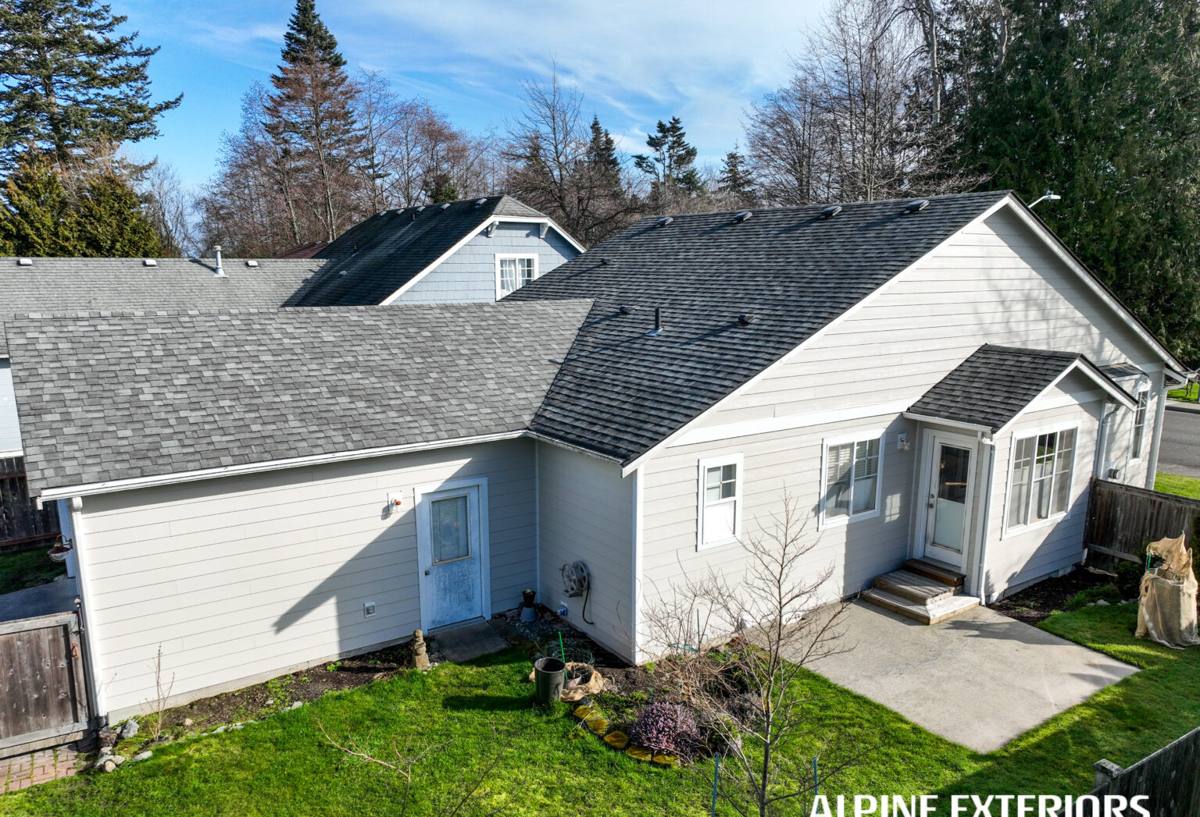
Signs Your Siding Needs Repair
Cosmetic Wear vs. Structural Damage
Not every siding problem is urgent, and not every siding problem is cosmetic. Fading paint or light surface staining is usually just weathering. Soft boards, bubbling material, or dark streaking at the seams usually means water has already gotten behind the siding — and that's a different job entirely. Part of what a good inspection does is tell you which one you're actually looking at before any work starts.
- Boards or panels that feel soft, spongy, or give slightly when pressed
- Paint that's bubbling, peeling, or cracking in a pattern rather than evenly across the wall
- Dark staining or streaking concentrated at seams, corners, or below window trim
- Visible moss or algae growth that keeps returning after cleaning
- Gaps opening up between siding and trim, window casings, or door frames
- Rust streaks running down from fastener heads
- Warping, cupping, or buckling panels, especially on north- and west-facing walls
- A musty smell near an exterior wall or soft drywall on the interior side
What a Correct Siding Repair Actually Involves
Diagnosing the Cause, Not Just the Symptom
Replacing a damaged board without figuring out why it failed is how the same repair ends up getting redone in a few years. A proper repair starts with finding the actual water path — a failed piece of flashing, a caulk joint that dried out and cracked, a fastener that backed out, or a seam that was never properly lapped to begin with. In a marine climate like Anacortes, that diagnostic step matters more than it does inland, because moisture that gets behind siding here has more opportunities to arrive and fewer chances to fully dry out between rain events.
Checking What's Behind the Siding
Once damaged material is removed, the sheathing and water-resistive barrier behind it need to be checked for rot, staining, or soft spots. Repairing the visible siding while ignoring compromised sheathing underneath just hides the problem for a while. If framing or sheathing has been affected, that has to be addressed before any new siding goes back on — otherwise you're fastening a new product to a weak substrate.
Matching Materials and Fasteners
Whatever goes back on needs the correct fastener type and spacing, proper flashing detail at every seam and penetration, and a finish that will actually match the surrounding siding rather than standing out as an obvious patch. This is where a lot of repairs go wrong — a repair done with mismatched material, inconsistent fastening, or no attention to flashing just becomes the next failure point.
Repair or Replace? What Actually Determines the Right Call
Homeowners often ask us this before we've even looked at the house, and the honest answer is that it depends on a handful of specific factors rather than a blanket rule. The table below covers what typically points one way or the other.
| Factor | Repair Usually Makes Sense | Replacement Usually Makes Sense |
|---|---|---|
| Extent of damage | Isolated to one section, corner, or wall | Spread across multiple walls or the whole exterior |
| Water intrusion behind siding | Localized, sheathing mostly intact | Widespread rot or repeated moisture damage found behind the cladding |
| Age and condition of existing siding | Relatively sound siding with a localized failure point | Siding nearing or past its expected service life |
| Material of existing siding | Can be matched or blended reasonably well | Original material is discontinued, mismatched, or was never installed correctly |
| Underlying cause | A specific, fixable failure point (flashing, caulk, fastener) | A systemic issue, such as poor original installation or missing water management |
A trustworthy contractor should be willing to tell you when a repair is the right call, even if a full replacement would be a bigger job for them. If repair genuinely solves the problem, that's what we recommend.
Why We Repair and Rebuild Using James Hardie Fiber Cement Only
When a repair calls for replacing a section of siding, we use James Hardie fiber cement — never vinyl, LP SmartSide, or primed wood — even for a partial repair. There's a practical reason for that beyond product preference. Patching a damaged wall with a different material than the rest of the house rarely blends well, and mixing materials with different moisture behavior on the same wall can create new problems at the transition points.
James Hardie's HZ5 product line is engineered for climates like ours, where wind-driven rain and sustained moisture exposure are a regular part of the year. It's non-combustible fiber cement, which matters for long-term durability in a way that matters more here than in drier inland climates, and the factory-applied ColorPlus finish holds up to UV and salt air better than field-applied paint. Hardie also backs its products with a strong transferable warranty, which is worth something when the whole point of a repair is to stop having the same problem again.
When damage is limited to a single section, we can often match new Hardie material into an existing Hardie wall with a clean, consistent result. When the existing siding is a different material entirely, we'll talk through whether a full wall or elevation replacement is the more honest long-term fix rather than patching in something that won't age the same way as what's around it.
Our Process for an Old Town Anacortes Repair
- Inspection: We look at the damaged area and the surrounding siding, checking for signs the problem has spread beyond what's visible.
- Moisture and substrate check: Once we know the scope, we check sheathing and framing behind the damaged siding before quoting the repair.
- Scope and plan: We tell you plainly whether this is a repair, a partial wall replacement, or something bigger — and why.
- Removal and substrate correction: Damaged siding comes off, and any compromised sheathing or framing gets addressed first.
- Water management first: Proper flashing and water-resistive barrier detail go in before any new siding is installed.
- Hardie installation to spec: New material is fastened, spaced, and finished according to manufacturer installation requirements, not shortcuts.
- Finish and blend: Caulking, touch-up, and trim work are done to blend the repair into the surrounding siding as closely as possible.
What Happens When Siding Repairs Get Put Off
Deferred siding repair rarely stays a small problem in a coastal climate. Moisture that's found a way behind siding keeps working during every rain event, and Anacortes gets plenty of them. Rot spreads into sheathing and framing, insulation loses effectiveness once it's wet, and pests find soft, damaged wood easier to get into than sound material. What could have been a contained repair on one wall often turns into a larger structural fix once it's been left unaddressed through a wet season or two. Catching the signs early is almost always the cheaper and simpler path.
Why Local Experience in Old Town Anacortes Matters
A repair crew that regularly works this neighborhood knows which walls take the worst of the wind and rain, how fast moss reestablishes itself on shaded, damp elevations, and what the salt air does to fasteners and trim over time compared to homes further inland in Skagit County. That kind of familiarity shows up in the details — where extra attention to flashing matters most, which sections of a home are worth watching closely, and how to set a repair up so it actually holds against another Pacific Northwest winter rather than needing to be revisited in a year or two.
If you're seeing soft spots, staining, moss buildup, or gaps opening up in your siding, we're happy to take a look and give you a straightforward read on what's going on — repair, partial replacement, or otherwise. Reach out for a free, no-pressure estimate using the form below.