 Anacortes Siding
 Why Ship Harbor Puts Extra Wear on a Deck
Ship Harbor sits right up against the water on Fidalgo Island, close to the ferry terminal and the open exposure of Rosario Strait. That location is part of what makes the area beautiful, and it's also exactly why decks here take more abuse than decks a few miles inland. Salt-laden air off the strait settles on every exposed surface, wind-driven rain gets pushed sideways under railings and against house walls, and the tree cover that gives the neighborhood its character also keeps decks shaded and damp for long stretches of the year. Add in Anacortes' long moss season, and you've got a set of conditions that will find every weak point in a deck build within a few years if the job wasn't done right the first time.
None of this means composite decking is a bad fit for Ship Harbor — it's actually one of the better options for this exact climate. But "composite" isn't one product, and installing it well here takes different choices than installing the same boards on a dry, inland lot. This page covers what that actually looks like.
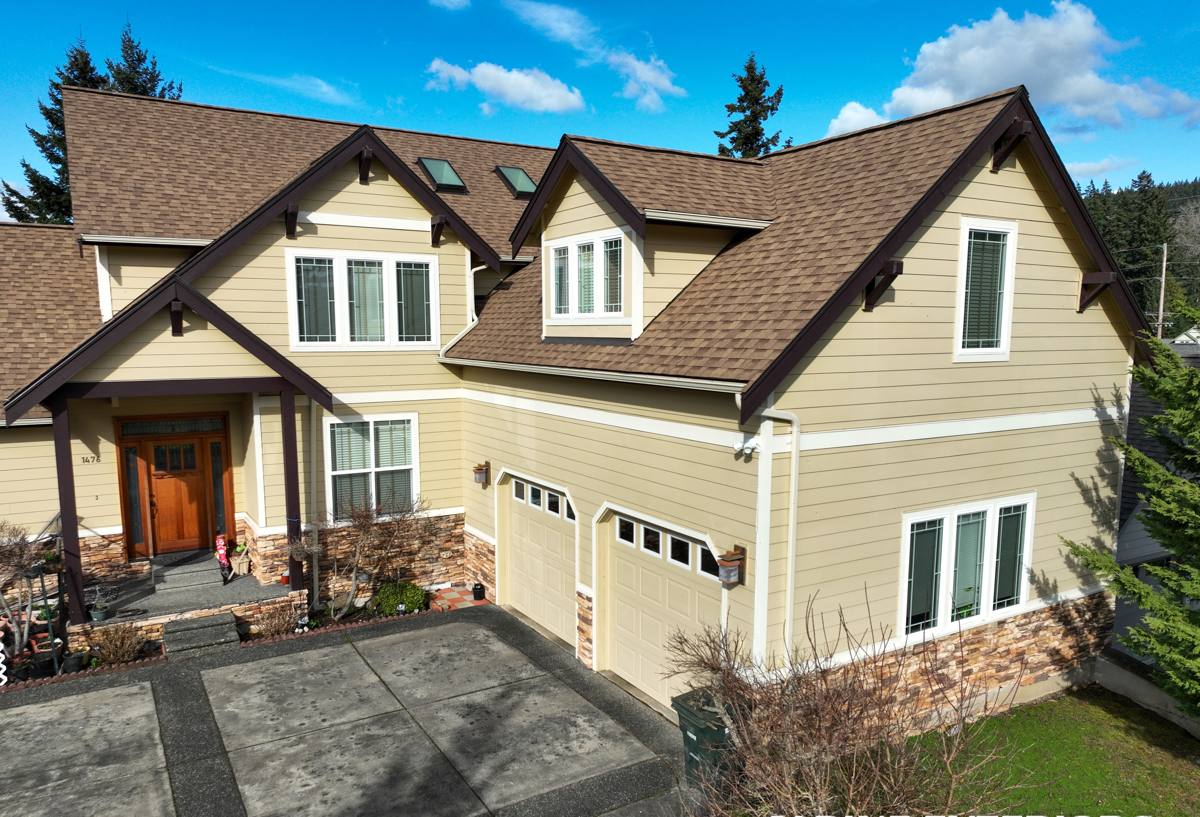
What Skagit County's Marine Climate Does to a Deck Over Time
Salt Air and Metal Hardware
Salt air accelerates corrosion on anything metal — fasteners, joist hangers, railing brackets, post bases. On a lot of decks we've been called out to repair or replace, the boards themselves were still in decent shape, but the fasteners and hardware underneath had corroded to the point of failure. That's a hardware and substructure problem, not a "composite decking doesn't work here" problem, and it's fixed by specifying the right materials from the start.
Driving Rain and Moisture Traps
Rain in this part of Skagit County doesn't fall straight down very often. Wind off the water pushes it sideways, which means it gets into gaps, joints, and ledger connections that would stay dry in a calmer climate. Any spot where water can collect and sit — a poorly flashed ledger board, a picture-frame border with no drainage path, end cuts that were never sealed — becomes a slow-motion problem, even with a moisture-resistant decking material on top.
Moss, Algae, and Shade
Anacortes' moss season runs long, and shaded decks under tree cover stay damp far longer after a storm than decks in the open. Moss and algae need moisture and organic debris to get established, and a deck that traps both will grow a green film faster than one built to shed water and dry out between rains.
What a Correctly Built Composite Deck Looks Like Here
A composite deck that's going to hold up in Ship Harbor isn't just "good boards laid down." The board is maybe a third of the equation. The rest is substructure, fastening, and drainage decisions that most homeowners never see once the project is finished.
Substructure
We frame with pressure-treated lumber rated for ground contact where it's relevant, and we favor composite or coated-steel joists in high-moisture spots where wood framing would otherwise take the brunt of standing water. Joist tape over the top of every joist is non-negotiable in this climate — it's a cheap step that keeps water from wicking into the wood through fastener holes, and skipping it is one of the most common shortcuts we see on decks that failed early.
Fasteners and Hardware
Stainless steel or marine-grade coated fasteners are worth the extra cost this close to the water. Standard galvanized hardware can hold up fine a few miles inland, but in a salt-air exposure like Ship Harbor it corrodes noticeably faster, and a rusted joist hanger or bracket is a structural issue, not a cosmetic one.
Ventilation and Drainage
Low decks and decks built close to grade need real airflow underneath — proper joist height, vented skirting instead of solid skirting, and grading that carries water away from the foundation rather than under the deck. A deck that can't breathe underneath stays damp longer, and damp framing is what eventually fails even when the boards on top still look fine.
Choosing the Right Composite Board for a Marine Climate
Not every composite product handles moisture and salt exposure the same way. Here's how the main categories compare for a site like Ship Harbor:
| Material | Moisture Resistance | Maintenance | Notes for This Climate |
|---|---|---|---|
| Capped composite (wood-plastic core, polymer shell) | Very good | Occasional wash | Good balance of cost and durability; capping resists moisture absorption at the shell |
| Cellular PVC (all-polymer) | Excellent | Low | No wood content to absorb moisture; handles constant damp shade well, though softer surface can show scuffs |
| Mineral-based composite | Very good | Occasional wash | Dense, heavy board; performs well in wet climates but limited color/style range compared to capped composite |
| Uncapped or first-generation composite | Fair | Higher | Older formulations absorb more moisture and are more prone to mold/algae staining; we don't recommend this category for shaded, damp lots |
For most Ship Harbor properties, capped composite or cellular PVC are the two we recommend, with the choice usually coming down to budget, the amount of direct shade on the deck, and the look the homeowner wants. We'll walk through the trade-offs on-site rather than pushing one brand — the right call depends on your specific lot, sun exposure, and how the deck will be used.
Our Process on a Ship Harbor Composite Deck Project
- Site walk and drainage assessment. We look at grade, shade patterns, existing moisture damage, and how water currently moves around the house before we talk products.
- Substructure design. We spec framing material, joist spacing, and hardware based on the deck's height, exposure, and load — not a one-size-fits-all template.
- Material selection. We walk you through board options with samples, focused on how each performs in a shaded, damp, salt-air setting like yours.
- Demo and framing. Old decking and, if needed, compromised framing come out; new substructure goes in with joist tape and corrosion-resistant hardware throughout.
- Decking installation. Boards are installed with manufacturer-specified gapping for drainage and expansion, hidden or exposed fastening per the product's system, and attention to end cuts and cut edges, which is where uncapped or exposed cores are most vulnerable to moisture.
- Railing, stairs, and finish details. Hardware here gets the same corrosion-resistant treatment as the substructure — it's a common place for cut corners to show up years later.
- Final walk-through. We cover basic care and answer questions before we consider the job done.
Cost Factors for a Composite Deck in This Area
Composite decking costs more upfront than pressure-treated wood, but the total cost of a project depends on more than just the board price. Here's what actually moves the number on a Ship Harbor job:
| Factor | Why It Matters Here |
|---|---|
| Existing substructure condition | Salt-air corrosion and moisture damage on older decks often means more framing replacement than expected |
| Deck height and grade | Low decks near grade need more attention to drainage and ventilation, which adds labor |
| Shade and tree cover | Heavily shaded decks benefit from higher-end capped or PVC boards, which cost more but resist moss and algae better |
| Railing and hardware spec | Marine-grade or stainless fasteners and brackets cost more than standard galvanized but hold up far longer this close to the water |
| Board pattern and complexity | Picture-frame borders, angled layouts, and stairs add labor and material beyond a simple rectangular deck |
We give straightforward, itemized estimates so you can see where the money is going rather than a single lump number.
Living With Moss and Algae in a Wet Climate
Even a well-built composite deck in Ship Harbor will need some seasonal attention — no exterior surface here is completely maintenance-free. The difference between a deck that stays clean and one that turns green under the trees usually comes down to airflow, drainage, and a bit of regular upkeep rather than the board itself. Capped composite and PVC resist mold and algae far better than bare wood or older composite formulations, but organic debris left to sit in corners or against railings will still eventually grow something given enough of Anacortes' damp weather.
Simple Seasonal Maintenance Checklist
- Sweep off leaves, needles, and moss spores regularly during fall and winter, when debris builds up fastest under tree cover
- Rinse the deck surface a few times a year with a garden hose or low-pressure wash — avoid aggressive pressure washing, which can damage the board's cap layer
- Keep gutters and downspouts clear so overflow doesn't dump extra water onto the deck or framing below
- Check railing posts and stair connections once a year for movement, which can signal hardware corrosion underneath
- Trim back overhanging branches where practical to cut down on shade and falling debris
- Clear vented skirting or gaps at the deck's perimeter so air can keep moving underneath
Permits and Local Considerations
Deck projects in Anacortes and unincorporated Skagit County typically require a permit once you're past minor repairs, especially for anything involving new footings, structural framing, or railings above a certain height. Requirements can also shift depending on whether a property is close to shoreline setback areas, which is worth checking given how close much of Ship Harbor sits to the water. We handle the permitting process as part of the job so you're not left tracking down requirements on your own.
Why a Ship Harbor-Experienced Crew Matters
A composite deck built by a crew that hasn't worked this specific stretch of coastline can still look fine on installation day. The problems show up two, three, or five years later — corroded hardware, damp framing that was never given a way to dry out, moss creeping in around joints that weren't detailed for drainage. We've seen what fails first on decks in this area, and we build to avoid those specific failure points rather than following a generic install guide written for a drier climate. That's the difference between a deck that needs real repair work in year four and one that's still solid well past year fifteen.
If you're planning a new composite deck or replacing an aging one in Ship Harbor, we're happy to take a look and give you a straightforward, no-pressure estimate — just fill out the form below.