 Anacortes Siding
 Ship Harbor's Siding Challenge: Salt Air, Driving Rain, and a Long Moss Season
Ship Harbor sits on the water side of Anacortes, on Fidalgo Island in Skagit County, where homes face weather coming straight off the Salish Sea. That location is part of what makes the area desirable, and it's also exactly what wears out the wrong siding fast. Wind-driven rain off the water pushes moisture into joints and laps that would stay dry a few miles inland. Salt-laden air corrodes unprotected fasteners and trim hardware over time. And on lots shaded by mature evergreens or facing north away from direct sun, moss and algae get a long, damp season to take hold on any surface that stays wet.
None of this is unusual for Anacortes or the rest of Skagit County — it's just more concentrated near the shoreline. A siding job that would hold up fine on a sunny inland lot can fail years early on a shaded, wind-exposed property near Ship Harbor if it wasn't installed with that exposure in mind.
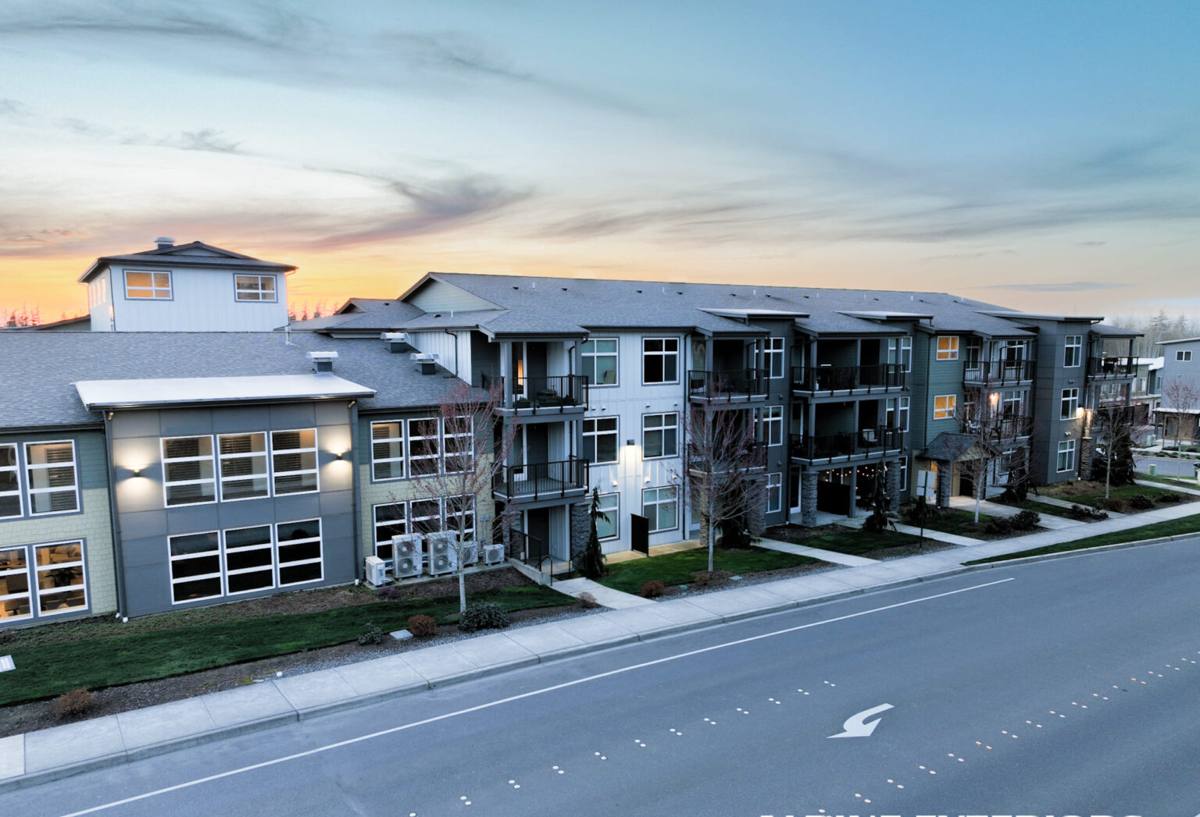
What Ship Harbor Homes Actually Need From Their Siding
Salt Air and Hardware
Salt air doesn't just affect boats and railings. Over years, it attacks any fastener, flashing, or trim piece that isn't rated for coastal exposure. Siding that relies on standard fasteners or unprotected metal trim will show rust streaks and loosened boards well before the siding material itself gives out.
Moss, Shade, and Moisture Cycling
Shaded walls near mature trees or facing away from prevailing sun stay damp longer after every rain. Organic siding materials give moss and algae something to root into; the siding then holds moisture against the wall longer, which accelerates rot at seams and butt joints. Non-organic, factory-finished siding doesn't feed that growth cycle the same way, but it still needs to be installed with drainage and drying in mind.
Dimensional Stability
Materials that swell and shrink with every wet-dry cycle eventually telegraph that movement through open joints, popped fasteners, and cracked paint. In a marine climate with frequent wetting, that cycle happens far more often than it would in a drier region.
Why We Install Only James Hardie Fiber Cement
We don't install vinyl, LP SmartSide, cedar, primed spruce, or other fiber cement brands like Cemplank or Allura. That's a deliberate standard, not an accident, and it matters more here than in a drier climate.
Vinyl siding is inexpensive and low-maintenance in mild conditions, but its panels expand and contract significantly with temperature swings, and wind-driven rain off the water can drive moisture behind loose or wind-stressed panels at a shoreline property. LP SmartSide is an engineered wood product with real strengths, but any wood-based siding depends on intact factory coatings and diligent field caulking at every cut edge — a maintenance burden that's harder to stay ahead of in a climate with this much rain and shade-driven moss. Cedar and primed spruce are traditional, attractive choices, but as organic materials they need ongoing refinishing and are naturally more susceptible to rot and moss colonization in a damp, shaded coastal setting.
Other fiber cement brands make a legitimate product. We standardized on one manufacturer because it lets our crews install to a single specification, back every job with one consistent warranty structure, and use a factory finish system we know performs in this specific climate zone. That consistency is worth more to us than offering every option on the shelf.
The Right Hardie Product Line for This Climate
James Hardie engineers its siding by climate zone, and homes in Anacortes and the rest of the Pacific Northwest fall into the HZ5 category — built for the wetter, colder conditions common in this region, as opposed to the HZ10 line engineered for hot, humid southern climates. That distinction affects the formulation of the fiber cement itself, not just the color options.
ColorPlus finishes are baked on at the factory under controlled conditions, rather than field-applied on a wet job site where cure times fight the weather. That matters near Ship Harbor: paint applied and cured on-site in a marine, moisture-heavy environment is fighting the same damp conditions that cause premature failure in the first place. A factory finish sidesteps that problem entirely.
Both HardiePlank lap siding and Hardie shingle-style panels work well in this area. Lap siding is the more common choice for a clean, traditional look; shingle-style panels suit homes going for the shake-and-shingle character common along this stretch of coastline, without the maintenance load of actual wood shingles.
What a Correct Installation Involves
Fiber cement siding is only as good as the installation behind it, and in a wet, salt-exposed climate the details matter more than usual.
- Proper clearance — roughly 6 inches from grade and 2 inches from roof lines — so the siding never sits in standing water or gets a constant wick of moisture from below
- Corrosion-resistant fasteners, appropriate for coastal exposure, so hardware doesn't rust and stain or loosen boards years before the siding itself would need attention
- Kickout flashing at every roof-to-wall intersection, and proper head flashing over windows and doors, so wind-driven rain is directed out and away from the wall assembly instead of behind it
- A weather-resistant barrier installed and lapped correctly behind the siding, with attention to how water is meant to drain if it does get past the cladding
- Quality sealant at butt joints and trim intersections, applied with room for the assembly to move without opening a gap
- Factory-cut field edges sealed or back-primed per manufacturer spec, since a raw cut edge is the fastest way for moisture to enter the board
Skip any one of these steps and the siding itself can be flawless while the wall behind it still takes on water. This is where a rushed or unfamiliar install shows up as a callback two or three winters later, not on day one.
Our Process for Ship Harbor Projects
We start with an on-site assessment, not a generic estimate. That means checking the existing wall assembly and sheathing for any moisture damage already present, noting which elevations get the most shade and wind exposure, and walking the property the way water actually moves across it during a storm rather than assuming every wall faces the same conditions.
From there, the sequence is straightforward: remove the old siding, repair or replace any compromised sheathing before it gets covered up again, install the weather-resistant barrier and flashing details correctly the first time, then install the Hardie siding to manufacturer specification. Trim and caulking come last, followed by a walkthrough so you know exactly what was done and why.
We don't cover over a wet or damaged wall just to make the outside look finished faster. Anything found during tear-off gets addressed before new siding goes on, which is the only way the new siding actually gets the lifespan it's rated for.
Cost Factors for Fiber Cement Siding Near Ship Harbor
| Factor | Why It Affects Cost Here |
|---|---|
| Siding profile (lap vs. shingle-style panel) | Shingle-style panels involve more pieces and detail work per square foot than standard lap siding |
| Existing sheathing condition | Homes with prior moisture intrusion near the water often need sheathing repair discovered during tear-off |
| Flashing and trim detail | Proper kickout flashing, corrosion-resistant fasteners, and coastal-grade trim add labor and material cost but prevent early failure |
| Wall height and access | Multi-story or steep-lot homes common near the shoreline take longer to scaffold and access safely |
| Color and finish | Standard ColorPlus colors are priced differently than custom color-match options |
We'll walk through these specifics for your home during the estimate rather than quoting a blind per-square-foot number that doesn't account for what your particular property actually needs.
Maintenance in a Salt Air, Moss-Prone Climate
Correctly installed Hardie siding is low-maintenance, but "low" isn't "none," especially this close to the water. A short annual routine keeps it performing the way it's designed to:
- Rinse salt residue and grime off the siding once or twice a year, especially on elevations facing the water
- Check shaded and north-facing walls for early moss or algae growth and clean it off before it spreads
- Inspect caulking at butt joints and trim intersections annually and re-caulk any cracked or separated sections
- Keep gutters clear and downspouts directed away from the foundation so runoff doesn't sheet down the siding
- Trim back vegetation that keeps a wall shaded and damp longer than necessary
- Watch for rust staining around fasteners or trim, which can signal hardware that needs attention before it affects the board itself
Why a Crew That Already Works Ship Harbor Matters
A contractor who already works this area knows which elevations near the water take the worst wind-driven rain, which lots hold shade long enough to grow moss every year, and what typical wall assemblies look like in homes built in different eras around Anacortes. That's not something you can fully account for from a generic estimate written up without walking the property.
Local experience also means fewer surprises on permitting and scheduling with the city and Skagit County, and a crew that isn't guessing at how a Ship Harbor property behaves in a January storm versus an August afternoon. That familiarity translates directly into fewer callbacks and a siding job that's built for the conditions it will actually face, not just the conditions on the spec sheet.
If you're weighing a siding replacement or new installation near Ship Harbor, we're glad to walk the property with you and talk through what your home specifically needs. Request a free, no-pressure estimate using the form below.