 Anacortes Siding
 Windows Built for Ship Harbor's Waterfront Exposure
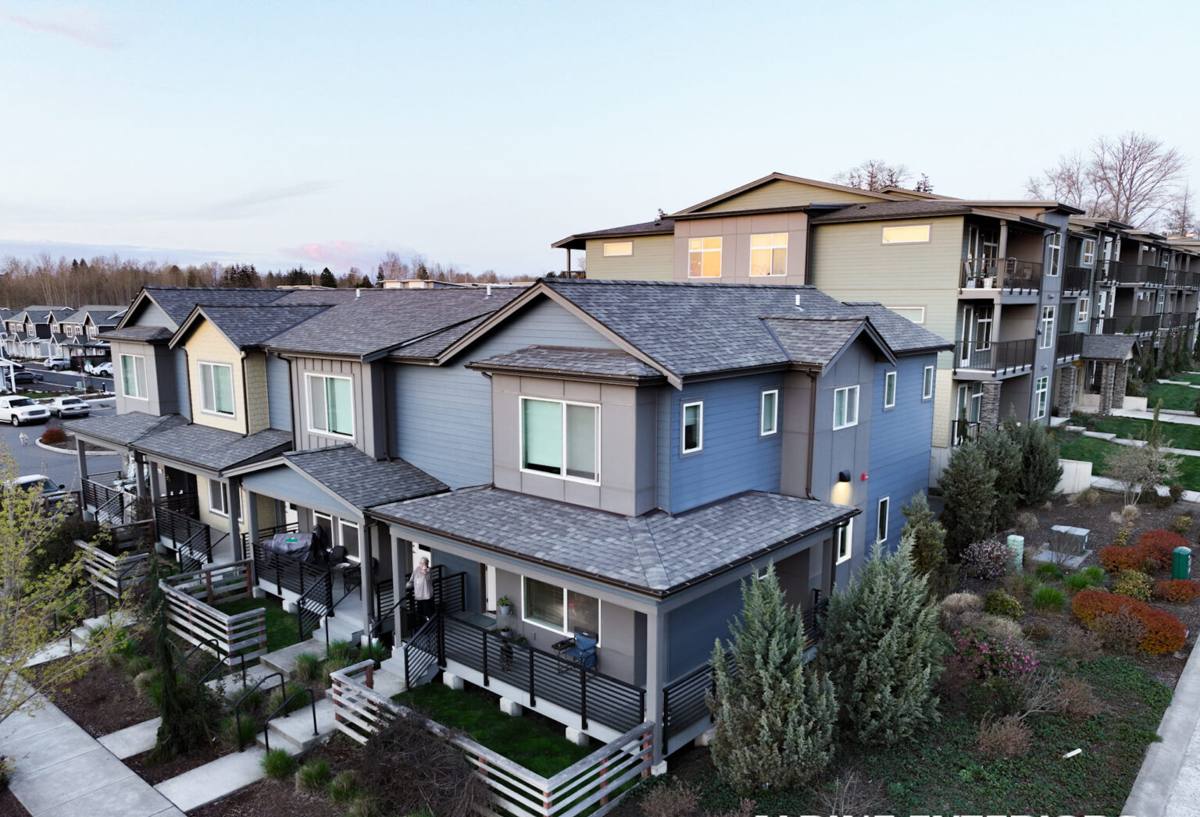
Ship Harbor sits close to the water on Fidalgo Island, near the ferry terminal traffic and the open exposure of Rosario Strait. That location is part of what makes it a great place to live, and it's also exactly why windows here fail faster than windows five or ten miles inland. Salt-laden air off the water accelerates corrosion on hardware, frames, and fasteners. Wind-driven rain finds its way into gaps that would stay dry in a more sheltered part of Skagit County. And the long, damp moss season that defines this part of Washington keeps wood trim and sills wet for months at a time, which is when rot actually gets started.
We work on homes in this area regularly, and the pattern is consistent: windows that were fine for the first decade start showing trouble at the seams first — corroded weep holes, soft sills, fogged glass, and frames that no longer close snug. Replacing them correctly, with materials and details suited to a marine-exposed site, is a different job than a standard inland window swap.
What Salt Air and Coastal Wind Actually Do to a Window
It helps to understand the failure mechanism, not just the symptom, so you know what you're paying to fix.
Corrosion at the Hardware Level
Cranks, locks, hinges, and balance mechanisms are usually the first casualty near the water. Even "marine-grade" hardware can pit and seize faster in a salt-air environment than the manufacturer's warranty literature assumes, because most of that testing isn't done a few hundred yards from tidal water. Once hardware seizes, homeowners force windows open and closed, which stresses the frame and speeds up seal failure.
Wind-Driven Rain Intrusion
Anacortes gets weather that comes sideways, not just down. A window that seals fine in a light rain can still leak in a wind-driven storm if the flashing and sill pan weren't detailed for that condition. This is a common gap in older installs — the window itself may be decent, but the water management around it was built for calmer weather.
Moss, Mildew, and Sustained Moisture
Skagit County's moss season isn't just a roof problem. Moss and algae hold moisture against wood trim, exterior sills, and even vinyl cladding around a window opening for weeks at a stretch. That sustained dampness is what turns a small gap in caulk into a soft spot in the framing underneath.
Signs a Ship Harbor Home Needs Window Replacement
- Hardware that's stiff, gritty, or corroded — cranks that won't turn smoothly, locks that don't seat
- Fogging or a permanent haze between the panes (failed seal on double- or triple-pane glass)
- Soft or spongy wood at the sill or bottom corners of the frame
- Visible gaps between the frame and siding, or caulk that's cracked and pulling away
- Drafts you can feel on a windy day, even with the window latched
- Water staining on interior trim or drywall below the window after a storm
- Streaking, chalking, or pitting on aluminum or vinyl frames facing the water
- Difficulty opening or closing that's gotten noticeably worse over the past year or two
Any one of these on its own might just mean a repair. Two or three together, especially on the water-facing side of the house, usually means the window has moved past the point where patching makes sense.
What a Correct Installation Involves Here
The window unit itself matters, but in a marine-exposed spot like Ship Harbor, the installation details matter just as much — arguably more, since a good window installed poorly will still leak, and a mid-grade window installed correctly will often outperform it.
Sill Pan Flashing
We install a sloped, sealed sill pan under every window opening so that any water that does get past the exterior seal drains back out instead of sitting on the framing. This is standard building practice, but it's frequently skipped on older or lower-cost installs, and it's the single detail that most affects long-term rot risk.
Proper Flashing Integration with Siding
The window's flashing has to integrate correctly with the weather-resistive barrier and siding above and around it — shingled so water always sheds outward and down, never trapped behind the trim. On a wind-exposed elevation this sequencing is not optional detail work, it's the difference between a dry wall cavity and a hidden leak.
Sealant and Fastener Selection
We use sealants and fasteners rated for coastal exposure rather than whatever's cheapest at the yard. Standard fasteners can start showing rust streaks within a few seasons this close to salt air; corrosion-resistant hardware costs more up front and avoids that entirely.
Insulation and Air Sealing Around the Frame
The gap between the window frame and the rough opening gets properly insulated and air-sealed, not just stuffed with fiberglass. This affects both comfort and the chance of condensation forming inside the wall cavity.
Choosing Frame Material for a Water-Exposed Property
There's no single "best" frame material for every home — it depends on sun exposure, how close you are to the water, and what you want to maintain.
| Frame Material | Coastal Performance | Maintenance | Trade-offs to Know |
|---|---|---|---|
| Vinyl | Good — won't rust or rot; UV-stable modern formulations hold up well | Low — occasional wash-down | Frame color/style options are more limited than wood; welded corners vary in quality by manufacturer |
| Fiberglass | Very good — dimensionally stable, resists warping in temperature swings off the water | Low | Higher upfront cost than vinyl |
| Wood (clad exterior) | Fair to good if the exterior cladding is intact — bare or damaged wood is the weak point in salt air | Higher — exterior clad needs monitoring, interior wood needs occasional refinishing | We recommend clad wood only where the cladding is fully sealed and detailed correctly; exposed wood sills are a poor fit for this specific site |
| Aluminum | Poor to fair — prone to pitting and corrosion in direct salt exposure over time | Moderate — needs monitoring for corrosion at fasteners and tracks | We generally steer clients away from bare aluminum on water-facing elevations for this reason, not because it's a bad product everywhere, just a poor match for this exposure |
For most Ship Harbor homes we install vinyl or fiberglass on elevations that face the water directly, and we'll walk through the honest trade-offs for your specific exposure rather than defaulting to one material for every wall of the house.
Single-Hung, Double-Hung, Casement, or Slider — What Fits a Windy Site
Window style affects how well a unit performs in wind and driving rain, not just how it looks.
- Casement windows seal by compression against the frame when cranked shut, which generally gives them a tighter, more wind-resistant seal than sliding sashes — a real advantage on an exposed wall.
- Double-hung windows are a good fit for matching traditional home styles and offer flexible ventilation, though the sliding sash design means the seal depends more heavily on weatherstripping condition over time.
- Sliders are practical and cost-effective but, like double-hungs, rely on weatherstripping rather than compression, so hardware quality and installation precision matter more in a wind-exposed spot.
We'll talk through which style suits each elevation of your home — it's common to mix styles, using casements on the water side and double-hungs elsewhere.
Our Process for Ship Harbor Window Replacement
- On-site assessment. We look at each window individually — hardware condition, sill and frame moisture, current flashing, and how the specific elevation is exposed to wind and rain.
- Honest scope discussion. Not every window on a house needs replacing at once. We'll tell you which ones are failing, which are still sound, and what a phased approach could look like if that fits your budget better.
- Product selection. We help you pick frame material, glass package, and style based on which wall it's going on, not a one-size answer for the whole house.
- Removal and opening prep. Old units come out carefully, and we inspect the framing underneath before anything new goes in — this is where hidden moisture damage from a past leak shows up.
- Sill pan and flashing installation. Every opening gets a proper sloped sill pan and correctly sequenced flashing, whether or not the old install had one.
- Window installation, shimming, and sealing. Units are set plumb and square, shimmed correctly, and sealed with coastal-rated sealant.
- Interior and exterior trim finishing. Trim is reset or replaced and finished to match the home.
- Final check. We test operation, check seals, and walk the job with you before we call it done.
Why Local Experience Matters for This Job
A contractor who mostly works inland projects can still install a window correctly on paper and still get it wrong for a site like Ship Harbor, because the failure points aren't obvious until you've seen them repeatedly on homes exposed to the same wind and salt. Knowing to spec corrosion-resistant fasteners without being asked, knowing which elevations of a Fidalgo Island home take the worst of the weather, and knowing how moss season affects trim and sealant over the following winter — that's learned from doing this work in this specific place, not from a general contractor training. We've worked on homes throughout the Anacortes area and understand how Skagit County's marine climate is different from a job 20 miles inland.
Cost Factors to Expect
Every home is different, so we won't quote a number without seeing your windows, but the main variables that move the price are:
| Factor | Why It Matters |
|---|---|
| Frame material | Fiberglass and higher-end vinyl cost more upfront than basic vinyl |
| Number of windows and elevations affected | Water-facing walls often need more attention to flashing detail than sheltered walls |
| Extent of hidden damage | Rot found in the framing during removal adds repair scope beyond the window itself |
| Glass package | Double- vs. triple-pane, and Low-E or impact-rated glass, change unit cost |
| Style | Casements generally cost more per unit than comparable sliders or double-hungs |
We'll give you a clear, itemized quote after seeing the actual condition of your windows and framing — no guessing games, and no surprise charges added mid-project for things we should have caught at the estimate.
If your windows are showing any of the wear signs above, or you'd just like an honest read on how much life is left in them, we're happy to come take a look. Reach out for a free, no-pressure estimate using the form below.