 Anacortes Siding
 Similk Beach sits along the shoreline on Fidalgo Island, between Anacortes proper and the route toward Deception Pass, and that setting shapes how a house ages here more than most homeowners realize until they've lived through a few wet seasons. Homes along this stretch of Similk Bay take on salt-laden air, wind-driven rain, and a moss season that can run for the better part of the year. Siding installed without those specifics in mind tends to show its age early — fading, staining, soft spots at the joints — while siding installed correctly, in the right material, can handle decades of this exposure without much drama. We install siding throughout Anacortes and greater Skagit County, and Similk Beach is one of the areas where getting every detail right, not just the visible ones, actually matters.
Similk Beach's Shoreline Climate and What It Asks of Siding
Being close to the water means Similk Beach properties deal with salt air more consistently than homes set back a mile or two inland. Salt is corrosive to exposed fasteners and unprotected finishes, and it accelerates the breakdown of coatings that aren't formulated to resist it. Add to that Skagit County's pattern of driving rain — rain pushed sideways by wind rather than falling straight down — and you get a house exterior that's fighting moisture intrusion from angles a lot of siding products and installation methods simply aren't built to handle. Then there's the moss. Western Washington's long wet season lets moss and algae establish on shaded, north-facing, or tree-covered sections of a house for much of the year, and once it takes hold on certain siding materials, it holds moisture against the surface and accelerates whatever decay process is already underway.
None of this means a house on Similk Beach is doomed to premature siding failure — plenty of homes here have held up fine for a long time. It means the margin for error is smaller than it is on a sheltered inland lot, and the choices that don't matter much elsewhere — material selection, fastener grade, flashing detail — matter quite a bit here.
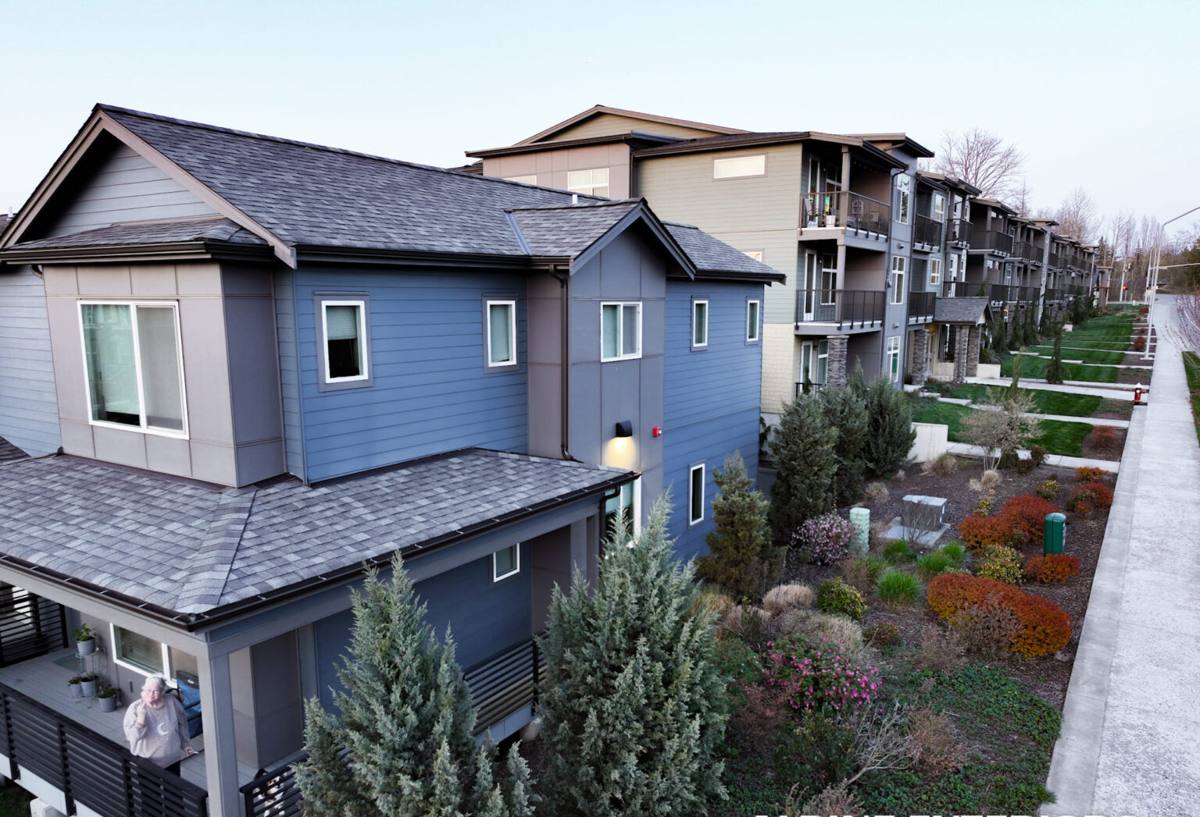
What a Correct Siding Installation Actually Involves
Siding installation is often talked about as if it's just cladding — panels going up over a wall. In practice, the panels are the last and least important step. The water-management system behind them is what actually determines whether the wall assembly stays dry for the next thirty years or starts rotting from the inside in five.
The Water-Management System Behind the Panels
A correct installation starts with a continuous weather-resistant barrier over the sheathing, properly lapped so water sheds downward and outward rather than working its way behind seams. Flashing goes in at every penetration — windows, doors, hose bibs, electrical fixtures, deck ledgers — and it has to be integrated with the barrier in the right sequence, not just caulked over afterward. Caulk is a backup, not a strategy. On a property exposed to wind-driven rain off the water, a flashing detail that's slightly out of sequence is often where a moisture problem starts, even though the siding itself looks fine on the surface for years afterward.
Fastening, Clearance, and Joint Details
Fiber cement siding has specific fastening requirements — nail or screw type, spacing, and how close to the panel edge a fastener can go — and those specs exist because they affect how the panel handles moisture and movement over time. Clearance matters too: siding that's installed too close to grade, a roofline, or a deck surface will wick moisture it was never designed to sit in. Joints between panels need the right gap and the right flashing or caulk treatment behind them, since a butt joint is one of the more common places water finds its way in in an inland installation, let alone one exposed to sideways rain. None of this is visible once the job is finished, which is exactly why it's worth asking a contractor about before they start.
Why We Install Only James Hardie Fiber Cement Here
We install one siding product, James Hardie fiber cement, and a shoreline property like the ones on Similk Beach is a clear example of why. Fiber cement doesn't absorb and swell with moisture the way wood does, it doesn't become brittle under sustained UV and salt exposure the way vinyl can, and it's non-combustible, which matters to homeowners thinking about wildfire risk during the region's drier summer stretches. We don't install vinyl, LP SmartSide, Cemplank, Allura, primed spruce, or cedar. Each of those has a case to be made for it somewhere, but for a house taking on this level of coastal exposure year after year, we've made a professional decision to stand behind one product system instead.
HZ Engineering for Marine Exposure
Hardie builds region-specific HZ product lines engineered for the conditions a given climate zone actually sees, rather than selling one generic formulation everywhere in the country. For a marine-influenced, high-moisture climate like Skagit County's, that engineering is the difference between siding that's rated for the job and siding that merely tolerates it. It's a meaningful distinction on a property that sits this close to open water.
ColorPlus Factory Finish
Hardie's ColorPlus finish is baked onto the fiber cement in a factory setting under controlled conditions, rather than field-applied on site where weather, temperature, and humidity during application all affect how well a coating cures and adheres. That factory finish is backed by its own manufacturer warranty against fading and chalking — a real advantage in a spot that sees strong UV reflection off the water combined with long gray, wet stretches that are hard on lesser coatings. It also means a homeowner isn't looking at a repaint cycle every several years the way they would with field-painted wood siding.
Our Installation Process for Similk Beach Homes
The process we follow doesn't change project to project, but the attention we put into certain steps scales up on an exposed shoreline property. Broadly, it looks like this:
- On-site assessment of the existing wall assembly, sheathing condition, and any prior moisture damage before a single panel comes off
- Removal of old siding and inspection of the sheathing and framing underneath, since a shoreline home with any history of water intrusion sometimes has damage that isn't visible from outside
- Installation of a continuous weather-resistant barrier, correctly lapped and sealed at all seams
- Flashing at every window, door, and penetration, integrated with the barrier in the correct shingle-style sequence rather than caulked on afterward
- Installation of James Hardie panels or lap siding to manufacturer fastening and clearance specifications, with attention to joint treatment at every seam
- Final detail work — trim, caulking where appropriate, and a walkthrough of what was done and why, including anything we found underneath that's worth knowing about
The steps a homeowner sees — panels going up, the finished color, the trim lines — are also the steps that matter least for how the wall performs over time. The steps that matter most happen underneath, before the visible siding ever goes on.
Comparing a Standard Installation to Ours
| Factor | Common/Lower-Cost Approach | Approach We Use on Similk Beach |
|---|---|---|
| Siding material | Vinyl, engineered wood, or primed wood — lower upfront cost | James Hardie fiber cement with factory ColorPlus finish |
| Weather barrier | Single layer, minimum lap | Continuous barrier with verified lap and seam sealing |
| Window/penetration flashing | Caulk-and-seal without sill pan | Full flashing sequence integrated with the water barrier |
| Fasteners | Standard-grade, prone to corrosion near salt air | Fastener type and spacing per manufacturer spec for this exposure |
| Finish | Field-painted, needs repainting on a shorter cycle | Factory-applied ColorPlus finish, backed by manufacturer warranty |
| Clearance from grade/roofline | Often minimum or unchecked | Verified clearance to prevent moisture wicking |
Signs Your Current Siding Is Already Losing the Fight
On a shoreline property, siding problems often show up earlier than homeowners expect, and usually in specific spots rather than uniformly across the house. Worth checking for:
- Soft or spongy spots when you press on the siding, especially near the bottom courses or around window and door trim
- Persistent moss or dark staining on shaded or north-facing walls that keeps coming back after cleaning
- Visible gaps, warping, or separation at panel joints and corners
- Peeling or bubbling paint on wood-based siding, or chalky, faded color on vinyl or older coatings
- Any musty smell or visible staining on interior walls that back up to exterior siding, which can indicate moisture has already gotten past the cladding
Any one of these on its own isn't necessarily an emergency, but on a house this close to the water, they tend to compound faster than they would inland, and catching them early is almost always less costly than waiting for the damage to spread into the wall framing.
Why Hiring a Crew That Already Works Similk Beach Matters
Similk Beach doesn't see the same volume of contractor traffic as denser parts of Anacortes, and that can mean homeowners here end up hiring crews who are used to installing siding on sheltered, inland lots and apply the same approach without adjusting for the exposure. A crew that regularly works this shoreline knows which walls on a typical Similk Beach property take the worst of the wind and rain, what an installation failure actually looks like on a house nearby after a few winters, and where to add flashing or fastening attention that a generic install would skip. That familiarity with the specific stretch of coastline doesn't show up in a brochure, but it shows up in whether the siding is still performing well a decade or two after it goes up.
What to Check Before Hiring for Siding Installation Here
- Ask how they handle flashing at windows, doors, and penetrations specifically — not just what siding brand they carry
- Confirm they're familiar with installing on properties with direct or near-direct water exposure, not just general residential work
- Get clarity on both the manufacturer's material warranty and the contractor's own workmanship warranty, in writing
- Ask what fastener type and spacing they use, and why, for a coastal-exposure property
- Verify the contractor is licensed, bonded, and insured to perform exterior work in Washington State
What This Means for Your Home on Similk Beach
Every property along this shoreline sits a little differently relative to wind, sun, and water exposure, and the right scope of work depends on the specific house — its age, its orientation, and the actual condition of what's on the walls now. We're not going to recommend a full siding replacement if a section of repair and better flashing detail is what the house needs, and we're not going to install a material we don't think will hold up to what this location sees year-round. If you're weighing what your home on Similk Beach needs, we're glad to take a look and give you a straight, honest read on it.
If you'd like a free, no-pressure estimate on siding installation for your Similk Beach home, reach out and we'll walk the property with you — no obligation either way. There's a form below to get started.