 Anacortes Siding
 Why Siding Takes a Beating on March Point
Homes out on March Point sit closer to open water than most of Anacortes, and that location shapes how siding ages here. Salt-laden air moves in off the surrounding bays, wind exposure is higher on a low-lying point than it is a mile inland, and the wet season stretches long enough that siding rarely gets a real chance to dry out between storms. None of that means siding fails fast — it means siding fails differently than it would in a drier, more sheltered part of Skagit County, and a repair that doesn't account for that will usually fail again within a few years.
We work on homes throughout the March Point area and see the same patterns repeat: damage concentrated on the water-facing and wind-facing walls, moisture problems that started small and got ignored, and repairs from other contractors that patched the visible symptom without fixing the cause. This page covers what siding repair actually needs to look like for a home in this specific environment.
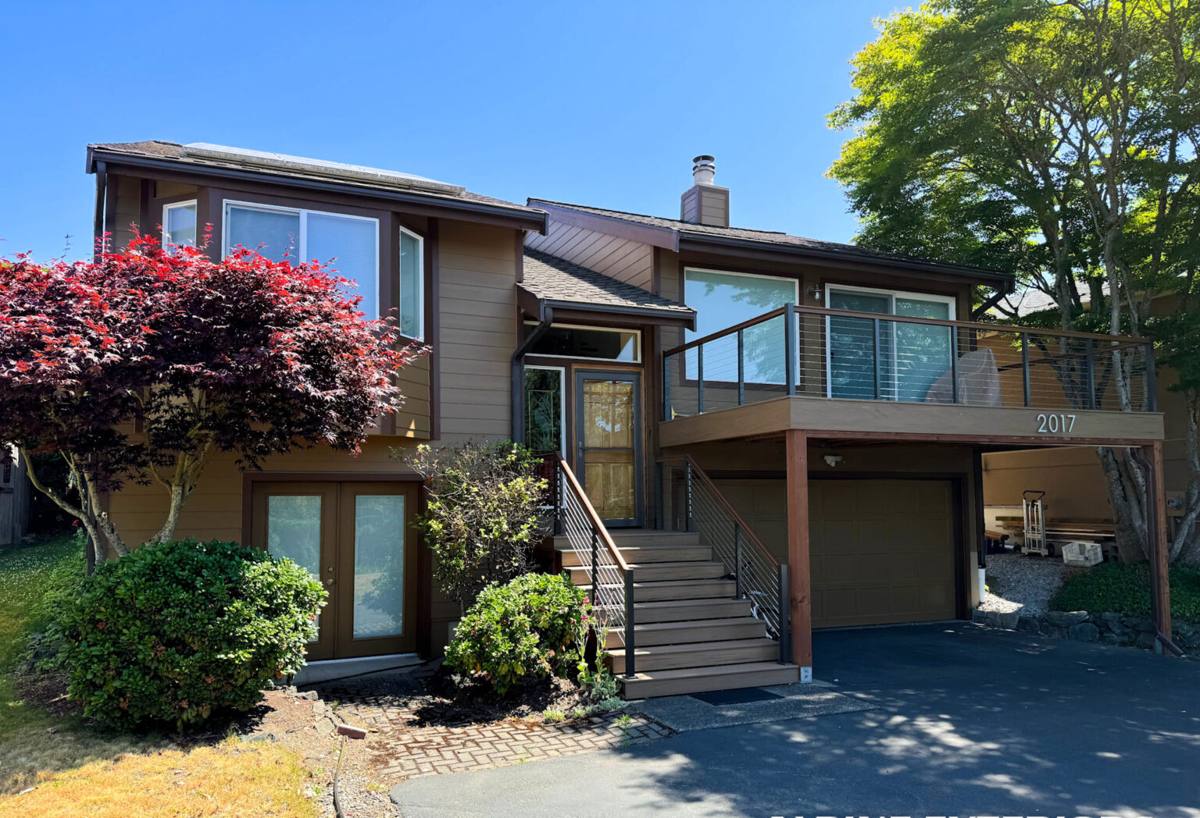
Early Warning Signs You Need Siding Repair
Most siding problems are visible well before they become structural. Homeowners who catch these signs early spend far less than those who wait for a soft spot to show up on an interior wall.
- Panels that look warped, bowed, or slightly separated from the wall
- Dark streaking, green film, or black staining that keeps coming back after cleaning
- Cracked or crumbling caulk lines around trim, windows, and panel seams
- Soft or spongy spots when you press on the siding, especially near the bottom courses
- Nail heads popping out or visible rust bleeding through the paint
- Peeling, bubbling, or chalky paint on one wall while the rest of the house looks fine
- Gaps or daylight visible at corner boards, butt joints, or where siding meets the foundation
A wall facing the water or prevailing wind will almost always show these signs first and worst. If one side of the house looks noticeably rougher than the others, that's not a coincidence — it's exposure.
Moisture Intrusion
This is the damage type that matters most on March Point. Wind-driven rain doesn't just wet the surface of a wall — it gets pushed into seams, gaps, and any spot where caulk or flashing has failed. Once water gets behind the siding, it can travel and cause rot in sheathing or framing long before it becomes visible from outside.
Impact and Fastener Damage
Wind is the other constant here. Loose panels flex in gusts, which works fasteners loose over time, and debris carried by a storm can crack or chip siding directly. Once a panel is loose, it's no longer shedding water the way it was designed to, and the moisture problem above starts from there.
Moss, Algae, and Surface Staining
Skagit County's long damp stretch — roughly October through June some years — gives moss and algae plenty of time to establish on siding that stays shaded or doesn't dry quickly. This is mostly cosmetic on its own, but moss holds moisture against the surface, and on wood-based products that constant dampness accelerates rot underneath the growth.
Repair or Replace? How We Make the Call
Not every damaged section needs full replacement, and not every "small" repair is actually small once you look behind the siding. We evaluate this honestly on every job — a patch job that ignores hidden rot just delays a bigger repair, and a full re-side that isn't necessary just costs the homeowner money they didn't need to spend.
| Factor | Repair Usually Makes Sense | Replacement Is the Better Call |
|---|---|---|
| Extent of damage | Isolated to one or two panels or a single wall section | Spread across multiple walls or the whole exterior |
| Underlying sheathing | Dry, solid, no soft spots when probed | Soft, discolored, or rotted where opened up |
| Siding material | Matching material still available and stable | Original product discontinued, faded, or prone to repeat failure |
| Age of siding | Well within expected service life | Nearing or past the end of its realistic lifespan |
| Pattern of failures | First occurrence, clear isolated cause | Repeat callouts to the same walls year after year |
We open up the affected area before quoting anything. If the sheathing underneath is compromised, patching the visible siding and leaving the real problem in place isn't a service we'll offer — we'll tell you what we actually found and what it takes to fix it correctly.
What a Correct Siding Repair Involves
A repair that holds up in this climate isn't just about swapping a damaged board for a new one. It has to address why the damage happened in the first place, or it will happen again.
- Removing enough surrounding material to inspect the sheathing and framing, not just the damaged piece
- Confirming the weather-resistive barrier behind the siding is intact and properly lapped
- Repairing or replacing any flashing at windows, doors, and butt joints that's failed
- Matching replacement material in profile, exposure, and color as closely as possible
- Re-fastening to manufacturer spec rather than just tacking a patch back in place
- Sealing seams and joints with an exterior-grade sealant rated for this climate, not whatever's on hand
- Confirming proper clearance at the bottom of the wall so siding isn't sitting in standing water or soil contact
Skipping any one of these steps is how a repair turns into a callback eighteen months later. It's also how a small, affordable fix turns into a wall replacement — because the water kept getting in behind a patch that looked fine from the driveway.
Our Repair Process, Step by Step
- Inspection. We look at the whole exterior, not just the spot you called about — related damage often shows up on the same wall.
- Diagnosis. We open up the damaged area to check the sheathing, framing, and moisture barrier before recommending anything.
- Honest scope. You get a clear explanation of what's actually wrong, what a repair will and won't solve, and whether replacement is the smarter long-term move.
- Repair. We replace only what needs replacing, match material and color as closely as possible, and rebuild the moisture barrier and flashing correctly.
- Sealing and finish. Seams, joints, and fastener points get sealed to hold up against wind-driven rain, not just look finished.
- Walkthrough. We show you what we found and what we did before we leave, so nothing is a surprise later.
When Repair Isn't Enough: Why We Rebuild in James Hardie
When a repair evaluation turns up widespread rot, a discontinued product, or a siding material that's simply not suited to a wind- and salt-exposed site like this one, we only offer one replacement path: James Hardie fiber cement. We don't install vinyl, LP SmartSide, primed wood, cedar, or other fiber cement brands, and we're upfront about why.
Vinyl can warp and lose its seal in sustained wind exposure, and it's a poor match for a site where impact resistance and a tight building envelope both matter. Wood-based products like LP SmartSide, primed spruce, and cedar depend on paint and caulk maintenance staying ahead of moisture — miss a cycle in a climate this wet and rot can start before it's visible. Other fiber cement brands compete reasonably on paper, but we've standardized on Hardie because of the factory-applied ColorPlus finish, the HZ5 product engineering built for exactly this kind of exposure, and a transferable warranty that holds up when the installation is done to spec. Fiber cement itself doesn't burn, doesn't feed moss the way wood fiber can, and holds paint far longer than field-applied finishes on other materials — all of which matters more here than it would on a sheltered inland lot.
We're not saying every other product is a bad product. We're saying that for the exposure this site gets, Hardie is the one we're willing to put our name behind.
Why Local Experience in March Point Matters
A crew that's worked exposed, wind- and water-facing sites in this part of Skagit County knows to check specific things a general contractor might skip: how the weather barrier is holding up on the prevailing-wind wall, whether moss has been masking a wet spot for a season or two, and where wind-driven rain actually gets in versus where it just runs off. That's not a guess — it's pattern recognition from having done this work on similar homes nearby.
It also means realistic scheduling. Siding repair goes faster and holds up better when it's timed around this area's weather rather than squeezed in during the wettest stretch of the year. A crew already working locally can plan around that instead of learning it on your job.
Keeping Your Siding Ahead of the Next Repair
Between now and any future repair, a few habits go a long way toward keeping small problems small:
- Rinse siding once or twice a year to keep salt residue and moss spores from building up
- Check caulk lines at windows, doors, and trim annually — this is usually the first thing to fail
- Keep gutters clear so overflow isn't running down the siding face
- Trim back vegetation that keeps a wall shaded and slow to dry
- Walk the exterior after any major windstorm and look for anything newly loose or cracked
None of this replaces a professional inspection, but it buys time and often catches problems while they're still a repair rather than a replacement.
If you're seeing any of the warning signs above on a March Point home, we're happy to take a look and give you a straight answer on repair versus replacement — no pressure, no upsell. Use the form below to request a free estimate.