 Anacortes Siding
 Similk Beach Homes Face a Tougher Window Environment Than Most of Skagit County
Similk Beach sits close enough to the water that homes here deal with a different set of pressures than a house a few miles inland in Anacortes. Salt-laden air moves through window seals and hardware year-round, wind-driven rain during fall and winter storms tests every joint and sill, and the long wet season keeps moss and algae established on north-facing and shaded elevations for much of the year. None of that is a problem specific to Similk Beach alone, but the combination — proximity to salt water, exposure to Rosario Strait weather, and heavy tree cover in some pockets of the neighborhood — adds up faster here than it does on a typical Skagit County lot.
Windows that aren't built or installed with that combination in mind tend to show it early: hardware that corrodes ahead of schedule, seals that fail before their rated lifespan, and frames that hold moisture instead of shedding it. Custom windows done right for this area aren't about upgrading for the sake of it — they're about matching the product and the installation to conditions that are genuinely harder on a window than what you'd find in a lot of other places.
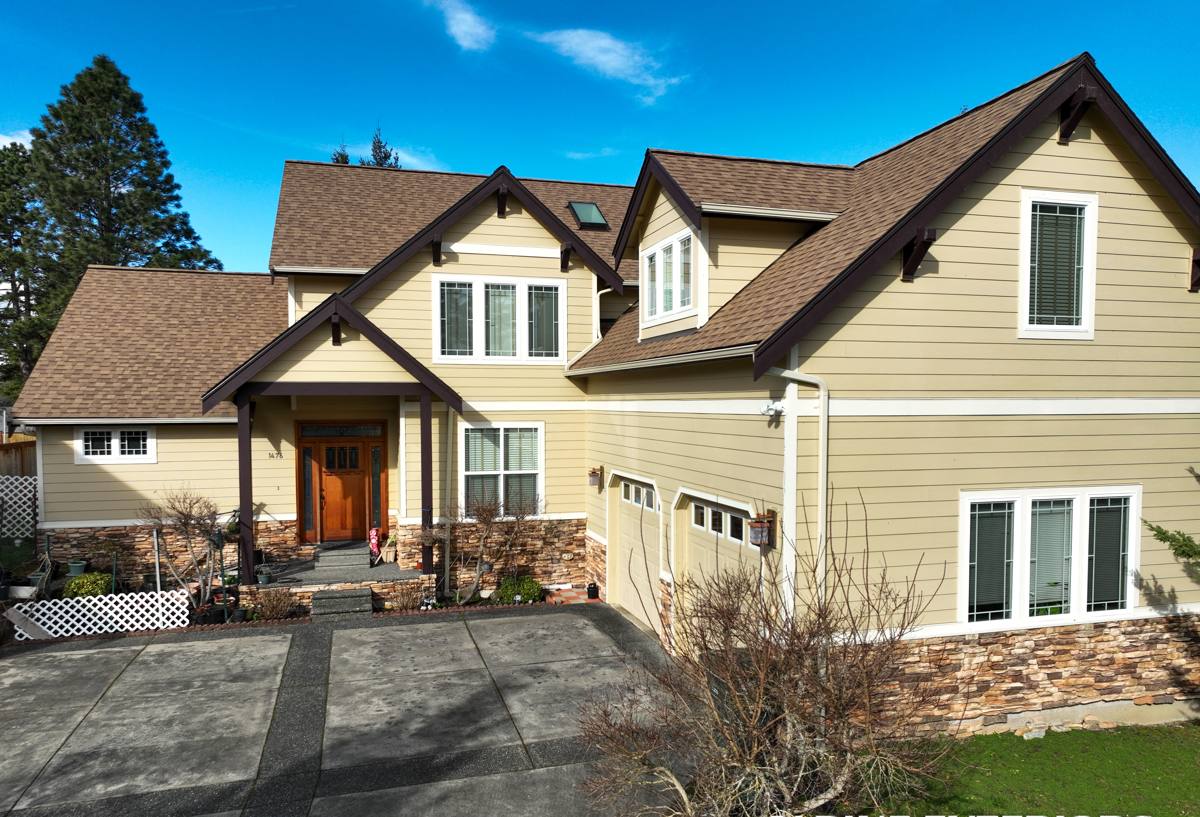
What "Custom" Actually Means for a Similk Beach Property
Custom doesn't just mean a nonstandard size or a decorative shape, though those come up plenty in older Similk Beach homes with additions or remodels that left odd rough openings. In practice, custom windows here usually mean:
- Sizing built to your home's actual openings, not the nearest stock size with shims and extra trim to make it fit
- Frame material and finish chosen for water exposure and salt air, not just looks
- Glass packages selected for the amount of direct exposure a given elevation gets — a south or west-facing wall facing open water needs different consideration than a shaded north wall
- Hardware and fasteners rated for coastal-adjacent use, since standard hardware corrodes faster in salt-influenced air
A house with several additions over the decades, which is common in this part of Anacortes, often has three or four different window opening sizes and depths. Custom work means every one of those gets measured and treated on its own, not forced into a one-size approach.
When Custom Is the Right Call Versus Standard Replacement
Not every window job at Similk Beach needs a fully custom approach. If your openings are standard sizes and in good condition, a quality standard replacement window can perform just as well for less money. Custom sizing and detailing earn their cost when the opening is nonstandard, when the wall assembly needs correction as part of the job, or when a particular elevation's water and wind exposure justifies a heavier-duty product than what's typical elsewhere in the neighborhood.
Material and Glass Choices That Actually Hold Up Near the Water
There's no single "best" window material — each has real trade-offs, and the right call depends on the specific exposure of the wall you're replacing. Here's how the common options stack up for a salt-air, high-moisture environment like Similk Beach:
| Material | Salt Air / Moisture Behavior | Maintenance Burden | Best Use Case Here |
|---|---|---|---|
| Vinyl | Doesn't corrode or rot; seams and welds need to be quality-checked | Low — occasional cleaning | Most Similk Beach homes, especially value-focused replacements |
| Fiberglass | Very stable in moisture and temperature swings, resists warping | Low | Higher-exposure elevations facing open water or prevailing storms |
| Aluminum | Can corrode faster in salt air without a marine-grade finish; conducts cold | Moderate — finish needs monitoring | Limited use, or paired with thermal breaks and coastal-rated coatings |
| Wood (clad exterior) | Handsome, but exposed wood is vulnerable to the area's near-constant damp and moss growth | High — regular finish upkeep required | Interior-facing trim preference where exterior is fully clad and protected |
On glass, most Similk Beach homes benefit from a double- or triple-pane package with a low-E coating suited to the amount of direct sun and reflected water glare a given wall gets. Argon or krypton gas fill helps with thermal performance during the region's cold, wet winters, but the gas fill matters less than a properly sealed, well-installed unit — a great glass package in a poorly flashed frame will still fail early.
What a Correct Installation Actually Involves
The window itself is only part of the job. In an area with this much wind-driven rain, the installation detailing is what actually determines whether water stays out for the next twenty years or finds its way into the wall assembly in five. A correct install includes:
- Removing the old unit and inspecting the rough opening and sill for hidden rot or prior water damage before anything new goes in
- Proper flashing sequencing — installed so water is directed out and down, never trapped behind the new frame
- A continuous, compatible sealant bead at all critical joints, not just a bead of caulk around the visible trim
- Correct shimming and fastening so the frame isn't stressed or racked, which affects both weather sealing and long-term operation
- Interior and exterior trim work that matches the home instead of looking bolted on
Skipping or rushing any one of these steps is usually invisible on installation day and only shows up later as staining, soft trim, or a window that's suddenly hard to operate.
Signs Your Current Windows Are Already Losing the Battle
Because moss, salt residue, and moisture damage build slowly, a lot of homeowners in this area don't notice a window problem until it's fairly advanced. Worth checking for:
- Green or black growth building up in the corners of frames or on the sill, even after cleaning
- Condensation forming between panes, which means the seal has failed and the insulating gas is gone
- Hardware that's stiff, corroded, or leaves rust streaks on the frame or siding below
- Soft or discolored trim and siding directly around the window opening
- Drafts or a noticeable temperature difference near the window on windy days
- Difficulty opening, closing, or locking a window that used to operate smoothly
Any one of these on its own might just mean a repair or a cleaning. Several at once, or on more than one window, usually means the unit or its installation has reached the end of its useful life.
Our Process, Start to Finish
1. On-Site Assessment
We look at each opening individually — sizing, condition of the surrounding wall, sun and water exposure, and what's actually causing the current window to underperform, if anything is. This is also where we talk through material and glass options honestly, including what we wouldn't recommend for a given elevation and why.
2. Measuring and Ordering
Custom work means precise measurement of each opening rather than assuming uniformity across the house. We account for any out-of-square conditions common in older Similk Beach homes before anything is ordered.
3. Installation
Old units come out, the opening gets inspected and corrected if needed, and the new window goes in with full flashing and sealing detail — not just a fast swap.
4. Final Check and Walkthrough
Every window is operated, checked for level and square, and inspected for a clean seal before we consider the job finished. We walk the job with you so you know what was done and what to watch for going forward.
Living With Windows in a Salt Air, High-Moss Environment
Even a correctly installed, well-chosen window benefits from some basic upkeep in this climate. A simple annual routine goes a long way:
- Rinse frames and tracks periodically to clear salt residue, especially on water-facing elevations
- Clear moss and organic buildup from sills and surrounding trim before it holds moisture against the frame
- Check weep holes on the exterior sill to make sure they're clear and draining
- Lubricate hardware and tracks as needed, since salt air accelerates wear on moving parts
- Watch for any new staining or soft spots in the trim, which can signal a seal starting to fail
None of this is heavy maintenance, but skipping it in this particular environment tends to shorten a window's service life more than it would in a drier, less exposed part of the county.
Why It Matters That We Already Work in Similk Beach
A crew that mainly works inland jobs may not have a strong feel for how much harder salt air and driving rain are on a window system here compared to elsewhere in Skagit County. Working regularly in Similk Beach means we've already seen how different materials, sealants, and hardware hold up specifically in this setting — not just in a manufacturer's general rating, but in how the products actually perform a few winters in. That local track record shapes what we recommend and what we steer away from, and it means fewer surprises once the job is done.
If you're weighing a window replacement or a custom fit for a Similk Beach home, we're glad to take a look and give you a straight answer on what your home actually needs — no pressure, no upsell for its own sake. Reach out for a free estimate using the form below, and we'll walk the property with you and talk through real options for your specific exposure and budget.