 Anacortes Siding
 Decks in Similk Beach Take a Different Kind of Beating
Similk Beach sits close to the water on Fidalgo Island, in the shadow of tall Douglas fir and cedar that keep most yards shaded for a good part of the day. That combination — marine air off Similk Bay, heavy tree cover, and Skagit County's long wet season — is hard on outdoor structures in ways that inland decks never have to deal with. Salt-laden air accelerates corrosion on fasteners and hardware. Shade keeps deck boards damp long after a storm has passed. And moss doesn't just look bad; it holds moisture against wood and traps water on composite surfaces, which shortens the life of almost any decking material if it isn't accounted for from the start.
When we replace a deck in Similk Beach, we're not just swapping out old boards for new ones. We're building for a specific set of conditions: a structure that sheds water fast, resists corrosion, and doesn't give moss a place to take hold. That's a different job than a deck replacement in a dry, sunny part of the county, and it should be treated that way.
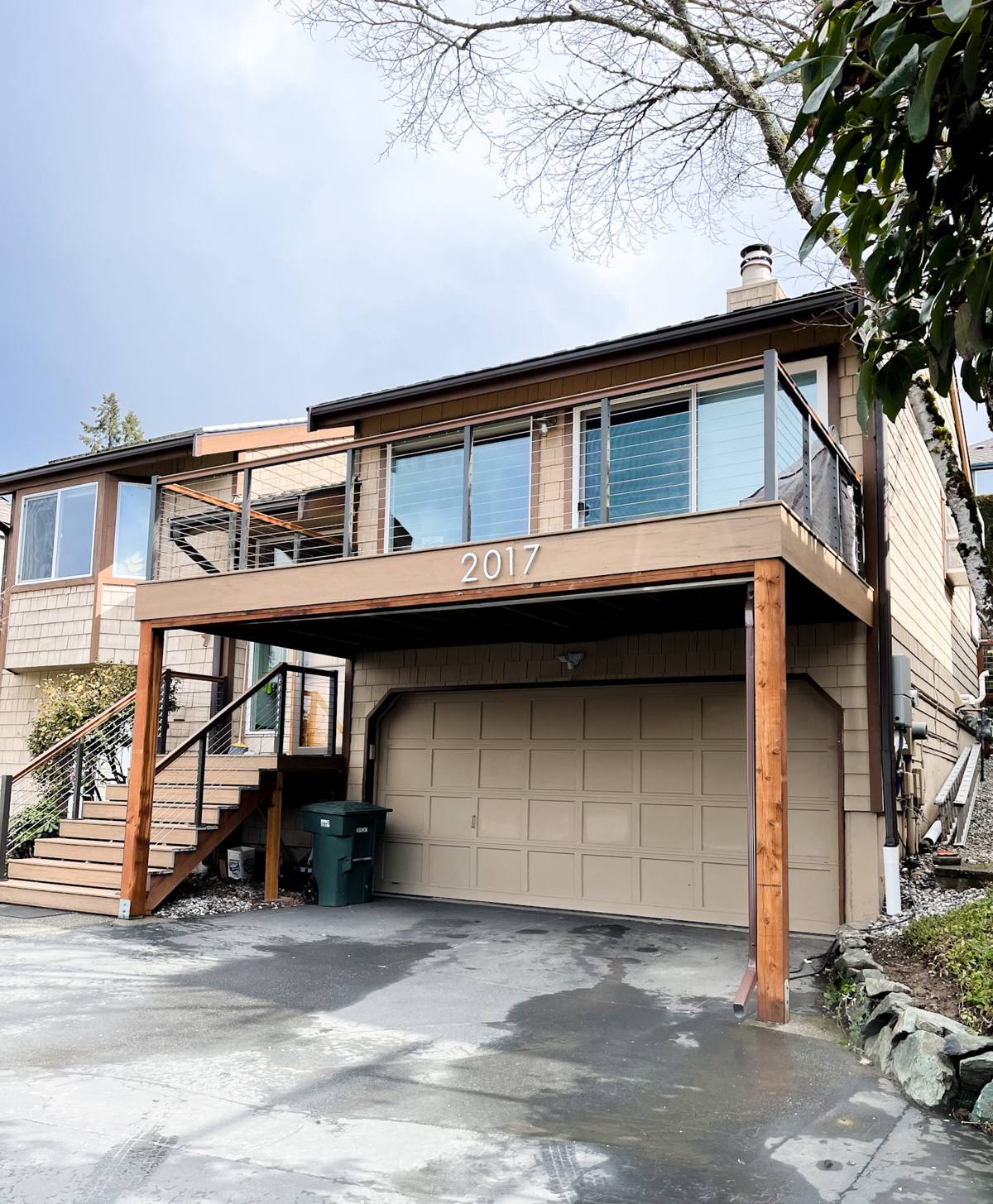
Signs Your Deck Needs Replacement, Not Repair
Not every tired-looking deck needs to come out. But in this climate, surface problems often point to something deeper going on underneath. Here's how we tell the difference during an inspection:
- Soft, spongy, or springy spots when you walk across the deck — usually a sign of rot in the framing below, not just the surface boards
- Fasteners that are rusted, bleeding orange stains into the wood, or backing out of their holes
- Ledger board separation from the house, or gaps opening up where the deck meets the siding
- Persistent green or black staining that returns within weeks of cleaning, especially on the shaded side of the deck
- Posts or support beams with visible checking, crumbling, or soft wood near ground contact
- A deck older than 15–20 years that was built with standard lumber and minimal flashing, which was common practice at the time
If the damage is limited to a handful of surface boards and the framing underneath is sound, repair can make sense. Once the substructure is compromised, patching the surface just hides the problem for another season or two.
What a Correct Deck Replacement Actually Involves
It Starts Below the Surface
The part of a deck that fails first in this climate is almost never the decking itself — it's the framing, flashing, and connection points underneath. A replacement done right addresses all of it:
- Ledger flashing: Proper flashing where the deck attaches to the house is the single most important detail for keeping water out of your wall framing. This is also one of the most commonly skipped steps in older or budget builds.
- Joist protection: Joist tape or a comparable water-resistant barrier over the top of each joist keeps moisture from sitting in the fastener holes where deck screws penetrate the wood.
- Post bases and hardware: Structural connectors should be rated for the exposure they'll face — standard hardware corrodes faster near salt air, so we spec hardware built for that environment.
- Footings: Concrete footings set below frost depth and sized for the load, not just poured to "get something down there."
- Airflow underneath: Low decks with poor ventilation trap moisture and encourage rot and moss growth on the underside of the boards. Where possible, we build in enough clearance for air to move.
Then the Surface
Once the structure is right, the decking material and fastening method determine how much maintenance you'll be doing every year and how the deck actually feels underfoot — dry, slip-resistant, and stable, versus slick with algae by November.
Choosing a Decking Material for Similk Beach Conditions
There's no single "best" decking material — there's a best fit for your budget, your shade level, and how much upkeep you want to do. Here's how the common options hold up in a shaded, salt-air, high-moisture setting like Similk Beach:
| Material | Moisture & Moss Resistance | Maintenance | Typical Lifespan |
|---|---|---|---|
| Pressure-treated wood | Fair — needs sealing to perform well in shade | Annual cleaning and re-sealing recommended | 10–15 years with upkeep |
| Cedar | Good natural rot resistance, but shade still promotes moss | Regular cleaning, periodic oiling for color and protection | 15–20 years with upkeep |
| Capped composite | Very good — cap layer resists moisture absorption | Occasional washing to keep moss and pollen off the surface | 25–30 years |
| PVC decking | Excellent — no wood fiber to hold moisture | Lowest maintenance of the common options | 25–30+ years |
In heavily shaded yards near the water, we generally steer homeowners toward capped composite or PVC for the primary walking surface, simply because uncapped wood products need more consistent upkeep to keep moss and mildew from getting a foothold. That said, plenty of homeowners prefer the look and feel of real wood and are willing to stay on top of the maintenance — that's a legitimate choice, and we'll build a wood deck correctly if that's your preference. Our job is to lay out the honest trade-offs so you're choosing with full information, not guessing.
Our Deck Replacement Process
- On-site evaluation: We walk the existing deck, check the framing and footings where accessible, and talk through what's actually failing versus what's cosmetic.
- Design and material selection: We go over decking options, railing systems, and layout changes if you want them, with straightforward pricing for each.
- Permitting: We handle the permit application with the applicable jurisdiction and make sure the structural design meets current code before work begins.
- Demolition: The old deck comes out, and we inspect the ledger and house framing behind it for any hidden moisture damage before building forward.
- Framing and flashing: New footings, framing, hardware, and flashing go in to current code, built for the exposure this site actually gets.
- Decking, railing, and finish work: Surface material and railings are installed, fasteners are set correctly, and the site is cleaned up.
- Final walkthrough: We go over the finished deck with you, including care instructions specific to whatever material you chose.
Permits and Code Considerations
Deck replacement projects in and around Anacortes typically require a permit once the structure exceeds a certain size or height, and that's a good thing — it means the framing, footing depth, and railing height all get checked against current building code rather than just matching whatever was there before. Older Similk Beach decks were often built to standards that have since changed, particularly around guardrail height, baluster spacing, and stair requirements. A full replacement is the natural point to bring those details up to current code, and we manage that permitting process as part of the job so you're not dealing with the county paperwork yourself.
Maintaining Your New Deck in This Climate
Even the most moisture-resistant materials benefit from a little seasonal attention here. A short checklist goes a long way toward getting the full lifespan out of your investment:
- Sweep debris and needles off the deck regularly — trapped organic matter is what feeds moss and mildew
- Rinse or wash the surface at least once or twice a year, more often in heavily shaded areas
- Check for standing water after storms and clear any drainage paths that are blocked
- Trim back overhanging branches where practical to let more light and air reach the deck surface
- Inspect fasteners and hardware annually for early signs of corrosion, especially closer to the water
- Re-seal or re-stain wood decking on the schedule recommended for that specific product
- Keep planters and rugs from sitting in one spot too long, since they trap moisture underneath
Why Hire a Crew That Already Works Similk Beach
A contractor who mostly builds decks in drier, sunnier parts of Skagit County will design and build differently than a crew that works this specific stretch of shoreline regularly. We know which details actually matter here — flashing that holds up to marine air, hardware that won't corrode ahead of schedule, and framing choices that account for shade and moss rather than ignoring them. That local knowledge shows up in fewer callbacks and a deck that still looks and performs well ten years in, not just on installation day.
It also means a smoother process overall. We're familiar with the permitting expectations for this area, we know realistic timelines given the weather patterns, and we're not learning the site's quirks on your dime.
Get a Straightforward Estimate
If your deck is showing its age, or you're just not sure whether it needs repair or full replacement, we're happy to take a look and give you an honest answer either way. Reach out for a free, no-pressure estimate using the form below, and we'll walk you through what we find and what your options actually look like.