 Anacortes Siding
 Why Similk Beach Siding Wears Differently Than Homes Inland
Similk Beach sits close enough to the water that the air itself works against your siding every single day. Homes a few miles inland in Skagit County deal with rain and cold, but they don't deal with the constant low-grade salt exposure that comes off the bay, or the wind that drives rain sideways into wall assemblies that were never detailed to handle it. If you own a home in this area, your siding is doing a harder job than the siding on a house in, say, Mount Vernon or Burlington — and it shows up first in the details: fasteners, seams, corners, and anywhere water has a path behind the cladding instead of off of it.
Salt Air and Slow Corrosion
Airborne salt doesn't just affect boats and railings. It accelerates the breakdown of fasteners, metal flashing, and trim connectors, and it's harder on paint and caulk than plain rainwater is. Over years, that means nail heads bleed rust through paint, staples and screws lose their grip, and joints that were sealed tight start to fail sooner than the manufacturer's own timelines would suggest. On a lot of older siding — wood, older fiber cement without a factory finish, or anything installed with the wrong fastener spec — salt exposure is the difference between a repair job at year twelve and a repair job at year six.
Driving Rain and Wind-Loaded Walls
Similk Beach catches wind off the water, and wind-driven rain behaves nothing like a straight-down shower. It gets pushed up under laps, into butt joints, and around window and door trim that would stay dry in a calmer location. Siding systems are engineered assuming some of this — that's what laps, flashing, and house wrap are for — but the assumption only holds if every one of those details was installed correctly the first time. On exposed and waterfront-adjacent lots, a small installation shortcut that would go unnoticed inland becomes a real leak point here.
A Long Moss Season
Western Skagit County's moss season isn't a few weeks — it's most of the year on shaded, damp lots, and a lot of Similk Beach properties sit under fir and cedar canopy that keeps siding wet and shaded long after a storm passes. Moss and algae hold moisture against the surface, which keeps wood-based products and unfinished cement board damp for longer stretches, softens caulk lines, and gives paint less of a chance to fully cure between wet spells. It's cosmetic at first. Left alone, it becomes a moisture problem.
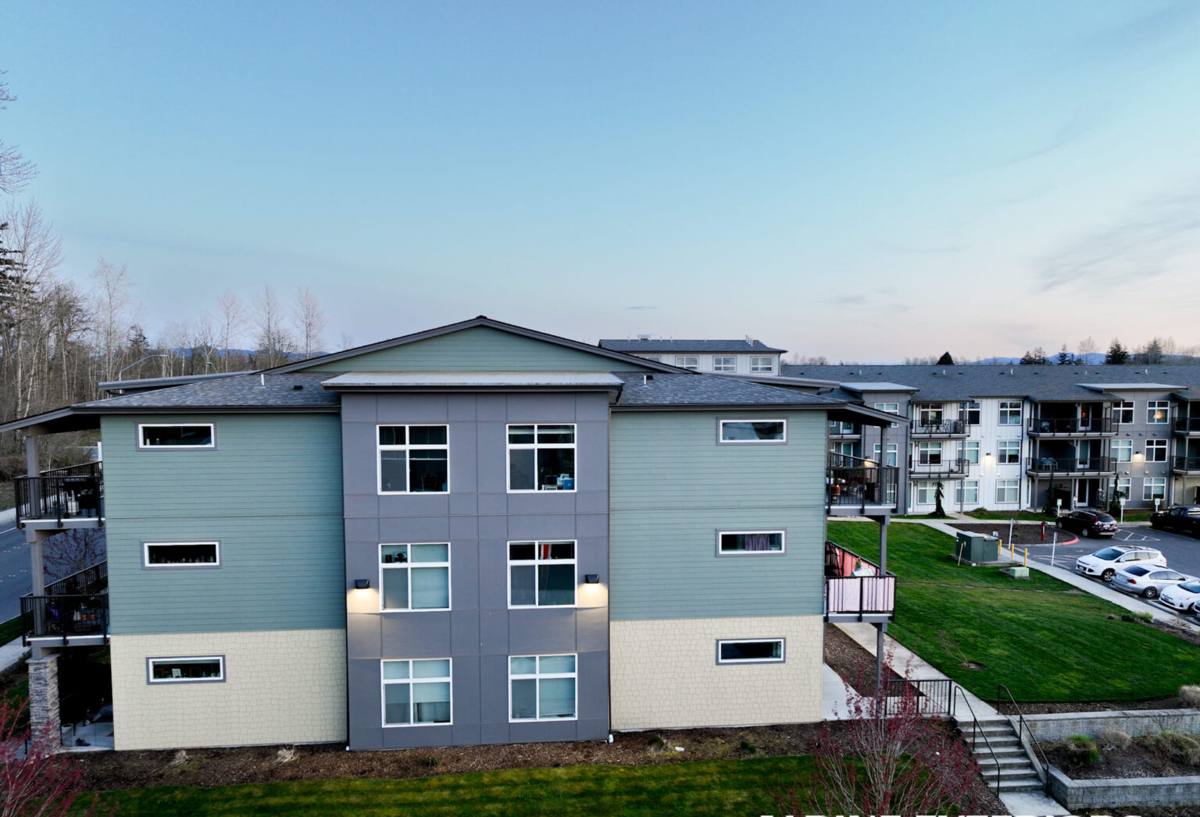
Signs Your Similk Beach Home Needs Siding Repair, Not Just a Repaint
A lot of homeowners call about paint and end up needing repair, or call about repair when a simple caulk and paint refresh would have done the job. Here's how to tell the difference before you call anyone:
- Soft or spongy spots when you press on the siding, especially near the bottom courses, around windows, or below rooflines — usually means moisture has reached the substrate.
- Visible gaps or separation at butt joints and corners where caulk has pulled away or shrunk, common after repeated wet-dry cycles.
- Rust streaking from fastener heads, a strong sign that salt-air corrosion has reached the nails or screws holding panels in place.
- Persistent moss or dark staining that returns quickly after cleaning, which points to a spot that stays wet longer than the rest of the wall.
- Bubbling or peeling paint in a localized area rather than across the whole wall, often a sign of trapped moisture behind that section.
- Warped, cupped, or delaminating boards, typically on older wood or lower-grade composite siding that's reached the end of what it can absorb and release.
Any one of these on its own might be minor. Two or three in the same area, especially near a corner, window, or low course, usually means water has been getting behind the siding for a while.
What a Correct Siding Repair Actually Involves
A proper repair isn't just pulling a damaged board and nailing up a new one that looks similar. It starts with figuring out why that section failed, because if the cause isn't fixed, the same spot fails again in a couple of years — sometimes worse, since the sheathing underneath has already been exposed once.
Diagnose Before You Patch
Before any siding comes off, the damaged section and the area around it need to be checked for the actual source: a failed flashing detail, a caulk joint that opened up, a fastener that backed out, or simply age and UV/salt exposure catching up with the material. We also check how far moisture has traveled — sometimes visible damage is a foot from where water is actually entering.
Check What's Behind the Siding
Once siding is pulled back, the house wrap, flashing, and sheathing underneath get inspected. Soft or discolored sheathing needs to be addressed before new siding goes back up — covering damaged sheathing with new siding just hides the problem for a while longer. This is the step that separates a repair that actually lasts from one that looks fine for a season.
Match Material and Finish
New siding, trim, and fasteners need to match the existing system in profile, exposure, and fastening pattern, and the finish needs to hold up to the same salt-air and moisture conditions that damaged the original section. Mismatched materials — different thicknesses, incompatible caulks, or bare fasteners where the rest of the house used coated ones — create new weak points even in a repair that's otherwise done well.
Reseal and Reflash Correctly
Every seam, joint, and penetration touched during the repair gets flashed and sealed to the same standard as new construction, not just caulked over. This is especially important on wind-exposed walls near the water, where a shortcut caulk joint has less margin for error than it would on a sheltered inland wall.
Why We Repair — and Replace — With James Hardie Fiber Cement
We install only James Hardie fiber cement siding, and that standard carries into repair work too. When we're patching or replacing a section on a home that already has Hardie siding, we match it properly. When a Similk Beach homeowner is dealing with older wood, primed board, or another composite siding that's failing repeatedly in the same spots, we're honest that repair may only buy a limited amount of time, and that replacement with a product built for this climate is often the more cost-effective long-term move.
James Hardie's fiber cement is non-combustible, doesn't swell or rot the way wood-based products can when moisture gets in, and its ColorPlus factory finish is baked on and warrantied against fading — which matters in a spot getting steady sun, salt, and moisture cycling. Hardie also engineers its HZ product lines for specific climate zones, accounting for exactly the kind of moisture exposure a bay-adjacent property like this deals with. We don't install LP SmartSide, vinyl, Cemplank, Allura, or primed spruce or cedar siding, because we've seen how those products perform over time in this kind of environment, and we'd rather stand behind one system we trust completely than offer several we have reservations about.
Our Similk Beach Siding Repair Process
- On-site inspection. We walk the exterior, check every wall exposure, and identify all damaged or at-risk areas — not just the spot you called about.
- Moisture and substrate check. Where damage is suspected, we check underlying sheathing condition before quoting the scope, so the estimate reflects the real job.
- Written scope and estimate. You get a clear breakdown of what's being repaired, what's being replaced, and why — no vague line items.
- Material match or upgrade. We source matching Hardie product where you already have it, or discuss replacement options where repair isn't the better long-term call.
- Careful removal. Damaged siding and trim come off without unnecessary disturbance to adjacent, sound material.
- Sheathing and flashing repair. Any compromised sheathing or house wrap is repaired or replaced, and flashing details are corrected, not just resealed.
- Installation to spec. New siding goes on following James Hardie's fastening and clearance requirements, which matter more, not less, in a wind- and salt-exposed location.
- Finish and walkthrough. Caulk lines, touch-up paint, and trim are finished to match, and we walk the job with you before calling it done.
Repair or Replace? Cost Factors to Weigh
| Factor | Leans Toward Repair | Leans Toward Replacement |
|---|---|---|
| Extent of damage | Isolated to one or two sections | Recurring in multiple areas or walls |
| Sheathing condition | Dry and sound behind damaged siding | Soft, stained, or damaged sheathing found |
| Siding material | Existing James Hardie fiber cement | Older wood, primed board, or failing composite |
| Age of siding | Well within expected service life | Near or past typical lifespan for the material |
| Repair history | First repair in this area | Same spot repaired more than once already |
These are general guideposts, not a formula — every home is different, and part of our job during the inspection is telling you honestly which side of this table your situation falls on.
A Maintenance Checklist for Salt-Air, High-Moss Properties
- Rinse salt residue and grime off siding a couple of times a year, focusing on walls facing the water and prevailing wind.
- Keep gutters clear so overflow doesn't run down the siding face and feed moss growth at the bottom courses.
- Trim back tree limbs and brush that keep siding shaded and damp longer than the rest of the house.
- Check caulk lines at trim, corners, and butt joints annually, and re-caulk before gaps let water behind the siding.
- Look at fastener heads periodically for early rust staining, especially on lower courses and south- or west-facing walls.
- Address soft spots or persistent moss patches promptly rather than waiting for a full section to fail.
Why Hiring a Crew That Already Works Similk Beach Matters
Siding repair here isn't quite the same trade as siding repair fifteen miles inland. A crew that regularly works this stretch of the Skagit County shoreline already knows which wall exposures take the worst of the wind, how fast moss comes back on shaded lots near the water, and how salt air changes the math on fastener choice and finish durability. That experience shows up in small decisions during a repair — where to add extra flashing even though it wasn't strictly failing yet, which joints need a heavier bead of sealant, how tight to run clearances near grade on a property that gets a lot of standing moisture.
It also means fewer surprises for you. A crew unfamiliar with this environment can miss why a repair failed the first time and end up making the same mistake again. A crew that's repaired dozens of homes along this coastline knows what tends to actually go wrong here, and builds the fix accordingly.
If you're seeing soft siding, recurring moss, cracked caulk lines, or rust staining on your Similk Beach home, it's worth having it looked at before a small repair becomes a bigger one. We offer free, no-pressure estimates — fill out the form below and we'll take a look.