 Anacortes Siding
 Building a Deck That Holds Up in Skyline's Climate
Skyline sits on Fidalgo Island, close enough to the water that salt air is a constant factor in how outdoor structures age. Add Skagit County's long wet season, driving rain off the Strait, and the shade and moss growth that come with mature evergreen tree cover, and you have a set of conditions that punishes decks built to a generic spec. A deck that would hold up fine in a dry inland climate can start showing rot, corrosion, and slick moss growth within a few seasons out here if it wasn't designed with this specific environment in mind.
We build and repair decks throughout Anacortes and the surrounding Skagit County area, and Skyline's combination of elevation, water exposure, and tree canopy is something we plan for specifically — not something we treat the same as a deck build in a drier, more sheltered part of town.
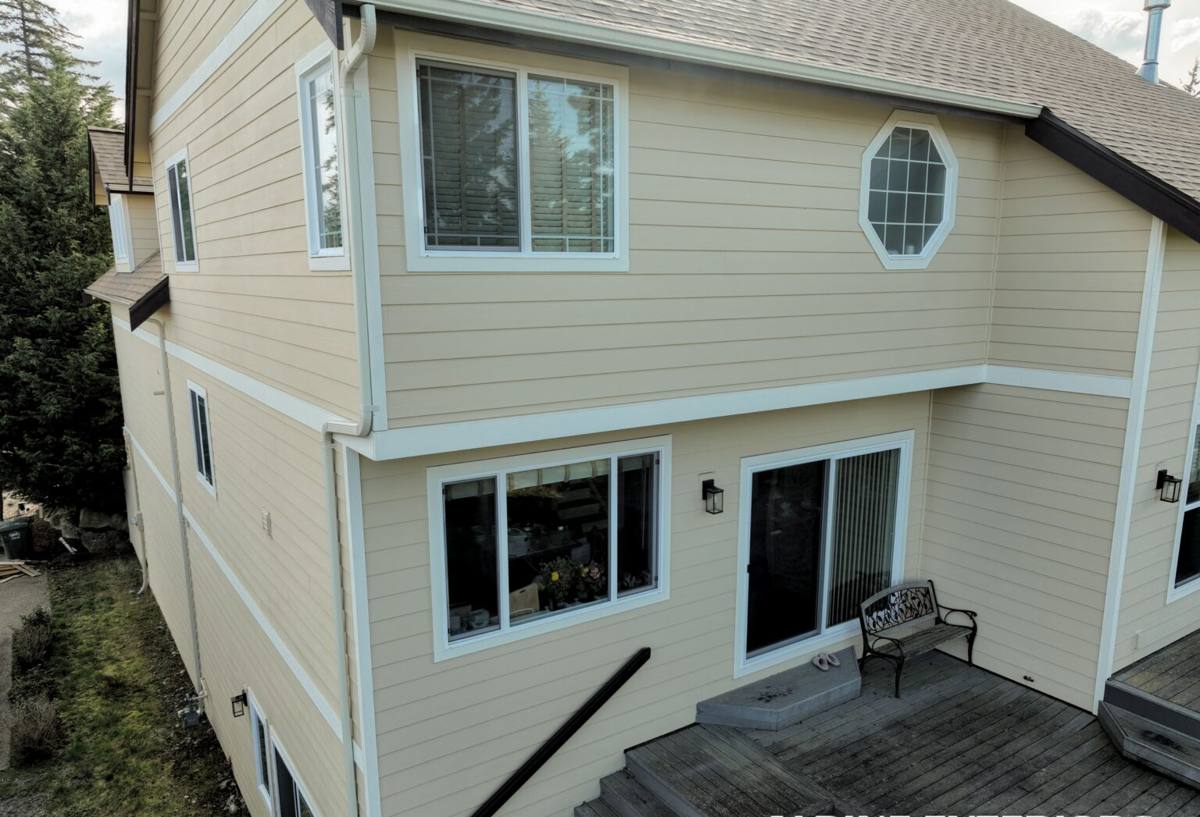
What Skyline Homes Need From a Custom Deck
Skyline is a mix of waterfront and hillside lots with view exposure and a fair amount of tree cover, which creates a few recurring conditions we design around:
Salt and Moisture Exposure
Proximity to saltwater accelerates corrosion on any exposed metal fasteners, hardware, and hidden fastener clips. Standard hardware that's fine twenty miles inland can pit and rust within a couple of years this close to the water.
Shade and Moss
Homes tucked under fir and cedar cover stay damp longer after a storm than open, sun-exposed lots. That extended damp period is exactly what moss and algae need to establish on decking boards, and it's what turns a deck surface slick and dangerous underfoot if the material and gap spacing aren't chosen with drainage and airflow in mind.
Wind and Rain Exposure on View Lots
Elevated and waterfront lots often catch more direct wind-driven rain than a deck tucked against a house in a sheltered yard. That means flashing details and water management at the ledger board and framing matter more here than they would on a low, protected patio deck.
Choosing the Right Decking Material for This Climate
There's no single "best" decking material — the right choice depends on how much sun the deck gets, how much maintenance the homeowner wants to do, and budget. Here's how the common options actually perform in a marine, moss-prone climate like Skyline's.
| Material | Moisture & Moss Performance | Maintenance | Typical Lifespan |
|---|---|---|---|
| Pressure-treated wood | Prone to moss/algae in shaded areas without regular cleaning; can cup or check if not sealed | Annual cleaning and re-staining/sealing recommended | 15-20 years with upkeep |
| Cedar | Naturally rot-resistant but still needs cleaning to prevent surface moss and graying | Periodic cleaning and oil/stain to maintain appearance | 20-25 years with upkeep |
| Composite decking | Resists moisture damage well; textured boards can still get slick with algae film if never cleaned | Occasional washing, no staining or sealing | 25-30+ years, manufacturer-warrantied |
| PVC/vinyl decking | Fully moisture-resistant, doesn't absorb water like wood-based composites | Low — occasional washing | Comparable to or longer than composite, varies by product |
We install all of these depending on what a homeowner wants, but for shaded Skyline lots with heavy tree cover, we lean toward recommending composite or PVC decking on the walking surface simply because it doesn't give moss and algae organic material to root into the way wood fibers do. Wood and cedar remain good choices for homeowners who want that natural look and are willing to keep up with annual cleaning and sealing — it's a maintenance trade-off, not a durability failure on our end or the manufacturer's.
What a Correctly Built Deck Involves
The decking material is the part homeowners see, but the framing and attachment details underneath are what actually determine whether the deck stays safe and dry for the next few decades.
Footings Set Below Frost Depth
Footings need to be sized and set to local Skagit County code requirements and below frost depth so the structure doesn't heave or settle unevenly over time. On sloped Skyline lots, footing depth and placement also have to account for grade changes across the site.
Ledger Board Attachment and Flashing
Where a deck attaches to the house is the single most common failure point we find on older decks — a missing or improperly lapped flashing detail lets water track behind the ledger board and into the house framing. On a driving-rain, high-moisture site like Skyline, we treat ledger flashing as non-negotiable, not an optional upgrade.
Fasteners and Hardware Rated for Coastal Exposure
Given the salt air, we use corrosion-resistant fasteners and structural hardware rated for exterior and coastal exposure rather than standard-grade hardware. It costs more up front and saves the homeowner from hidden corrosion issues showing up in the framing years down the line.
Board Spacing and Ventilation
Proper gapping between boards and adequate airflow underneath the deck both help the structure dry out between rain events instead of staying damp, which is one of the biggest factors in how fast moss and rot take hold.
Railings, Stairs, and Local Code
Any deck built to a meaningful height above grade needs code-compliant railings, baluster spacing, and stair geometry. Skagit County and the City of Anacortes have permitting and inspection requirements for deck construction, and elevated Skyline lots often mean taller decks with more significant railing and stair requirements than a low ground-level patio deck would need. We handle the permitting and inspection process as part of the build so homeowners aren't left figuring out code requirements on their own.
Our Process, Start to Finish
- On-site assessment — we walk the property, look at grade, sun/shade exposure, existing structure (if replacing a deck), and how the space will actually be used.
- Design and material selection — we go over decking material, railing style, and layout options based on the site conditions and the homeowner's budget and maintenance preference.
- Permitting — we prepare and submit what's required for Skagit County/City of Anacortes permitting before any framing work starts.
- Framing and footings — footings, posts, beams, and joists get built to code, with flashing and hardware appropriate for this climate.
- Decking, railing, and stairs — surface material and railings are installed to the agreed design.
- Final walkthrough and inspection — we review the finished deck with the homeowner and coordinate any required final inspection.
What to Expect From a Properly Built Deck
- Footings set to code depth and engineered for the specific site's grade and soil
- Flashed, sealed ledger board connection where the deck meets the house
- Corrosion-resistant fasteners and structural hardware throughout
- Board spacing and underside airflow that allow the deck to dry between rain events
- Code-compliant railings and stairs, permitted and inspected
- A material choice that matches the site's actual sun/shade and moisture exposure, not just what looks good in a showroom
Keeping a Skyline Deck in Good Shape Year-Round
Even a well-built deck needs some seasonal attention in this climate. Clearing fallen needles and leaves out of board gaps keeps moisture from pooling and feeding moss growth. An annual rinse — plain water and a stiff brush is often enough, avoid pressure washers on wood decking since they can gouge the surface — cuts down on the slick algae film that builds up under tree cover. Wood and cedar decks benefit from a fresh coat of sealer or stain every year or two; composite and PVC decking mostly just need washing. None of this is complicated, but skipping it for a few years in a row is how a deck that was built correctly still ends up looking neglected and feeling slippery underfoot.
Why Hire a Crew That Already Works in Skyline
A deck built to a generic national spec sheet, without accounting for salt air, moss-heavy shade, and driving rain off the water, is a deck that will need premature repairs. Working regularly in Anacortes and around Skagit County means we already know which hardware holds up this close to saltwater, which materials actually resist moss under heavy tree cover, and what the local permitting process requires before a single footing goes in the ground. That local familiarity is what keeps a project on schedule and keeps the finished deck performing the way it should for decades, not just for the first few dry summers.
If you're planning a new deck or replacing an aging one in Skyline, we're happy to come take a look and talk through what makes sense for your site. Reach out for a free, no-pressure estimate using the form below.