 Anacortes Siding
 Siding Built for Skyline's Corner of Fidalgo Island
Skyline sits on Fidalgo Island in Anacortes, close enough to the water that homes here take a different kind of weathering than houses ten miles inland in Skagit County. Salt-laden air, wind-driven rain off the Sound, and a long gray moss season stack up year after year on exterior walls. We install James Hardie fiber cement siding on Skyline homes because it's the one product system built specifically to stand up to marine exposure without the constant upkeep that softer materials demand.
This page focuses on one service, in one place: Hardie fiber cement siding installation for homes in the Skyline neighborhood. If you're trying to figure out what your siding actually needs to survive this environment, and what a correct installation looks like, this is written for you.
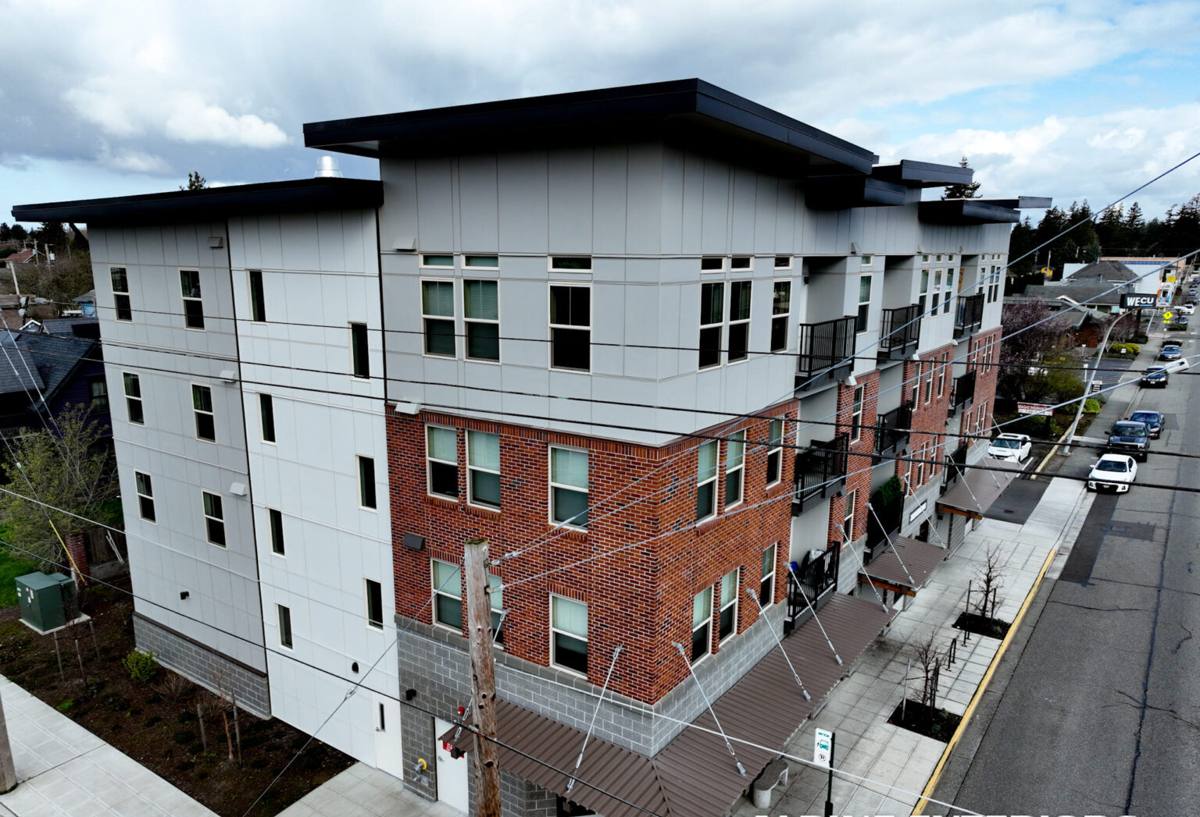
Why Skyline's Climate Is Hard on Siding
Anacortes homeowners sometimes assume "coastal" just means a little more rain. In practice, Skyline's exposure creates three distinct stressors that compound each other over time.
Salt Air
Airborne salt from the Sound settles on exterior surfaces and accelerates corrosion of fasteners, staples, and any exposed metal trim. It also breaks down cheaper paint films and coatings faster than inland exposure would, which is why siding that looks fine after five years somewhere else can already be chalking or peeling in Skyline.
Driving Rain
Storms coming off the water don't just fall straight down — wind pushes rain sideways into wall assemblies, joints, and butt seams. Any siding product with weak moisture resistance at the seams, or a substrate that swells when wet, is going to show problems first at those joints: cupping, staining, soft spots.
Moss and Sustained Dampness
Western Washington's long wet season means north-facing and shaded walls in Skyline can stay damp for weeks at a stretch. That's exactly the environment moss, algae, and mildew need to establish. Siding that can't shed moisture quickly, or that has a paper or wood-based core, is more vulnerable to trapped moisture doing damage behind the surface you can see.
What Fiber Cement Siding Solves Here
James Hardie fiber cement is cement, sand, and cellulose fiber — there's no wood core to swell, rot, or feed fungal growth, and no organic material for salt air to degrade the way it degrades some coatings and composite products. It's also non-combustible, which matters given how many Skyline homes sit near trees and dry-season brush, even in a generally wet climate.
The factory-applied ColorPlus finish is baked on under controlled conditions rather than field-sprayed, which gives it stronger adhesion and better fade resistance against UV and salt exposure than a job-site paint job. That matters more in Skyline than it would somewhere drier, because you're asking the finish to hold up against both sun and salt spray at the same time.
Hardie's Climate-Engineered Product Lines
Hardie makes region-specific formulations (HZ5 for the Pacific Northwest's wet, moderate climate) engineered around moisture and freeze-thaw behavior for exactly the conditions Skyline sees. We install the product line matched to this climate zone, not a generic national spec.
What Correct Installation Actually Involves
Fiber cement siding is only as good as the installation behind it. Most siding failures we're called to diagnose in coastal Skagit County homes trace back to installation shortcuts, not the material itself. A correct job includes:
- A properly lapped weather-resistive barrier behind the siding, with all penetrations flashed before a single board goes up
- Correct fastener placement and spacing per Hardie's published specs — over-driven or under-driven nails are one of the most common causes of premature failure
- Proper clearance at grade, roof lines, and horizontal trim so water has somewhere to go instead of wicking up into the board
- Caulked and painted cut ends, since a raw cut edge is the one place fiber cement can absorb moisture if left exposed
- Rain-screen or drainage gap detailing appropriate to the wall assembly, which matters more on a wind-driven-rain site like Skyline than on a sheltered inland lot
Skip any one of these and you can end up with a "premium" siding job that still fails early — which is exactly why the crew doing the work matters as much as the product on the truck.
Our Process for Skyline Projects
1. On-Site Assessment
We walk the exterior, check for existing moisture damage, evaluate the wall assembly, and look at exposure on each elevation — a north wall shaded by trees and a south wall facing open water don't need identical detailing.
2. Product and Color Selection
We help you choose the right Hardie panel or plank profile and ColorPlus color for your home, factoring in how the finish will read against Anacortes' gray-sky days as well as full sun.
3. Tear-Off and Prep
Old siding comes off, the wall sheathing gets inspected for hidden rot or damage (common on older homes near the water), and any needed repairs happen before new material goes up — not after problems resurface.
4. Weather Barrier and Flashing
This is the step that determines whether the siding performs for 30+ years or 10. We install and lap the weather-resistive barrier correctly and flash every window, door, and penetration before installation begins.
5. Installation to Manufacturer Spec
Boards go up with correct fastening, spacing, and clearances, following Hardie's installation instructions for this climate zone.
6. Final Detail and Walkthrough
Cut ends sealed, trim finished, and a walkthrough so you understand what was done and what maintenance (minimal as it is) looks like going forward.
Fiber Cement vs. Other Siding Options in a Marine Climate
| Factor | James Hardie Fiber Cement | Vinyl | Wood / Cedar |
|---|---|---|---|
| Salt air resistance | Strong — non-organic material, factory finish | Can become brittle and discolor over time | Vulnerable without diligent maintenance |
| Driving rain / moisture | Resists swelling and rot; no wood core | Seams can allow water intrusion behind panels | Prone to swelling, cupping, rot at joints |
| Moss and algae exposure | Non-organic surface resists growth | Can trap moisture behind panels | Organic surface, feeds growth if damp |
| Fire resistance | Non-combustible | Combustible | Combustible |
| Finish longevity | Factory-baked ColorPlus finish | Color molded in, can fade/chalk | Requires repainting/staining cycles |
What Homeowners Underestimate About Cost Factors
Every Skyline quote looks a little different because the site and the existing wall condition drive the price as much as the siding itself does. The factors that move the number most:
| Factor | Why It Matters |
|---|---|
| Existing wall damage | Hidden rot from prior moisture intrusion has to be repaired before new siding goes on |
| Home elevation and access | Steep lots or limited access near the water add labor time |
| Number of elevations exposed to weather | Water-facing walls may need extra flashing and drainage detailing |
| Trim and detail complexity | Multiple gables, dormers, or trim styles increase cut and fit time |
| Product profile chosen | Lap siding, panel siding, and shingle-style Hardie products vary in material and labor cost |
Maintenance Once It's Installed
One of the reasons homeowners in Skyline move to fiber cement is how little ongoing work it asks for compared to wood. That said, "low maintenance" isn't "no maintenance" — especially in this climate:
- Rinse siding annually to clear salt residue and organic buildup before it takes hold
- Keep gutters clear so overflow doesn't run down the wall face
- Trim back vegetation that keeps a wall shaded and damp longer than it needs to be
- Touch up any caulking at trim joints if it starts to separate
- Watch for any impact damage and have it repaired promptly to keep the weather barrier intact
Why Hire a Crew That Already Works Skyline
Detailing for wind-driven rain and salt exposure isn't universal — it's site-specific, and it's the kind of thing a crew learns from doing dozens of jobs in the same conditions, not from a general contractor's manual. We work Anacortes and the surrounding Skagit County waterfront regularly, so we already know how much clearance a given elevation needs, where flashing tends to get skipped on older homes, and which details actually hold up against this specific coastline rather than a generic "coastal" spec sheet.
We only install James Hardie fiber cement siding. We don't offer vinyl, LP SmartSide, or bare cedar as alternatives, because for a home in Skyline's exposure, those products ask for trade-offs — more maintenance, more moisture sensitivity, more finish upkeep — that we don't think make sense when a better-suited product exists. Hardie is what we put on our own recommendations, and it's the only thing we stand behind with our install.
If you're planning a siding project in Skyline, we're happy to walk your property, look at your current siding condition, and put together a straightforward, no-pressure estimate — just fill out the form below.