 Anacortes Siding
 Building New in Skyline? The Windows Are Not a Commodity Item
Skyline sits on the west side of Fidalgo Island, close enough to open water that every home there deals with a version of the same weather: salt-laden air off Rosario Strait, wind-driven rain that hits walls sideways instead of falling straight down, and a wet season long enough to grow moss on anything that stays damp too long. When you're building new in this neighborhood, the windows you choose and how they're installed become one of the biggest long-term factors in whether that house stays dry, energy-efficient, and low-maintenance for the next twenty-plus years.
New-construction window work is a different job than replacing windows in an existing house. On a new build, the window opening is raw framing — no old flashing to work around, no existing trim to match, no compromises forced by what's already there. That's an advantage if the person setting the windows understands coastal moisture management. It's a liability if they don't, because mistakes made now get sealed behind siding and trim and won't show up as a leak for years.
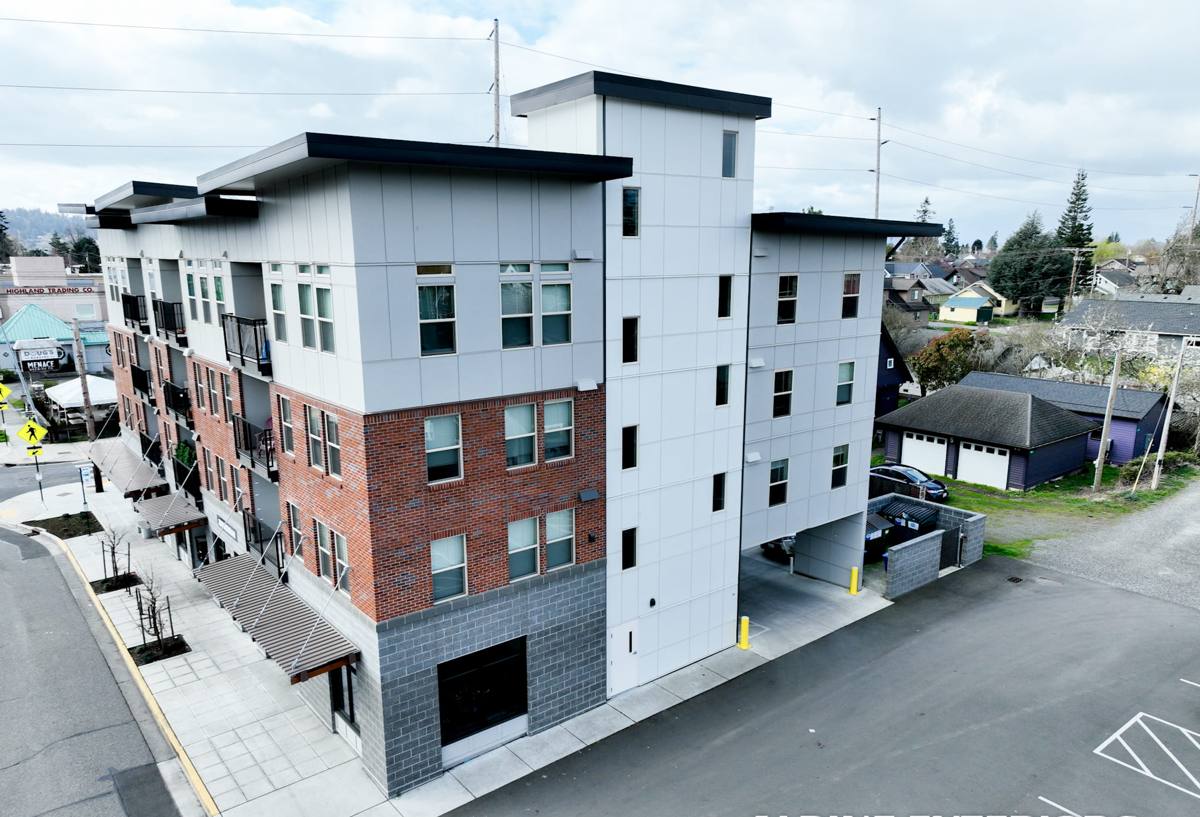
What Anacortes and Skagit County Weather Actually Does to a New Window Install
Three things drive most of our decisions on new-construction window jobs in this area:
- Salt air corrosion. Proximity to the water accelerates corrosion on hardware, fasteners, and some metal flashing products. Cheaper hinges, cranks, and screws can start showing rust or pitting well before a window in an inland climate would.
- Wind-driven, horizontal rain. Anacortes storms often push rain sideways against west- and south-facing walls. A window that would stay dry with a gentle vertical rain can take on water at the sill or head if the flashing detail wasn't built for lateral wind pressure.
- Long moss and mildew season. Extended damp stretches from fall through spring mean any spot where water collects or drainage is blocked stays wet for weeks at a time, not hours. That's exactly the condition moss, algae, and rot organisms need.
None of this means Skyline homes need exotic products. It means ordinary good practice — correct flashing sequence, proper sill pans, quality sealants, and hardware rated for coastal exposure — has to be non-negotiable, not optional.
Getting the Rough Opening and Flashing Right the First Time
Sill Pan Flashing
Every new-construction window in this climate should sit on a sloped sill pan, not directly on bare framing. A sill pan gives any water that gets past the window a path back outside instead of into the wall cavity. This is standard practice everywhere, but it matters more here because the volume and duration of driving rain make "almost right" flashing fail sooner than it would in a drier climate.
Head and Jamb Flashing Sequence
Flashing has to be layered shingle-style — each piece overlapping the one below it — so water sheds down and out rather than working its way behind the housewrap. On a new build we tie the window flashing directly into the weather-resistive barrier as part of one continuous drainage plane, rather than treating the window as a separate system taped on afterward.
Housewrap and Weather Barrier Integration
The window flashing and the house's weather barrier need to work as one system. Gaps, reversed laps, or flashing tape that isn't compatible with the housewrap underneath are common causes of hidden leaks that don't surface until years later — often right around window openings, which is where most envelope failures start.
Choosing the Right Window Frame Material for a Skyline Build
Frame material affects how well a window holds up to salt air and moisture over time, and how much maintenance it asks of you. There's no single "best" choice — it depends on budget, the look you're going for, and how much upkeep you want to sign up for.
| Frame Material | Coastal Durability | Maintenance | Typical Fit |
|---|---|---|---|
| Vinyl | Good — won't rust or rot; UV-stable formulas hold up well | Low — occasional cleaning | Budget-conscious new builds, rental or spec homes |
| Fiberglass | Very good — dimensionally stable, resists warping from moisture cycling | Low | Homes wanting a premium look with minimal upkeep |
| Wood-clad (exterior clad, wood interior) | Good on the exterior if cladding and flashing are correct; interior wood needs a dry, well-sealed install | Moderate — clad exterior is low-maintenance, but any exposed wood needs attention | Homes wanting a traditional wood interior look |
| Solid wood | Poor without diligent, ongoing maintenance in this climate | High — regular refinishing needed | We generally steer new-construction coastal clients away from this unless they understand and accept the upkeep |
Aluminum-clad and fiberglass windows tend to be popular choices in Skyline new builds because they combine a clean, modern look with genuinely low maintenance in salt air — but vinyl remains a completely legitimate, durable option for most budgets when the product line and installation are handled correctly.
Glass and Performance Choices That Matter Here
Low-E coatings and gas-filled insulated glass units are standard on new construction now, and they earn their keep in Skagit County's climate — cutting heat loss in winter and reducing glare off the water in summer. A few Skyline-specific considerations:
- Orientation matters. West-facing rooms catching afternoon water glare may benefit from a slightly different Low-E package than north-facing rooms.
- Wind load ratings. Homes with more open exposure to the strait should use windows rated for the wind pressures typical of that exposure, not just the regional code minimum.
- Condensation resistance. Cooler, damp winters mean condensation resistance ratings are worth paying attention to, especially on larger view windows facing the water.
Coordinating Window Install With the Rest of the Build
New-construction window work doesn't happen in isolation — it has to sync with the framer, the siding crew, and whoever is running housewrap and flashing tape. Problems on new builds usually come from poor handoffs between trades, not from any single trade doing bad work in isolation. Our process on Skyline builds is straightforward:
- Confirm rough opening sizes against the actual window order before framing is closed up, so there's no last-minute cutting or shimming that compromises the flashing plan.
- Install sill pan flashing and verify slope before the window ever goes in.
- Set the window plumb, level, and square, fastened per the manufacturer's coastal or high-wind installation instructions — not just the generic instructions.
- Flash the head and jambs in the correct shingle-lap sequence, tied into the housewrap.
- Seal and insulate the interior gap with a product that stays flexible through temperature swings, rather than a rigid foam that can crack and open a gap over time.
- Walk the exterior with the siding crew before cladding goes on, to confirm every opening drains correctly.
New-Construction Window Install Checklist
- Rough openings verified against actual window schedule, not just plans
- Sloped sill pan flashing installed and checked for drainage before window placement
- Flashing tape compatible with the housewrap system in use
- Shingle-lap sequence followed at head, jambs, and sill
- Fasteners and hardware rated for coastal/salt-air exposure
- Window shimmed, plumb, level, and square before final fastening
- Interior gap sealed with a flexible, long-life sealant or low-expansion foam
- Exterior drainage path confirmed before siding installation begins
Design Covenants and Neighborhood Character
Skyline is a planned community, and many homes here are built or renovated under HOA architectural guidelines that address exterior appearance, including window style and trim. We factor that into the product selection conversation early, so the window package a homeowner falls in love with is also one that clears the approval process without a redesign delay. If you're not sure what your specific guidelines require, that's worth sorting out before windows are ordered — lead times on new-construction window packages can run several weeks, and a rejected submittal after ordering costs real time and money.
Why Local Experience on This Specific Job Matters
Anacortes and the rest of Skagit County have their own microclimate quirks compared to more sheltered inland parts of Washington. A crew that's done new-construction window installs across Fidalgo Island — including in Skyline specifically — already knows which orientations catch the worst wind-driven rain, which flashing details hold up over a full wet season here, and how the local building department expects these details documented. That experience shows up as fewer callbacks, fewer surprises during the siding crew's walk-through, and a house that's actually sealed correctly the first time, not one that looks fine until the first hard winter storm finds the weak point.
If you're building new in Skyline and want windows installed the right way from the start, we're happy to walk the plans, talk through frame and glass options for your specific lot orientation, and give you a free, no-pressure estimate — just use the form below to get started.