 Anacortes Siding
 Roofing in Skyline: A Different Set of Conditions
Homes in the Skyline area sit close enough to the water that the roof over your head is doing more work than most homeowners realize. Salt-laden air moves off the bay and settles on every exposed surface, wind-driven rain finds its way into laps and seams that would stay dry in a more sheltered location, and the shaded, moisture-heavy tree cover common in this part of Skagit County keeps roof surfaces damp for long stretches of the year. That combination is exactly what shortens the life of a roofing system that wasn't built with this climate in mind.
A new roof installation here isn't just about swapping old shingles for new ones. It's about choosing materials and installation details that specifically account for salt exposure, sustained rain, and a moss season that can run from fall through spring. We install roofs on Skyline homes regularly, and the approach we take reflects what actually holds up in this neighborhood, not a generic specification pulled from a national installation manual.
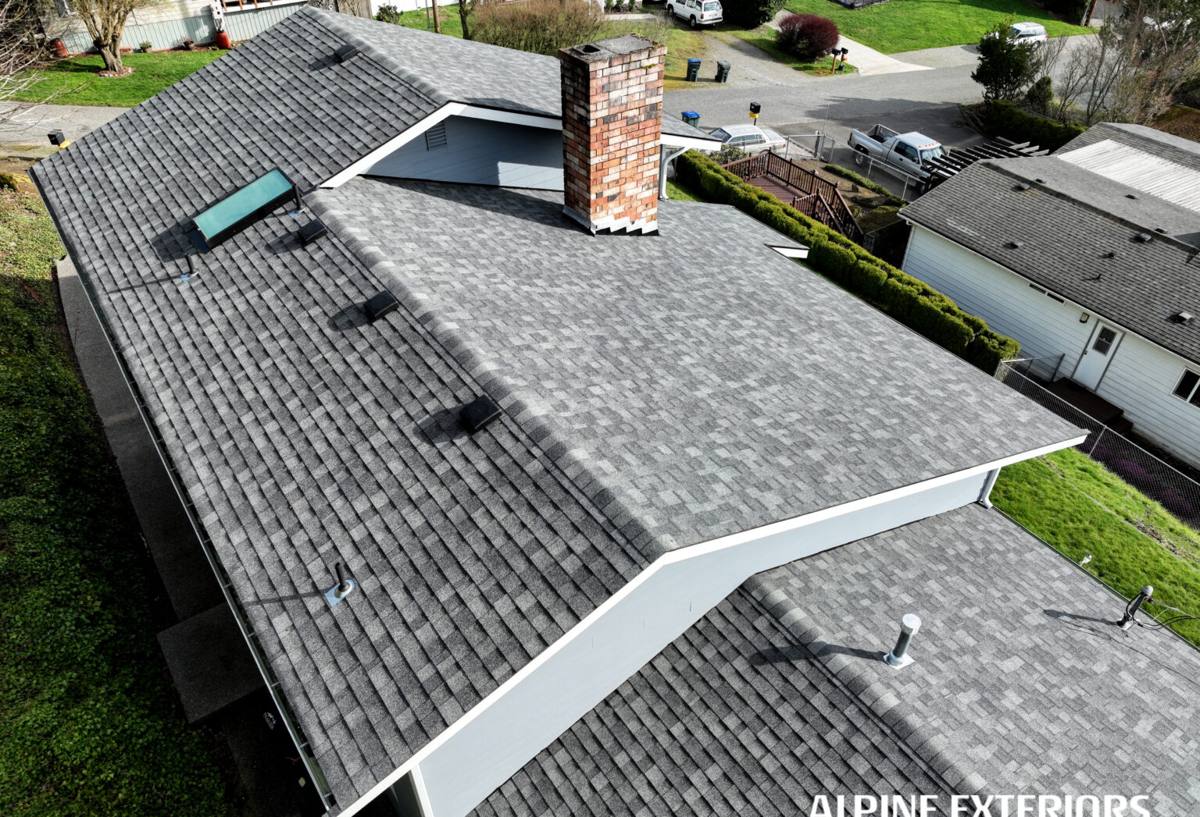
What Anacortes' Marine Climate Does to a Roof Over Time
Salt Air and Metal Fasteners
Airborne salt accelerates corrosion on any exposed metal component — nail heads, flashing, vent stacks, and fastener systems. Roofs installed with standard-grade fasteners or thin, uncoated flashing tend to show rust streaking and early metal fatigue well before the shingles themselves wear out. In a coastal-influenced area like this, fastener and flashing material selection matters as much as the shingle brand on the package.
Driving Rain and Wind-Loaded Seams
Rain that falls straight down is easy for almost any roof to shed. Rain that's pushed sideways by wind off the water is a different problem — it tests every seam, every nail line, and every point where the roof plane changes direction (valleys, hips, and penetrations). A roof that was installed to minimum code in a low-wind, low-rain region often isn't detailed for what Skyline sees during a winter storm system.
Moss, Shade, and a Long Wet Season
Many Skyline lots have mature trees nearby, and combined with our long stretch of overcast, damp weather, that creates ideal conditions for moss and algae growth. Moss isn't just cosmetic — it holds moisture against the roof surface, works its way under shingle tabs, and can lift edges over time, giving water a path underneath the roofing material. A roof installed without moss-resistant considerations in a shaded Skyline lot will need moss treatment far sooner than one installed with this in mind from the start.
What a Correct New Roof Installation Actually Involves
A roof replacement done right is a sequence of decisions, not just a single product choice. Skipping or rushing any of these steps is where premature leaks and shortened roof life usually start.
- Full tear-off, not a layover. Installing new shingles over old ones traps moisture, hides deck problems, and voids most manufacturer warranties. We remove the existing roofing down to the deck on every job.
- Deck inspection and repair. Once the old roofing is off, the sheathing gets inspected for soft spots, delamination, and water staining — all common where a roof has been quietly leaking for years. Any compromised sheathing gets replaced before anything new goes down.
- Ice-and-water shield at vulnerable areas. Eaves, valleys, and areas around penetrations get a self-adhering waterproof membrane underneath the primary underlayment. This is the backup layer that protects the deck if wind-driven rain or ice does get past the shingles.
- Synthetic underlayment across the full deck. This is the roof's secondary defense and it needs to be installed correctly — proper overlap, proper fastening pattern, no wrinkles that trap water.
- New flashing at every transition. Chimneys, sidewalls, skylights, and roof-to-wall junctions all get new step flashing, counterflashing, or apron flashing as appropriate. Reusing old, corroded flashing to save time is one of the most common shortcuts that leads to callbacks.
- Balanced ventilation. Intake at the eaves and exhaust at the ridge, sized to move air through the attic space correctly. Poor ventilation traps moisture, which shortens shingle life and can promote rot in the deck and framing.
- Correct nailing pattern and exposure. Manufacturer specifications on nail placement and count exist for a reason — they're what the wind-resistance warranty is actually based on.
Choosing a Roofing Material for a Skyline Home
There isn't one "best" roofing material for every home — the right choice depends on your roof's exposure, your home's style, and your budget. Here's how the common options compare specifically for a coastal, moss-prone, high-rainfall setting like Skyline.
| Material | Salt Air Performance | Moss Resistance | Typical Lifespan | Notes |
|---|---|---|---|---|
| Architectural asphalt shingles | Good, especially with coated fasteners and metal flashing | Better with algae-resistant granules (look for a copper or zinc-infused shingle line) | 25–30 years | The most common choice locally; wide style and color range |
| Standing seam metal | Very good with properly coated/finished panels | Excellent — moss struggles to hold on smooth metal | 40–50+ years | Higher upfront cost, sheds moss and debris well on steep pitches |
| Cedar shake/shingle | Requires regular maintenance near salt air | Poor without diligent upkeep and treatment | 20–30 years with maintenance | Traditional look, but the maintenance burden is real in this climate |
| Synthetic composite shingles | Good — resistant to corrosion-related issues | Good, varies by product line | 30–50 years | Newer to the market; check manufacturer track record and local installer experience |
We don't push one product on every roof. What we do is walk you through how each option will actually behave on your specific roof pitch, tree exposure, and budget, and we're honest about the maintenance each one asks of you afterward. A cedar roof can look great on a Skyline home, for example, but only if you're prepared for the upkeep salt air and shade require — that's a trade-off we lay out plainly rather than glossing over.
Underlayment and Fasteners Matter More Here Than the Brochure Suggests
Two roofs with identical shingles can perform very differently depending on what's underneath them and what's holding them down. In a salt-air, high-rainfall environment, we default to synthetic underlayment over traditional felt (it resists moisture absorption and holds up better during the install window when a roof is exposed to the elements) and corrosion-resistant fasteners and flashing metals rated for coastal exposure. These are small line items on an estimate that make a large difference in how the roof ages.
Our Installation Process, Step by Step
- On-site inspection and estimate. We look at your current roof's condition, attic ventilation, and any trouble spots before recommending a scope of work — no guessing from a photo or a satellite measurement alone.
- Material selection. We go over options suited to your roof's exposure and your budget, with real numbers, not a single "recommended" package.
- Scheduling around the weather. Roofing in this region means planning installation windows around rain forecasts. We don't leave a deck exposed and hope the weather holds.
- Tear-off and deck prep. Old roofing comes off, the deck is inspected and repaired as needed, and debris is cleared and hauled off daily — we don't leave a job site with nails and old shingles scattered around a family's yard overnight.
- Underlayment, flashing, and shingle installation. Installed to manufacturer specification, not shortcuts, so your warranty coverage is actually valid if you ever need it.
- Ventilation check. We confirm intake and exhaust venting are balanced for your attic's size before calling the job finished.
- Final walkthrough. We go over the completed roof with you, answer questions, and make sure you know what routine maintenance (if any) the new material calls for.
Ventilation: The Step That Gets Skipped Most Often
Attic ventilation doesn't show up in curb-appeal photos, which is probably why it's the step some installers skip or shortcut. But in a wet climate, poor ventilation is one of the fastest ways to undercut an otherwise good roofing job. Trapped moisture in the attic condenses on the underside of the deck, softens sheathing over time, and can void shingle warranties that require adequate airflow. On a Skyline roof surrounded by damp air for much of the year, getting intake and exhaust venting right isn't optional — it's part of what makes the roof actually last as long as the shingle warranty claims.
Moss and Algae: What Happens After Installation
Even a well-installed roof in a shaded, damp part of Skagit County will see some moss and algae growth over time — the climate simply favors it. The difference a correct installation makes is in how much growth happens and how much damage it can do before you catch it. Zinc or copper strips near the ridge, algae-resistant shingle granules, and keeping nearby tree limbs trimmed back all reduce how aggressively moss establishes itself. We're happy to walk you through simple maintenance steps — like gentle moss removal methods that don't damage granules — that keep a new roof looking and performing well for years, without turning it into a chore.
What Drives the Cost of a New Roof
Every roof is priced based on its own specifics, but the factors below are what typically move the number up or down. We'll walk through these directly with you during your estimate rather than quoting a number over the phone with no inspection.
| Factor | How It Affects Cost |
|---|---|
| Roof size and number of planes | More square footage and more valleys/hips mean more material and labor |
| Roof pitch | Steeper roofs require more safety setup and take longer to work on |
| Current layers and tear-off scope | Multiple existing layers add to disposal and labor time |
| Deck condition | Rot or soft sheathing found during tear-off adds repair cost, but skipping it isn't an option |
| Material choice | Asphalt, metal, and cedar carry different material and labor costs, as shown above |
| Flashing and penetration count | Chimneys, skylights, and multiple vents each add flashing work |
Signs a Skyline Roof Needs Replacement, Not Another Repair
Not every roofing problem calls for a full replacement. But there's a point where continued patching costs more over time than doing the job right once. Watch for:
- Granule loss heavy enough that shingles look bald or patchy in spots
- Curling, cupping, or cracked shingles across multiple areas of the roof, not just one spot
- Daylight visible through the roof deck from inside the attic
- Recurring leaks in different locations after repairs, rather than one isolated spot
- Heavy, established moss growth that's lifted shingle edges rather than just sitting on the surface
- A roof approaching or past the manufacturer's expected lifespan for its material and this climate
- Visible sagging anywhere along the roofline, which can indicate deck or structural issues
Why Local Experience in Skyline Actually Matters
A crew that regularly works in Skyline knows which roof slopes tend to hold moss the longest, which lots see the most wind-driven rain off the water, and which flashing details tend to fail first on homes in this specific area. That's knowledge you don't get from a general roofing checklist — it comes from having installed and later revisited roofs in this exact neighborhood. It also means we're a known, reachable local presence if a question comes up after the job is done, not a crew that installed once and moved on to the next county.
If your roof is showing its age or you're planning ahead rather than waiting for a leak, we're glad to come take a look. A free, no-pressure estimate gives you a clear picture of your roof's actual condition and honest options for moving forward — just fill out the form below to get started.