 Anacortes Siding
 Why Skyline Roofs Wear Differently
Skyline sits up where Fidalgo Island's weather doesn't get filtered by much of anything. Homes here catch the same marine air that rolls in off the water, then hold onto the moisture longer than roofs further inland because of the tree cover and the shade that comes with living on a wooded slope. That combination — salt-laden air, driving rain off Rosario Strait and the Sound, and long stretches of shaded, damp roof surface — is exactly what shortens the life of a roofing system that wasn't built with this climate in mind.
None of that is unique to any one house. It's just what Anacortes and the rest of Skagit County throw at a roof year after year. A roof replacement done right here accounts for all three factors at once, not just the one that's most visible when you're standing on a ladder.
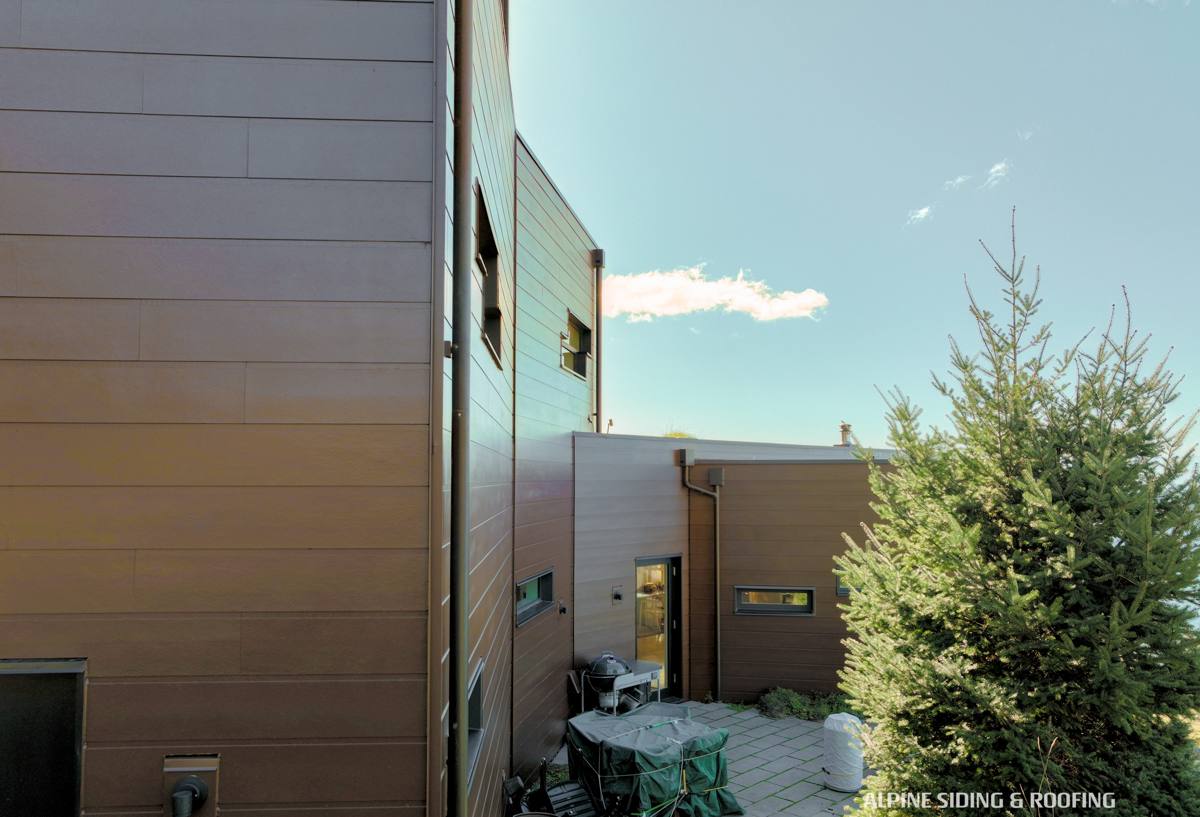
What Salt Air, Rain, and Moss Actually Do to a Roof
Salt air
Airborne salt accelerates corrosion on anything metal — nails, flashing, drip edge, vent boots with metal collars. A roof that looks fine from the ground can have flashing that's already pitting or fasteners that are backing out because the metal is degrading faster than the shingles around it.
Driving rain
Wind-driven rain doesn't just fall straight down — it gets pushed sideways and upward under laps, around valleys, and into any gap in the flashing. Roofs on this coastline need underlayment and flashing details sized for that reality, not just a code-minimum installation meant for calmer weather.
Moss and moisture
Shaded, north-facing slopes and roofs tucked under fir and cedar canopy stay damp for days after a storm. That's exactly what moss and moss-lichen need to establish. Once moss takes hold, it lifts shingle edges, holds water against the roof deck, and turns a cosmetic problem into a structural one if it's left alone long enough.
Signs a Skyline Roof Needs Replacement, Not Another Repair
- Granule loss heavy enough that you can see bare, shiny patches on multiple shingles, not just one storm-damaged spot
- Moss or moss staining that comes back within a season or two of cleaning, even after treatment
- Soft spots, sagging, or visible deflection when walked on — a sign the decking underneath has taken on moisture
- Flashing around chimneys, skylights, or valleys that's rusted, lifted, or was never properly stepped and counter-flashed
- Daylight visible through the attic decking, or insulation that's damp or matted near the eaves
- A roof approaching or past 20–25 years old, regardless of how it looks from the driveway
A repair can buy time for one or two of these. It rarely solves all of them, because most of these issues trace back to the same root causes — inadequate ventilation, aging underlayment, or flashing that was undersized for this climate to begin with.
What a Correct Roof Replacement Actually Involves
A roof replacement is more than swapping old shingles for new ones. On a Skyline property, the parts that matter most are usually the parts you never see once the job is done:
- Full tear-off — removing the old roofing down to bare decking so we can actually see the wood underneath, not just install over a hidden problem.
- Deck inspection and repair — replacing any decking that's soft, delaminated, or water-stained before anything new goes down.
- Ice-and-water or synthetic underlayment — installed at eaves, valleys, and any low-slope transitions where wind-driven rain is most likely to find a way in.
- Flashing — new step flashing, counter-flashing, and drip edge sized and fastened for salt-air exposure, not just whatever matched the old roof.
- Ventilation — balanced intake and exhaust so the attic can actually dry out between storms instead of staying damp under shaded tree cover.
- Field installation — shingles or panels installed to manufacturer spec and nailing pattern, which matters more in high-wind, high-rain conditions than in calmer climates.
- Cleanup and final inspection — magnetic sweep for nails, gutter and downspout check, and a walk-through of what was done and why.
Choosing Materials for a Skyline Home
There's no single "best" roofing material for every house — the right choice depends on the roof's pitch, how much shade it gets, and what the homeowner wants to maintain over time. Here's how the common options stack up for this specific climate:
| Material | Moss/Moisture Resistance | Salt Air Durability | Typical Lifespan Here | Maintenance |
|---|---|---|---|---|
| Standard architectural asphalt shingle | Moderate — benefits from algae-resistant granules | Good, if flashing/fasteners are corrosion-resistant | 20–25 years | Periodic moss removal on shaded slopes |
| Algae-resistant (copper-granule) shingle | Better — granules actively discourage algae/moss growth | Good | 25–30 years | Lower, but not maintenance-free |
| Standing seam metal | Excellent — sheds moisture fast, little surface for moss to grip | Depends on coating — needs marine-grade or coastal-rated finish | 40+ years | Low; check fastener/coating condition periodically |
| Composite/synthetic shake | Good | Good | 30–40 years | Low to moderate |
For homes tucked under heavy tree canopy — which describes a lot of the wooded lots around Skyline — we generally steer people toward algae-resistant shingles or metal over a standard three-tab product, simply because the shade and moisture load here work against anything without extra moss resistance built in. That's a maintenance and moisture-behavior recommendation, not a judgment on any particular manufacturer's product.
Our Process for a Skyline Roof Replacement
1. On-site assessment
We get on the roof, check the attic, and look at ventilation, decking condition, and flashing details — not just the shingles. This tells us whether a full replacement is actually warranted and what the underlying causes are.
2. Straightforward scope and estimate
You get a written scope covering materials, tear-off, decking allowance, flashing, and ventilation work — no vague line items and no pressure to decide on the spot.
3. Scheduling around the weather
We plan installations around drier stretches whenever possible. Anacortes doesn't hand out long dry windows, so we stage material delivery and crew scheduling to minimize the roof deck's exposure to open weather.
4. Installation
Tear-off, deck repair, underlayment, flashing, and field installation, done in sequence rather than rushed to beat weather that's already moved in.
5. Final walk-through
We walk the finished roof and attic with you, point out what changed and why, and go over care going forward — particularly moss prevention if the roof sits under tree cover.
Ventilation: The Part Most Roofs Around Here Get Wrong
A shaded roof that can't breathe stays wet longer than it should, and a damp attic accelerates rot from the inside even while the shingles up top look fine. Balanced ventilation — intake low at the eaves, exhaust high at the ridge — lets moisture escape instead of condensing against the underside of the deck. On a lot of older Skyline homes we've looked at, ventilation was either undersized or mismatched (exhaust vents with no matching intake, or vice versa), which quietly shortens the life of everything above it. Correcting this is one of the highest-value parts of a replacement, even though it's invisible once the job is finished.
What to Expect During the Project
- Most single-family roof replacements take 1–3 days depending on size, pitch, and material
- Expect noise and some vibration during tear-off — pets and anyone sensitive to noise are best out of the house that day
- Driveway and yard access for material delivery and disposal — we'll walk you through staging before the start date
- Weather can shift the schedule; we'd rather delay a day than install underlayment or flashing in the wrong conditions
- A dumpster or trailer on site for tear-off debris, removed at project completion
Why a Crew That Already Works Skyline Matters
A roofer who works this specific area regularly already knows which slopes hold moss the longest, which flashing details tend to fail first in this wind pattern, and how much ventilation a shaded attic actually needs versus what a generic spec sheet says. That local pattern recognition is the difference between a roof that's installed to code and one that's installed for what this particular hillside and this particular weather will actually do to it over the next 20 years. It also means faster, more accurate estimates — less guessing, because we've already seen the failure modes common to homes in this part of Anacortes and Skagit County.
Questions Worth Asking Before You Hire Anyone
- Are you licensed and bonded to do roofing work in Washington State, and can you provide proof?
- Does the estimate include full tear-off, or is it a layover?
- What underlayment and flashing are specified, and are they rated for coastal/high-moisture exposure?
- Is attic ventilation being assessed and addressed, or just the visible roofing?
- What's covered under workmanship warranty versus manufacturer material warranty, and for how long?
If your roof is showing its age or you're just not sure whether it's a repair or replacement situation, we're happy to take a look. There's a free, no-pressure estimate form below — reach out and we'll give you a straight answer about what your roof actually needs.