 Anacortes Siding
 Siding Installation Built for Skyline's Exposure
Homes in the Skyline area sit above Anacortes with a mix of open, view-facing walls and shaded, tree-lined sides — often on the same house. That combination is harder on siding than it looks. One elevation takes the brunt of wind-driven rain off the water, while the shaded side stays damp longer after every storm and grows moss faster than almost anywhere else on the property. A siding installation that doesn't account for both conditions on the same structure is starting from a weak position before the first course goes up.
This page covers what Skyline homes specifically need from a siding job, what a correct installation actually involves, and how our crew approaches the work having installed siding across Anacortes and Skagit County for years.
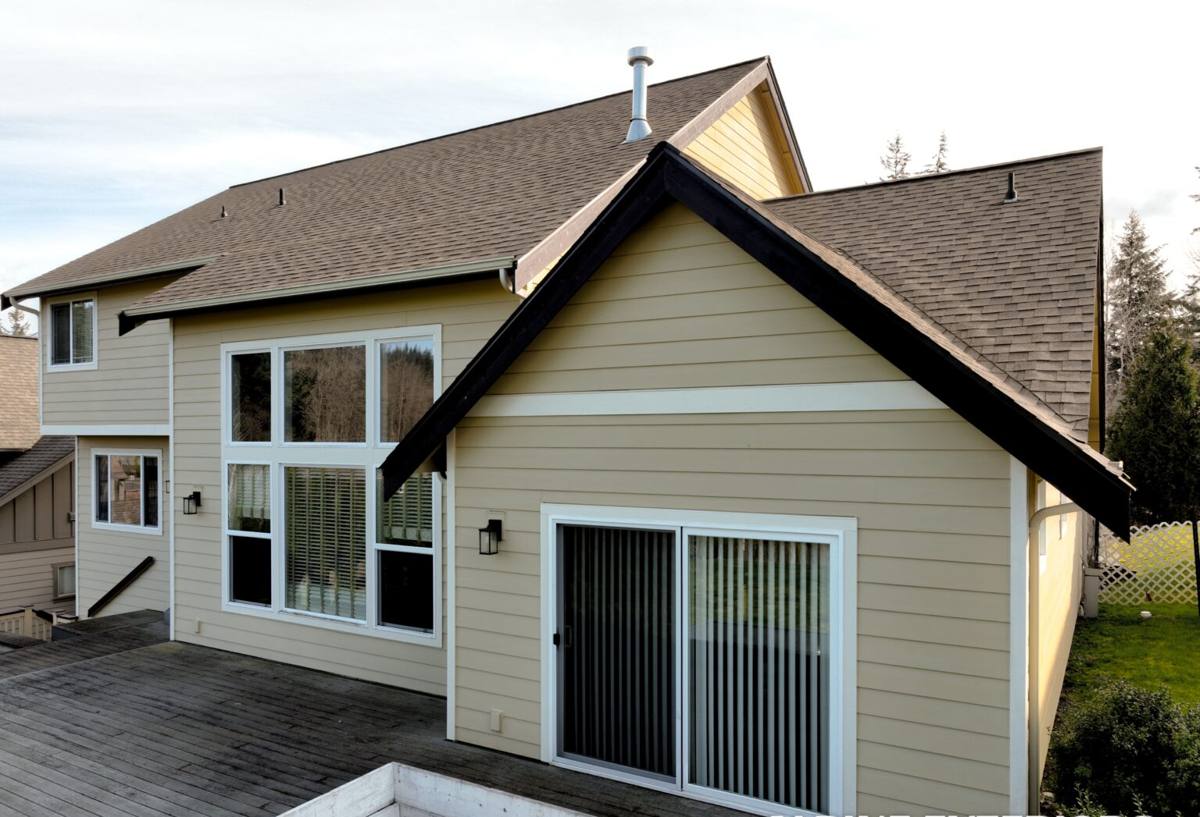
The Climate Factor: Salt Air, Driving Rain, and a Long Moss Season
Anacortes sits close enough to saltwater that airborne salt is a real factor on fasteners, trim metal, and any exposed wood. Combine that with the wind-driven rain that comes off the water during fall and winter storms, and siding on exposed elevations takes a steady beating year after year. Skyline's elevation can mean more direct wind exposure on some walls than homes tucked down closer to town.
At the same time, wooded and shaded sides of the same home deal with the opposite problem: slower drying, more standing moisture in shade, and a moss and algae season that in this part of Skagit County can run most of the year rather than just a few winter months. Siding that can't tolerate sustained dampness on the shaded side will show it first — as staining, soft spots, or paint failure — long before the sunnier side shows any wear.
A correct installation has to work for both conditions on the same house: salt-air corrosion resistance and wind-driven-rain management on one side, moisture and moss tolerance on the other. That's a design and materials question as much as a labor question.
What This Means in Practice
- Fasteners and trim hardware need to resist corrosion, not just look good on installation day.
- Flashing and drainage details matter more on wind-exposed walls than in sheltered inland settings.
- Shaded, tree-covered walls need a siding material and finish that won't degrade from prolonged moisture contact.
- Gaps, caulking, and paint film are the first things to fail under this kind of repeated wet-dry, salt-air cycling — which is why factory-cured finishes hold up better than field-applied paint over time.
What a Correct Siding Installation Actually Involves
Siding installation is not just fastening panels to a wall. The parts of the job that determine whether siding lasts 10 years or 40 happen before and around the visible panel — the parts a homeowner can't easily inspect after the fact.
Tear-Off and Wall Inspection
Removing the old siding is also the only real chance to inspect sheathing, framing, and existing moisture damage before it's covered up again. On Skyline homes with shaded, damp-prone walls, this step matters more than on a typical inland property — hidden rot or compromised sheathing behind old siding is common enough that it needs to be checked and addressed, not assumed away.
Weather-Resistive Barrier and Flashing
A weather-resistive barrier (house wrap) goes on correctly lapped and sealed, with flashing integrated at every window, door, and penetration so water is directed out and down rather than trapped behind the siding. On wind-exposed elevations, this drainage plane is what actually keeps rain from getting behind the cladding in the first place — the siding itself is the second line of defense, not the first.
Fastening and Clearances
Correct fastener type, spacing, and penetration depth are manufacturer-specified for a reason — get them wrong and you get panel movement, cracking, or reduced wind resistance. Proper ground clearance and gaps at trim and horizontal surfaces also keep splash-back and standing moisture away from the bottom edge of the siding, which is often the first place failure shows up.
Finish and Sealant Details
Caulking only goes where the manufacturer calls for it — over-caulking traps moisture just as often as it keeps it out. Cut edges get properly sealed or primed so raw material isn't left exposed to the weather.
Why We Install Only James Hardie Fiber Cement
We install James Hardie fiber cement exclusively — not vinyl, not LP SmartSide, not cedar, not primed spruce. That's a standard we hold for every job, including Skyline homes, because of how the material performs against this specific climate:
- Non-combustible — a real consideration anywhere near wooded lots and dry-season fire risk.
- Fiber cement doesn't rot, swell, or feed moss the way wood-based products can on a shaded, damp wall.
- ColorPlus factory finish is baked on under controlled conditions, holding color and film integrity far longer than field-applied paint exposed to salt air and UV.
- HZ5 climate-engineered formulation, built for the Pacific Northwest's wet-humid conditions specifically, rather than a one-size-fits-all product.
- A strong, transferable manufacturer warranty backed by decades of real-world performance data.
We're not going to tell you competitors' products are junk — vinyl and engineered wood both have legitimate uses and reasonable price points. But we've made a professional decision that on homes exposed to salt air, driving rain, and heavy moss seasons, the trade-offs of those other products (moisture sensitivity, shorter finish life, more frequent maintenance) aren't worth it long-term. Fiber cement is what we're willing to warranty our workmanship against, and it's what goes on every home we side.
Our Installation Process, Start to Finish
- On-site assessment — we walk the whole exterior, noting sun/shade exposure per wall, existing moisture or rot issues, and wind exposure specific to your lot.
- Tear-off and sheathing inspection — old siding comes off, sheathing is checked, and any damaged material is repaired before anything new goes on.
- Weather-resistive barrier install — house wrap installed and lapped correctly, with flashing integrated at every opening and penetration.
- Trim and starter strip — corner boards, trim, and starter courses set level and square, since everything above follows this line.
- Hardie panel installation — fastened to manufacturer spec for fastener type, spacing, and clearance, with special attention to ground clearance on damp, shaded walls.
- Sealant and detail work — caulking only where specified, cut edges sealed, trim finished.
- Final walkthrough — we go over the finished job with you before calling it done.
Comparing Siding Options for a Skyline Property
| Factor | Vinyl | LP SmartSide / Engineered Wood | James Hardie Fiber Cement |
|---|---|---|---|
| Moisture / moss resistance on shaded walls | Moderate — can warp with heat, doesn't rot | Vulnerable if moisture reaches wood substrate | Strong — cement-based, doesn't feed moss or rot |
| Salt-air / coastal wind performance | Can become brittle over time | Finish and edges need diligent maintenance | Engineered for coastal/wet climates (HZ5) |
| Fire resistance | Melts/deforms under heat | Combustible | Non-combustible |
| Finish longevity | Color can fade, not repaintable easily | Field or factory finish, moisture-sensitive edges | ColorPlus factory finish, long color life |
| Typical maintenance | Low, but limited repair options | Regular inspection of seams/edges needed | Periodic wash, minimal upkeep when installed correctly |
We only install the column on the right — the comparison is here so you understand why, not to talk you out of asking questions about the alternatives.
What to Ask Before Hiring a Siding Crew for Skyline
- Have you installed siding on homes in this specific area before, and do you understand the exposure differences between the view side and the shaded side of a property?
- What weather-resistive barrier and flashing details do you use, and will you show me before it's covered?
- Do you install strictly to the manufacturer's fastening and clearance specifications, or "close enough"?
- What's covered under both the material warranty and your workmanship warranty, and for how long?
- Will the same crew that tears off the old siding also be the one installing the new siding, or is work subcontracted out?
- Are you licensed and insured to do exterior work in Washington state?
Maintenance After Installation
Correctly installed Hardie siding is low-maintenance, not no-maintenance. In a climate like this, a periodic gentle wash to keep moss and algae from taking hold on shaded walls goes a long way, along with an annual look at caulking lines and trim for any gaps that open up as the house settles. Catching a small gap early is a five-minute fix; ignoring it for a few wet seasons can turn into a bigger repair.
Why a Crew That Already Works Skyline Matters
Every neighborhood in Skagit County has its own combination of exposure, tree cover, and weather pattern, and Skyline's mix of elevated view walls and shaded, moss-prone sides is a distinct one. A crew that has already worked this area knows to plan for both conditions on the same house instead of applying one generic approach to every wall. That's the difference between siding that looks right on installation day and siding that's still performing correctly ten winters later.
If you're planning a siding project on a Skyline-area home, we're happy to come take a look, walk the exterior with you, and talk through what your specific walls need. There's no pressure and no cost for an estimate — just a straight assessment from a crew that installs one product, to one standard, on homes in this exact climate.