 Anacortes Siding
 Skyline is one of the more exposed residential pockets in Anacortes, and homes up there earn their keep against the weather. Sitting higher and more open to wind off the water than homes tucked into town, Skyline properties take a steadier beating from salt-laden air, driving rain, and the long, damp moss season that defines exterior maintenance all over Skagit County. When siding starts failing on a Skyline home, it's rarely a one-spot problem — it's usually the whole assembly telling you it's time for a real replacement, not another round of caulk and patch.
Why Skyline Homes Wear Out Their Siding Faster
Siding on a sheltered, inland lot ages differently than siding on a lot that catches wind straight off the water. Salt air accelerates corrosion on fasteners, flashing, and any metal components behind or around the siding. Wind-driven rain finds its way into joints and seams that would stay dry on a calmer site. And shade from mature trees, combined with the region's wet stretches, keeps moisture sitting on north- and east-facing walls longer than it should — which is exactly the recipe for moss and algae growth.
None of this means Skyline homes are poorly built. It means the exterior envelope has to work harder here than it does elsewhere in Anacortes, and siding that's marginal on a sheltered lot can fail outright on an exposed one. That's the lens we bring to every Skyline siding replacement: what's this wall actually facing, and what does it need to hold up for the next several decades.
What We Typically Find on Older Skyline Siding
- Fasteners and flashing corroding faster than the siding material itself, especially on homes with any exposed or older-style hardware
- Caulk joints that have opened up from repeated wet-dry cycling, letting water track behind the siding
- Moss and algae staining concentrated on shaded, north-facing, or tree-covered walls
- Paint or coating failure — chalking, peeling, or fading — on painted wood or older composite siding
- Soft or spongy spots near the bottom courses, around window trim, or wherever flashing details were never quite right
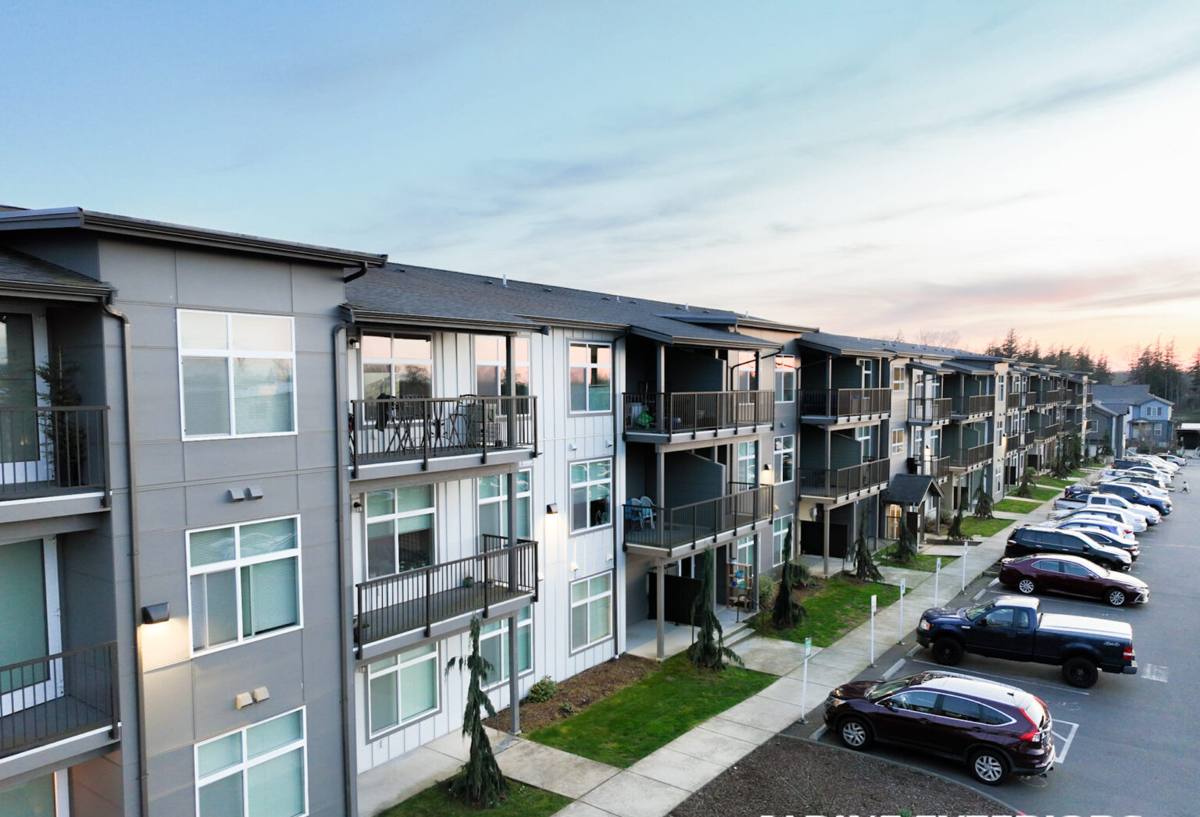
Signs It's Time to Replace, Not Just Patch
Not every siding problem calls for full replacement. But there's a point where patching stops making sense — where the cost and effort of chasing individual repairs exceeds the cost of doing the job right, once, with material built for the exposure. Here's what tells us a Skyline home has crossed that line:
- Soft, spongy, or crumbling siding when pressed, especially near the bottom edge or around penetrations
- Visible gaps, warping, or buckling across multiple sections rather than one isolated spot
- Moss or algae that returns within a season or two of cleaning, no matter how thoroughly it's removed
- Paint that won't hold — repainted within the last few years but already chalking, peeling, or blistering again
- Water stains on interior walls or ceilings near exterior walls, which usually means moisture has already gotten past the siding
- Siding that's simply reached the end of its expected service life, even if it looks intact from the ground
Why We Install Only James Hardie Fiber Cement
We install James Hardie fiber cement siding exclusively — we don't do vinyl, LP SmartSide, Cemplank, Allura, primed spruce, or cedar. That's a deliberate standard, not a sales pitch, and a Skyline lot is a good example of why we hold to it. Vinyl siding isn't a water barrier on its own; it depends entirely on the assembly behind it, and it can become brittle with age and UV exposure — a real liability on a wall that takes direct wind-driven rain. Wood-based products, including cedar and primed spruce, need consistent repainting and are vulnerable to rot if moisture works its way behind them, which is a demanding maintenance cycle to keep up with on an exposed, shaded lot.
Hardie's fiber cement is non-combustible, dimensionally stable, and factory-finished with ColorPlus coating engineered to resist fading and cracking under UV and salt exposure — the exact combination Skyline homes deal with every year. It also carries a strong, transferable warranty, which matters more on a home facing harsher conditions than the Skagit County average.
Hardie Product Lines We Use in Skyline
| Product | Best Use | Why It Fits Skyline |
|---|---|---|
| HardiePlank Lap Siding | Full-wall replacement, most home styles | Available in smooth or cedar-textured finishes; the workhorse for exposed coastal walls |
| HardiePanel Vertical Siding | Accent walls, gable ends, modern designs | Clean vertical lines that pair well with lap siding on mixed-style homes |
| HardieTrim Boards | Window and door surrounds, corners, fascia | Resists the moisture-driven rot that plagues wood trim on windward walls |
| HZ10 Climate-Engineered | Homes with direct wind and water exposure | Formulated specifically for wetter, harsher climate zones like the Pacific Northwest coast |
What a Correct Siding Replacement Actually Involves
A siding replacement is only as good as what's underneath it. On a Skyline home, we treat tear-off as an inspection opportunity — once the old siding is off, we can see the sheathing, framing, and water-resistive barrier underneath, and catch problems before they get sealed back up behind new material.
The Steps That Matter Most
- Full removal of old siding and trim, with the sheathing checked for rot, soft spots, or water staining
- Repair or replacement of any damaged sheathing or framing found underneath
- Installation of a new water-resistive barrier, lapped and taped correctly to shed water downward and outward
- Careful flashing at every window, door, and penetration — the single most common place water intrusion starts on an exposed wall
- Hardie siding installed to manufacturer fastening and clearance specifications, including proper ground and roofline clearance
- Trim, caulking, and touch-up finishing to a factory-matched standard
Skipping or rushing any one of these steps is how a siding job that looks fine on day one starts failing in year three. Fastener spacing, nailing patterns, and clearances aren't optional details on a wall that takes this much wind and rain — they're the difference between siding that lasts and siding that doesn't.
Our Process, Start to Finish
We keep the process straightforward and communicate clearly at each stage, since a siding replacement is disruptive enough without added uncertainty:
- Estimate and inspection: we walk the exterior, look at what's driving the need for replacement, and give you a clear, honest scope
- Material selection: we go over Hardie product lines, textures, and ColorPlus color options that fit your home and the exposure it faces
- Scheduling: we plan around weather windows, since fiber cement installation and any exposed sheathing work needs a reasonably dry stretch
- Tear-off and inspection: old siding comes off, and we address anything we find underneath before moving forward
- Installation: water-resistive barrier, flashing, and Hardie siding installed to spec, with trim and caulking finished cleanly
- Final walkthrough: we go over the finished job with you before calling it done
Cost Factors for a Skyline Siding Replacement
Every home is different, so we won't quote a number without seeing the site, but a few factors consistently move the price on Skyline jobs specifically:
| Factor | Why It Matters |
|---|---|
| Sheathing condition | Water damage found during tear-off adds repair scope that's hard to know until the old siding is off |
| Home size and wall complexity | More corners, dormers, and trim detail means more labor and material |
| Product selection | HZ10 climate-engineered panels and premium ColorPlus finishes cost more than standard lines |
| Access and site conditions | Sloped lots, limited staging area, or difficult equipment access add time |
| Trim and detail work | Extensive window, door, and corner trim adds labor beyond flat wall coverage |
Why a Crew That Already Works Skyline Matters
Siding work on an exposed lot isn't the same job as siding work on a sheltered one, even with identical materials. A crew that's already replaced siding on other Skyline homes knows what to expect before the tear-off even starts — where water tends to have gotten in, how much wind exposure to plan flashing details around, and what fastening and clearance specs actually hold up here versus on paper. That experience shows up in fewer surprises mid-job and a finished result that's built for the site it's actually on, not a generic wall.
It also means working within Anacortes' permitting and inspection requirements without treating them as an afterthought, and understanding how Skagit County's coastal weather patterns affect scheduling and sequencing on a real job site, not just in theory.
If your Skyline home's siding is showing its age — or you're just trying to figure out whether you're looking at a repair or a replacement — we're happy to take a look. Reach out for a free, no-pressure estimate; there's a form right below to get started.