 Anacortes Siding
 Deck Repair in West Anacortes: What Local Homes Are Up Against
West Anacortes sits close enough to the water that salt air is a daily fact of life, not an occasional nuisance. Combine that with Skagit County's long wet season, frequent driving rain off Rosario Strait and Guemes Channel, and the shaded, moisture-holding conditions that let moss take over almost any horizontal surface, and you have a climate that is genuinely hard on decks. Wood fibers swell and shrink with every wet-dry cycle, fasteners corrode faster near salt air, and moss holds water against boards long after a storm has passed. A deck that would last decades in a dry inland climate can develop real structural problems here in half that time if it isn't built and maintained with this environment in mind.
We repair decks in West Anacortes regularly, and the failure patterns we see are consistent enough that we can usually tell what's wrong before we even get on a ladder to check the ledger board. That familiarity matters, because deck repair done wrong — patched over rot, fasteners swapped without checking what caused them to fail, a ledger flashed incorrectly — just buys a homeowner a year or two before the same problem resurfaces, often worse.
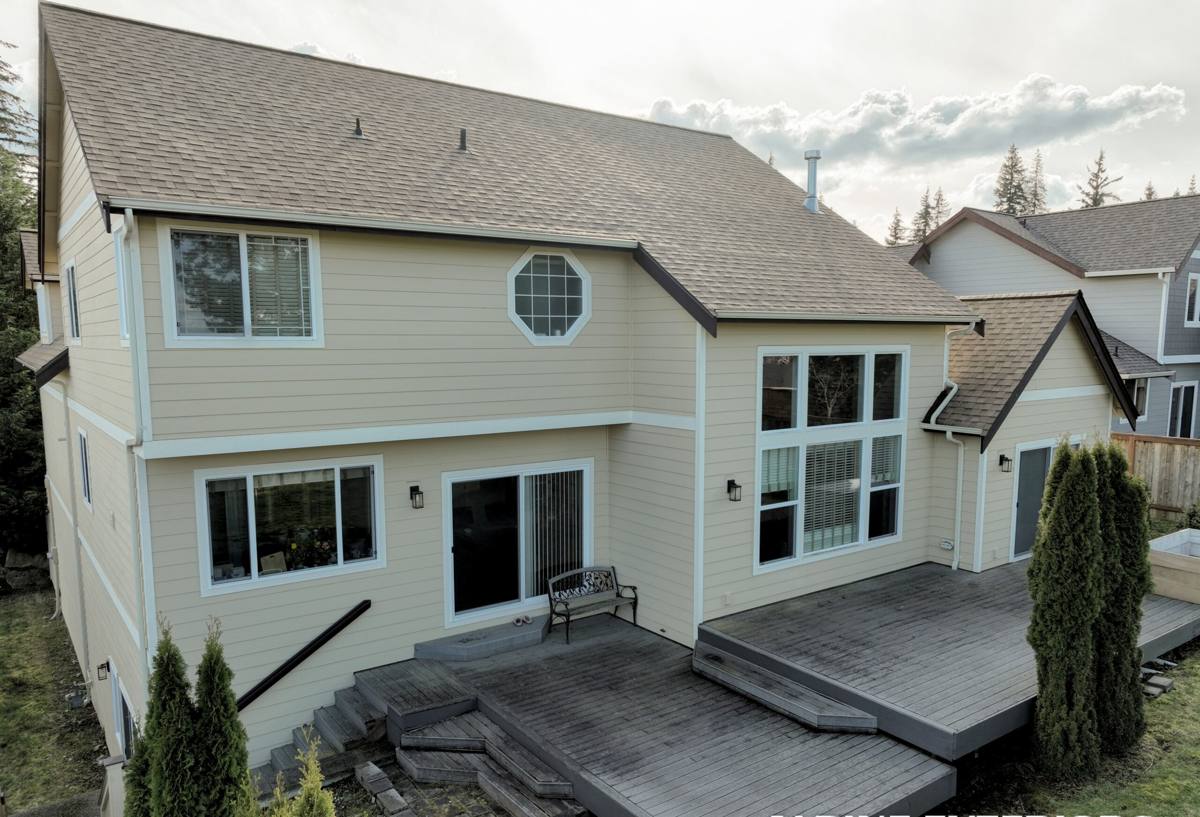
Common Deck Problems We See in This Area
Moss and Algae Buildup
Moss doesn't just look bad. It holds moisture against the wood surface for days after rain has stopped, which accelerates rot in the boards underneath and makes the deck surface slick and dangerous. West Anacortes' tree cover and marine humidity give moss ideal growing conditions, especially on decks with any shade during the day. Left untreated, moss-covered boards will soften and delaminate from the inside out long before the surface looks obviously damaged.
Ledger Board and Rim Joist Rot
The ledger board — where the deck attaches to the house — is the single most safety-critical component on most decks, and it's also the part most likely to be hidden from casual view. Poor or missing flashing lets water track behind the ledger and into the rim joist and framing, where it can sit and rot for years unnoticed. In a driving-rain climate like ours, wind-driven water gets pushed sideways into these joints in ways that vertical-rain assumptions don't account for. This is the repair issue we take most seriously, because a compromised ledger connection is a structural failure risk, not a cosmetic one.
Fastener Corrosion
Salt air accelerates corrosion in standard fasteners and hardware. We regularly find decks where the original screws or joist hangers have rusted, weakened, or stained the surrounding wood. Corroded fasteners lose holding strength gradually, which means a deck can feel solid right up until it isn't.
Board Cupping, Splitting, and Delamination
Repeated wet-dry cycling causes wood decking to cup, crack, and eventually split along the grain. Composite decking isn't immune either — some older composite products absorb moisture at the core and delaminate at the surface, particularly in shaded, poorly ventilated areas.
Understructure and Post Base Deterioration
Posts set in or near grade, and beams close to soil level, are exposed to splash-back and standing water during Skagit County's wet months. Rot at the base of a support post is a structural issue that's often invisible until the post is probed or the deck develops a noticeable soft spot or bounce.
How We Diagnose a Deck Before Repairing It
We don't repair what we can see and hope the rest is fine. A proper deck repair starts with a structural check, because patching surface damage on top of a compromised frame is a waste of money and a safety issue.
- Probe the ledger board connection and check flashing condition where it's accessible
- Check joist hangers and structural fasteners for rust, deformation, or missing hardware
- Probe deck posts and beams near grade for soft or spongy wood
- Test board attachment points and look for cupping, splitting, or surface delamination
- Assess moss and algae coverage and identify the moisture source keeping it established
- Check railing post connections, since these see repeated lateral stress and are a common failure point
- Confirm the deck's drainage path — where water goes after it hits the surface
This inspection tells us whether we're looking at a surface-level repair, a structural repair, or in some cases a recommendation to rebuild sections rather than patch them. We'll always tell you honestly which category your deck falls into rather than defaulting to the most expensive answer.
What a Correct Deck Repair Involves
Structural Repairs
Any rot found in ledger boards, rim joists, beams, or posts needs to be cut back to solid wood — not just sistered over. We re-flash ledger connections properly when we open them up, since this is often the root cause of the original damage and skipping it just resets the clock on the same failure. Fasteners and hardware in structural repairs get replaced with corrosion-resistant hardware rated for exterior and coastal-adjacent use, not standard interior-grade screws.
Board Replacement
Individual damaged boards can usually be replaced without rebuilding the whole deck, as long as the framing underneath is sound. Matching existing wood decking reasonably well is usually possible; matching discontinued composite lines is sometimes not, and we'll tell you upfront if that's the case with your product rather than promising a seamless match we can't deliver.
Moss and Surface Treatment
Beyond simply cleaning moss off, addressing the underlying moisture and shade conditions that let it grow back is part of a real fix. That can mean trimming back vegetation that's shading the deck, improving airflow underneath, or recommending a maintenance cleaning schedule suited to how much shade and moisture your specific location gets.
Railing and Guard Repair
Loose or failing railings get the post connections rebuilt to code, not just tightened. A railing that "feels solid" when pushed gently can still fail under real load if the post-to-frame connection has been compromised by rot or fastener failure.
Repair vs. Rebuild: How We Help You Decide
| Factor | Repair Usually Makes Sense | Rebuild Usually Makes Sense |
|---|---|---|
| Structural frame | Solid, with isolated rot in one or two areas | Widespread rot in ledger, beams, or multiple posts |
| Decking surface | Isolated cupped or split boards | Majority of boards cupping, splitting, or delaminating |
| Age of structure | Under 15-20 years, built to reasonable standards | Older deck, undersized framing, or unpermitted original build |
| Fasteners/hardware | Localized corrosion | Widespread rust and hardware failure throughout |
| Cost outlook | Repair cost is a fraction of rebuild cost | Repair scope approaches 50%+ of a rebuild |
We give you our honest read on which column your deck falls into. A deck with a sound frame and a handful of bad boards is a straightforward repair. A deck where the ledger, several joists, and multiple posts all show rot is usually more cost-effective to rebuild than to keep patching piece by piece — patch repairs on a failing frame tend to just delay a bigger expense while adding cost you don't get credit for later.
Our Process for West Anacortes Deck Repairs
- On-site inspection. We walk the deck, probe suspect areas, and check the structural connections that matter most.
- Written scope and estimate. You get a clear breakdown of what needs repair, what we recommend versus what's optional, and pricing before any work starts.
- Repair work. Structural fixes first, then surface and cosmetic repairs, using fasteners and materials suited to our marine climate.
- Final check. We confirm railings, stairs, and structural connections all meet a safe, solid standard before calling the job done.
We work efficiently, but we don't rush structural repairs to hit a timeline — a ledger reattachment or post replacement done carelessly is worse than not doing it at all.
Maintenance That Extends Your Deck's Life Here
Given how much moss season and salt air shorten a deck's practical lifespan in this area, a modest annual maintenance routine pays for itself. Clearing debris out of gaps between boards prevents standing water and trapped organic matter, which is one of the biggest drivers of rot. Keeping nearby vegetation trimmed back improves airflow and sun exposure, which slows moss regrowth. Checking for soft spots, loose railings, or popped fasteners once a year — ideally before the wet season sets in — catches small issues while they're still cheap to fix. Re-sealing or re-staining wood decking on the manufacturer's recommended cycle protects it against the wet-dry cycling that's constant in Skagit County.
None of this eliminates the need for repair work eventually — every deck in a coastal climate needs it at some point — but it stretches the interval between repairs and keeps small problems from becoming structural ones.
Why Local Experience Matters for This Kind of Repair
A contractor who mostly works drier inland climates may not default to checking for the specific failure patterns that show up here: ledger flashing gaps that let wind-driven rain track sideways, fastener corrosion from salt air, moss establishing itself in shaded pockets that never fully dry out. We work in West Anacortes and the surrounding Anacortes area regularly enough that these aren't unfamiliar edge cases — they're what we check for first. That translates into faster, more accurate diagnosis and repairs that actually hold up through the next wet season instead of needing to be redone.
If your deck has soft spots, loose railings, moss buildup, or you just want an honest read on its condition before it becomes a bigger problem, we're happy to take a look. Reach out for a free, no-pressure estimate using the form below.