 Anacortes Siding
 Building on West Anacortes' Waterfront Side Changes the Window Plan
West Anacortes sits closer to open water than most of the rest of the city, and that changes what a window needs to survive. Homes going up on this side of Fidalgo Island take more direct exposure to wind off the strait, more wind-driven rain, and more salt-laden air than a lot on the more sheltered, inland side of town. If you're building new here, the window package and the way it's installed both need to account for that from day one — not get retrofitted later once staining, corrosion, or leaks show up.
New-construction windows are a different job than replacements. On a replacement, the contractor works around an existing rough opening, existing siding, and existing flashing that may or may not be in good shape. On a new build, we're setting the window into a fresh rough opening with no history to compensate for — which means there's no excuse for the flashing and water management details to be anything less than correct. Get it right at framing stage in West Anacortes and the house is set up to handle decades of marine weather. Get it wrong, and the first few winters of driving rain will find every gap.
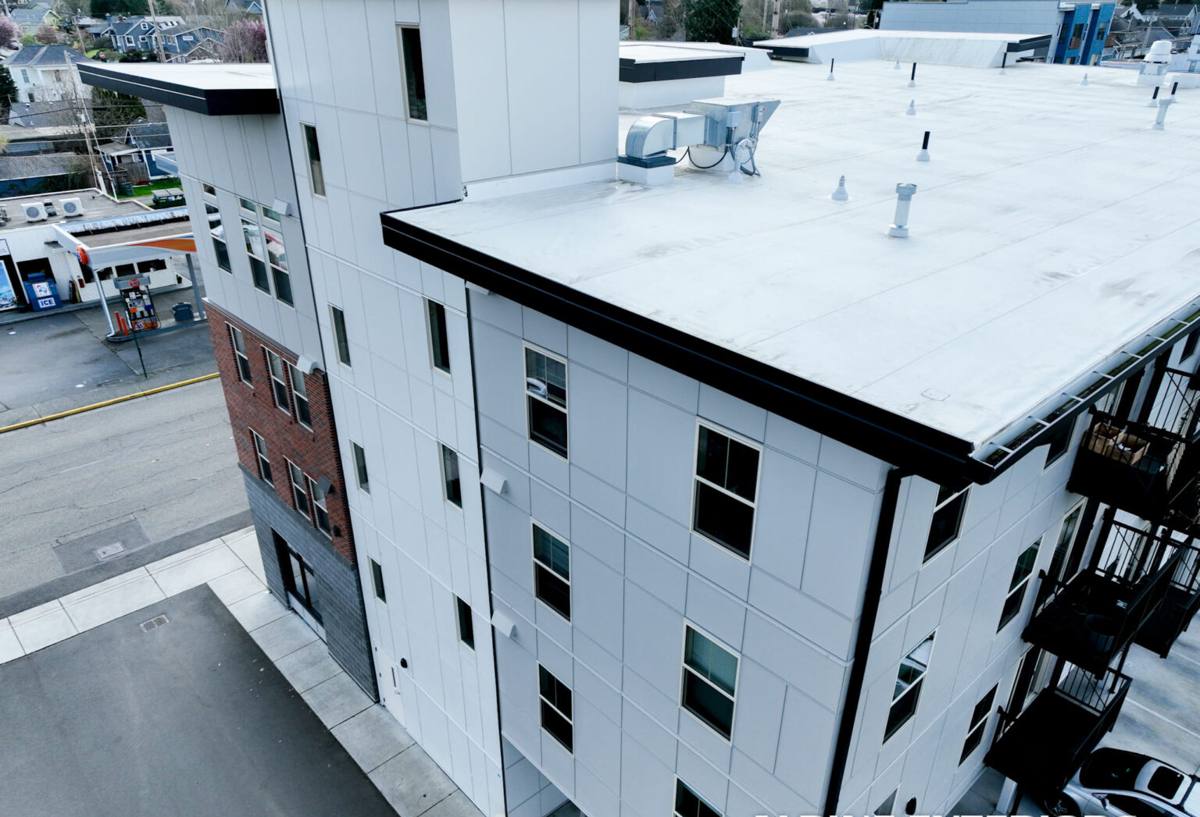
What Skagit County's Marine Climate Actually Does to Windows
Anacortes sits in a marine climate zone — mild temperatures, but a lot of moisture moving through the air most of the year. For new windows, three things matter most:
- Salt air: Airborne salt from Rosario Strait and the surrounding waterways accelerates corrosion on unprotected hardware, fasteners, and lower-grade metal components. It also breaks down cheap finishes faster than a homeowner further inland would ever see.
- Driving, wind-driven rain: Storms here don't just fall straight down — wind pushes rain sideways into wall assemblies, which puts real pressure on flashing details and window-to-wall transitions rather than just the glass and frame.
- Long moss and algae season: Shaded, damp elevations in Skagit County stay wet for extended stretches of the year, which is exactly the condition moss and mildew need to take hold on sills, trim, and anything with poor drainage.
None of this means new-construction windows in West Anacortes need to be exotic or overbuilt. It means the frame material, the glass package, and — most importantly — the installation sequence all need to be chosen and executed with this environment in mind, not a generic install spec pulled from a drier region.
Sun Exposure Isn't the Main Driver Here
In a lot of the country, window specs are chosen around heat and UV. In West Anacortes, moisture management is the bigger factor. A window that's rated for extreme heat but poorly detailed for water will underperform here, while a moderately specced window installed with correct flashing will outlast it.
Choosing a Frame Material for a Coastal Fidalgo Island Lot
There's no single "right" frame material for every new build — it depends on your elevation, how exposed the wall is to the water side, budget, and how much upkeep you want to take on. Here's how the common options stack up for a marine, salt-air setting like West Anacortes:
| Frame Material | Salt Air Resistance | Maintenance | Typical Lifespan | Notes |
|---|---|---|---|---|
| Vinyl | Good — inert, won't corrode | Low — occasional cleaning | 20–30 years | Best value; quality varies a lot between manufacturers, so hardware and weld quality matter more than the material itself |
| Fiberglass | Very good — dimensionally stable, resists pitting | Low | 30–40 years | Handles the freeze-thaw and moisture swings of a marine climate well; higher upfront cost |
| Wood-clad | Fair — depends entirely on the cladding and sealant condition | Higher — cladding seams and interior wood need periodic checks | 20–30 years with upkeep | Interior wood look, but the exterior clad shell is doing all the weather work — a compromised seam invites rot faster here than inland |
| Aluminum | Poor to fair unless marine-grade and finished well | Moderate | 15–25 years near water | We steer most West Anacortes clients away from standard aluminum on exposed elevations — it's more prone to pitting and corrosion in salt air, and it's not a fit we'd stand behind on this side of town |
For most West Anacortes new builds, we land on vinyl or fiberglass for the water-exposed elevations, reserving wood-clad for sheltered sides or interior-facing walls where the homeowner wants that look without the full weather load hitting it.
The Install Detail That Matters More Than the Window Itself
A high-end window installed with sloppy flashing will leak. A mid-grade window installed correctly will not. That's true everywhere, but it's especially true in a place that gets sustained, wind-driven rain like Skagit County does. On a new-construction job, we control the whole sequence, so there's no reason to cut corners here:
- Sill pan flashing installed first, sloped to drain any water that gets past the window back out and away from the framing — never toward the interior.
- Housewrap integrated shingle-style around the opening, so water sheds over each layer the way shingles do on a roof, with the nailing flange lapped correctly at the sides and head.
- Corner and head flashing sized and lapped to handle wind-driven rain hitting the wall at an angle, not just straight-down water.
- Backer rod and sealant at the interior and exterior gaps, sized for the joint rather than just filled with excess caulk, which fails faster than a properly sized joint.
- Final water test on exposed elevations where practical, before siding closes the wall up for good.
Once the siding goes on, these details are hidden for the life of the house. On new construction, this is the one chance to get them right without cutting into finished walls later.
Matching Window Types to How the Room Will Be Used
New construction gives you the freedom to choose window operation type room by room, which isn't always practical on a replacement job. In a wind-exposed, rain-heavy environment like West Anacortes, that choice affects long-term performance:
- Casement windows compress against the frame when closed, which generally gives a tighter seal against wind-driven rain than a slider — a good fit for water-facing elevations.
- Sliders are lower-maintenance mechanically and work well on sheltered walls, but rely more heavily on track seals staying clean and clear of grit and salt residue.
- Fixed picture windows have no moving parts to seal, making them one of the most weather-tight options for capturing a view on an exposed wall.
- Awning windows can stay cracked open during a light rain since they hinge at the top, which is useful in a climate where it rains often but you still want ventilation.
Our New-Construction Window Process
Working on a new build means coordinating with your general contractor or framer rather than working around existing finishes, so the sequence looks different from a replacement job:
- Plan review: we go over rough opening sizes, window schedule, and elevations with the builder before framing locks in, catching sizing or placement issues while they're still cheap to fix.
- Rough opening check: verifying openings are square, plumb, and correctly sized before any window goes in.
- Flashing and housewrap integration: installed in the sequence above, coordinated with whoever is running housewrap on the rest of the building envelope so there are no gaps at the transitions.
- Window setting: shimmed, leveled, and fastened to manufacturer spec — not just "close enough."
- Sealing and insulation: interior gaps filled with appropriate low-expansion foam or backer rod, avoiding over-packing that can bow a frame.
- Walkthrough: operation check on every window — smooth open/close, proper latching, no racking — before we sign off.
Coordinating Timing With Your Build Schedule
Windows typically go in right after framing and before siding and interior drywall close things up. On a West Anacortes lot, we also try to time the install to avoid setting windows into an open frame during the worst of a storm cycle where possible — practical scheduling, not a guarantee anyone can make on a coastal job site, but worth planning around.
Living With New Windows in a Salt Air, Moss-Prone Setting
Good windows in West Anacortes still need some seasonal attention to get their full lifespan out of them. None of this is heavy work, but skipping it is how avoidable problems creep in:
- Rinse salt residue off frames and hardware a few times a year, especially on elevations facing open water.
- Keep weep holes on sliders and lower sashes clear of debris so water drains instead of pooling.
- Check exterior caulk lines annually — UV and moisture cycling will eventually ask for a re-bead, and catching it early is cheap.
- Knock back moss or algae buildup on shaded sills and trim before it holds moisture against the frame.
- Test operation on all windows once a year, including any that don't get opened often, so hardware doesn't seize up.
Why a Local Crew Matters for This Job
New-construction window installs go faster and hold up better when the crew has already worked this specific stretch of coastline. We know which West Anacortes elevations take the brunt of storms off the strait, which lots sit in enough shade to stay damp longer into the season, and how the housewrap and flashing sequence needs to adjust wall by wall on a given lot. A crew that's only ever installed windows in a drier, more sheltered part of the county is learning those lessons on your house. We'd rather bring them with us before the first shim goes in.
If you're planning a new build on the west side of Anacortes and want to talk through window options, frame material, or how the install will be sequenced with your builder, we're happy to walk the plans with you. Reach out for a free, no-pressure estimate — there's a form just below to get started.