 Anacortes Siding
 Storm Damage Roofing in West Anacortes
West Anacortes sits close to the water, which means homes here take a different kind of beating than roofs just a few miles inland. Wind off the Rosario Strait and Guemes Channel drives rain sideways into roof edges, valleys, and wall-to-roof transitions that a roof on a more sheltered lot rarely has to deal with. When a windstorm rolls through Skagit County, the damage isn't always obvious from the ground, and it isn't always urgent-looking. A few lifted shingles or a cracked ridge cap can sit quietly for weeks before they turn into a stained ceiling or a soft spot in the decking.
We work on roofs throughout Anacortes, but West Anacortes homes get their own set of problems worth understanding on their own terms: salt-laden air that accelerates corrosion on metal fasteners and flashing, near-constant marine moisture that keeps roofs from ever fully drying out between storms, and a moss season that runs long compared to drier parts of the state. Storm damage repair here isn't just about patching what broke — it's about fixing it in a way that holds up against the next system that rolls in off the water.
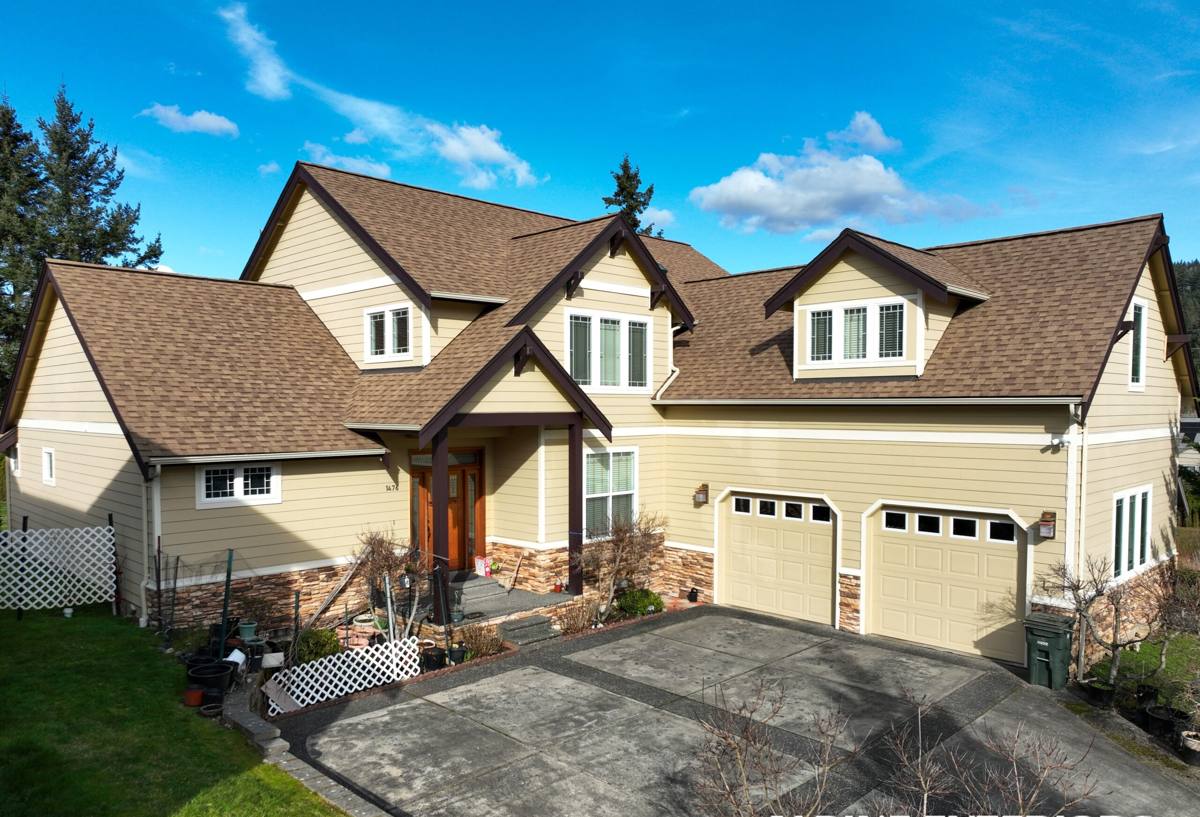
What Makes This Area Different
Salt Air and Metal Fatigue
Roofs near the water deal with airborne salt that settles on metal roofing, flashing, gutters, and exposed fasteners. Over time it speeds up corrosion, especially on lower-grade or improperly coated hardware. After a storm, we specifically check flashing and fastener condition, not just for storm damage but for how much life the salt exposure has already taken out of the metal. A repair that ignores this just sets up the next failure.
Driving Rain and Wind-Driven Water
West Anacortes gets hit with wind-driven rain that doesn't behave like a normal vertical downpour. It gets pushed sideways and upward under shingle edges, around chimneys, and through any gap in step flashing or ridge caps. A roof that's watertight in a light rain can still leak badly in a wind-driven storm because the water is attacking from an angle the roofing system wasn't sealed for.
A Long Moss Season
The Pacific Northwest's damp, mild climate keeps moss and algae growing on roofs for most of the year, and shaded, north-facing slopes near the water are some of the worst spots for it. Moss holds moisture against the roofing surface, works its way under shingle tabs, and lifts them just enough for wind and rain to get underneath. A lot of the "storm damage" we find after a windstorm actually started as moss that had already loosened shingles months earlier — the storm just finished the job.
Common Storm Damage We See in West Anacortes
- Shingles lifted, cracked, or blown off entirely along roof edges and ridges, where wind uplift is strongest
- Flashing pulled loose or bent around chimneys, skylights, and roof-to-wall transitions
- Gutters torn away from fascia boards or packed with wind-blown debris, causing water to back up under the roof edge
- Soft or discolored decking where a slow leak has been running under moss-covered shingles for longer than the homeowner realized
- Cracked or displaced ridge caps that let wind-driven rain into the attic space
- Granule loss on asphalt shingles from wind abrasion and hail, which shortens the roof's remaining service life even without a visible hole
What a Correct Storm Repair Actually Involves
A quick patch job is tempting after a storm, especially when the leak seems to have stopped. But a repair that only addresses the visible symptom tends to fail again in the next storm. Here's what we consider a complete job:
1. Full Roof Assessment, Not Just the Leak Point
Water travels. The spot where it's showing up inside the house is often not where it's getting in. We trace the path back to the actual entry point — which might be a lifted shingle, a flashing gap, or a moss-clogged valley several feet away from the ceiling stain.
2. Decking Inspection
If water has been getting under the roofing surface for any length of time, the plywood or OSB decking underneath needs to be checked for soft spots, delamination, or rot. Replacing shingles over compromised decking just hides the problem until it fails again, usually somewhere new.
3. Matching Materials Correctly
Repairs on an existing roof need to match the surrounding materials in type, weight, and color as closely as possible. Mismatched shingles or flashing not only look wrong, they can behave differently in wind and moisture, creating a weak point right next to the repair.
4. Flashing and Fastener Upgrades Where It Makes Sense
Given the salt air and wind exposure in West Anacortes, we sometimes recommend upgrading flashing or fasteners to corrosion-resistant materials during a repair, even if the original spec was standard-grade. It's a small cost difference that pays off in a coastal climate.
5. Moss and Debris Cleanup
Storm repairs are a good time to clear moss buildup and debris from valleys and gutters, since leaving it in place undermines the repair and invites the same failure mode to start over.
Our Process, Start to Finish
- Contact and initial questions — we ask about when the damage occurred, what you're seeing (stains, drafts, visible debris), and the roof's age if known.
- On-site inspection — we get on the roof (not just a look from the ground) and check the interior attic space where accessible, since attic staining and insulation dampness tell us a lot about how long a leak has been active.
- Written scope and pricing — you get a clear explanation of what's damaged, what needs to happen, and why, before any work starts.
- Repair work — matched materials, proper flashing technique, and decking replacement if needed.
- Final check — we confirm the repair area sheds water correctly and check adjacent sections of roof for related wear, since storm stress rarely affects just one isolated spot.
Repair vs. Replacement: How We Help You Decide
Not every storm-damaged roof needs to be replaced, and not every roof that looks rough after a storm is actually in bad shape structurally. The right call depends on the roof's age, how widespread the damage is, and what condition the decking is in.
| Factor | Leans Toward Repair | Leans Toward Replacement |
|---|---|---|
| Roof age | Under 15 years, in otherwise good condition | Near or past expected lifespan for the material |
| Extent of damage | Isolated to one section or a few spots | Widespread across multiple roof planes |
| Decking condition | Solid, no rot or soft spots found | Rot or delamination found in multiple areas |
| Storm history | First significant damage in years | Repeated storm damage or a pattern of repeat leaks |
| Moss/algae condition | Light, manageable buildup | Heavy, long-term moss damage under the surface |
We'll always tell you honestly if a repair is the right move, even if a full replacement would be a bigger job for us. A roof that's fundamentally sound doesn't need to be torn off just because one section took storm damage.
Why Local Experience in West Anacortes Matters
A crew that regularly works West Anacortes roofs already knows what to expect here — the wind exposure on water-facing homes, which roof orientations collect moss fastest, and how salt air affects different flashing and fastener materials over time. That's not something you get from a general roofing outfit that swings through the area once and moves on. It shows up in small decisions: which side of a roof to inspect closest for wind-driven damage, whether a flashing detail needs upgrading given the site's exposure, and how urgently a given leak needs to be addressed before the next system rolls in off the water.
It also matters for follow-up. Storm damage repairs sometimes reveal a second issue once the roofing surface is opened up, and having a crew that's already familiar with the property and easy to reach locally makes that a lot less stressful to deal with.
What Homeowners Can Check After a Storm
- Look for granules collecting in gutters or at downspout outlets — a sign of shingle wear from wind and impact
- Check ceilings and upper closet corners for new water stains, even faint ones
- From the ground, scan for shingles that look curled, cracked, or missing along ridges and edges
- Check gutters and downspouts for damage or blockages that could cause water to back up under the roof edge
- Note any new drafts or musty smells in the attic, which can mean moisture is getting in before it shows up as a visible stain
None of these checks replace an actual roof inspection, but they help you decide how quickly to get one scheduled.
Get an Honest Look at the Damage
If your West Anacortes home took storm damage, or you're not sure whether that ceiling stain is new or old, we're happy to come take a look. We'll give you a straight answer on what's actually going on and what it'll take to fix it right — no pressure, no upsell. Fill out the form below to request a free estimate.