 Anacortes Siding
 Similk Beach Roofs Work Harder Than Most
Similk Beach sits close enough to open water that the roof over your head is doing a different job than a roof twenty miles inland. The name itself comes from Similk Bay, and that proximity means salt-laden air, wind off the water, and rain that doesn't just fall straight down — it drives sideways into eaves, vents, and flashing details that a fair-weather roof never has to deal with. Add in Skagit County's long, wet shoulder seasons, and you get conditions that are genuinely tougher on asphalt shingles than most manufacturers' warranty language assumes.
None of this means asphalt shingle roofing is a poor choice for Similk Beach. It's still the most practical, cost-effective roofing material for the vast majority of homes here. It just means the material selection, the underlayment details, the fastener choice, and the ventilation plan all need to account for salt air, driving rain, and moss the way a generic install wouldn't.
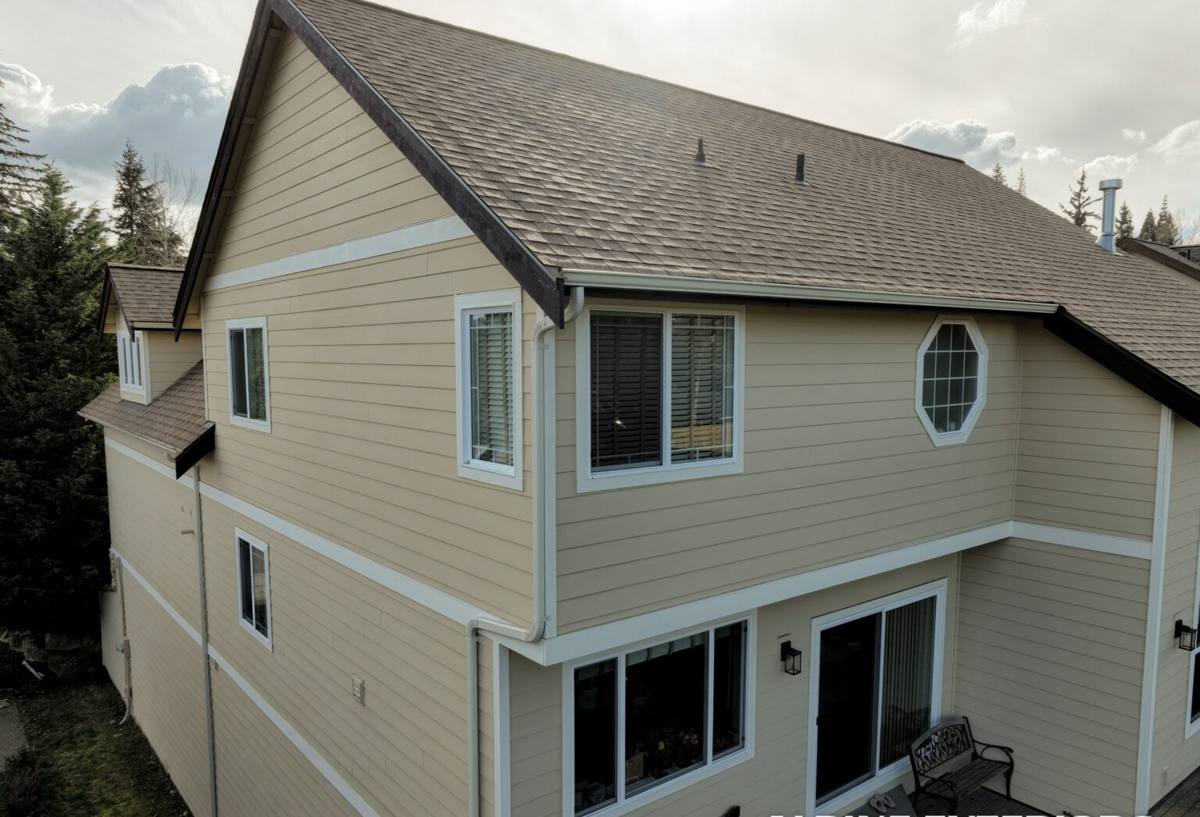
What Salt Air Actually Does to a Shingle Roof
Salt air doesn't damage the asphalt shingles themselves in any dramatic way — the fiberglass mat and asphalt coating hold up fine. Where salt exposure causes real problems is in the metal components: nails, flashing, and vent stacks. Ordinary electro-galvanized fasteners can start corroding faster near the water than they would further inland, and once a nail head weakens, the shingle above it loses its grip. Loose shingles are exactly what wind-driven rain needs to find its way underneath.
Where corrosion shows up first
- Exposed fastener heads on ridge caps and starter courses
- Flashing around chimneys, skylights, and roof-to-wall transitions
- Vent stack boots and their surrounding sealant
- Gutter fasteners and drip edge, especially on the sides of the house facing open water
The fix isn't complicated, but it does mean specifying the right materials up front — hot-dip galvanized or stainless fasteners, and flashing metals that won't set up a corrosion reaction against whatever they're touching. It costs a little more at install time and saves a homeowner from chasing leaks five years later.
Driving Rain and Wind: Getting Water Management Right
A shingle roof doesn't actually keep water out by being waterproof on the surface — it keeps water out by shedding it downhill through a layered system, with the underlayment and flashing doing the real work at every seam, valley, and penetration. On a roof that only ever sees rain falling straight down, a mediocre underlayment job might go unnoticed for years. On a roof exposed to wind-driven rain off the water, sloppy detailing gets found fast.
The details that matter most in this exposure
- Self-adhered ice-and-water membrane at eaves, valleys, and around every roof penetration — not just where code minimums require it
- A quality synthetic underlayment across the full field, properly lapped against the prevailing wind direction
- Metal drip edge at both eaves and rakes, not just one or the other
- Shingles rated for the higher end of the wind scale, installed with the correct nailing pattern — six nails per shingle in higher-exposure sections is often worth the small labor increase
- Properly stepped and counter-flashed transitions at walls, chimneys, and dormers, rather than relying on caulk alone
Wind rating on the shingle itself only matters if the nailing pattern and sealant strip activation are done correctly. A premium shingle installed with a rushed nailing job will underperform a mid-grade shingle installed correctly.
Moss, Algae, and the Long Wet Season
This part of Skagit County gets a genuine moss season, not just an occasional patch of green. Shaded roof slopes, north-facing pitches, and anything under tree canopy stay damp for long stretches between fall and spring, and that moisture is exactly what moss and algae need to take hold. Left alone, moss does more than look bad — it lifts shingle edges, holds water against the roof deck, and accelerates granule loss.
Algae-resistant (AR) shingles, which use copper- or zinc-infused granules, are worth the modest upcharge on almost every Similk Beach roof, especially on shaded sides of the house. They don't make moss impossible, but they slow it down considerably compared to standard granules. Beyond material choice, moss control comes down to a few habits: keeping gutters and valleys clear so water doesn't sit, trimming back overhanging branches where it's practical, and having moss physically removed — by soft brushing or low-pressure rinsing, never by aggressive pressure washing, which strips granules and shortens the roof's life.
Choosing the Right Shingle for This Climate
Not every asphalt shingle product is built the same, and the differences matter more here than they would in a drier, calmer climate. The table below covers the general categories homeowners choose between.
| Shingle Type | Wind Rating | Algae Resistance | Typical Lifespan | Best Fit |
|---|---|---|---|---|
| 3-tab (standard) | Lower end of the range | Only if AR-rated version is chosen | 15-20 years | Budget-conscious projects on lower-exposure roof faces |
| Architectural / laminate | Mid-to-high, varies by product | Widely available in AR versions | 25-30 years | Most Similk Beach homes — the standard recommendation |
| Premium / designer laminate | Highest of the asphalt options | Standard on most premium lines | 30+ years | Homes with heavy wind/salt exposure or where longevity is the priority |
For most homes in this area, an architectural laminate shingle with algae resistance and a solid wind rating is the sensible middle ground — enough durability for the exposure without paying for features a smaller inland home wouldn't need.
Signs Your Similk Beach Roof Needs Attention
Roofs in this climate tend to fail gradually, not all at once, which means small warning signs are worth taking seriously before they become a full replacement.
- Dark streaking or visible moss growth, especially on shaded or north-facing slopes
- Granules collecting in gutters or at downspout outlets
- Shingles that are curling, cupping, or lifting at the edges
- Cracked, rusted, or visibly failing flashing around chimneys, skylights, or vents
- Daylight visible through the roof deck from inside the attic
- Soft or spongy spots when walking the roof (a sign of deck damage, not something to test lightly)
- Missing or torn shingles after a windstorm
- Water stains on interior ceilings or in the attic, particularly near valleys or wall transitions
- A roof that's 20-25 years old and has never been fully inspected
How We Approach an Asphalt Shingle Roof Here
Our process is the same discipline every time, adjusted for the specific exposure of the home:
- Inspection first. We look at the whole system — deck condition, existing ventilation, flashing details, and how the roof is actually oriented to wind and rain — before recommending anything.
- Full tear-off. We don't layer new shingles over old ones. Tear-off lets us inspect and repair the deck, which is the part of the roof salt air and moisture damage the most.
- Deck repair as needed. Any soft, rotted, or delaminated sheathing gets replaced before anything new goes down — never covered over.
- Ice-and-water membrane at eaves, valleys, and penetrations, followed by a full synthetic underlayment across the field.
- Corrosion-resistant metal for drip edge, step flashing, and fasteners, matched so dissimilar metals aren't set against each other.
- Shingle installation with the manufacturer's specified nailing pattern, tightened up for wind exposure where the site calls for it.
- Balanced ventilation — intake at the eaves, exhaust at the ridge — so moisture doesn't get trapped in the attic and work against the new roof from underneath.
- Final walk-through and cleanup, including a magnetic sweep for stray fasteners.
Why It Matters That We Already Work Similk Beach
A roofing crew that's worked this specific stretch of Anacortes and Skagit County knows things that don't show up in a generic estimate: which roof orientations catch the worst of the wind off the water, which shaded lots need extra attention to moss and ventilation, and which flashing and fastener specs actually hold up here instead of just meeting code minimums. That local knowledge shows up in fewer callbacks and a roof that's built for the exposure it will actually face, not a textbook average.
It also matters for response time. When a windstorm off the water peels back a section of shingles or knocks a flashing detail loose, having a crew nearby that already understands the property type and the exposure means a faster, more accurate repair — not a guessing game from a contractor who's never worked this microclimate before.
Protecting the Investment After Installation
A well-installed shingle roof in this climate still benefits from light, regular attention: keeping gutters and valleys clear, having moss addressed before it spreads rather than after, and getting flashing and fastener points checked every few years rather than waiting for a leak to announce a problem. None of this is expensive or time-consuming, but skipping it is the single biggest reason otherwise well-built roofs underperform their expected lifespan near the water.
If you're weighing a repair, a full replacement, or just want an honest read on where your current roof stands, we're happy to take a look. Reach out for a free, no-pressure estimate — use the form below and we'll get back to you.