 Anacortes Siding
 Deck Replacement in Conway's Skagit Valley Climate
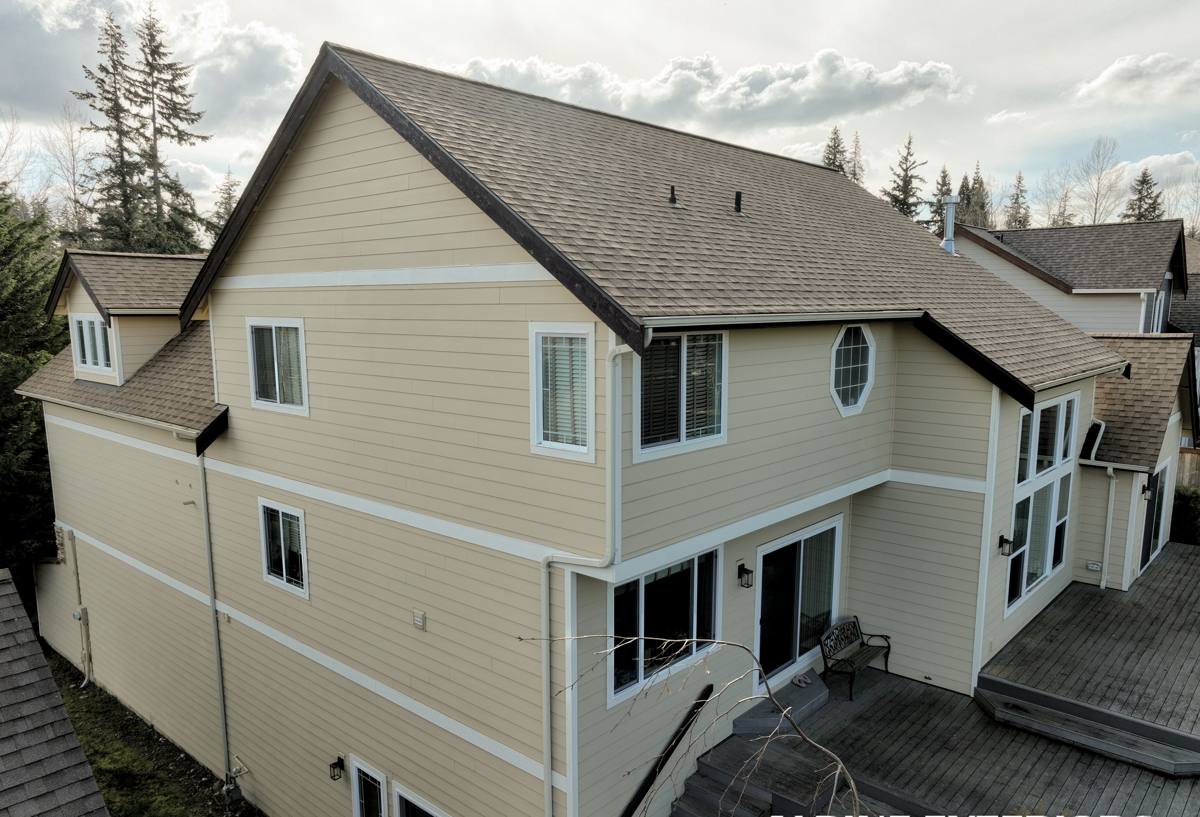
Conway is a small community in the lower Skagit Valley, and like the rest of Skagit County it sits under a weather pattern that's hard on anything built to stand outside year-round. Salt-tinged air moves in off the water, storms roll through with real wind behind the rain, and the mild, wet stretches between storms give moss and mildew months at a time to take hold. A deck takes the brunt of all of it — no roofline, no wall cavity, just boards and framing sitting exposed to whatever the season brings.
When a deck in this area reaches the end of its life, replacing it correctly means more than swapping old boards for new ones. It means understanding what actually failed, why it failed here specifically, and building the replacement so the same problems don't show up again in five years. This page covers what a Conway deck replacement should involve, what our process looks like, and why it matters to work with a crew that already knows this stretch of Skagit County.
Why Decks Wear Out Faster in This Part of Skagit County
Salt Air and Moisture
Homes in the lower Skagit Valley get a steady dose of salt-laden air moving in from Puget Sound and the Skagit River delta, and a deck has nowhere to hide from it. Salt accelerates corrosion in any exposed metal — fasteners, joist hangers, post bases, railing brackets — and once a fastener starts corroding, it loses holding strength well before the rust is obvious to the eye. On a structure people walk and stand on, that's a real safety consideration, not just a cosmetic one.
Driving Rain and Wind
Storms in this part of Washington rarely fall straight down. Wind pushes rain sideways, up under railings, and into the ledger connection where the deck attaches to the house — one of the most common places water intrusion starts on an older deck. A deck surface that sheds water fine on a calm day can still trap moisture the moment wind gets involved, and in the Skagit Valley, wind-driven rain is more the rule than the exception during the wet months.
A Moss Season That Doesn't Really End
Mild temperatures and near-constant dampness give moss and mildew a long growing season here, and a horizontal deck surface is one of the first places it shows up — it holds water longer than a vertical wall and stays damp between rain events. Shaded decks and north-facing surfaces are usually first, and any decking material with even a little surface porosity gives moss something to grip onto.
Signs Your Deck Needs Replacement, Not Repair
Not every aging deck needs a full rebuild. But there's a point where patching individual boards or re-securing loose railings stops being a real fix and starts being a way to delay the inevitable. Signs it's time to talk about replacement rather than repair:
- Soft, spongy, or spring-back decking boards, especially near the house or in shaded areas
- Visible rot, splitting, or fungal growth at the ledger board where the deck meets the house
- Wobble or movement in the railing system, or posts that shift when leaned on
- Rust staining or crumbling concrete around footings and post bases
- Fasteners that are heavily corroded, missing heads, or pulling loose from the framing
- A deck built more than 15-20 years ago that hasn't had its structural connections inspected since
- Multiple past repairs to the same sections, which usually means the underlying cause was never addressed
If more than one or two of these apply, an honest assessment usually points toward replacement. Chasing surface symptoms on a structure with failing framing or connections just delays a problem that gets more expensive the longer it sits.
What Tear-Off Uncovers That a Surface Repair Never Would
One of the real differences between repairing a deck and replacing it is what you find once the old decking and framing actually come off. A surface repair leaves the framing, ledger connection, and footings untouched — which is fine if they're sound, but risky if they're not. On a full replacement, we're looking at everything a homeowner can't see from the top: the condition of the joists, whether the ledger board is properly flashed and fastened to the house structure, whether footings have shifted or heaved, and whether framing lumber shows rot that started from the inside out.
This matters especially on older decks in this climate, because a ledger connection that was never properly flashed can look fine on the surface for years while water works its way into the rim joist and wall framing behind it. Replacement is the point where that gets caught and corrected, rather than covered back up with new boards on top of a compromised structure.
Choosing the Right Decking Material for a Conway Rebuild
Material choice matters more here than it would in a drier, more sheltered part of the state, because the gap in performance between a well-suited product and a poorly-suited one shows up faster in this kind of climate. The three main categories homeowners weigh are pressure-treated or cedar wood, capped composite, and cellular PVC.
| Material | Moisture & Salt Air Handling | Moss Resistance | Ongoing Upkeep |
|---|---|---|---|
| Cellular PVC | Excellent — no wood fiber to absorb moisture | Strong, smooth non-porous surface | Occasional washing |
| Capped composite | Strong — cap layer resists moisture and staining | Good on most product lines | Occasional washing |
| Uncapped composite | Moderate — some absorption at exposed fiber and cut edges | Fair; more prone to buildup over time | Periodic cleaning |
| Cedar | Moderate — natural resistance, but needs sealing | Fair when sealed and maintained | Regular oiling or sealing |
| Pressure-treated wood | Weak against sustained salt exposure over time | Poor without regular treatment | Regular sealing or staining |
Wood remains the lowest up-front cost and can look good the day it's installed, but it asks the most of a homeowner in ongoing maintenance, and in this climate that maintenance schedule is less forgiving than it would be somewhere drier. Capped composite has become the most common choice we install on replacements in this area — the cap layer does real work against moisture and staining rather than just adding a marketing claim. Cellular PVC costs more and can flex more under heavy point loads, but for a deck that sits low, stays shaded, or takes direct exposure, some homeowners decide the extra cost is worth the added moisture resistance.
Framing, Fasteners, and Drainage — The Part That Doesn't Show
The decking surface gets most of the attention, but in this climate the framing and connection details underneath are what actually determine how long a replacement lasts. A correctly built replacement includes:
- Framing lumber rated for the application and sized correctly for the actual span and load, not just whatever matches the old framing
- Stainless steel or coastal-grade corrosion-resistant fasteners and hardware throughout, not standard hardware that starts corroding within a few seasons in salt air
- A properly flashed ledger connection at the house, with flashing that actually sheds water away from the rim joist rather than trapping it against the wall
- Footings sized and set to current frost depth and load requirements, not just matched to whatever was there before
- Board spacing and fastening that accounts for the specific decking material's expansion behavior, so gaps don't close up or open too wide as seasons change
- Grading and drainage under the deck that moves water away from the house rather than letting it pool against the foundation
None of this is visible once the project is finished, which is exactly why it's worth asking a contractor to explain it rather than just show you decking samples.
Code and Structural Details That Often Get Missed on Older Decks
A lot of decks in this region were built years ago, under an older code cycle, by whoever was available at the time. A full replacement is the natural point to bring the structure up to current requirements rather than rebuilding the same shortcuts. That usually means reviewing guardrail height and baluster spacing against current code, confirming stair geometry meets current rise-and-run requirements, verifying the ledger attachment method is one current code actually recognizes, and pulling the permit that Skagit County requires for deck replacement work rather than treating it as a like-for-like swap that doesn't need one. Skipping that step can create real problems later — at resale, at insurance time, or if something eventually needs to be inspected.
How Our Deck Replacement Process Works
- On-site assessment. We look at the existing deck's framing, footings, ledger connection, and decking condition, and give an honest read on what's actually failing versus what's cosmetic.
- Material and design discussion. We walk through decking material options, railing style, and layout, matched to your budget and how the space actually gets used.
- Permitting. We handle the permit process with Skagit County so the replacement is documented and inspected correctly, not built around the requirement.
- Tear-off and structural inspection. Once the old decking and framing are exposed, we confirm the condition of everything underneath before building back, and flag anything unexpected before proceeding.
- Framing and connection work. Ledger flashing, footings, framing, and fastening are built to current code and to the specific demands of this climate, not just matched to what was there before.
- Decking, railing, and finish work. The visible surface goes in last, with fastening and spacing set for the specific material's behavior over time.
- Final walkthrough. We go over the finished deck together and answer questions about care and maintenance for whatever material was installed.
Why Hiring a Crew That Already Works Conway Matters
A deck replacement done to a generic specification can look right on paper and still underperform once it's sitting outside through a full Skagit Valley wet season. A crew that already works in and around Conway has seen what actually fails here — which fastener grades hold up, where moss takes hold first, how wind-driven rain finds the gaps in a ledger connection that wasn't flashed right the first time. That's the difference between a deck built to a spec sheet and one built for the conditions it will actually sit in every day it's outside.
It also means fewer surprises during the permitting and inspection process, since a local crew already knows how that process works in Skagit County and isn't learning it for the first time on your project.
Get an Honest Look at Your Deck
If your deck in Conway is showing soft spots, rust, rot at the ledger, or just isn't holding up the way it used to, we're glad to come take an honest look and tell you straight whether repair or replacement makes sense for your situation. There's no pressure and no obligation — just a clear read on what your deck actually needs. Reach out for a free estimate whenever you're ready.