 Anacortes Siding
 Building a Deck That Holds Up on Fidalgo Island
Fidalgo Island sits right at the edge of Rosario Strait and the Salish Sea, which means homes here deal with a different set of pressures than a deck built twenty miles inland. Salt-laden air, driving rain that comes in sideways off the water, and a long, damp moss season all work against wood, fasteners, and finishes year-round. A deck that would last two decades in a dry inland climate can start showing real problems in half that time here if it's not built with this environment in mind.
We build and repair decks throughout Anacortes and the surrounding Skagit County area, and Fidalgo Island properties are a regular part of that work. This page covers what actually matters when you're planning a deck here: the materials that hold up, what has to happen underneath the decking before the first board goes down, how our process works, and what ongoing care looks like once the project is done.
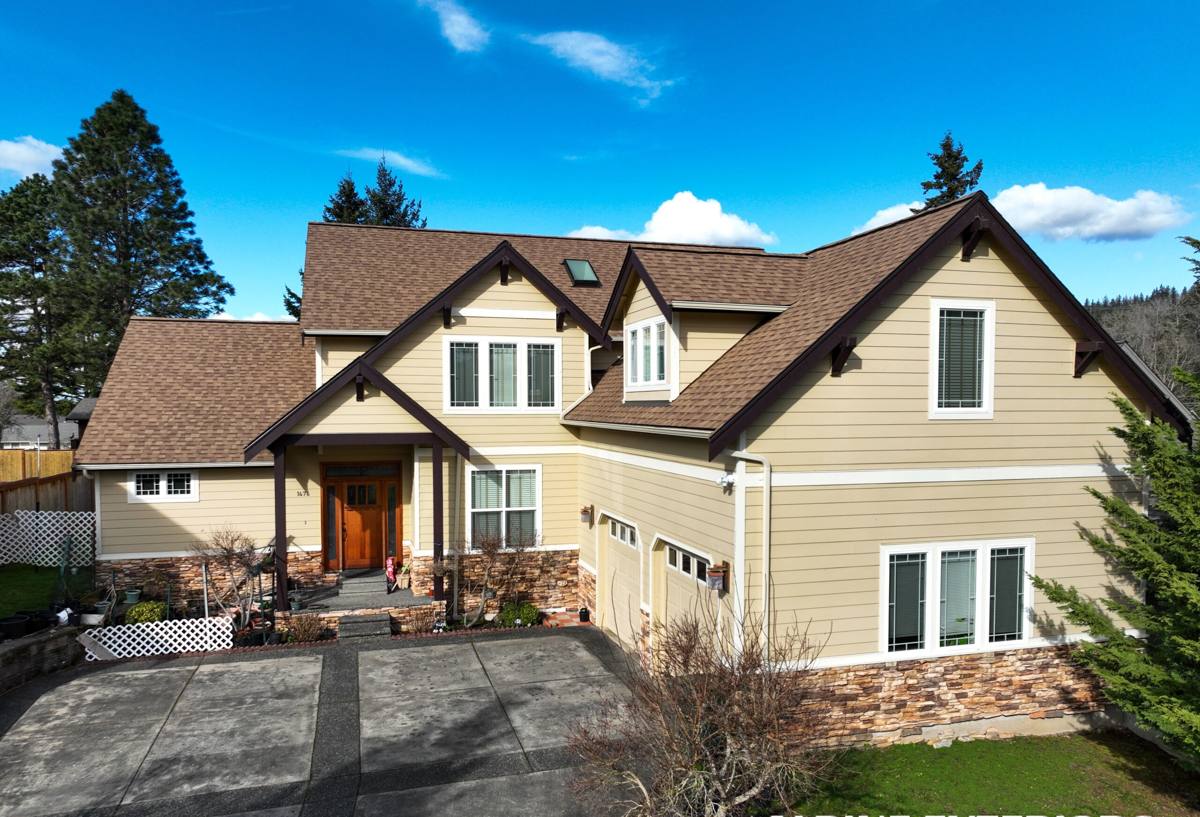
What Fidalgo Island's Climate Does to a Deck
Salt Air and Corrosion
Homes close to the water take on airborne salt that settles on every exposed surface, including deck hardware. Standard fasteners, brackets, and screws that are fine in a drier, inland yard can start rusting and staining the wood around them within a couple of seasons on a waterfront or near-waterfront lot. Once corrosion starts on a structural fastener, it's not just cosmetic — it's a slow loss of holding strength.
Driving Rain and Trapped Moisture
Anacortes gets a lot of its rain in wind-driven bursts rather than gentle straight-down showers, and that matters for a deck attached to a house. Rain gets pushed sideways into ledger connections, under railing posts, and into any gap where end grain is exposed. Wood that stays wet longer than it needs to is wood that rots, and the areas most likely to trap water — ledger boards, post bases, and butt joints — are exactly the areas a rushed or inexperienced build tends to shortcut.
Moss, Algae, and Slip Risk
The long wet season here isn't just hard on the wood itself — it's hard on the walking surface. Moss and algae take hold fast on any deck surface that doesn't get regular sun or airflow, and a mossy deck is a genuinely slippery deck, not just an unattractive one. Decking material, board spacing, and how much airflow gets underneath the structure all affect how quickly moss becomes a problem.
Choosing the Right Decking Material
There's no single "best" decking material for every project — it depends on budget, how much maintenance you're willing to do, and how exposed the deck is to wind and salt spray. Here's how the common options actually compare in this climate.
| Material | How It Handles This Climate | Maintenance | Relative Cost |
|---|---|---|---|
| Pressure-treated lumber | Holds up well if properly sealed and re-sealed; end cuts and fastener holes need extra attention | Annual cleaning, resealing every 1–2 years | Lowest upfront |
| Cedar | Naturally rot- and insect-resistant, but the surface grays and softens faster in constant damp and salt air without upkeep | Regular cleaning and periodic oil or sealant | Mid-range |
| Composite decking | Doesn't rot or splinter; some early-generation composites held moisture and grew mold in shaded, damp spots — newer capped composites handle this much better | Occasional washing, no sealing or staining | Higher upfront |
| PVC decking | Fully synthetic, doesn't absorb water at all, holds up well against salt air and moss | Lowest — mostly just washing | Highest upfront |
We'll walk through this trade-off with you honestly rather than push whatever has the best margin. A lot of Fidalgo Island homeowners land on a capped composite or PVC decking for the walking surface specifically because it removes the sealing and staining cycle from the maintenance list — that matters more here than in a drier climate, because the weather window for outdoor maintenance work is shorter.
Fasteners and Hardware
Whatever decking material you choose, the hardware holding it all together matters just as much, and it's the part most homeowners never think to ask about. On or near Fidalgo Island, we treat stainless steel or high-grade coated fasteners and structural connectors as the standard, not an upgrade — standard galvanized hardware simply doesn't hold up as well against sustained salt exposure. The same goes for post bases, joist hangers, and ledger flashing.
What's Underneath Matters as Much as What's on Top
A deck's surface is the part everyone sees, but the framing, flashing, and connections underneath are what determine whether it's still solid in fifteen years. This is where a lot of problems on older or lower-bid decks actually start.
Ledger Board Flashing
If a deck attaches to the house, the ledger board connection is the single most important detail on the whole project. Done wrong, it lets water track behind the flashing and into the house's rim joist and wall framing — a problem that can go unnoticed for years until there's real rot damage. Done right, with proper flashing and a drainage gap, it keeps water moving away from the structure instead of into it.
Footings and Post Bases
Footings need to sit below frost depth and on undisturbed or properly compacted soil, and post bases should hold the post up off the concrete rather than letting end grain sit directly on a surface that collects water. On sites with poor drainage or heavier clay soils, we adjust footing design accordingly rather than using a one-size-fits-all approach.
Airflow Underneath
Decks built low to the ground or over poorly draining soil trap moisture underneath, which speeds up both rot and moss growth on the surface above. Adequate clearance and, where needed, grading or drainage work underneath the deck make a real difference in how the whole structure ages.
Our Deck Building Process
Every deck project follows the same general sequence, though the specifics get adjusted for the site, the slope, and what the homeowner wants out of the space.
- Site evaluation — we look at sun exposure, wind direction, drainage, existing grade, and how close the deck will sit to the water or open exposure, since that affects material and hardware choices.
- Design and layout — sizing, elevation, stair placement, and railing style get worked out with the homeowner before anything is ordered.
- Permitting — most decks attached to a house, or elevated above a certain height, require a permit through the applicable building department. We handle that process rather than leaving it to the homeowner.
- Framing and flashing — footings, posts, beams, joists, and ledger flashing go in first, built to hold up under this area's rain and wind loads.
- Decking installation — boards are laid with the spacing and fastening method appropriate to the chosen material.
- Railings and finishing — railing systems, stairs, and any trim or skirting get installed and checked for code compliance on height and baluster spacing.
- Final walkthrough — we go over the finished deck with the homeowner, including what maintenance to expect going forward.
Permits and Building Codes
Deck construction on Fidalgo Island falls under either City of Anacortes or Skagit County building requirements depending on the specific property location, and most attached or elevated decks need a permit before work starts. Code requirements typically cover things like footing depth, guardrail height, baluster spacing, and stair rise and run. We manage the permitting and inspection process as part of the job so homeowners aren't left navigating that on their own, and so the finished deck is something that will pass inspection and hold up to scrutiny at resale.
Maintaining a Deck in a Marine Climate
Even a well-built deck needs some seasonal attention here — the climate simply asks more of an outdoor structure than it does in drier parts of the state. A basic yearly routine goes a long way:
- Sweep and wash the surface at least once or twice a year to clear moss, algae, and organic debris before it builds up
- Check railing posts and stair connections for looseness, which can signal fastener corrosion or wood movement
- Reseal or restain wood decking on the schedule appropriate to the product — don't wait until it visibly grays and cracks
- Keep gutters and downspouts near the deck clear so runoff isn't dumping extra water onto or under the structure
- Trim back vegetation that shades the deck surface and keeps it damp longer than it needs to be
- Look underneath the deck periodically for standing water, soft wood, or signs of pest activity around posts and beams
Why Hire a Crew That Already Works Fidalgo Island
A deck built by a crew unfamiliar with this specific stretch of coastline tends to make the same avoidable mistakes: standard-grade hardware that corrodes early, ledger flashing details borrowed from drier-climate practice, or decking material chosen without accounting for how much shade and moisture a particular lot actually gets. None of those mistakes show up on day one — they show up in year three or four, as loose railings, soft ledger connections, or a walking surface that's slick half the year.
Working regularly in Anacortes and on Fidalgo Island means we've already seen how different lots on the island behave — which sites get hit hardest by wind and salt spray, which ones sit in enough shade to grow moss fast, and which soil types need extra attention at the footings. That local pattern recognition is part of what you're paying for when you hire a contractor who already knows the area, on top of the actual craftsmanship.
Get a Free, No-Pressure Estimate
If you're planning a new deck on Fidalgo Island or need an honest assessment of one that's showing its age, we're happy to take a look and walk you through the options — no pressure, no obligation. Use the form below to request a free estimate.