 Anacortes Siding
 Siding Repair for Edison Homes Near Samish Bay
Edison sits in one of the wetter, greener corners of Skagit County, tucked between farmland and the tidal flats along Samish Bay. That location is part of what makes it beautiful, and part of what makes siding repair here a different job than it is twenty minutes inland. Homes in and around Edison deal with a longer damp season, more shade from mature trees and fencerows, and a steady dose of salt-tinged air moving in off the water. Siding that would hold up fine in a drier, more open part of the county can start showing problems years earlier out here.
We work on homes throughout the Anacortes and Skagit County area, and Edison shows up on our repair calls often enough that we've come to expect certain patterns: moss creeping up from the bottom courses, soft spots near ground level, and trim that's held onto moisture longer than it should have. None of that is unusual for the area — it's just what this climate does to siding over time, especially siding that wasn't detailed correctly when it went up.
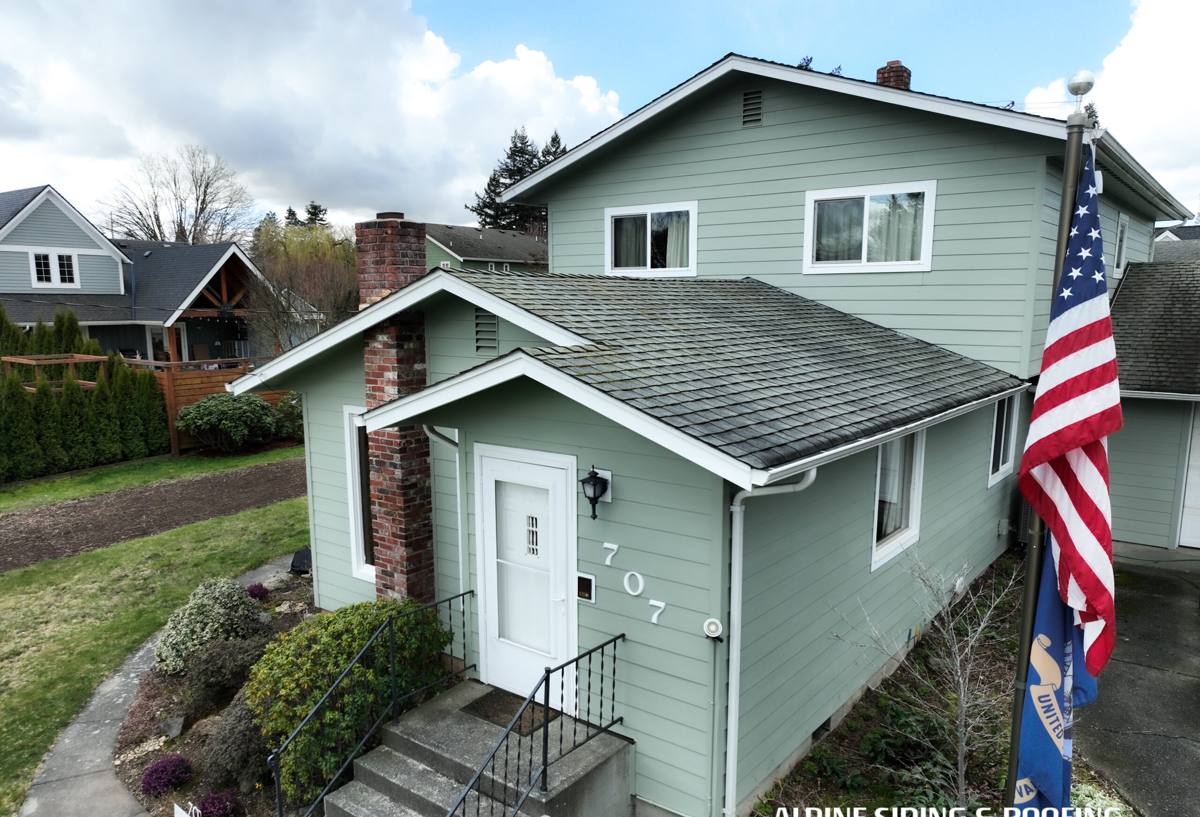
What This Climate Does to Siding Over Time
Three things drive most of the siding repair work we see in Edison:
- Salt-influenced air — proximity to Samish Bay means siding, fasteners, and trim take on a low but constant dose of salt-laden moisture, which accelerates corrosion in exposed fasteners and speeds up the breakdown of lower-grade materials.
- Driving rain — wind off the water pushes rain sideways into walls rather than letting it run straight down, which puts extra stress on laps, seams, and anything that wasn't flashed or caulked correctly the first time.
- Extended moss season — shaded walls, tree cover, and consistently damp ground keep moisture sitting against siding longer here than in more open, sun-exposed parts of the county. Moss isn't just cosmetic — it holds water directly against the surface and, over years, that constant dampness is what leads to rot underneath.
Individually, none of these is dramatic. Together, over a few winters, they're exactly the combination that turns a small gap in flashing or a hairline crack in siding into a soft wall panel or a rotted corner board.
Common Repair Issues We See in Edison
Moisture Damage at the Base of Walls
Lower courses of siding sit closer to splashback, standing moisture, and shaded ground — all more pronounced on properties with mature landscaping or homes set back from the road under tree cover, which describes a lot of Edison. This is where we most often find soft siding, swelling, or staining that signals water has been getting behind the surface.
Moss and Organic Growth
Moss on a roof gets noticed. Moss on siding often doesn't, until it's thick enough to hold visible moisture. On shaded walls facing away from the sun, moss can establish itself within a couple of seasons and keep the material underneath damp far longer than it would otherwise stay.
Failed Caulking and Trim Joints
Caulk has a service life, and in a climate this damp, it's shorter than manufacturers' best-case numbers suggest. Once a bead cracks or pulls away at a window, corner, or butt joint, wind-driven rain finds its way in — and because Edison gets more of that sideways rain than sheltered inland areas, failed caulking here tends to turn into real moisture intrusion faster.
Fastener Corrosion
Older siding installations, especially anything installed with standard rather than corrosion-resistant fasteners, can show rust streaking, popped nail heads, or loosening panels — accelerated by the salt content in the air near the bay.
What a Correct Siding Repair Actually Involves
A repair that just patches the visible symptom tends to fail again within a season or two. A repair done right starts with figuring out why that spot failed in the first place.
Diagnose Before You Patch
We pull back siding around the damaged area to check whether moisture has reached the water-resistive barrier, sheathing, or framing. A stained board is sometimes just cosmetic; sometimes it's the visible edge of a much larger problem underneath. You can't tell which without opening it up.
Fix the Water Path, Not Just the Board
If the damage traces back to a flashing gap, a caulking failure, or grading that's pushing water toward the wall, replacing the siding alone doesn't solve anything — the same spot will fail again. Correct repair means addressing the water path first, then the siding.
Match Material and Method
Repairs need to match the existing siding in profile, reveal, and fastening pattern, or the patch will stand out and can create its own new water path at the seam. Where the surrounding siding is failing broadly rather than in one isolated spot, we'll say so plainly — patching a wall that's failing across multiple areas is a short-term fix, not a real solution.
Rebuild Damaged Structure Where Needed
If sheathing or framing behind the siding has softened, that gets replaced before anything new goes back on. Closing damaged framing back up under new siding just hides the problem for the next owner to find.
Repair or Replace? What We Weigh
| Factor | Leans Toward Repair | Leans Toward Replacement |
|---|---|---|
| Extent of damage | Isolated to one or two areas | Spread across multiple walls or elevations |
| Underlying structure | Sheathing and framing sound | Widespread rot found once opened up |
| Siding material | Newer, still-manufactured product | Discontinued product with no color/profile match |
| Age of existing siding | Well within expected service life | Near or past the material's realistic lifespan |
| Moss/moisture history | First occurrence, clear cause | Recurring problem despite past repairs |
We'll always give you a straight answer on which side of that table your home falls on. If a targeted repair genuinely solves the problem, that's what we recommend — replacement isn't the answer just because it's more work.
Our Repair Process
- On-site inspection — we look at the damaged area and the surrounding siding, not just the spot you called about, since one visible failure often points to a broader pattern.
- Open and assess — affected siding is pulled back to check the condition of the barrier, sheathing, and framing underneath.
- Address the cause — flashing, caulking, or drainage issues get corrected before anything is closed back up.
- Rebuild as needed — any damaged sheathing or framing is replaced, not just covered.
- Match and install — new siding is installed to match reveal, profile, and fastening, using corrosion-resistant fasteners suited to this climate.
- Final check — we walk the repair with you before we consider the job done.
Why Material Choice Matters for a Repair That Lasts
When a repair does call for replacing sections of siding, what we install matters as much as the workmanship. We install James Hardie fiber cement siding exclusively, and in a climate like Edison's, the reasons are practical rather than theoretical. Hardie's HZ5 product line is engineered specifically for climates with the kind of moisture exposure and freeze-thaw cycling the Pacific Northwest sees. Fiber cement doesn't feed moss the way some organic and wood-based siding products can, it resists moisture-driven swelling and rot far better than wood or engineered wood siding, and it holds its factory-applied ColorPlus finish without the fading or peeling that repeated damp cycles cause in field-painted materials. When we patch in Hardie siding on a repair, the new material is built for exactly the conditions that damaged the old siding in the first place — which is a big part of why the repair actually holds.
Why It Matters to Hire a Crew That Already Works in Edison
Edison isn't a huge town, and it isn't the first place every siding contractor thinks of. A crew that's worked here already understands why a wall on the shaded side of a farmhouse near the flats behaves differently than a wall on a newer, more exposed home closer to Anacortes proper. That local pattern recognition matters — it's the difference between a repair that addresses the actual cause and one that just covers the symptom for a season. We're based out of Anacortes and cover Skagit County regularly, so getting to Edison for an inspection or a repair isn't a special trip — it's routine work in our service area.
Signs Your Siding Needs a Professional Look
- Soft or spongy spots when you press on the siding, especially near the bottom courses
- Visible moss or persistent green staining on shaded walls
- Cracked, gapped, or missing caulking at trim, corners, or window edges
- Rust streaking below nail heads or fasteners
- Peeling paint or a chalky, deteriorating surface
- Warping, buckling, or panels that have pulled away from the wall
- A musty smell or interior wall staining near an exterior wall
If you're seeing any of that on a home in Edison, it's worth getting a real look before another wet Skagit County winter makes it worse. We offer free, no-pressure estimates — we'll tell you honestly whether you're looking at a straightforward repair or something bigger, with no obligation either way.