 Anacortes Siding
 Roof Repair Built for Flounder Bay's Waterfront Conditions
Homes in Flounder Bay sit close enough to the water that the roof takes on a different kind of wear than a roof a few miles inland. Salt-tinged marine air moves across the property year-round, working on exposed fasteners and flashing metal in ways that aren't visible until a leak finally shows up inside the house. Rain in this part of Skagit County doesn't always fall straight down — it gets pushed sideways by wind coming off the water and forced up under shingle edges and flashing laps that would stay dry in a calmer setting. And on roof planes that stay shaded through the wetter months, moss and algae take hold early and hang on long into what should be the dry season.
None of that means every roof problem in Flounder Bay calls for a full tear-off and replacement. Plenty of roofs in this neighborhood are structurally sound and have years of service life left — they just have specific, identifiable problems that need to be found and fixed correctly. This page is about that: what roof repair actually involves for a Flounder Bay home, how to tell when repair is the right call, what a correct repair looks like, and why it matters to hire a crew that already understands this particular stretch of coastline.
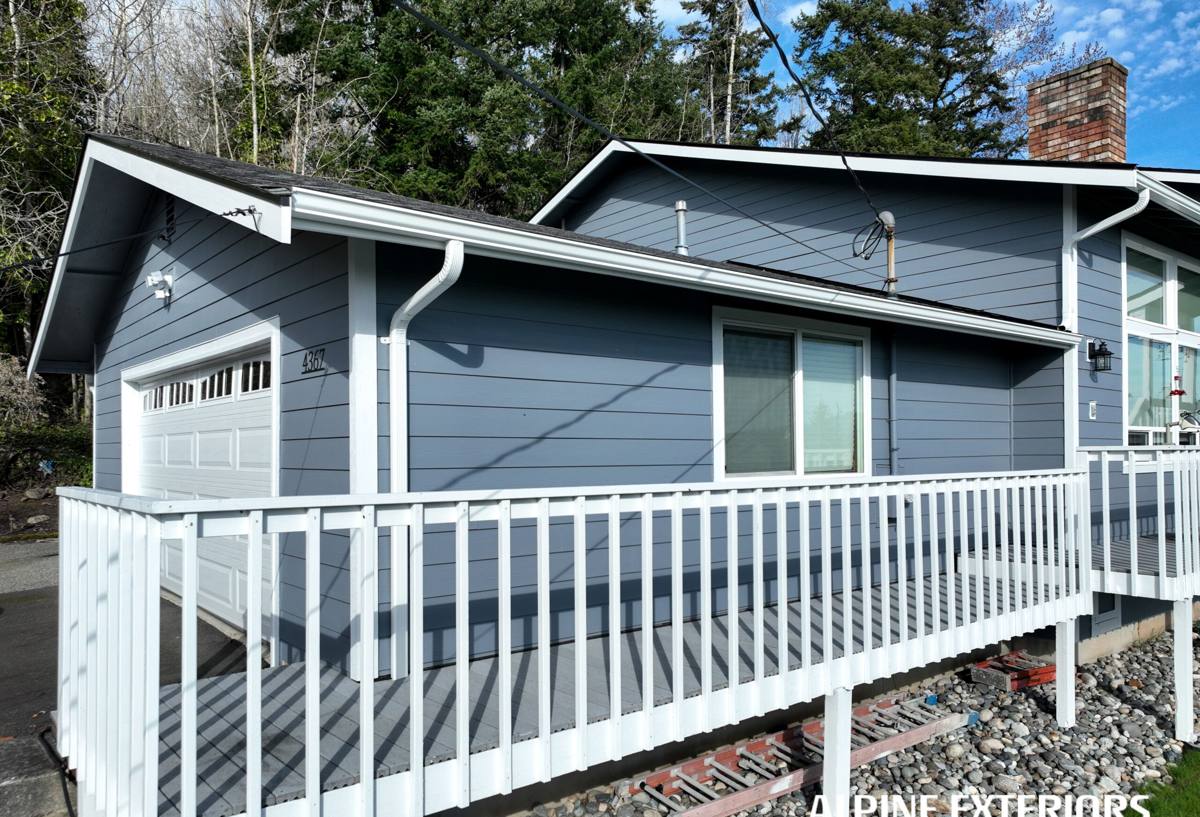
Why Targeted Repair Often Makes More Sense Than Full Replacement
A full roof replacement is sometimes the right answer, but it's a bigger investment than most roof problems actually require. When the underlying deck is sound and the shingles or metal roofing still have useful life left, a well-executed repair can resolve the actual problem — a leak, a failed flashing detail, wind-lifted shingles — without spending money on square footage of roof that isn't failing.
The key word is targeted. A repair only works long-term if it addresses the actual cause of the problem, not just the visible symptom. Roofing cement smeared over a symptom without fixing what's underneath it is a temporary patch, not a repair, and it tends to fail again within a season or two — often in wetter weather than the first time. A proper repair diagnoses why water is getting in, then rebuilds that specific section of the roofing system correctly.
What's Actually Damaging Roofs in Flounder Bay
Understanding what's driving the damage on a given roof is most of the work of diagnosing it correctly. In this neighborhood, three factors show up again and again.
Salt Air and Metal Corrosion
Flashing metal, roofing nails, and any exposed fasteners are the first parts of a roof to show the effects of salt-laden air. Lower-grade or undersized metal corrodes faster here than it would a few miles inland, and once flashing starts to rust through at a seam or fastener hole, it stops shedding water the way it's supposed to. This is one of the most common root causes behind a leak that seems to appear out of nowhere.
Wind-Driven Rain
Open water nearby means wind off the bay can push rain sideways and even slightly upward against a roof surface, rather than letting it simply run downhill and off the edge. That matters most at transitions — valleys, chimney flashing, wall intersections, and shingle laps — where a small gap that would stay dry in calm rain becomes a point of entry when the wind picks up.
A Long Moss Season
Shaded or north-facing roof planes in Flounder Bay hold moisture long enough for moss to establish itself, and once it does, it works against the roof in more than one way. Moss holds water against the shingle surface, which accelerates granule loss and shingle aging, and as it spreads it can lift shingle edges just enough to let wind-driven rain underneath. Left unaddressed, moss growth is one of the more common paths from "the roof needs cleaning" to "the roof needs a leak repaired."
Common Roof Repairs We Handle Here
Every roof is different, but the repairs we're called out for in this neighborhood tend to fall into a fairly consistent set of categories.
- Flashing repair and replacement at valleys, chimneys, skylights, and wall transitions, where corrosion or a poorly integrated original install is the actual source of a leak.
- Shingle replacement for sections that are cracked, curling, or missing after wind exposure, matched as closely as possible to the surrounding roof.
- Leak tracing and repair, tracking a water stain on a ceiling or in the attic back to its actual entry point, which is often several feet from where the stain shows up inside.
- Moss and organic growth remediation, including safe removal and treatment on shaded planes before growth compromises the shingles underneath it.
- Storm and wind damage repair, addressing lifted, torn, or displaced roofing after a significant weather event.
- Deck repair in isolated areas where sustained moisture intrusion has softened the plywood or OSB beneath the roofing.
- Ventilation corrections where poor attic airflow is trapping moisture and accelerating problems from underneath the roof deck.
Repair vs. Replacement: How to Tell Which You Need
Homeowners often aren't sure which category their roof falls into, and an honest contractor should be willing to say plainly when repair is the right call and when it isn't.
| Situation | Repair Usually Makes Sense | Replacement Usually Makes Sense |
|---|---|---|
| Age of roof | Roof is well within its expected service life | Roof is at or past the end of its expected lifespan |
| Extent of damage | Damage is isolated to one section, flashing detail, or penetration | Damage or wear is widespread across most of the roof |
| Deck condition | Decking underneath is sound where inspected | Deck rot or soft spots are found in multiple areas |
| Shingle condition | Granule loss and curling are limited to the repair area | Granule loss and curling are consistent across most planes |
| History of leaks | First occurrence or a single identifiable cause | Recurring leaks in different locations over time |
When there's genuine uncertainty, the honest move is an inspection that looks past the visible symptom and checks the deck, the flashing, and the surrounding shingle condition before recommending either path. A contractor who suggests full replacement without ever getting on the roof to look closely isn't giving you enough information to make that decision.
What a Correct Repair Involves
A repair that actually holds up through Flounder Bay's wet season is built the same way a full roofing job is — it just covers a smaller, targeted area.
Diagnosis Before Anything Else
The repair starts with tracing the problem to its real source. Water can travel along rafters or underlayment before showing up as a stain, so the visible damage inside a house is not always directly below the actual entry point on the roof. Getting this wrong means repairing the wrong spot and having the leak return.
Removing Compromised Material, Not Covering It
The damaged shingles, underlayment, or flashing in the affected area need to come out, not get buried under new material. Anything installed over compromised flashing or rotted decking is sealing in a problem rather than solving it, and it tends to resurface — often in a worse spot — within a season or two.
Rebuilding the Section to Spec
New underlayment, correctly lapped flashing, and properly fastened shingles go back in following the same standards used on a full roof install: corrosion-resistant fasteners and flashing metal given the salt air exposure, underlayment suited to wind-driven rain, and shingle courses tied in cleanly with the surrounding roof so the repaired section sheds water the same way the rest of the roof does.
Matching and Blending
We make a genuine effort to match shingle color and profile to the existing roof, though some visible difference is normal on an older roof where the surrounding shingles have weathered and faded over time. We'll tell you honestly upfront if an exact match isn't realistic rather than promising something we can't deliver.
Cost Factors Worth Understanding
Roof repair costs vary more than people expect, and the reason usually comes down to a few specific factors rather than the contractor simply charging more or less.
| Factor | What It Affects |
|---|---|
| Size and number of affected areas | Labor time and material needed for the repair |
| Cause of the damage | Whether the fix is a straightforward patch or involves flashing rebuild and deck repair |
| Roof access and pitch | Staging, safety equipment, and time needed to work the area safely |
| Extent of hidden deck damage | Whether plywood or OSB needs to be cut out and replaced before roofing goes back on |
| Shingle availability and match | Whether a close match is on hand or needs to be sourced |
A trustworthy estimate breaks these out rather than giving a single vague number, and it should be clear about what happens if hidden damage is found once the affected shingles come off — a possibility on almost any repair, since some of what needs fixing simply isn't visible until the old material is removed.
How Our Process Works
We run repair calls with the same care we'd want if it were our own roof, and we keep the homeowner informed at every step.
- In-person inspection: We get on the roof and, where relevant, check the attic, rather than diagnosing from photos or a description over the phone.
- Honest diagnosis: We identify the actual cause of the problem and tell you plainly whether it's a repair or something that points toward replacement.
- Written estimate: You get a clear scope of work covering what's being removed, what's going back in, and what happens if we find hidden damage once we're into the repair.
- The repair itself: Compromised material comes out, the affected section is rebuilt to the same standard as a full roof install, and shingle color and profile are matched as closely as possible.
- Final walkthrough: We review the completed repair with you and do a site cleanup, including a check for stray fasteners, before considering the job finished.
Why Hiring a Crew That Already Works Flounder Bay Matters
A crew that's spent real time working roofs in Flounder Bay has already seen how salt air chews through underspecified flashing, which roof orientations hold moss longest, and how wind off the water finds its way into a valley or wall transition that a drier inland roof would never have a problem with. That kind of practical, earned familiarity shapes dozens of small decisions during a repair — decisions a crew unfamiliar with this specific waterfront setting might not think to make.
It also matters after the work is done. A repair warranty is only worth as much as the company standing behind it, and a contractor with an ongoing presence in the area is one you can actually reach if a question comes up down the road.
A Practical Checklist Before You Hire a Roof Repair Contractor
- Do they physically inspect the roof and, when relevant, the attic before quoting a price?
- Does the estimate explain the actual cause of the damage, not just describe the visible symptom?
- Are they clear about whether repair or replacement is the more sensible long-term choice, even if repair is the smaller job?
- Do they carry current WA contractor licensing, liability insurance, and workers' compensation?
- Can they point to recent, real repair work in or near Flounder Bay?
- Does the estimate separate labor, materials, and any contingency for hidden deck damage?
Signs Your Flounder Bay Roof Needs Repair Now
Roof problems in this climate rarely announce themselves loudly at first. Catching the early signs is often the difference between a modest repair and a much bigger job later.
- A water stain on a ceiling or in the attic, even a small one that hasn't grown
- Visible moss or dark streaking building up on shaded or north-facing roof planes
- Shingles that look lifted, cracked, or curled, especially after a windy stretch of weather
- Rust staining running down from a flashing detail at a chimney, valley, or skylight
- Granules collecting in the gutters or downspouts more than usual for the roof's age
If any of these sound familiar, it's worth having the roof looked at before the next round of wind and rain rather than waiting to see if it gets worse on its own.
If you'd like an honest look at your Flounder Bay roof and a straight answer about whether it needs a repair or something more, we're glad to come take a look — no pressure, no upsell. Use the form below to request a free estimate.