 Anacortes Siding
 Windows Built for the Skagit Valley, Not a Showroom in Arizona
Mount Vernon sits inland from Anacortes and Fidalgo Bay, but the marine air still finds its way up the valley. Add in fog off the Skagit River floodplain, a long wet season, and the moss that takes hold on anything shaded and damp, and you've got a climate that's hard on windows in ways a generic sales brochure never mentions. Salt-tinged moisture works into seals and frame joints, driving rain tests every piece of flashing and caulk around an opening, and the region's mild-but-long heating season means a window's real-world performance matters every single day, not just on a handful of extreme weather days.
When we talk about "energy-efficient windows" for a Mount Vernon home, we mean windows and installation details chosen specifically for this combination of moisture, wind-driven rain, and temperature swings — not just a product with a good rating on paper.
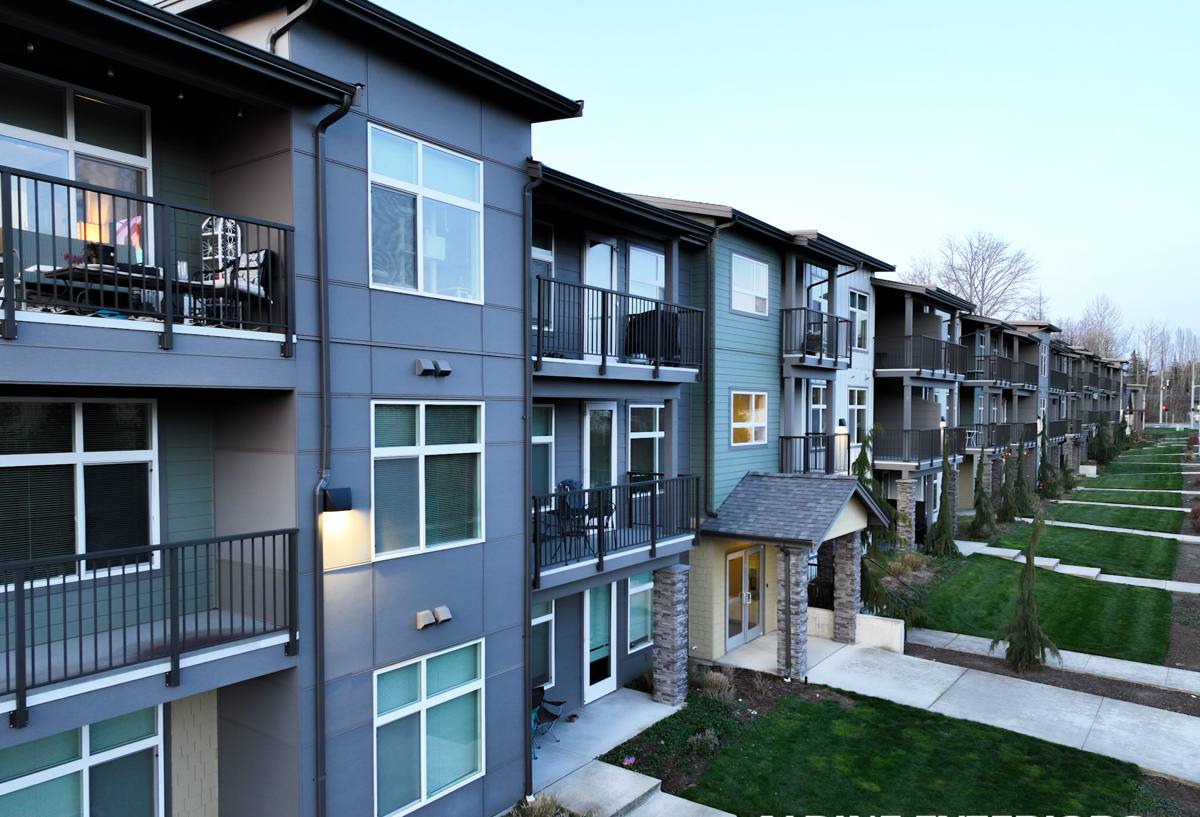
What Old or Poorly Installed Windows Are Actually Costing You
Most homeowners notice the obvious symptoms first: cold drafts near the frame in winter, condensation fogging up between the panes, or a window that's suddenly hard to open and close. Those are surface signs of a deeper problem. In this climate, failing windows usually mean:
- Broken seals letting moisture into the glass unit, which shows up as permanent fog or cloudiness that no amount of cleaning will fix
- Wood frames or sills that have started to soften or discolor from years of trapped moisture
- Gaps around the frame that let wind-driven rain track behind trim and siding, not just into the house
- Higher heating bills from constant heat loss through single-pane glass or worn-out weatherstripping
- Moss or mildew building up in shaded corners where poor drainage keeps the frame damp longer than it should be
None of these problems fix themselves, and most get more expensive the longer they're left — a soft sill today is a rotted rough opening in a few years.
What "Energy-Efficient" Actually Means
The term gets used loosely, so it's worth breaking down what actually separates a genuinely efficient window from one that's just marketed that way.
The numbers that matter
Two ratings do most of the work: U-factor (how much heat the window lets escape — lower is better for our climate) and SHGC, or solar heat gain coefficient (how much solar heat passes through the glass — this matters more on south- and west-facing walls that get direct afternoon sun). A low-E coating on the glass and an argon gas fill between panes both improve U-factor without changing how the window looks. A warm-edge spacer (the material separating the panes at the glass edge) reduces the cold spot that shows up as condensation right at the corner of the glass in winter — a common complaint in valley homes that see a lot of humid, cool mornings.
Frame material matters as much as the glass
| Frame Material | Coastal/Marine Durability | Maintenance | Typical Cost |
|---|---|---|---|
| Vinyl | Good — won't rot or corrode; can expand/contract with big temperature swings | Low — no painting, occasional cleaning | Lowest |
| Fiberglass | Very good — dimensionally stable, holds up well to moisture and salt air | Low — factory finish holds up for years | Mid to upper-mid |
| Wood-clad | Fair — the exterior cladding protects the wood, but any breach in the seal exposes wood to rot | Higher — seals and caulk lines need periodic inspection | Highest |
We don't push one material for every home. A shaded, north-facing wall that stays damp longer behaves differently than a sun-exposed south wall, and we factor that into what we recommend, not just what looks best in a catalog.
Installation Is Where Efficiency Is Actually Won or Lost
A high-performance window installed poorly will underperform a modest window installed correctly — this is the single most overlooked fact in window replacement. The window itself is only part of the system; the other part is how it ties into the wall assembly around it.
A correct installation in this climate includes:
- Removing old flashing and checking the rough opening and sheathing underneath for hidden moisture damage before anything new goes in
- Installing new flashing and integrating it properly with the house wrap or weather-resistive barrier so water is directed out, not trapped behind the siding
- Shimming the window square and plumb — an out-of-square window stresses seals and hardware over time
- Insulating the gap between the frame and rough opening with a material that stays flexible, rather than overfilling with rigid expanding foam that can bow the frame
- Sealing the exterior with a sealant rated for the surface and movement it will see, then backing that up with correctly lapped trim or flashing — sealant alone is never the whole answer
- Confirming the sash operates smoothly and the locking hardware compresses the weatherstripping evenly on all sides
Skip any one of these steps and you can end up with a brand-new, high-rated window that still leaks air, fogs up, or lets water behind the siding within a few winters.
Our Process for Mount Vernon Window Projects
Assessment first
We start by walking the exterior and looking at each opening individually — sun exposure, existing moisture staining, the condition of the surrounding siding and trim, and how the home's drainage plane is set up. A window on a shaded, moss-prone north wall doesn't need the same glass package as one taking direct afternoon sun on the west side.
Matching the product to the opening
From there we recommend frame material and glass package based on that specific wall's exposure, not a single default spec for the whole house. If your budget only covers part of the project this year, we'll tell you honestly which openings matter most.
Removal and install
We remove the old unit carefully to protect the surrounding siding and trim wherever possible, inspect the opening once it's exposed, address any hidden rot or moisture damage we find before it gets covered back up, and install with proper flashing integration — not just caulk and hope.
Final walkthrough
Before we consider a job finished, we test every operable window, check that hardware locks tight and evenly, and walk the exterior with you so you know exactly what was done and why.
Signs It's Time to Replace, Not Just Repair
- Fogging or cloudiness between the panes that cleaning doesn't remove
- Visible gaps, drafts, or daylight around the frame when the window is closed
- Wood trim or sills that feel soft, spongy, or show discoloration
- Windows that are difficult to open, close, or lock without extra force
- Noticeable moss, mildew, or dark staining building up around the frame or sill
- A room that's consistently colder or draftier than the rest of the house
- Condensation forming on the inside of the glass regularly, even in normal weather
What Drives the Cost of a Window Project
Every project is different, but the same handful of factors determine most of the cost:
| Factor | Why It Matters |
|---|---|
| Number and size of openings | More glass area and more units means more material and labor |
| Frame material chosen | Vinyl, fiberglass, and wood-clad carry different material costs, as shown above |
| Glass package | Double-pane with low-E and argon costs less than triple-pane; the right choice depends on exposure, not just budget |
| Condition behind the old window | Hidden rot or moisture damage found during removal adds repair work before the new unit goes in |
| Access and story height | Second-story or hard-to-reach openings take more time and equipment |
| Trim and siding integration | Matching or repairing surrounding siding and trim after the swap adds scope |
We give you a real number based on a look at your actual openings, not a phone quote based on square footage alone — there's too much variation between a straightforward swap and an opening that needs structural attention.
Why Hiring a Crew That Already Works Mount Vernon Matters
Window replacement isn't an isolated trade in this climate — it's part of the building envelope, and the envelope is exactly what a siding contractor works with every day. We're already dealing with flashing, moisture barriers, and how water moves behind exterior cladding on every siding job we do in Skagit County, so window tie-ins aren't a guessing game for us. We also know how to time exterior work around this area's weather — scheduling around driving rain stretches so sealants and flashing details can cure and set properly, rather than rushing a job between storm systems.
A crew that only installs windows and never touches the siding around them can miss how the two systems interact. We see both sides of that seam, which is exactly where problems show up first in a marine climate like this one.
If your Mount Vernon home has drafty, foggy, or aging windows, we're happy to take a look and give you a straightforward, no-pressure estimate — just fill out the form below and we'll get back to you.