 Anacortes Siding
 Why Fidalgo Island Decks Wear Out Faster Than You'd Expect
A deck on Fidalgo Island lives a harder life than the same deck would in a drier inland town. The island sits surrounded by saltwater, which means fasteners, flashing, and any exposed metal are dealing with salt-laden air on top of the normal moisture load every Pacific Northwest deck handles. Add in driving rain that comes sideways off the water during winter storms, and a moss season that can stretch from fall through spring, and you have a structure that's under near-constant attack from three directions at once: corrosion, water intrusion, and organic growth.
Most homeowners don't think about deck replacement until something obvious fails — a soft board, a wobbly rail, a stair stringer that flexes underfoot. By that point, the damage is usually deeper than the visible symptom. Framing lumber that's been wet and drying in cycles for a decade loses strength long before it looks rotten. This page covers what actually goes wrong with decks in this environment, what a correct replacement involves, and how we approach the job when we're out on Fidalgo Island.
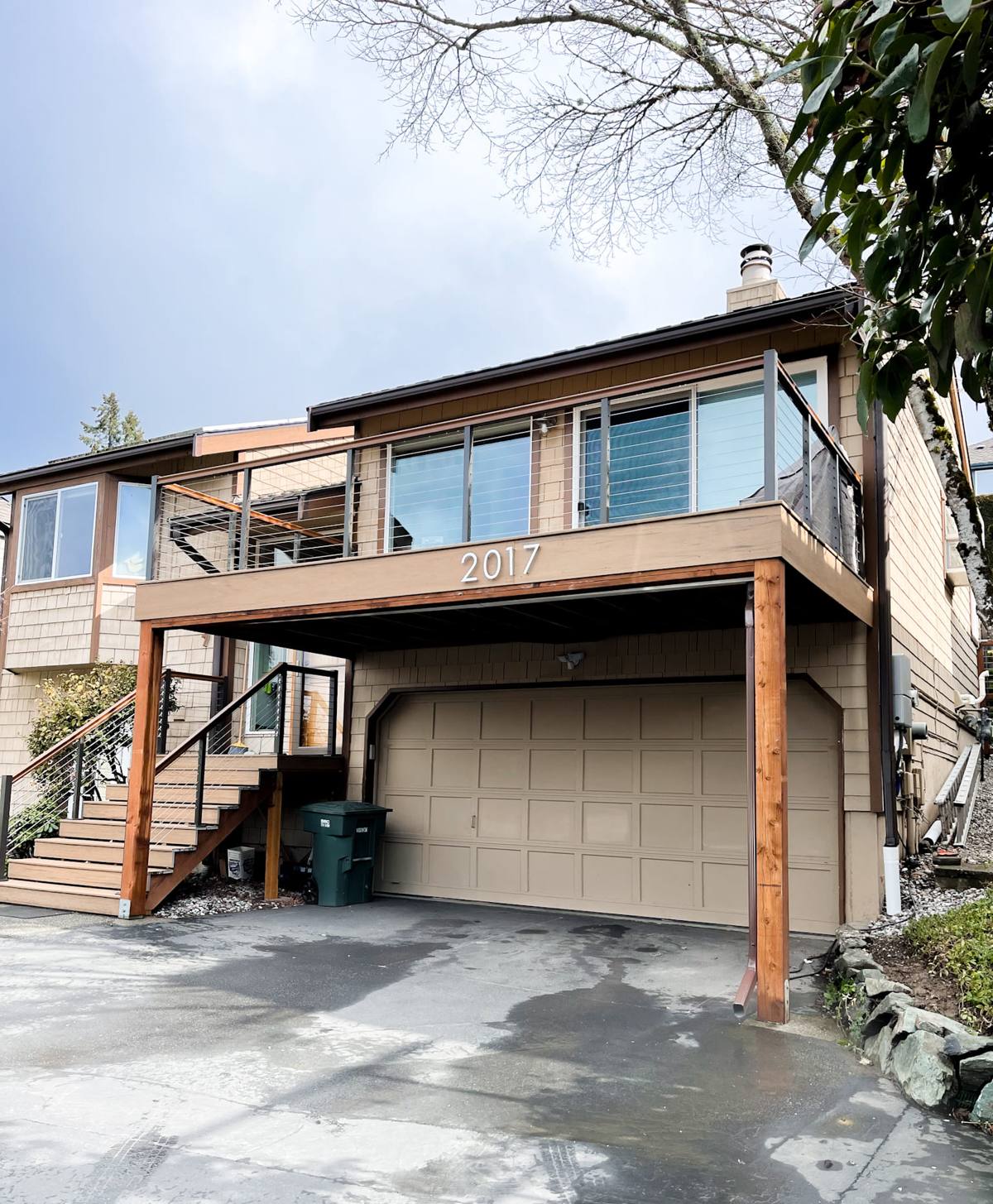
Signs Your Deck Needs Replacement, Not Just Repair
Repair makes sense when the problem is isolated — a few boards, a section of rail. Replacement becomes the honest answer when the damage has reached the structural bones of the deck: the ledger board, the joists, or the posts and footings. Here's how to tell which situation you're in.
- Soft or spongy decking in more than one area, not just around a single planter or drain point
- Rust streaking or crumbling at fastener heads, especially near the ledger board where the deck meets the house
- Visible gaps or separation where the ledger attaches to the framing — a common failure point in wet climates
- Persistent green or black staining on the underside of joists that comes back after cleaning
- Noticeable bounce, sway, or movement in the rail system when you lean on it
- A deck older than 20-25 years that has never had the framing inspected or the ledger flashing upgraded
If you're seeing two or more of these, it's worth having someone look at the framing before spending money on new boards over a structure that won't support them much longer.
What a Correct Deck Replacement Involves
A deck replacement is not just swapping old boards for new ones. Done right, it's a rebuild of everything between the house and the surface you walk on, with particular attention to the details that fail first in a marine climate.
Ledger Board and Flashing
The ledger — the board that attaches the deck to the house — is the single most common point of structural failure in Pacific Northwest decks, and it's usually a flashing problem, not a lumber problem. Water gets behind the ledger, sits against the house's structural framing, and rots both the ledger and the wall behind it from the inside. A correct replacement uses proper flashing that directs water away from this joint entirely, not just caulk over the old connection. On a site exposed to driving rain, this detail matters more than almost anything else in the job.
Framing and Joist Layout
We replace joists, beams, and posts that show any sign of decay rather than building new decking over questionable framing underneath. Joist spacing and beam sizing get checked against current code requirements, not just matched to whatever was there before — older decks are frequently under-built by today's standards, especially for stair loads and guard rail attachment points.
Fasteners and Hardware
Salt air accelerates corrosion on standard fasteners noticeably faster than it does further inland. We use stainless steel or high-grade coated fasteners and structural hardware rated for the exposure, particularly at joist hangers, post bases, and any connector near ground level or facing prevailing weather. This is one area where cutting corners doesn't show up as a problem for a few years — and then it shows up all at once.
Choosing Decking Material for a Marine Climate
There's no single "best" decking material — there's a best material for your budget, your maintenance appetite, and how exposed your deck is to weather. Here's how the common options actually perform in conditions like Fidalgo Island's.
| Material | Moisture & Salt Air Behavior | Maintenance | Typical Lifespan |
|---|---|---|---|
| Pressure-Treated Wood | Prone to checking, cupping, and fastener corrosion if not sealed regularly | Annual cleaning and re-sealing recommended | 10-15 years before major issues |
| Cedar | Naturally rot-resistant but still needs sealing against driving rain and moss | Sealing every 1-2 years, regular cleaning | 15-20 years with upkeep |
| Capped Composite | Resists moisture absorption well; shell resists moss staining better than wood | Occasional washing, no sealing | 25-30 years |
| PVC Decking | Fully synthetic, essentially immune to moisture damage and rot | Occasional washing | 30+ years |
We don't push one product line over another as a default. Composite and PVC cost more upfront but remove moisture and moss from the maintenance equation almost entirely, which matters a lot on a site where organic growth is a year-round concern. Wood costs less initially but only performs well if the maintenance actually happens — a sealed cedar deck that gets neglected for three winters in a row will show it faster here than in a drier climate.
Our Deck Replacement Process
We keep the process straightforward and give you visibility into what we find as we go, since framing condition often isn't fully known until the old decking comes off.
- On-site assessment — we inspect the existing deck, ledger connection, framing, and footings, and talk through what your household actually uses the space for.
- Written estimate — a clear scope covering demolition, framing, flashing, material selection, and railing, with options at different price points where they make sense.
- Permitting — we handle the permit application and inspection scheduling required for the project.
- Demolition and framing inspection — old decking and, where needed, old framing come out; we assess the ledger, joists, and posts once everything is exposed.
- Structural rebuild — new or repaired framing, corrected ledger flashing, and code-compliant post and beam sizing.
- Decking, rail, and stair installation — installed to manufacturer specifications for whichever material you've chosen.
- Final walkthrough — we go over the finished deck with you and cover basic care specific to the material installed.
Permits and Code Considerations
Deck replacement in Anacortes typically requires a permit, particularly when framing, footings, or guard rails are being rebuilt rather than just the surface decking. Requirements can depend on deck height, size, and proximity to property lines, and Skagit County shoreline regulations can come into play for homes closer to the water, which is common on Fidalgo Island. We handle the permit process as part of the job rather than leaving it for the homeowner to sort out, and we build to current guard rail height and baluster spacing requirements even when the original deck predates those rules.
Caring for Your New Deck
Whatever material you choose, a little seasonal attention goes a long way toward getting the full lifespan out of it in this climate.
- Clear leaves and debris out of gaps between boards before fall rains set in — trapped organic matter is what feeds moss growth
- Rinse or lightly scrub composite and PVC decking once or twice a year to prevent surface staining
- Reseal wood decking on the schedule the product calls for — don't wait until it looks weathered
- Keep gutters and downspouts near the deck clear so runoff isn't dumping extra water onto the structure
- Check the ledger flashing and any visible fasteners annually for early signs of rust or gaps
- Address a soft board or loose rail connection right away rather than waiting for it to spread
Why Hire a Crew That Already Works Fidalgo Island
Deck framing and flashing details that work fine in a drier inland climate can fail early here. A crew that's replaced decks around Anacortes and the rest of Skagit County knows which ledger flashing details actually hold up against driving rain off the water, which fastener grades are worth the extra cost given the salt air, and how much moss pressure to plan for when spacing boards and choosing materials. That local pattern recognition is the difference between a deck that needs attention again in eight years and one that goes twenty-five without a structural issue.
We also know the local permitting process and inspection expectations, which keeps the project moving instead of stalling on paperwork. When we quote a deck replacement, the estimate reflects what your specific site actually needs — not a generic template.
Get a Free, No-Pressure Estimate
If your deck is showing its age or you're not sure whether repair or replacement makes sense, we're happy to take a look and give you a straight answer. Fill out the form below to schedule a free estimate for your Fidalgo Island deck replacement — no pressure, no obligation.