 Anacortes Siding
 Siding in Edison Has to Work Harder Than Siding Almost Anywhere Else
Edison sits in a stretch of Skagit County where farmland meets tidal water, and that combination creates a microclimate that's tougher on exterior building materials than most homeowners realize. You've got the salt-laden air moving off Samish Bay, near-constant humidity rolling across open fields, driving rain that comes in sideways during winter storms, and long stretches of shade and moisture that keep moss and algae growing for most of the year. Siding that's fine in a drier inland neighborhood can start showing real problems here within a few seasons.
This page is about one thing specifically: James Hardie fiber cement siding, installed correctly, on homes in and around Edison. Not a general overview of siding options, not a sales pitch for whatever product happens to be in stock — a straight explanation of what this climate demands, what a proper Hardie installation looks like, and how our process is built around the conditions your home actually faces.
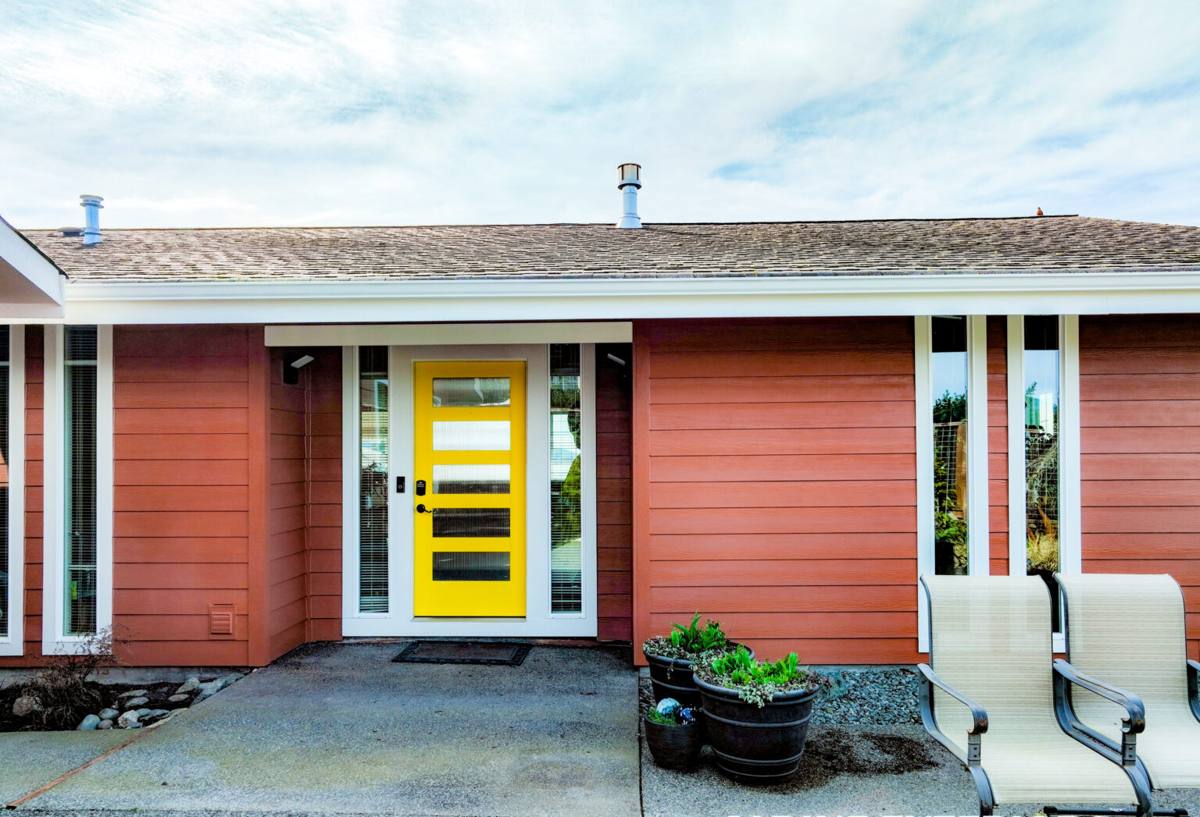
What Edison's Climate Actually Does to Siding
Salt Air Off Samish Bay
Homes closer to the water deal with airborne salt that settles on exterior surfaces and accelerates corrosion of fasteners, trim metal, and any material that isn't rated to handle it. Over years, that corrosion works its way into seams and joints, and once moisture finds a way behind the siding, the damage compounds fast. Materials and hardware need to be chosen with that exposure in mind from the start, not patched around later.
Driving Rain and Wind-Driven Moisture
Skagit County storms don't just drop rain straight down — wind pushes it sideways into wall assemblies, especially on exposed elevations. Siding that relies on caulk and paint film alone to keep water out will eventually fail here. What holds up is a system with proper flashing, correct lap and gap spacing, and a water-resistant barrier behind it doing the real work, with the siding itself as the first line of defense rather than the only one.
The Long Moss and Algae Season
Between the tree cover common around Edison properties and the region's extended damp season, north-facing and shaded walls stay wet for long periods. That's exactly the environment moss, algae, and mildew need to take hold. Porous or absorbent siding materials feed that growth from the inside out. A dense, factory-finished fiber cement surface gives it far less to grab onto.
Why We Only Put James Hardie on Homes in This Climate
We install James Hardie fiber cement exclusively — no vinyl, no LP SmartSide, no Cemplank or Allura, no primed spruce or cedar. That's not a brand preference for its own sake; it's a standard we hold because of what this specific climate does to lesser materials over time. Fiber cement is non-combustible, dimensionally stable in wet-dry cycling, and doesn't feed moss and mildew the way wood-based products can. James Hardie's ColorPlus finish is baked on at the factory under controlled conditions, which gives it better fade and moisture resistance than field-applied paint, and the company backs its products with a strong, transferable limited warranty that reflects real confidence in long-term performance.
James Hardie also engineers specific product lines for different climate zones. For a marine, high-moisture environment like Edison's, that engineering matters — it's the difference between siding that's merely acceptable and siding that's actually built for the conditions on your wall.
What "Correct" Installation Actually Means
James Hardie siding performs the way it's designed to only when it's installed to the manufacturer's specifications. Skipping steps doesn't show up as a problem on day one — it shows up two, five, or ten years later, usually as trapped moisture, buckling, or premature finish failure. The table below outlines the difference between a shortcut installation and the standard we hold ourselves to.
| Installation Element | Common Shortcut | Correct Approach for This Climate |
|---|---|---|
| Rain screen / drainage gap | Siding nailed tight to the weather barrier | Proper gap maintained so water drains and walls can dry |
| Fastener placement | Inconsistent nailing pattern, wrong fastener type | Corrosion-resistant fasteners placed per Hardie's nailing schedule |
| Field-cut edges | Left raw and unsealed | Primed or sealed per manufacturer instructions before installation |
| Flashing at windows, doors, penetrations | Minimal flashing, reliance on caulk | Full flashing detail with caulk as backup, not primary defense |
| Clearance at grade and roofline | Siding installed too close to ground or roof surfaces | Manufacturer-specified clearance maintained to prevent wicking |
| Butt joints and seams | Tight, unsealed joints | Properly gapped and treated joints that allow for movement |
Every one of these details matters more in Edison than in a drier climate, because there's more moisture pressing against the wall assembly for more months out of the year.
Our Process for Edison Installations
- On-site evaluation. We look at your home's exposure — how close it sits to open water or fields, which walls get the most shade, where existing moss or moisture staining shows up, and the condition of the sheathing and trim underneath the current siding.
- Product and line selection. We recommend the Hardie product line and profile that fits your home's exposure and style, not just the cheapest option on the truck.
- Removal and inspection. Old siding comes off and we inspect the sheathing for rot or hidden moisture damage before anything new goes up — this step gets skipped more often than homeowners realize, and it's where real problems hide.
- Weather barrier and flashing. We install or verify the water-resistive barrier and flashing details around every window, door, and penetration before the first piece of siding goes on.
- Installation to Hardie spec. Correct nailing pattern, proper gaps, correct clearances at grade and roofline, sealed field cuts.
- Final walkthrough. We go over the finished work with you, including care and maintenance specific to your home's exposure.
Signs Your Current Siding Is Already Losing the Fight
- Dark streaking or green film on north-facing or shaded walls that comes back soon after cleaning
- Soft or spongy spots when you press on the siding, especially near the bottom courses
- Paint that's peeling, bubbling, or chalking faster than it should
- Visible gaps, warping, or buckling at seams and butt joints
- Rust streaks near fasteners or trim
- Musty smell or visible staining on interior walls that back up to exterior siding
Any one of these on its own isn't necessarily an emergency, but in this climate they tend to get worse quickly once they start, since the moisture that caused them isn't going away on its own.
ColorPlus Finish and Choosing Colors for This Landscape
James Hardie's ColorPlus Technology finish is applied and cured at the factory, which gives it more consistent coverage and better long-term color retention than siding painted after installation. That matters in a place like Edison, where UV exposure off open water and fields, plus the salt and moisture in the air, put real stress on any exterior finish. Beyond durability, ColorPlus gives you a wide range of color options that suit the farmhouse, craftsman, and traditional Pacific Northwest styles common in this area, and touch-up products are available that match the factory finish rather than requiring a full repaint.
What Drives the Cost of a Hardie Installation
We don't quote pricing without seeing the home, but these are the main factors that move a project up or down in scope and cost.
| Factor | Why It Matters | Typical Cost Impact |
|---|---|---|
| Home size and wall area | More square footage means more material and labor | High |
| Condition of existing sheathing | Rot or moisture damage found during tear-off requires repair before new siding goes on | Medium to High |
| Number of stories and accessibility | Taller or harder-to-access walls take more time and equipment | Medium |
| Product line and profile chosen | Lap, panel, and shingle-style products have different material and labor requirements | Medium |
| Trim, corner, and detail work | Homes with more architectural detail take more precision and time | Medium |
| Removal and disposal of old siding | Certain materials require more careful removal and disposal | Low to Medium |
Maintenance That Actually Fits This Climate
James Hardie siding is low-maintenance compared to wood or wood-composite alternatives, but "low-maintenance" doesn't mean "no maintenance" in an environment like Edison's. A periodic gentle rinse to clear salt residue, pollen, and organic buildup off the surface — particularly on shaded and water-facing walls — goes a long way toward keeping moss and algae from establishing themselves. It's also worth doing a visual check after major storms for any damage to caulking, flashing, or trim, since catching a small gap early is a lot cheaper than dealing with what it turns into after another wet winter.
Why Hiring a Crew That Already Works in Edison Matters
A siding contractor who mostly works drier, inland areas doesn't always think about rain screens, salt exposure, and moss-prone shading the way a crew that works Skagit County's marine-influenced neighborhoods does by default. We've built our installation standards around the conditions homes in and around Edison actually face — not around a generic national spec sheet. That means the flashing details, fastener choices, and clearances we use here are chosen because they hold up in this climate, not because they're the minimum the manufacturer allows.
If your Edison home needs new siding, or you're not sure whether what's on the walls now is holding up the way it should, we're happy to take a look. Reach out for a free, no-pressure estimate using the form below — no obligation, just a straight assessment of where your home stands.