 Anacortes Siding
 Mount Vernon's Climate Is Harder on Windows Than It Looks
Mount Vernon sits inland from Anacortes along the Skagit River, in the flat farmland of the Skagit Valley, but the weather here is anything but mild on a house. Marine air pushes in off the Salish Sea and Puget Sound most of the year, the valley traps fog and humidity off the river and surrounding fields, and driving rain off passing fronts hits window frames sideways, not just from above. Add a long stretch of gray, damp months where surfaces barely dry out, and you get near-constant moisture exposure on anything facing north or west.
Windows take the brunt of this in ways siding and roofing don't. Every window is a hole cut into the building envelope, sealed with materials that age, shrink, and eventually fail. In a drier climate a marginal seal might last for years without causing damage. In Skagit County, a marginal seal starts letting in moisture on the first real storm season and keeps doing it quietly, behind the trim, where you can't see it until the sill or the framing underneath has already started to rot.
That's the frame we work from on every Mount Vernon custom window job: the glass and the frame style are the part homeowners notice, but the part that actually determines whether the window performs for twenty years is how it's sized, sealed, and integrated into the wall around it.
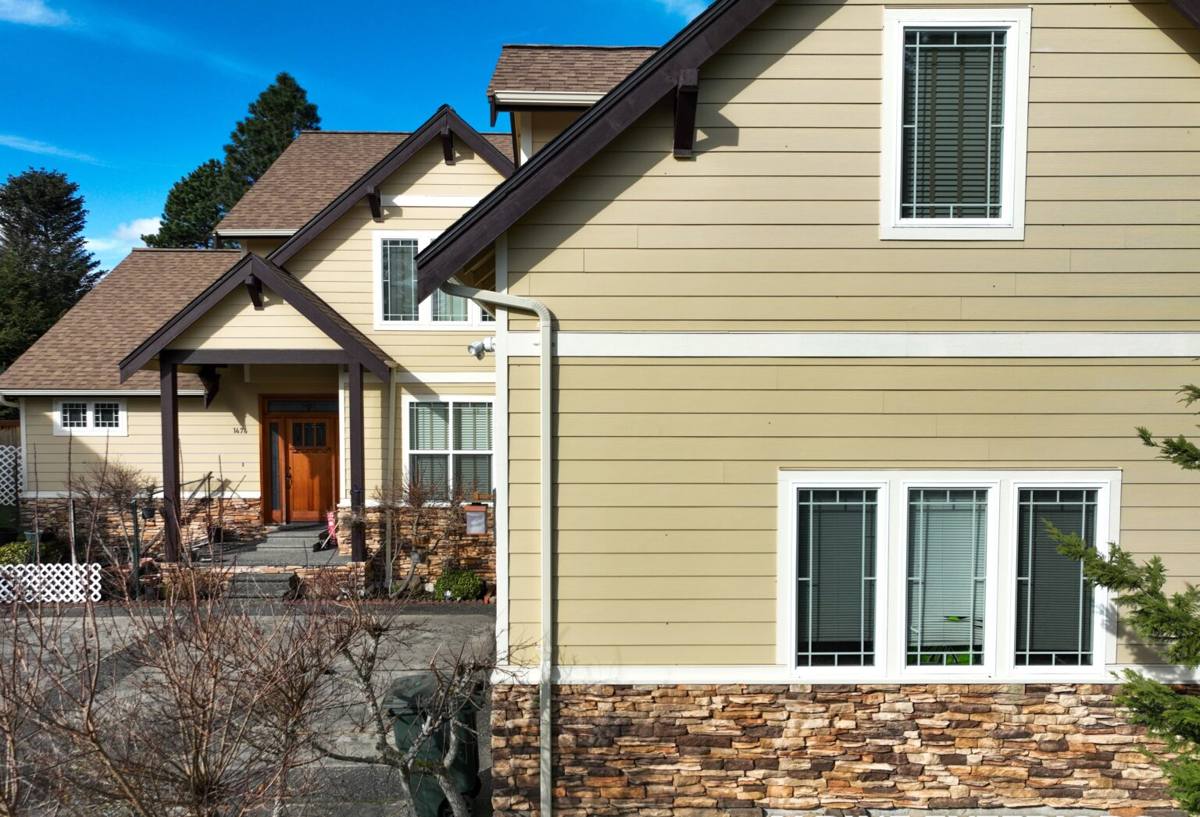
What "Custom" Actually Means Here
"Custom" gets used loosely in this industry, so it's worth being specific about what it means on our jobs.
Custom Sizing
Older Mount Vernon homes — especially anything built before standardized window openings became common — rarely have openings that match today's stock sizes exactly. A custom window is built to the actual rough opening, or the opening is corrected to fit a standard size cleanly, instead of forcing a close-enough window into a gap and packing it with foam and hope. Ill-fitting windows are one of the most common sources of the drafts and water intrusion we get called out to fix.
Custom Style and Grid Patterns
Farmhouses, older bungalows, and mid-century ranch homes all show up throughout the valley, and they don't all want the same window look. Custom means matching grid patterns, sash proportions, and trim profiles to the house instead of defaulting to whatever's on the showroom floor.
Custom Performance Specs
Not every wall of a house faces the same weather. A window on the exposed west or north side dealing with driving rain and long damp shade needs a different glass package and frame material than a sheltered south-facing window on the same house. Custom means specifying glass, gas fill, and frame material by exposure, not applying one spec to the whole house because it's simpler to order that way.
Signs Your Current Windows Are Losing the Fight
Most window failure in this climate is gradual, and homeowners often live with early symptoms for a year or two before calling anyone. Watch for:
- Condensation forming between the panes (not just on the inside surface) — this means the seal has failed and the insulating gas is gone
- Soft or spongy wood at the sill or the bottom corners of the frame
- Visible gaps between the frame and the trim, or daylight visible around the sash when the window is closed
- A window that's noticeably harder to open, close, or lock than it used to be
- Persistent moss, algae, or black staining building up on the sill or lower frame, especially on shaded or north-facing windows
- A cold draft you can feel standing near the window on a windy day, even with it fully latched
- Paint or finish that's peeling specifically around the window opening while the rest of the wall looks fine
Any one of these is worth a look. Several at once usually means the window has been letting moisture in behind the frame for a while, and the fix is bigger than the window itself.
Material and Glass Options — What Actually Holds Up Here
There's no single "best" window material for every house. Each option is a real trade-off between cost, maintenance, and how well it tolerates constant damp.
| Material | How It Handles Local Moisture | Maintenance |
|---|---|---|
| Vinyl | Won't rot; performs consistently in damp climates | Low — occasional cleaning of tracks and weep holes |
| Fiberglass | Very stable, minimal expansion/contraction with the temperature swings we get | Low |
| Wood | Needs a well-maintained finish or cladding to keep moisture out of the grain | High — periodic refinishing, more if fully exposed to weather |
| Wood-clad (wood interior, vinyl/aluminum/fiberglass exterior) | Exterior cladding shields the wood from driving rain and humidity | Moderate — cladding is low-maintenance, interior wood still needs care |
| Aluminum | Durable but conducts cold, leading to more interior condensation without a thermal break | Low, but check for condensation-related issues over time |
Glass matters just as much as frame material. A basic double-pane window is a big step up from single pane, but in this climate we typically recommend a low-E coated glass package with argon gas fill as the baseline, and triple-pane on north- or west-facing exposures that take the worst of the wind and rain. Low-E coatings reduce heat loss and help limit condensation on the interior glass surface during cold, damp stretches — a common complaint in valley homes during winter. Warm-edge spacers (instead of older aluminum spacers) also reduce the cold spot right at the edge of the glass, which is often where condensation and eventual seal failure start.
Installation Details That Matter More Than the Window Itself
We've been called to look at premium windows failing early, and it's almost never the window unit itself — it's the installation. A few details we treat as non-negotiable on every job:
Sill pan flashing. A sloped, sealed pan under the window directs any water that gets past the frame back outside instead of letting it pool against the framing. This is one of the single biggest predictors of whether a window opening stays dry over time.
Proper integration with the house wrap or building paper. Flashing tape and house wrap need to be layered correctly — upper layers over lower ones — so water sheds down and out, the same way shingles work on a roof. Get this backwards and you've built a funnel instead of a barrier.
Correct insulation around the frame. Gaps packed too loosely leave cold spots and drafts; over-packing rigid foam can bow the frame and cause the sash to bind or fail to seal properly. It has to be filled right, not just filled.
Sealant that's rated for the exposure. Exterior sealant on a window that takes direct driving rain needs to be a product built for continuous UV and moisture exposure, applied in the right conditions — not squeezed in during a light drizzle because the schedule says today's the day.
Our Process, Start to Finish
- On-site assessment. We look at existing window condition, framing, exposure on each elevation of the house, and any signs of water intrusion already underway.
- Measurement and spec. We measure actual openings, discuss style and grid options, and match glass and frame specs to each wall's exposure rather than a single spec for the whole house.
- Written estimate. You get a clear breakdown of materials, labor, and timeline before anything is ordered.
- Removal and inspection. When old windows come out, we check the framing and sill underneath for hidden rot or moisture damage before anything new goes in — this is often where we catch problems the homeowner didn't know existed.
- Flashing, pan, and installation. Sill pan, flashing integration, insulation, and the window itself, installed to manufacturer spec and adjusted for this climate's exposure demands.
- Sealing and trim. Interior and exterior finish work, sealant application, and a final check that the sash operates smoothly and locks tight.
- Walkthrough and cleanup. We review the finished work with you and clear the site of debris and packaging.
Why Hiring a Crew That Already Works Mount Vernon Matters
A window installer who mostly works drier inland climates will spec, seal, and schedule differently than one who works Skagit County year-round. Knowing how long the fall storm season typically runs, how much drying time a sealant realistically gets before the next front rolls through, and which exposures on a typical valley or riverside home take the worst of the wind-driven rain isn't something you learn from a manual — it's something you learn by doing the work here repeatedly.
There's also a practical scheduling piece: window installations that involve open wall cavities need a real weather window to go in correctly. A crew unfamiliar with the area's rain patterns is more likely to get caught mid-installation by a system moving in off the Sound. We plan installation timing around what the valley's weather actually does, not a generic forecast.
What Affects the Cost of Custom Windows
Costs vary by house, and we'll always give you specifics after a walkthrough rather than a number pulled from a brochure. In general, these are the factors that move the price:
| Factor | Why It Matters |
|---|---|
| Frame material | Vinyl is typically the most budget-friendly; fiberglass and wood-clad cost more but bring different durability and maintenance trade-offs |
| Glass package | Double-pane low-E vs. triple-pane, plus argon fill and spacer type, all affect price and long-term performance |
| Opening condition | Rot or damage found once old windows are removed adds repair work before the new window can go in |
| Number and size of windows | Larger units and multi-window jobs bring some efficiency but still scale with material and labor |
| Custom shapes or sizes | Non-standard openings, arched or specialty shapes cost more than stock-size rectangular units |
| Exterior finish work | Matching existing trim, siding repair around the opening, or repainting adds labor beyond the window install itself |
Keeping Custom Windows Performing for the Long Haul
Even a correctly installed window benefits from a little seasonal attention in this climate. Clear debris and standing moisture out of the tracks and weep holes so water has a way to drain rather than sit against the frame. On shaded or north-facing windows, keep an eye out for moss or algae buildup on the sill and clean it off before it holds moisture against the surface long-term. Check exterior sealant lines every year or two — caulk and sealant are wear items, and catching a failing bead early is far cheaper than dealing with the water damage that follows a few seasons of neglect. If a window starts sticking, feels drafty, or shows fogging between the panes, it's worth a look sooner rather than later — in this climate, small problems don't stay small for long.
If you're weighing whether it's time to replace aging windows on a Mount Vernon home, or you're planning a renovation and want windows specified correctly for each exposure from the start, we're happy to walk the property with you and give you a straight, no-pressure estimate. There's no obligation — just a clear look at what your house actually needs.