 Anacortes Siding
 Mount Vernon sits inland in the Skagit Valley, a short drive from our home base in Anacortes, but the exterior of a Mount Vernon home fights the same fundamental battle every house in this corner of Skagit County fights: salt-tinged marine air carried up the valley off the Sound, driving rain that comes in sideways during Pacific storm fronts, and a moss season that runs longer than most homeowners expect because the valley floor rarely gets enough sun and wind to dry out between storms. When siding on a Mount Vernon home reaches the point where patching and caulking aren't cutting it anymore, replacing it correctly — not just covering up what's failing — is what actually protects the house underneath. This page is specifically about what a full siding replacement looks like for a Mount Vernon home, and why it matters that the crew doing it already works this area regularly.
Why Siding Wears Out Faster on a Mount Vernon Home
Mount Vernon doesn't sit directly on the water the way Anacortes does, but it's close enough to Skagit Bay and low enough in the valley that marine air moves through regularly, carrying salt that speeds up corrosion on fasteners and accelerates the breakdown of lower-grade finishes. Add in wind-driven rain funneling up the valley from Pacific storm systems, and siding here takes on more sustained moisture exposure than a house built to a national-average spec was ever designed to handle.
The valley floor itself compounds the problem. Flat, low-lying terrain with less wind movement than an exposed coastal bluff means walls — especially north-facing ones and anything shaded by mature trees — stay damp longer after a storm passes. That extended dampness is exactly what moss and mildew need to take hold, and once a siding surface is holding moisture instead of shedding it, whatever's underneath the surface starts absorbing that moisture too, whether it's a wood substrate, an exposed fastener, or a gap in old caulking.
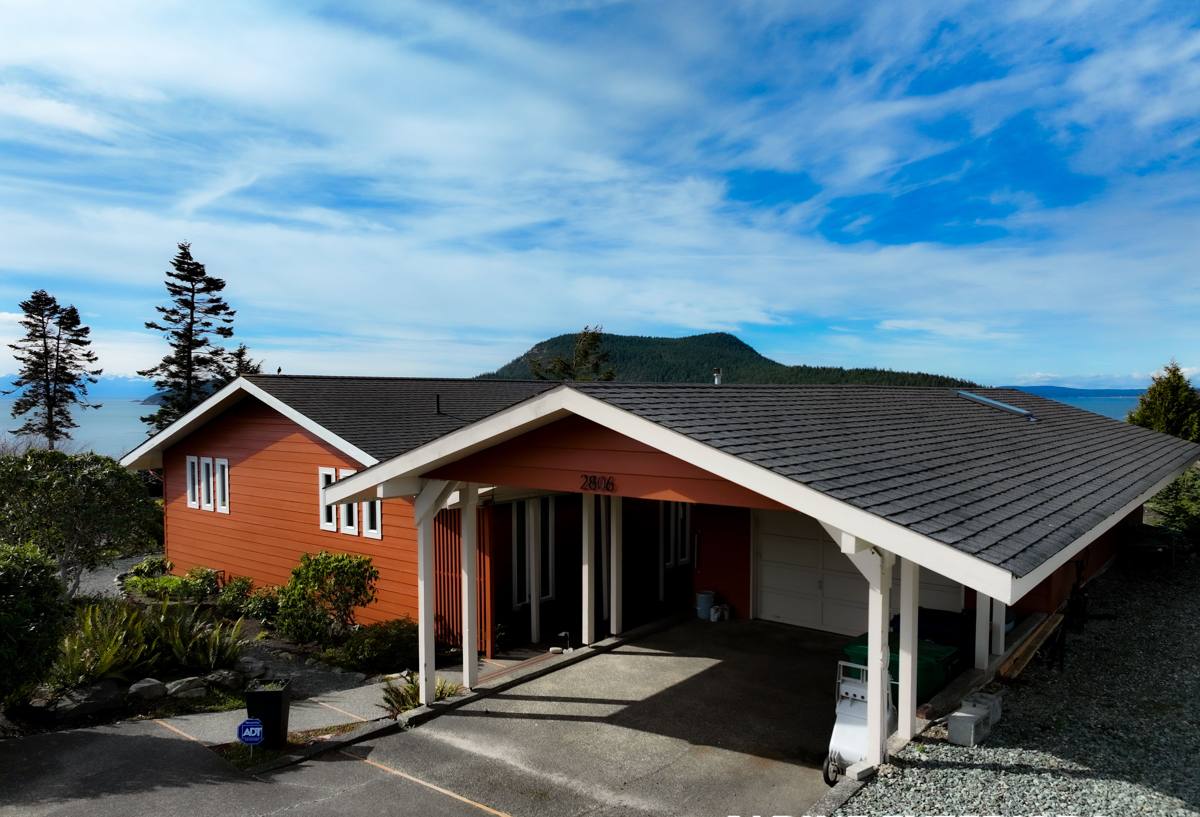
Signs a Mount Vernon Home Needs Full Replacement, Not Just Repair
Not every siding problem calls for tearing the whole wall down to the studs. But there's a real difference between a house that needs a few boards swapped and one where patching would just be delaying a bigger, more expensive failure. The most reliable way to tell the difference is a hands-on inspection, but there are signs worth watching for yourself before you even call anyone.
- Soft, spongy, or crumbling siding when pressed — a sign moisture has already reached the substrate
- Paint or finish failure across large sections rather than isolated spots, even after recent repainting
- Visible warping, buckling, or gaps at seams that keep reopening after caulking
- Persistent moss or mildew staining that returns within a season of cleaning
- Siding older than its expected service life with no documented maintenance history
- Interior signs like peeling paint, musty smell, or staining on walls that share an exterior wall with visible siding damage
One or two of these on their own might point to a repair. Several together, especially combined with an older siding system, usually mean the underlying moisture barrier and sheathing have already been compromised in more places than what's visible from the outside — and that's a replacement conversation, not a patch job.
Repair or Replace: How We Make the Call
| Situation | Repair Is Usually Enough | Full Replacement Is the Honest Call |
|---|---|---|
| Damage extent | Isolated to one or two boards or a single wall section | Spread across multiple walls or recurring in the same spots |
| Siding age | Relatively new, with an isolated installation or impact issue | At or past its expected service life |
| Moisture path | Surface-level, caught before it reached sheathing | Evidence of moisture already in the wall assembly |
| Material | Still James Hardie fiber cement or another sound material | Original material was never built for this climate to begin with |
| Cost over time | Repair cost is a small fraction of full replacement | Repeated repairs are starting to add up to replacement-level spending |
We'll tell a Mount Vernon homeowner honestly when repair is the right call — a full tear-off isn't the answer to every siding problem, and we'd rather do the smaller job right than sell a bigger one that isn't necessary.
What a Correct Siding Replacement Actually Involves
What's Underneath Matters as Much as What Goes On Top
A full siding replacement is the one time the wall is genuinely open, and that makes it the only real opportunity to fix problems that new siding alone can't solve. Tear-off means checking the sheathing for rot or soft spots, confirming the weather-resistive barrier is intact and correctly lapped, and repairing anything compromised before a single new board goes up. Skipping this step to save time is the single most common way a siding replacement fails early — the new material looks right for a few years while the same underlying moisture problem that damaged the old siding keeps working on the new one.
Installation Details That Determine How Long It Lasts
Once the wall is confirmed sound, correct installation comes down to details that don't show up in a walk-by look at a finished house: proper clearance from grade, decks, and rooflines so the bottom edge of the siding never sits in standing moisture; flashing integrated at every window, door, and penetration rather than caulked over as an afterthought; fastener spacing and pattern matched to the specific Hardie product line and this area's wind exposure; and joint treatment that accounts for which walls get sun and which stay shaded and damp longer. Any one of these skipped is a weak point that won't show up as a problem for a year or two — and then it does, usually at the worst possible time in a wet season.
Why We Install Only James Hardie Fiber Cement
We install one siding product on every replacement we do: James Hardie fiber cement. We don't offer vinyl, LP SmartSide, Cemplank, Allura, primed spruce, or cedar, and that's a professional standard, not a limitation of what we're able to source. Each of those alternatives does something well — vinyl is inexpensive, engineered wood installs fast, cedar has real visual character — but each also carries a trade-off we think matters too much in a climate this consistently wet to put our name behind.
Vinyl can warp with age and temperature swings, and its seams and channels give wind-driven rain a path in that fiber cement doesn't have. Wood-based products depend on flawless field priming and caulking at every cut edge to keep moisture out of an organic substrate — a hard standard to hold across an entire job, every time. Cedar is genuinely attractive but organic, and it asks for real ongoing maintenance — refinishing, sealing, moss control — in a valley that doesn't offer much of a dry stretch to recover in between wet seasons.
Fiber cement sidesteps the core issue: it isn't organic, so it doesn't have a wood substrate for moisture to work into and it doesn't feed moss growth the way wood-based siding can. James Hardie also builds climate-specific HZ product lines engineered around sustained moisture and coastal exposure, and its ColorPlus finish is baked on at the factory under controlled conditions instead of painted in the field — a real advantage in a place where dry, paint-curing weather windows aren't guaranteed.
Our Replacement Process for a Mount Vernon Home
The process is the same whether the house is a few blocks from downtown Mount Vernon or out toward the edge of the valley — what changes is how we adjust the details to the specific property.
- Inspection and estimate. We walk the exterior, check for moisture damage at grade, trim, and penetrations, and give a written estimate based on what we actually find — not a generic per-square-foot number.
- Prep and tear-off. Old siding comes off, sheathing and the weather-resistive barrier get inspected and repaired as needed, and any hidden damage gets flagged and priced before we move forward.
- Flashing and installation. Flashing goes in first at every window, door, and roofline transition, then Hardie siding goes up to manufacturer spec — fastening pattern, clearances, and joint treatment matched to the wall's actual exposure.
- Trim and finish work. Trim, corners, and touch-up are matched to the factory ColorPlus finish so the finished wall reads as one consistent system, not a patchwork.
- Final walkthrough and warranty paperwork. We walk the finished job with the homeowner, and go over what the warranty actually covers and what basic upkeep looks like going forward.
Cost Factors for a Mount Vernon Siding Replacement
We don't publish blanket pricing because it wouldn't be honest — every house is different. What we can lay out plainly is what actually moves the number up or down.
| Factor | How It Affects Cost |
|---|---|
| Hidden moisture or sheathing damage | Found during tear-off, adds repair scope beyond the siding itself |
| Home size and wall complexity | More corners, gables, and penetrations mean more flashing and labor time |
| Siding profile and trim package | Board-and-batten or heavier trim details run higher than standard lap siding |
| Tear-off and disposal scope | Full removal of old material and haul-away adds labor and disposal cost |
| Access and site conditions | Tree cover, tight lot lines, or difficult staging can affect labor time |
| Timing and scheduling | Wet-season weather windows can affect scheduling and project pacing |
Why Hiring a Crew That Already Works Mount Vernon Matters
We're based in Anacortes, and we work Mount Vernon regularly enough to know how differently a shaded, north-facing wall on a valley lot ages compared to an open, sun-exposed wall a few streets over — and we adjust flashing, joint treatment, and material recommendations accordingly. That kind of judgment comes from doing this work repeatedly in this specific valley climate, not from a spec sheet written for the whole country. It also means a real, reachable crew is available if a warranty question or a flashing detail needs a second look years down the road, instead of chasing down a company that only shows up for one job and moves on.
What to Verify Before You Hire
- Manufacturer training or certification on the specific siding product being installed
- A clear explanation of how flashing will be handled at every window, door, and roofline transition
- A written scope of work that spells out tear-off, sheathing repair contingencies, and installation method — not just materials and a total price
- Proper licensing, bonding, and insurance you can verify before signing anything
- A track record of work specifically in Skagit Valley conditions, not just a general service-area claim
Get a Free, No-Pressure Estimate
If your Mount Vernon home's siding is showing its age — soft spots, recurring moss, paint that won't hold, or gaps that keep opening back up — we're happy to take a look and give you a straight answer about whether it's a repair or a full replacement. No pressure, no generic sales pitch. Reach out for a free estimate and we'll walk the property with you and explain exactly what we see.