 Anacortes Siding
 Roofing a Home on March Point
March Point sits out on open water on nearly every side, which means the homes here take a different kind of beating than a house tucked into a neighborhood a mile inland in Anacortes. Wind has nowhere to slow down before it hits a roof out here, rain comes in sideways as often as it comes straight down, and the salt air off the surrounding water works on exposed metal and fasteners year-round. A new roof installed for this location needs to be built with all of that in mind from the first nail, not treated like a standard Skagit County reroof.
This page covers what a correct new roof installation looks like specifically for March Point conditions: what the climate actually does to a roof out here, what a full install should include, how we run the job, and what to expect for materials, timeline, and upkeep afterward.
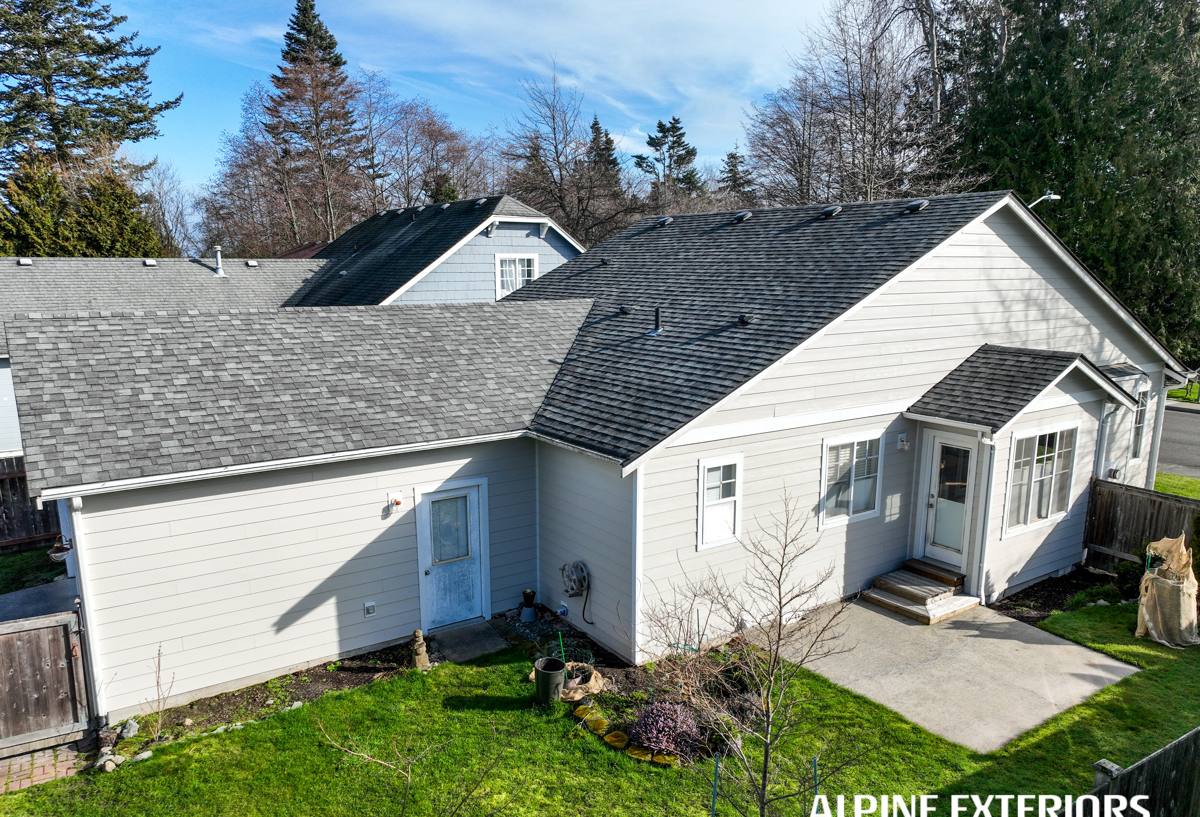
Why March Point Is Harder on a Roof
Salt Air and Metal Components
Homes with unobstructed exposure to the water around March Point deal with airborne salt settling on every exterior surface, including the roof. Salt accelerates corrosion on exposed fasteners, cheap flashing, and unprotected metal edges. It's not dramatic — it's slow, steady wear that shows up years later as rust streaks, loosened fasteners, or flashing that fails quietly at a seam. The fix isn't complicated, it's just non-negotiable: use fasteners and flashing rated for corrosion resistance, and don't cut corners on the metal components because "it's just a roof, nobody sees it."
Wind-Driven, Sideways Rain
Open exposure means wind-driven rain hits roof edges, valleys, and penetrations from angles a standard install in a sheltered location doesn't have to plan for. Water gets pushed uphill under shingles and around flashing that would hold up fine somewhere with more windbreak. This is why underlayment choice and flashing detail matter more here than the shingle brand printed on the wrapper.
Moss Season
Skagit County's wet season runs long, and any roof with shade, north-facing slopes, or debris buildup will grow moss given enough time. Moss holds moisture against the roofing material, works its way under shingle tabs, and shortens the life of whatever's underneath it. A roof designed for this area accounts for moss from day one — material choice, slope, and simple maintenance habits all play a role.
Signs a March Point Roof Needs Replacement, Not Another Repair
Not every roofing problem calls for a full tear-off. But a few signs tell us a patch job would just be delaying the inevitable:
- Granule loss heavy enough that you're finding shingle grit in gutters and downspouts every season
- Multiple soft spots or sagging areas on the decking when walked
- Repeated leaks in different spots rather than one recurring trouble area
- Shingles curling, cracking, or lifting at edges across large sections of the roof, not just one corner
- Flashing that's rusted through or separating at chimneys, vents, and valleys
- A roof already past 20-25 years old with visible wear, especially on the side facing the water
If it's one or two of these in isolation, a repair might genuinely be the right call. When several show up together, a new roof installation is usually the more honest recommendation — and it's what we'll tell you plainly during an inspection, not upsell you into.
What a Correct New Roof Installation Actually Involves
A roof is a system, not a single product. Skipping any layer of that system undercuts the whole thing, no matter how good the shingles are.
Full Tear-Off and Deck Inspection
We remove the old roofing down to the deck rather than layering over it. That's the only way to actually see the condition of the sheathing underneath — soft spots, rot around old penetrations, or damage from a slow leak that's been hidden for years. Any compromised decking gets replaced before anything new goes down.
Underlayment Built for Wind-Driven Rain
Given how much sideways rain a March Point roof takes on, we use synthetic underlayment with proper lap and fastening, plus self-adhered ice-and-water membrane at eaves, valleys, and around penetrations — the spots most likely to see water pushed uphill by wind.
Flashing at Every Transition
Chimneys, skylights, sidewalls, valleys, and vent penetrations all get new metal flashing sized and installed correctly for the transition, not reused from the old roof. Reused flashing is one of the most common causes of a "new roof" leaking within a few years.
Ventilation
Proper intake and exhaust ventilation keeps moisture from building up in the attic, which matters in a climate this wet. Poor ventilation shortens the life of the roofing material from underneath, regardless of what's on top.
Starter Strips, Drip Edge, and Ridge
Correct starter course and drip edge at eaves and rakes keep wind from getting under the first course of shingles — a real concern on an exposed point. Ridge components get finished to match, sealing the top of the system as carefully as the rest of it.
Material Options for March Point Homes
There's no single "best" roofing material for this location — it depends on your budget, your roof's exposure, and how much long-term maintenance you want to take on. Here's an honest comparison for a coastal-exposure Skagit County home:
| Material | Typical Lifespan | Salt Air & Moss Performance | Relative Cost |
|---|---|---|---|
| Architectural asphalt shingle | 25-30 years | Good with proper algae-resistant granules; needs periodic moss treatment | Lowest |
| Standing seam metal | 40-50+ years | Excellent shedding of moss and moisture; needs coastal-grade fasteners and coatings | Highest |
| Synthetic/composite shingle | 30-50 years | Strong resistance to moisture and moss; consistent performance in wind | Mid-to-high |
| Standard 3-tab asphalt | 15-20 years | Weakest against wind uplift and moss buildup | Lowest upfront, more frequent replacement |
We don't push one material on every home. What matters is matching the roof's slope, sun/shade exposure, and your own tolerance for maintenance to the right product — and being straight with you about the trade-offs rather than just selling the highest-margin option.
Our Process for a March Point Reroof
- Inspection and honest assessment — we look at the whole roof system, not just the shingles, and tell you if repair is genuinely a viable option before recommending replacement
- Written estimate — clear scope, material options, and pricing, no vague allowances
- Scheduling around weather — we plan install windows with Skagit County's wet season in mind so tear-off days aren't left exposed overnight
- Tear-off and deck inspection — full removal, deck repair as needed, disposal handled
- System installation — underlayment, flashing, ventilation, and roofing material installed in the correct sequence
- Final walkthrough — we go over the completed roof with you before calling the job done
Every crew we send to March Point works from the same checklist, regardless of which material was chosen, so nothing gets missed because a step "usually" doesn't matter:
- Deck inspected and any damaged sheathing replaced before underlayment goes down
- Ice-and-water membrane installed at eaves, valleys, and penetrations
- New flashing at every chimney, sidewall, and vent — nothing reused from the old roof
- Proper nailing pattern and fastener spacing for wind exposure, not just manufacturer minimums
- Intake and exhaust ventilation confirmed functional, not just present
- Jobsite and gutters cleaned of debris and old material before we leave
Permits, Timeline, and Weather Windows
Roof replacement in unincorporated Skagit County and within Anacortes city limits typically requires a building permit, which we handle as part of the job. A straightforward reroof on an average single-family home usually takes one to three days once the crew is on-site, weather permitting. Because March Point's location leaves it more exposed to storms rolling in off the water, we build a little more schedule flexibility into these jobs than we would for a sheltered lot — better to shift a start date than rush a tear-off into a wind event.
Why Local Experience in March Point Matters
A crew that's only worked roofs in sheltered Anacortes neighborhoods can still do competent work, but they haven't necessarily had to think through what constant wind and salt exposure do to flashing choices, fastener selection, or underlayment detail over time. Having done roofs out on the point before means we already know where wind-driven rain tends to find weak spots, which materials hold up honestly out here versus which ones just look fine at installation, and how to sequence a job around this area's weather rather than around a generic Western Washington schedule.
Keeping a New Roof Healthy After Installation
A correctly installed roof still benefits from a bit of upkeep, especially in this climate:
- Keep gutters and downspouts clear so water isn't backing up under the roof edge
- Address moss growth early with appropriate treatment rather than letting it establish
- Have the roof looked at after any major windstorm, especially given March Point's exposure
- Keep overhanging branches trimmed back where shade is contributing to moss or debris buildup
None of this is complicated, but it's the difference between a roof that reaches its full lifespan and one that needs early attention because small issues went unaddressed.
If your March Point home needs a new roof, or you're not sure whether repair or replacement is the right call, we're happy to take a look and give you a straight answer. Reach out for a free, no-pressure estimate using the form below.