 Anacortes Siding
 Old Town Anacortes Roofs Take a Different Kind of Beating
Old Town Anacortes is one of the older, established parts of the city — homes with some age on them, mature tree cover, and close proximity to the water. That combination is hard on a roof in ways that newer subdivisions further inland don't deal with in the same way. Salt-laden air off the water accelerates corrosion on fasteners, flashing, and vent stacks. Driving rain, pushed sideways by wind coming off the Strait, finds its way under shingles and flashing that would hold up fine in a calmer, drier climate. And the mature tree canopy that gives these older streets their shade also means moss, needle litter, and shaded roof sections that never fully dry out for months at a time.
None of that means an older roof in this neighborhood is doomed — it means it needs repair work that actually accounts for those conditions, not a generic patch job. We've worked on enough roofs in this part of Anacortes to know what fails first, why it fails, and what actually holds up afterward.
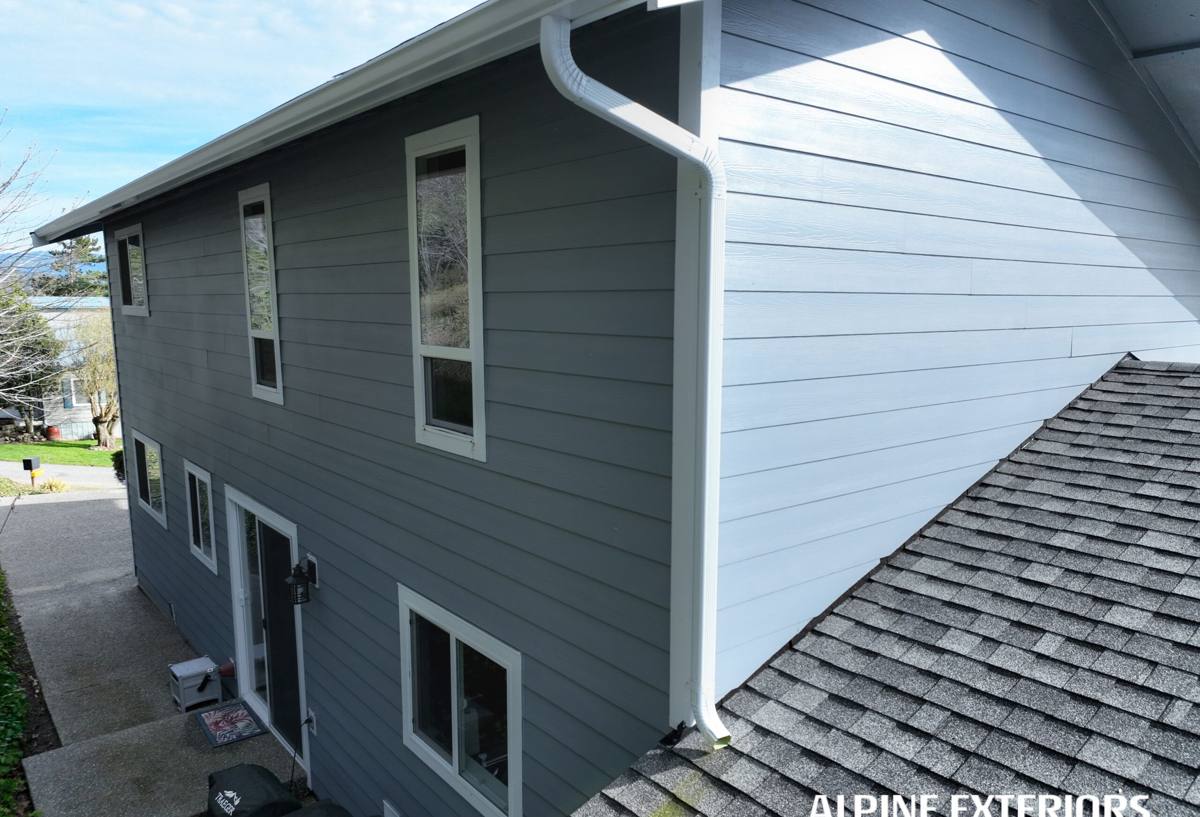
Signs an Old Town Roof Needs Repair, Not Just a Look-Over
Inside the House
- Water stains on ceilings, especially near chimneys, skylights, or where two rooflines meet
- A musty smell in an upstairs closet or attic space that wasn't there before
- Visible daylight through the roof deck when you look up into the attic
- Soft or sagging spots in ceiling drywall
Outside the House
- Green or black streaking, or thick moss cushions, especially on north-facing or shaded slopes
- Shingles that look cupped, curled at the edges, or missing granules in patches
- Rusted, lifted, or missing flashing around chimneys, vents, and valleys
- Gutters filling with granules, moss clumps, or shingle fragments after a storm
Any one of these on its own might be minor. Two or three together, especially on an older roof, usually means the underlying materials are past the point where a quick patch buys much time.
What's Actually Causing the Damage
Salt Air and Corrosion
Metal components — nails, flashing, vent boots with metal collars — corrode faster this close to salt water. A flashing detail that would last decades in a dry inland climate can start failing at the seams in a fraction of that time here. Once flashing corrodes and separates even slightly, wind-driven rain has a direct path underneath it.
Wind-Driven Rain
Rain that falls straight down mostly runs off a properly shingled roof without issue. Rain that's pushed sideways by wind off the water behaves differently — it can work backward under shingle tabs, around chimney step-flashing, and along valleys where two roof planes meet. Older roofs, especially ones where flashing was installed to a lower standard than we'd use today, are more vulnerable to this.
Moss and Organic Growth
Shaded, moisture-holding conditions under mature trees let moss take hold, and moss does real damage beyond looking bad. It holds water against the shingle surface far longer than the shingle was designed to tolerate, and as it grows it can physically lift shingle edges, breaking the seal between courses. Left long enough, moss works its way under the shingle line entirely.
Age of the Materials Themselves
A lot of Old Town homes still have original or older replacement roofing. Asphalt shingles have a service life, and once they're past it, granule loss accelerates, the mat underneath becomes brittle, and repairs that would have been simple patch jobs on a younger roof start requiring more extensive work just to tie in new material without it standing out or failing at the seams.
Common Problems We See, and What Actually Fixes Them
| Symptom | Likely Cause | Typical Fix |
|---|---|---|
| Thick moss on north-facing slope | Shade, poor airflow, organic debris buildup | Careful moss removal, zinc or copper control strip, targeted shingle repair if lifted |
| Ceiling stain near chimney | Failed or corroded step/counter flashing | Flashing rebuild and re-seal, not just caulk over the gap |
| Granules pooling in gutters | Shingles past their service life | Section repair if isolated, replacement conversation if widespread |
| Leak at a valley after wind storms | Undersized or aging valley flashing | Valley metal replacement and proper underlayment tie-in |
| Soft spot in roof deck | Long-term hidden moisture intrusion | Deck sheathing replacement under the repaired section |
Repair or Replace? How We Help You Decide
Not every roof problem in Old Town Anacortes needs a full replacement, and we're not going to tell you it does when it doesn't. But we also won't patch a roof that's genuinely at the end of its life just to sell a cheaper job now and have you calling again in a year. The honest answer usually comes down to a few factors.
| Factor | Leans Toward Repair | Leans Toward Replacement |
|---|---|---|
| Age of roofing material | Well within expected service life | At or past typical lifespan for the material |
| Extent of damage | Isolated to one section or detail | Spread across multiple slopes |
| Deck condition | Solid, dry sheathing | Soft, delaminated, or repeatedly wet sheathing |
| Moss/organic history | First occurrence, caught early | Chronic, recurring despite past cleaning |
| Remaining shingle stock | Matching shingles still available | Discontinued color/style, visible patch mismatch |
When repair makes sense, we'll say so plainly. When it doesn't, we'll explain exactly why — not in vague terms, but by showing you what we found underneath.
What a Correct Repair Actually Involves
Real Diagnosis First
We don't quote a roof repair from the ground. Water can travel a surprising distance from where it enters to where it shows up on your ceiling, so we get up on the roof, pull back the affected area, and look at the decking and underlayment condition before recommending anything.
Matching Materials Where Possible
If your roof still has usable life left, we try to match existing shingles as closely as the manufacturer's current lineup allows, so a repair doesn't stand out as an obvious patch. Where an exact match isn't available — common on older roofs — we'll talk through the options honestly rather than surprise you afterward.
Flashing Done Right, Not Caulked Over
A huge share of roof leaks near chimneys, skylights, and valleys come down to flashing, not shingles. Our standard is to rebuild and properly integrate flashing with the underlayment and shingle courses, not smear sealant over a gap and call it fixed. Sealant-only fixes are common shortcuts, and they fail again within a season or two, especially with the wind and rain this area gets.
Moss Treatment, Not Just Moss Removal
Scraping moss off without addressing why it's growing there just means it comes back. Where it makes sense, we'll talk about zinc or copper strips, airflow, and trimming back overhanging branches as part of the repair, not as a separate upsell.
Our Process for Old Town Anacortes Roof Repairs
- Inspection — We get on the roof and in the attic if needed, and document what we actually find.
- Honest assessment — We tell you whether it's a repair or something bigger, and why, in plain terms.
- Written scope and estimate — You know what's being done and roughly what it costs before we start. Small, isolated flashing or shingle repairs are often a modest, few-hundred-dollar job; more involved valley or deck work runs higher, and we'll walk you through where your specific job falls before any work begins.
- The repair itself — Done to hold up to this area's weather, not just pass a quick visual check.
- Cleanup and walkthrough — We clear debris and show you what was done before we consider the job finished.
Why It Matters That We Already Work This Neighborhood
Older homes in this part of Anacortes tend to have their own quirks — roof decking materials and dimensions that shifted over the decades, older flashing details, mixed pitches from additions built at different times. A crew that hasn't seen much of this housing stock can be caught off guard by things we plan for automatically: matching an odd shingle profile, knowing what's usually hiding under a chimney's old flashing, or recognizing that a shaded valley is going to need different moss management than a valley in full sun a few blocks away.
Being local also means we're not driving in from out of the area to give a quote and disappearing. If something about a repair needs a follow-up look after the next real storm, we're close by.
Between Repairs: What Helps an Old Town Roof Last
- Clear gutters and downspouts at least twice a year, more often under heavy tree cover
- Trim back branches that overhang or brush the roof surface
- Address moss when it first appears, rather than waiting for it to spread
- Have flashing checked after any significant windstorm, not just during a routine inspection
- Keep an eye on attic ventilation — poor airflow speeds up moisture problems from the inside
None of this replaces a professional inspection, but it does reduce how often you need one to be urgent.
If you're seeing any of the signs above, or just want an honest read on where your roof stands, we're glad to come take a look. The estimate is free, there's no pressure attached to it, and you'll get a straight answer either way — use the form below to get in touch.