 Anacortes Siding
 Roofing in Flounder Bay: A Different Set of Conditions
Flounder Bay sits close enough to the water that homes here deal with a combination of stresses most inland roofs never see. Salt-laden air corrodes exposed metal faster than it would a few miles inland. Wind-driven rain off Fidalgo Bay and Rosario Strait doesn't just fall straight down — it gets pushed sideways into laps, valleys, and fastener penetrations that a standard installation might get away with elsewhere. And the shaded, moisture-heavy tree cover common around this part of Anacortes means moss and algae growth basically never takes a season off. A roof replacement here isn't just about swapping old material for new — it's about specifying and installing a system that's built to handle those three things together.
We've worked on homes throughout this part of Skagit County long enough to know which failure points show up again and again in this neighborhood specifically: rusted-through flashing at chimneys and dormers, moss lifting shingle tabs at the north-facing slopes, and soffit or fascia rot from water that never fully dried out between storms. A replacement done right addresses all of that, not just the shingles on top.
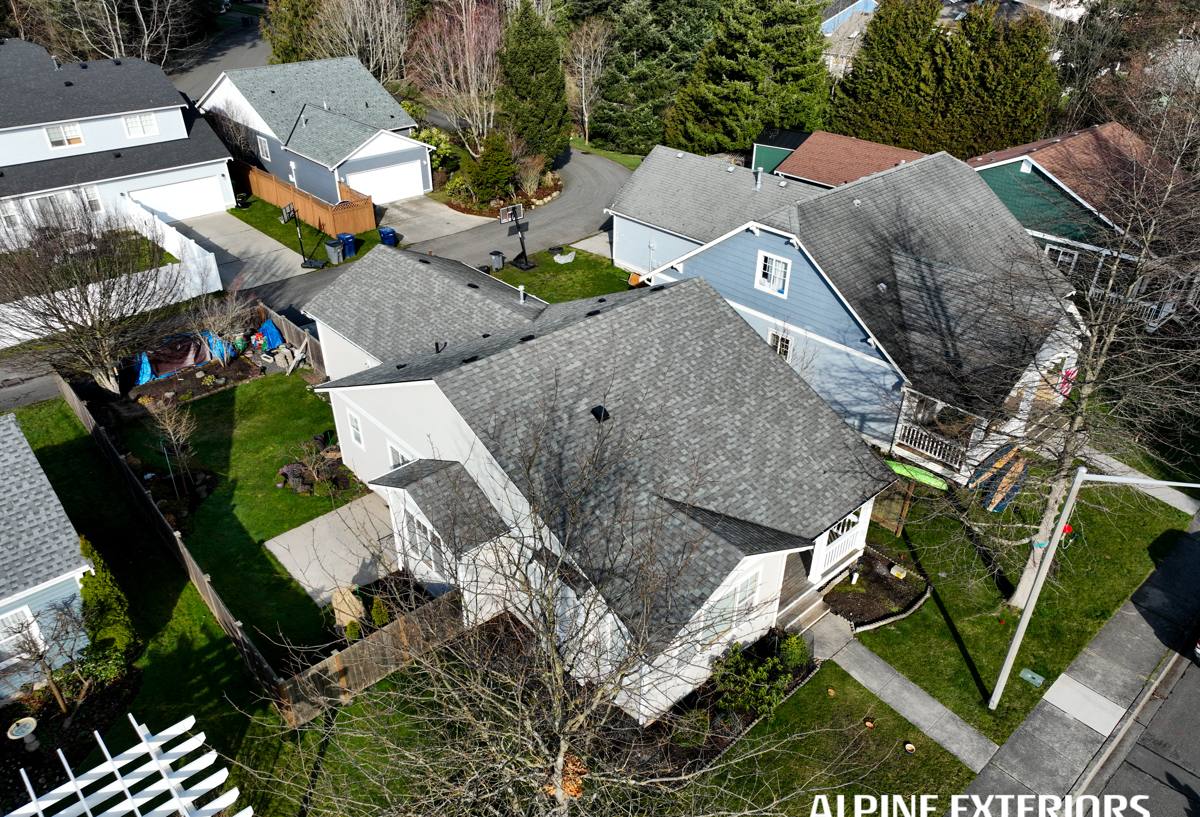
Signs a Flounder Bay Roof Has Reached Replacement Stage
Roofs rarely fail all at once. Usually there's a stretch of years where small issues stack up until repair no longer makes financial sense. Here's what tends to signal that a full replacement, rather than another patch, is the right call:
- Granule loss heavy enough that you're finding grit in gutters every time it rains
- Shingles that are curling, cupping, or cracking, especially on south- and west-facing slopes that take direct sun and wind
- Moss mats thick enough to hold moisture against the roof deck rather than just growing on the surface
- Flashing around chimneys, skylights, or wall intersections that's rusted, lifted, or was never properly stepped and counter-flashed to begin with
- Daylight or water staining visible in the attic, particularly along the ridge or at valleys
- A roof that's already had two or more repair visits in the last few years for different leaks
- Age — most asphalt roofs in this climate are due for a serious look once they pass the 18-20 year mark, sooner if ventilation has been poor
If you're only seeing one or two of these, a repair might still buy you time. If you're seeing several at once, that's usually the roof telling you it's past the point where patching makes sense.
What an Actual Roof Replacement Involves
Tear-Off and Deck Inspection
We remove the existing roofing down to the deck rather than layering over it. That's not just best practice — it's the only way to actually see what condition the plywood or plank sheathing is in underneath. Coastal moisture has a way of finding soft spots that don't show up from the attic side, and any rotten or delaminated sheathing gets replaced before anything new goes down. Skipping this step is how you end up with a brand-new roof over a deck that's already failing.
Underlayment and Ice/Water Protection
Given how much wind-driven rain this area sees, underlayment choice matters more here than in drier climates. We use synthetic underlayment across the field for its tear resistance and water shedding, with self-adhered ice-and-water membrane at eaves, valleys, and any roof-to-wall transitions — the spots where wind can force water backward under the shingles.
Flashing Done Properly
Most roof leaks that aren't age-related come down to bad flashing, not bad shingles. Chimneys, skylights, dormers, and sidewalls all need step flashing and counter-flashing installed correctly, not just caulked over. In a salt-air environment, we also pay attention to what the flashing itself is made of — some metals hold up to salt exposure far better than others over a 20+ year roof life.
Ventilation
A roof that can't breathe traps moisture in the attic, which speeds up deck rot and shortens the life of the new shingles from underneath. We check and correct intake (soffit) and exhaust (ridge or box vent) balance as part of every replacement — not as an upsell, but because it directly affects how long the new roof lasts.
Material Options for a Coastal Anacortes Home
There's no single "best" roofing material — the right choice depends on your home's slope, your budget, and how much long-term maintenance you're willing to do. Here's an honest comparison of the main options we install:
| Material | Typical Lifespan | Coastal/Moss Performance | Maintenance |
|---|---|---|---|
| Architectural asphalt shingle | 25-30 years | Good with proper ventilation; algae-resistant granules help but don't eliminate moss risk | Periodic moss/debris removal recommended |
| Standing seam metal | 40-50+ years | Excellent water shedding on steep slopes; smooth surface resists moss buildup | Low; occasional inspection of seams and fasteners |
| Exposed-fastener metal panel | 25-35 years | Good, but fastener gaskets can degrade over time in salt air and need eventual attention | Moderate; fastener checks every few years |
| Composite/synthetic shake | 30-40 years | Good moss resistance, but installation quality matters more than with asphalt | Low to moderate |
For homes closer to the water, we generally steer clients toward higher-quality asphalt with strong ventilation, or standing seam metal, over exposed-fastener panels. It's not that exposed-fastener metal is a bad product — it's that the fasteners themselves become the long-term maintenance item in a salt environment, and we'd rather you know that trade-off going in than discover it in year fifteen.
What Drives Cost on a Flounder Bay Roof Replacement
Every roof is priced based on its own specifics, but the factors that move the number up or down are consistent:
| Factor | Why It Matters |
|---|---|
| Roof pitch and complexity | Steeper slopes and multiple valleys/dormers take more labor and material than a simple gable |
| Deck condition | Rotten sheathing found during tear-off adds material and labor not visible in an initial estimate |
| Material selection | Asphalt, metal, and composite carry very different material and installation costs |
| Number of penetrations | Chimneys, skylights, and vents each require individual flashing work |
| Tear-off layers | Removing multiple existing layers costs more in labor and disposal than a single-layer tear-off |
| Access and site conditions | Tree cover, steep lots, or limited staging space near the water can affect labor time |
We give a detailed, itemized quote after an actual on-site inspection — not a phone-estimate number — because guessing on any of the above almost always leads to surprises mid-project, which nobody wants.
How We Approach a Replacement, Start to Finish
- Inspection and quote: We walk the roof and attic, document deck and flashing condition, and put together a written scope and price — no pressure, no gimmick discounts that expire the same day.
- Material selection: We go over the trade-offs for your specific roof (pitch, exposure, budget) so you're choosing based on real information, not a sales pitch.
- Scheduling around weather: Given how much rain this area gets, we watch forecasts closely and stage the job so the deck isn't left exposed longer than necessary.
- Tear-off and deck repair: Old material comes off, the deck gets inspected, and any compromised sheathing is replaced before anything new goes down.
- Underlayment, flashing, and installation: Ice-and-water membrane at vulnerable areas, proper step and counter-flashing, then the roofing material itself, installed to manufacturer spec.
- Ventilation check: Intake and exhaust balance confirmed or corrected as part of the job, not left as an afterthought.
- Cleanup and magnetic sweep: Full site cleanup including a nail sweep of the yard and driveway.
- Final walkthrough: We go over the finished roof with you before calling the job done, and provide documentation for warranty purposes.
Why Local Experience Actually Matters Here
A roofing crew that mostly works drier, inland climates can still put shingles on a roof — but they won't necessarily know to prioritize flashing detail at every wall intersection, or to flag that a particular slope facing the water is going to collect moss faster than the rest of the roof and might benefit from a different material or a copper/zinc strip at the ridge. Those are the kind of decisions that come from having actually worked on roofs in this specific stretch of Skagit County, watching how they hold up over years, and adjusting the approach accordingly.
There's also a practical side to hiring locally: warranty service, follow-up questions, and any future maintenance are a lot easier to handle with a crew that's a short drive away and familiar with your home, rather than a company that worked one job in Anacortes and moved on.
Protecting Your Investment After Installation
A well-installed roof still benefits from basic upkeep, especially in a climate that grows moss year-round. A simple annual routine goes a long way:
- Clear gutters and downspouts each fall so water isn't backing up under the eaves
- Have moss growth removed gently (not power-washed) before it thickens enough to hold moisture against the shingles
- Trim back overhanging branches to cut down on shade, debris, and moss-friendly conditions
- Do a visual check after major windstorms for lifted shingles or displaced flashing
- Schedule a professional inspection every few years, even with no visible problems
None of this is complicated, but skipping it is one of the most common reasons a roof underperforms its expected lifespan in a coastal climate like ours.
Permits and Local Considerations
Roof replacements in Anacortes and unincorporated Skagit County typically require a building permit, and any work needs to meet current wind and weather-exposure code requirements for the area. If your property is part of an HOA or has specific covenants around roofing materials or colors, that's worth checking before finalizing a material choice. We handle the permitting process as part of the job so you're not left tracking down paperwork on your own.
If your roof in Flounder Bay is showing its age, or you just want an honest read on whether repair or replacement makes more sense, we're happy to come take a look. The estimate is free, there's no pressure attached to it, and you'll get a straight answer about what your roof actually needs — you can request one using the form below.