 Anacortes Siding
 Sedro-Woolley's Climate Is Hard on Decks
Sedro-Woolley sits back from the water compared to some of the other Skagit County communities we work in, but it still lives inside the same weather pattern: long stretches of driving rain from October through April, humid, salt-tinged marine air that pushes inland off Puget Sound, and short summers that rarely give a deck enough consecutive dry days to fully release the moisture it soaked up over winter. That's the real problem with decks here. It's rarely one bad storm. It's months of a deck staying damp between rains, cycle after cycle, year after year.
Layer in the moss and algae that thrive in our shaded, moisture-heavy shoulder seasons, and you get slick walking surfaces, moisture trapped under fastener heads and hardware, and slow rot that isn't visible from the top of the board until you're standing on soft wood. We've repaired enough decks around Sedro-Woolley and the surrounding Skagit County area to know the failure points are predictable, even when the damage looks random at first glance.
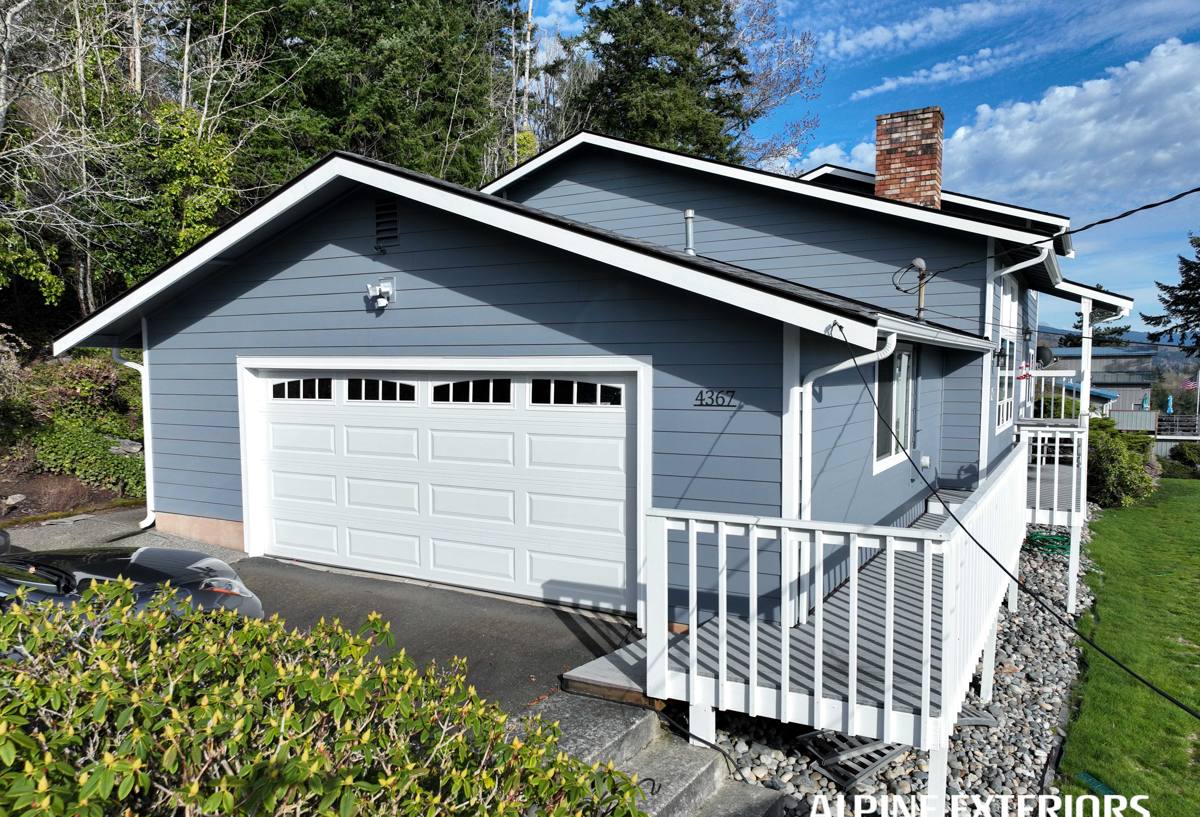
The Deck Problems We See Most Often in This Area
Rot at the Ledger Board and Rim Joist
The ledger board — where the deck attaches to the house — is the single most common failure point on decks in our climate. If it was never flashed correctly, or if the flashing has failed over time, water runs behind the ledger and soaks into the framing every time it rains. Because that spot is hidden behind the decking and often behind skirting, homeowners usually don't know there's a problem until the deck starts to feel spongy or pull away from the house.
Corroded or Failing Fasteners
Constant damp cycles are hard on hardware. Fasteners that weren't rated for ground contact or exterior exposure will rust, weep stains down the decking, and eventually lose their grip. Loose boards, popped screw heads, and rust streaks are usually a fastener problem, not a wood problem — and it's a cheap fix if it's caught before the surrounding wood is damaged.
Moss, Algae, and Surface Wear
Shaded decks and decks under trees hold onto moisture longer, which is exactly what moss and algae need to take hold. Beyond the slip hazard, a moss layer keeps the wood underneath constantly wet, which accelerates rot and finish failure. This is one of the most common reasons a deck that's structurally sound still looks and feels neglected.
Failing Railings and Stair Stringers
Railing posts and stair stringers take direct rain exposure and heavy structural load at the same time, which makes them one of the first things to loosen or rot. A wobbly rail post is a safety issue, not just a cosmetic one, and it's one of the repairs we treat as urgent rather than optional.
Composite and Capstock Board Issues
Composite decking resists rot, but it isn't maintenance-free. We see delamination at cut edges that weren't capped or sealed properly, fading and surface chalking on older boards, and fastener or clip failures where the substructure underneath was never built to the manufacturer's spacing requirements. Composite repair usually comes down to fixing what the original installation got wrong, not a flaw in the material itself.
Repair or Replace? How We Make the Call
Not every deck problem calls for a full rebuild, and not every repair is worth doing on its own. We walk every deck and make a straightforward recommendation based on what's actually happening in the structure, not just what's visible on the surface.
| Deck Component | Sign of Trouble | Usually Repairable | When Replacement Makes Sense |
|---|---|---|---|
| Ledger board | Soft wood, gap from siding, water staining | Yes, if rot is localized | Widespread rot along the full length |
| Joists / framing | Sagging, spongy footing, visible cracking | Sometimes, with sistering | Multiple joists compromised structurally |
| Decking boards | Splintering, soft spots, cupping | Yes, board by board | Majority of boards failing at once |
| Railings and posts | Wobble, rot at the base, loose connections | Yes, in most cases | Non-compliant height or spacing found |
| Fasteners and hardware | Rust staining, popped heads, corrosion | Yes, straightforward swap | Rarely triggers a full replacement alone |
| Footings and posts | Settling, cracking, movement underfoot | Sometimes | Undersized or failing footings |
As a general rule: if the framing underneath is sound, repair is almost always the smarter investment. If the framing itself has been compromised in more than one area, patching the surface just delays a bigger job and hides the actual problem under new boards.
What a Correct Deck Repair Actually Involves
A repair that just swaps a bad board for a new one without addressing why that board failed is a repair that will need to be done again in a few years. We treat every repair as a chance to fix the underlying cause, not just the symptom.
- Full inspection of the framing, not just the visible decking surface
- Checking and correcting ledger board flashing where it ties into the house
- Removing and replacing any rotted framing members, not just capping over them
- Using corrosion-resistant fasteners rated for exterior and ground-contact exposure
- Confirming footings and support posts are stable before touching what sits on top of them
- Matching or properly transitioning new material to existing decking where boards are replaced piecemeal
- Re-checking railing height, baluster spacing, and stair rise/run against code where those elements are disturbed
Skipping any of these steps is how a deck ends up with the same rot back in the same spot a couple of years later.
How Our Deck Repair Process Works
- Inspection. We get under the deck as well as on top of it, checking framing, footings, ledger flashing, and hardware condition, not just the boards you can see from the yard.
- Honest assessment. We tell you what's actually wrong, what's cosmetic versus structural, and what your realistic options are — repair, partial rebuild, or full replacement — before any work starts.
- Written estimate. You get a clear scope of work and price before we touch anything, so there are no surprises once the deck is opened up.
- Repair work. We remove and replace only what needs it, correct the root cause where we find one, like bad flashing or undersized fasteners, and rebuild to hold up under our specific weather pattern.
- Cleanup and walkthrough. We clear debris, check every repaired area with you, and point out anything worth keeping an eye on going forward.
Materials and Fasteners We Use, and Why
Material choice matters more on a deck repair than almost anywhere else on the exterior of a house, because the repaired sections have to survive the same wet-dry cycling as the original structure without becoming the next weak point.
For framing repairs, we use pressure-treated lumber rated for the exposure it's going into — ground contact rated where posts or framing sit close to grade, above-ground rated where that's appropriate. For fasteners, we use stainless steel or hot-dip galvanized hardware rated for treated lumber, never standard zinc-coated screws, which corrode quickly against modern treated wood chemicals and against our damp climate. Where a ledger board ties into the house, we use proper flashing and a water-resistant barrier between the ledger and the siding, not just caulk, which fails long before the wood underneath does.
On composite repairs, we match board profiles and follow the manufacturer's fastening and clip spacing requirements exactly, since composite decking's warranty and long-term performance depend on the substructure underneath being built correctly, not just on the board itself.
Best Timing for Deck Repair in Skagit County
Deck repair can happen almost any time of year here, but there are practical windows worth knowing about. Late spring through early fall gives us the most consistent dry stretches for framing repairs, staining, and sealing, since fresh wood and finish need real drying time to cure properly. Fall and winter repairs are still very doable for structural fixes — rotted framing, loose railings, failing fasteners — but any cosmetic refinishing work is better scheduled for a drier window.
If you've noticed a problem, the timing consideration that matters most isn't the season — it's not letting a small, localized issue sit through another wet season and spread into the surrounding framing.
Deck Maintenance Checklist for Sedro-Woolley Homeowners
A few minutes of seasonal attention goes a long way toward keeping small issues small in our climate. Worth checking twice a year, ideally before and after the wet season:
- Look and press for soft or spongy spots in decking boards, especially near the house and stair landings
- Check for rust streaks below screws or nail heads, which signal failing hardware
- Clear moss and debris from between boards so water can drain instead of pooling
- Test railings and stair posts for wobble or movement
- Look for gaps or staining where the deck meets the house at the ledger board
- Keep gutters and downspouts clear so roof runoff isn't draining directly onto the deck
- Reseal or refinish wood decking before the finish has fully worn through, not after
Why Hire a Crew That Already Works in Sedro-Woolley
Deck repair done right depends on understanding how a specific climate treats a specific structure over time, and that's knowledge you build by working the same area repeatedly, not by reading a general how-to guide. A crew that already works throughout Skagit County knows which framing details tend to fail first in our rain pattern, what moss and moisture do to shaded decks in this region, and how to build a repair that's meant to hold up here, not in a drier climate somewhere else.
Local experience also means straight answers. We're not going to recommend tearing out a whole deck when a targeted repair will genuinely hold up, and we're not going to patch over a structural problem just to keep a job quick and cheap. Our reputation in this area depends on repairs that are still solid years later, not just on the day we finish.
If your deck has soft spots, loose railings, rust stains, or just feels past its best years, we're glad to take a look and give you a straightforward, no-pressure estimate — use the form below to get started.