 Anacortes Siding
 Sedro-Woolley's Siding Problem Isn't Like Everywhere Else
Sedro-Woolley sits inland from Anacortes along the Skagit River, at the edge of the Cascade foothills, but it shares the same weather pattern that defines Skagit County: long wet winters, driving rain that comes in sideways during a windstorm, and a moss season that can stretch eight or nine months out of the year. The river valley adds its own wrinkle — cooler, damper microclimates in low-lying areas and homes tucked against tree lines that rarely get a full day of direct sun on their north-facing walls. That combination is hard on siding. It's especially hard on siding that wasn't engineered to handle it.
We've been doing this work across Skagit and Island County long enough to see the pattern repeat: houses sided with the wrong product start showing problems in year six or seven, not year twenty. Swollen seams, soft spots at the bottom courses, paint that won't hold a finish past a few years, moss and algae staining that comes back within months of a wash. None of that is really the homeowner's fault. It's what happens when a product built for a drier, more moderate climate gets installed in one of the wettest corners of Washington.
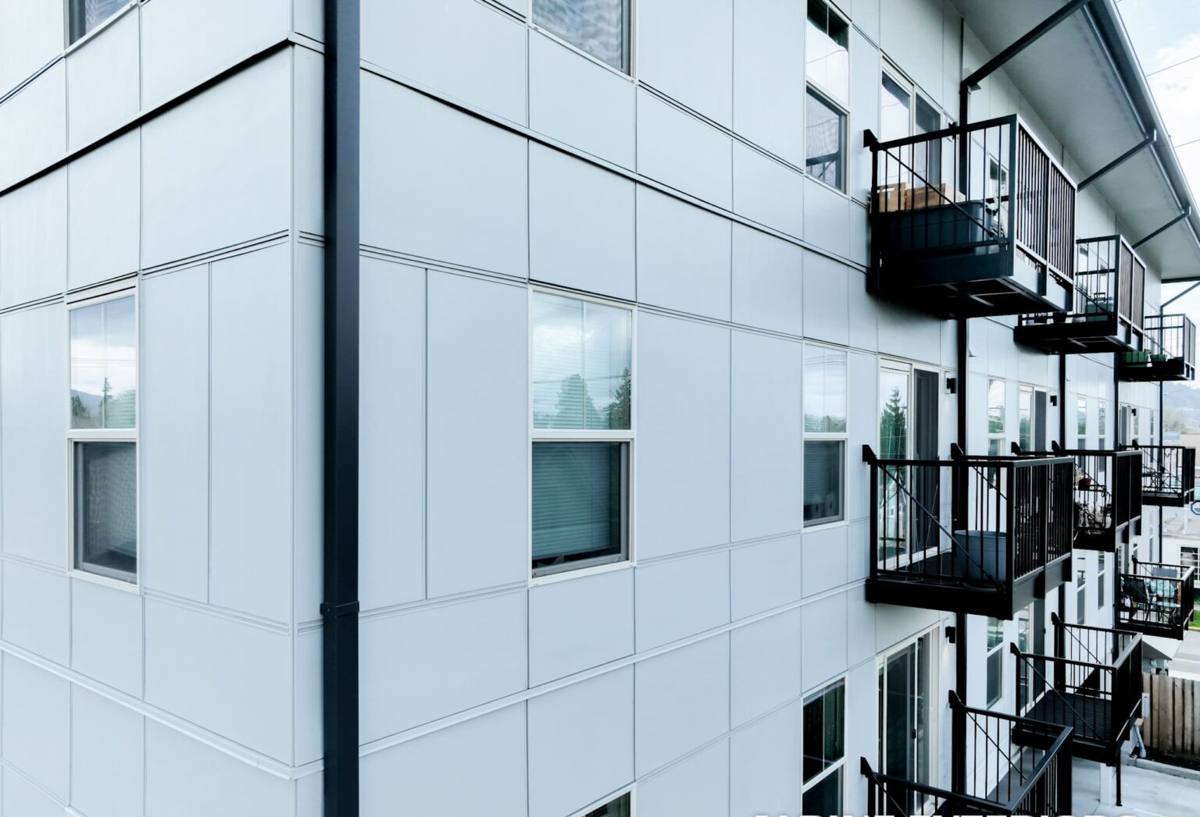
Why James Hardie Fits This Climate
James Hardie fiber cement siding is made from sand, cement, and cellulose fiber, pressed and cured into a rigid board. It does not absorb water the way wood-based products do, it does not rot, and it will not support the kind of fungal growth that swells and softens engineered wood siding over a wet Skagit Valley winter. That matters in Sedro-Woolley specifically because homes here go through repeated wet-dry cycles for months at a stretch — rain soaking the wall, a few days of sun, then rain again. Materials that swell and shrink with moisture eventually fail at the seams and fasteners. Fiber cement doesn't move the same way.
The HZ5 Product Line
Hardie engineers its siding for different climate zones, and the Pacific Northwest falls under the HZ5 designation — their most moisture- and impact-resistant formulation. It's built specifically for regions with sustained rainfall and freeze-thaw cycles, which is exactly what a river valley town like Sedro-Woolley deals with from November through April. We only install HZ5 product on homes in this area; it's not an upgrade option, it's the correct baseline for this climate.
ColorPlus Factory Finish
Most of the siding failures we see aren't the fiber cement board itself — they're the paint. Field-applied paint on any siding material starts breaking down faster in a climate that gets this much rain and this little consistent sun exposure for finish cure. Hardie's ColorPlus finish is baked on at the factory in a controlled process, which gives it better fade resistance and a longer service life than a job-site paint job, and it comes with its own finish warranty separate from the product warranty on the board itself.
What a Correct Installation Actually Involves
Fiber cement siding is only as good as the installation behind it. Hardie publishes detailed installation requirements, and skipping them is the single biggest reason a Hardie job underperforms in a wet climate like ours. A correct install includes:
- A weather-resistant barrier installed and lapped correctly behind the siding, with all penetrations sealed
- Proper flashing at every window, door, and roof-to-wall intersection — the details where water actually gets in
- A minimum clearance between the bottom edge of the siding and grade, decks, and roof lines, so splash-back and standing water don't wick into the board
- Correct fastener type, spacing, and depth — over-driven nails crack the board's edge and create a moisture entry point
- Butt joints sealed or flashed per Hardie's specification, not just caulked and left
- Proper gapping at trim and corners to allow for the board's minor seasonal movement
Every one of these steps is spelled out in Hardie's installation manual, and every one of them is easy to shortcut if a crew is moving fast or hasn't been trained specifically on fiber cement. It's also why Hardie's own warranty can be voided by improper installation — the material can only perform as designed if it goes on the way it's supposed to.
Our Process for Sedro-Woolley Siding Jobs
1. On-Site Assessment
We walk the exterior, check for existing moisture damage behind the current siding, look at grading and drainage around the foundation, and check flashing at windows, doors, and roof lines. On older homes in this area, this is often where we find the real problem — not the siding itself, but water intrusion that's been happening behind it for years.
2. Tear-Off and Sheathing Check
We remove the existing siding down to the sheathing and inspect for rot, soft spots, or mold before anything new goes up. Covering over a compromised wall assembly just hides the problem for another few years — we replace damaged sheathing before proceeding, not after a callback.
3. Weather Barrier and Flashing
New weather-resistant barrier goes on with correct lap and taped seams, then flashing at every penetration and transition. This step is invisible once the siding goes up, but it's the layer doing most of the actual work keeping water out of the wall.
4. Hardie Installation to Spec
HZ5 board and trim installed per Hardie's manual — correct fastening, correct clearances, correct joint treatment. We don't deviate from spec to save time.
5. Final Inspection and Walkthrough
We walk the finished job with the homeowner, cover basic care, and register the warranty paperwork so it's on file if it's ever needed.
Hardie Compared to Other Siding Options in This Climate
| Factor | James Hardie Fiber Cement | Vinyl | Engineered Wood (LP SmartSide) | Cedar |
|---|---|---|---|---|
| Moisture behavior in sustained rain | Does not absorb water or rot | Doesn't rot, but can warp and gap over time | Wood-based core can swell and delaminate at cut edges and seams | Absorbs moisture; requires diligent sealing and maintenance |
| Moss and algae resistance | Good; factory finish sheds growth better than field paint | Prone to algae streaking, especially on shaded walls | Similar to Hardie when new, but finish degrades faster | High — natural wood is a moss magnet in shaded, damp areas |
| Fire resistance | Non-combustible | Combustible, can melt or deform near heat | Combustible | Combustible |
| Expected repaint interval (this climate) | 15+ years (ColorPlus factory finish) | Never repainted, but color fades and can't be restored easily | 7-10 years | 3-5 years |
| Upfront cost | Higher than vinyl or LP, lower than premium cedar | Lowest | Mid-range | High, especially with quality-grade material |
None of these products are without some merit — vinyl is inexpensive and low-maintenance in mild climates, cedar has a look some homeowners love, and engineered wood is easier to install quickly. But for a wet, moss-prone, river-valley climate like Sedro-Woolley's, the trade-offs on the others show up faster than most homeowners expect, which is why we standardized on Hardie for every home we side.
Why a Crew That Already Works This Area Matters
Siding installation isn't just about the product — it's about knowing how the local conditions actually behave. A crew that regularly works Sedro-Woolley and the surrounding Skagit Valley knows which wall orientations stay damp longest, which older homes in the area tend to have outdated or missing flashing behind their siding, and how the freeze-thaw swings between the valley floor and the Fidalgo Island side of our service area affect fastening and expansion gaps. That's the kind of judgment that doesn't come from a manual — it comes from having done the work here, repeatedly, and having seen what fails and what holds up.
It also means we're not learning the permitting process or inspection expectations for the first time on your project. We know what a Skagit County exterior job needs to pass inspection cleanly, and we plan for it up front instead of scrambling at the end.
Maintenance: What Sedro-Woolley Homeowners Should Actually Do
Correctly installed Hardie siding is low-maintenance, not no-maintenance. A little seasonal attention goes a long way in this climate:
- Rinse the siding with a garden hose (not a pressure washer aimed directly at seams) once or twice a year to knock off moss spores and grime before they take hold
- Keep gutters clear so overflow doesn't run down the wall face and stay wet longer than it should
- Trim back landscaping and tree limbs that keep a wall shaded and damp — this is the single biggest driver of moss growth on siding here
- Check caulking at trim, window, and door edges annually and re-seal if it's cracked or pulled away
- Watch for any staining or dark streaking at seams, which can signal a flashing issue worth checking before it becomes a bigger repair
What This Costs
Every Sedro-Woolley home is different — square footage, number of stories, trim detail, and how much of the old siding and sheathing needs to come off all factor in. We don't publish blanket pricing because a straightforward single-story re-side and a complex multi-story home with extensive rot repair aren't the same job, and quoting them the same way would be dishonest. What we can tell you is that Hardie sits above vinyl and below premium cedar in upfront cost, and that the gap tends to close over time once you factor in how much less you'll spend on repainting, moss cleanup, and moisture repairs over the life of the siding.
If you're weighing siding options for a home in Sedro-Woolley or anywhere else in our Skagit County service area, we're happy to walk your property, give you a straight assessment of what's going on with your current siding, and put together a written estimate — no pressure, no sales script. Use the form below to get started.