 Anacortes Siding
 Asphalt Shingle Roofing Built for Ship Harbor's Climate
Ship Harbor sits close enough to the water that every roof in the neighborhood deals with the same combination: salt-laden air off Rosario Strait, driving rain that comes in sideways during winter storms, and a moss season that seems to stretch longer every year. A shingle roof installed the same way you'd install one in a dry inland climate will not hold up here. Fasteners corrode faster, moss gets a foothold in shaded valleys and north-facing slopes, and marginal flashing work turns into a leak within a few wet seasons instead of a few decades.
We install asphalt shingle roofs for homes in Ship Harbor and the surrounding Anacortes area with that reality built into the plan from day one — not bolted on afterward. That means specific underlayment choices, fastener specs, ventilation targets, and moss-prevention details that matter more here than they would twenty miles inland in Skagit County.
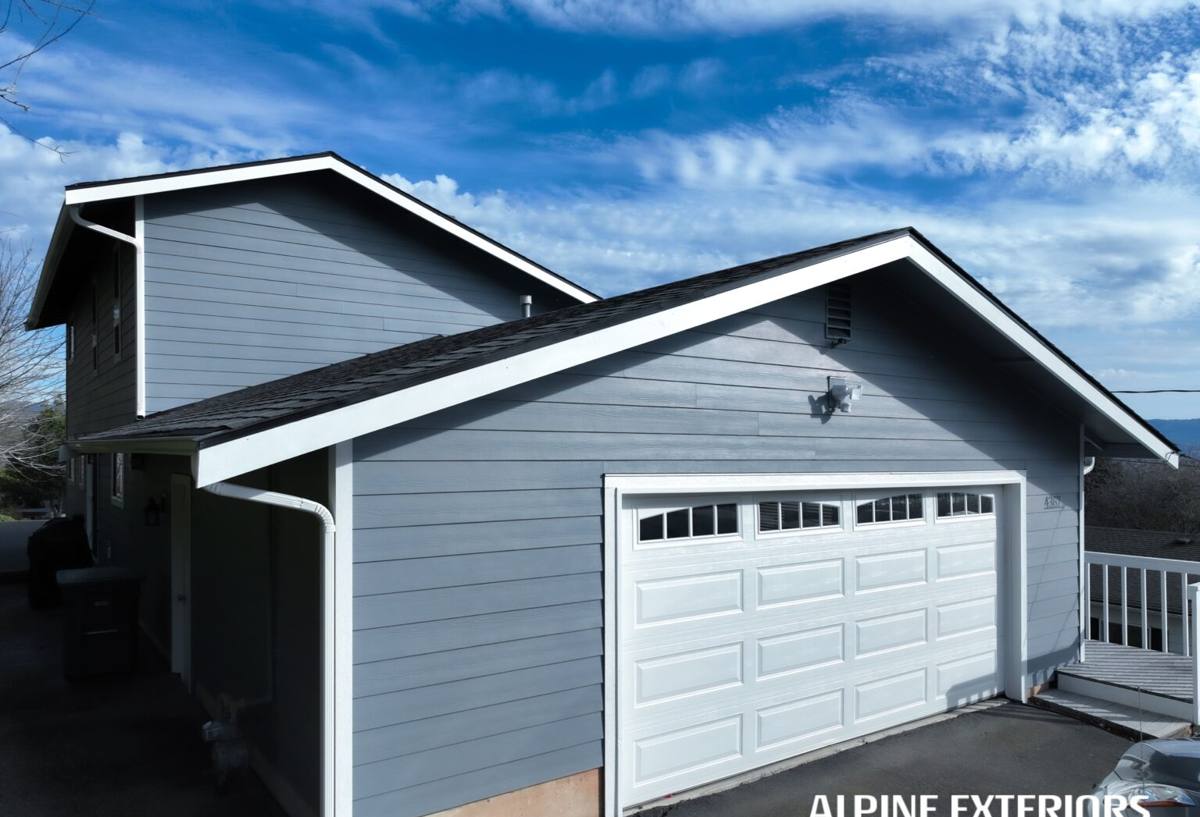
What Ship Harbor Homes Actually Need From a Roof
Salt Air and Metal Fatigue
Airborne salt accelerates corrosion on anything metal — nail heads, flashing, drip edge, and roof vents. On a lot of older roofs in this area, the shingles themselves are still serviceable but the metal components have failed first: rusted flashing at a chimney or wall intersection, a corroded vent boot, nails backing out because the shank has weakened. We spec corrosion-resistant fasteners and flashing metals suited to coastal exposure rather than the cheapest option that would pass inspection inland.
Wind-Driven Rain
Storms coming off the water don't just drop rain straight down — they push it under shingle tabs and up into laps that would stay dry in a calmer climate. That's why sealing strips, nailing patterns, and underlayment overlap all need to be tighter here than manufacturer minimums assume for a generic install.
Moss and Shade
Ship Harbor's tree cover is part of what makes the area attractive, but it also means extended shade on north- and west-facing roof slopes for much of the year. Combined with the Pacific Northwest's wet season, that's ideal moss-growing conditions. Moss holds moisture against the shingle surface, works its way under tabs, and can lift shingles enough to let water in — long before the shingles themselves would otherwise be due for replacement.
What a Correct Asphalt Shingle Install Involves
A shingle roof is only as good as the layers underneath it. Here's what we consider non-negotiable on any roof we install in this area:
- Full tear-off to the deck on re-roofs — no layering over old shingles, which traps moisture and hides deck damage
- Deck inspection and repair of any soft, delaminated, or water-damaged sheathing before anything else goes down
- Ice-and-water shield or equivalent self-adhered membrane at eaves, valleys, and around every penetration
- Synthetic underlayment across the full field, lapped and fastened to hold up under wind-driven rain
- Corrosion-resistant flashing at all walls, chimneys, and roof-to-roof transitions
- Balanced intake and exhaust ventilation so the attic isn't trapping moisture against the underside of the deck
- Manufacturer-spec nailing pattern — correct nail count, placement, and depth, not just "close enough"
- Ridge cap and hip installation that matches the shingle line's intended wind rating
Skip any one of these and the roof will still look fine on install day. The failures show up two, five, or ten years later — usually as a leak nobody can trace back to the actual cause.
Choosing the Right Shingle for a Coastal, Shaded Lot
Not every asphalt shingle product is a good fit for Ship Harbor's conditions. We steer homeowners toward algae-resistant shingle lines — most manufacturers now embed copper or zinc granules specifically to slow moss and algae growth — and away from lighter-weight three-tab products that don't hold up as well to wind uplift near the water. The table below is a general guide, not a quote; exact pricing depends on your roof's size, pitch, layer count, and access.
| Shingle Type | Typical Lifespan | Best Fit For |
|---|---|---|
| Standard 3-tab | 15–20 years | Budget re-roofs on simple, low-slope sections; less ideal for exposed or shaded areas |
| Architectural / laminate | 25–30 years | Most Ship Harbor homes — better wind rating and thicker profile |
| Algae-resistant architectural | 25–30 years | Shaded, tree-covered lots where moss and algae are a recurring problem |
| Premium / designer laminate | 30+ years | Homeowners wanting a heavier look and the longest warranty coverage |
We'll walk through which category makes sense for your specific roof — slope, sun exposure, and how long you plan to stay in the home all factor in.
Our Process, Start to Finish
1. On-Site Assessment
We get on the roof, not just in the driveway. That means checking the deck condition, current ventilation setup, flashing detail at every wall and penetration, and how much shade and moss exposure each slope actually gets.
2. Straight Answers Before You Commit
You'll get a written scope that spells out tear-off, deck repair allowances, underlayment and flashing materials, shingle options, and ventilation work — no vague "roofing package" language that leaves room to add charges later.
3. Tear-Off and Deck Repair
Full removal of the old roofing, deck inspection, and repair of any damaged sheathing. We won't cover up a soft deck with new shingles — it's a callback waiting to happen.
4. Weatherproofing Layers
Ice-and-water membrane at vulnerable points, full synthetic underlayment, and all flashing replaced or upgraded to corrosion-resistant material.
5. Shingle Installation
Installed to manufacturer spec — nailing pattern, exposure, and ridge/hip detail — so the warranty is actually valid if you ever need it.
6. Final Walkthrough
We walk the job with you, confirm cleanup (magnetic sweep for stray nails included), and go over basic maintenance — what to watch for with moss, when to have gutters checked, and what a normal amount of granule loss looks like versus a problem.
Signs Your Ship Harbor Roof Needs Attention
Because of the moss and salt exposure here, roofs in this neighborhood often show trouble earlier than the "expected lifespan" on the shingle bag would suggest. Worth a look if you notice:
- Moss or dark streaking concentrated on shaded, north-facing slopes
- Granules collecting in gutters or at downspout outlets
- Curling, cupping, or lifted shingle tabs, especially near eaves
- Rust staining running down from flashing, vents, or metal fixtures
- Soft spots or sagging visible from the ground or attic
- Daylight visible through the roof deck from inside the attic
- A ceiling stain that shows up or grows after a windy rainstorm
Catching these early is usually the difference between a repair and a full replacement.
Repair, Re-Roof, or Full Replacement?
Not every problem roof needs to come off entirely. If the deck is sound and the shingles are still within their reasonable service life, a targeted repair — replacing damaged flashing, addressing a moss-damaged section, fixing a specific leak point — can be the right call. We'll tell you honestly when a repair makes sense versus when the roof has enough scattered issues (or enough age) that a full tear-off and replacement is the better long-term value. We don't upsell a full re-roof when a repair will genuinely hold, and we won't patch a roof that's past the point where patching makes financial sense.
Maintenance That Actually Extends Roof Life Here
A shingle roof in Ship Harbor needs a bit more attention than the same roof would in a drier climate, but it's not complicated:
- Keep gutters clear so water isn't backing up under the shingle edge
- Have moss treated or removed before it spreads across a full slope — soft-washing rather than pressure-washing protects the granule surface
- Trim back overhanging branches where practical to reduce shade and debris buildup
- Get flashing and penetration points checked every few years, especially after a hard winter
- Address small leaks immediately — in a wet climate, a small leak becomes a deck repair fast
Why a Ship Harbor–Familiar Crew Matters
A crew that works this neighborhood regularly already knows which slopes hold moss longest, how the wind comes off the water during a winter storm, and which flashing details tend to fail first on homes built to older code. That's not something you get from a generic roofing checklist — it comes from having actually worked on roofs in this specific pocket of Anacortes and Skagit County. We're not guessing at what "coastal Washington conditions" means in the abstract; we're building the roof for the conditions your specific street actually sees.
Get a Straight Answer on Your Roof
If you're dealing with moss buildup, a suspicious ceiling stain, or a roof that's simply getting up in years, we're happy to take a look and give you an honest read on repair versus replacement — no pressure, no inflated scope. Use the form below to request a free estimate for your Ship Harbor home.