 Anacortes Siding
 Why Sedro-Woolley Siding Wears Differently Than You'd Expect
Sedro-Woolley sits inland from Anacortes, but that distance doesn't buy your siding much of a break. Skagit County's weather pattern pushes moisture off the Sound and up the river valley, and by the time it reaches Sedro-Woolley it's still loaded with the same driving rain, salt-tinged air, and heavy tree cover that keeps this whole corner of Washington green ten months out of the year. That combination is exactly what accelerates siding failure: constant dampness, limited direct sun on shaded elevations, and a moss and algae season that can run from October through May.
We've repaired siding on homes throughout Skagit County long enough to know that the damage pattern here isn't random. It shows up in predictable places — north-facing walls that never fully dry out, areas under mature trees where debris collects in seams, and lower courses of siding that catch splashback from saturated ground. Understanding those patterns is what separates a patch job from a repair that actually holds.
Homes right on Anacortes's shoreline take salt air head-on. Sedro-Woolley sits further up the valley, which trades some of that direct salt exposure for heavier tree canopy and a valley floor that holds humidity longer between storms. Either way, siding here rarely gets the long dry stretches it needs to fully recover between wet spells, and that's the root cause behind most of the repair calls we get.
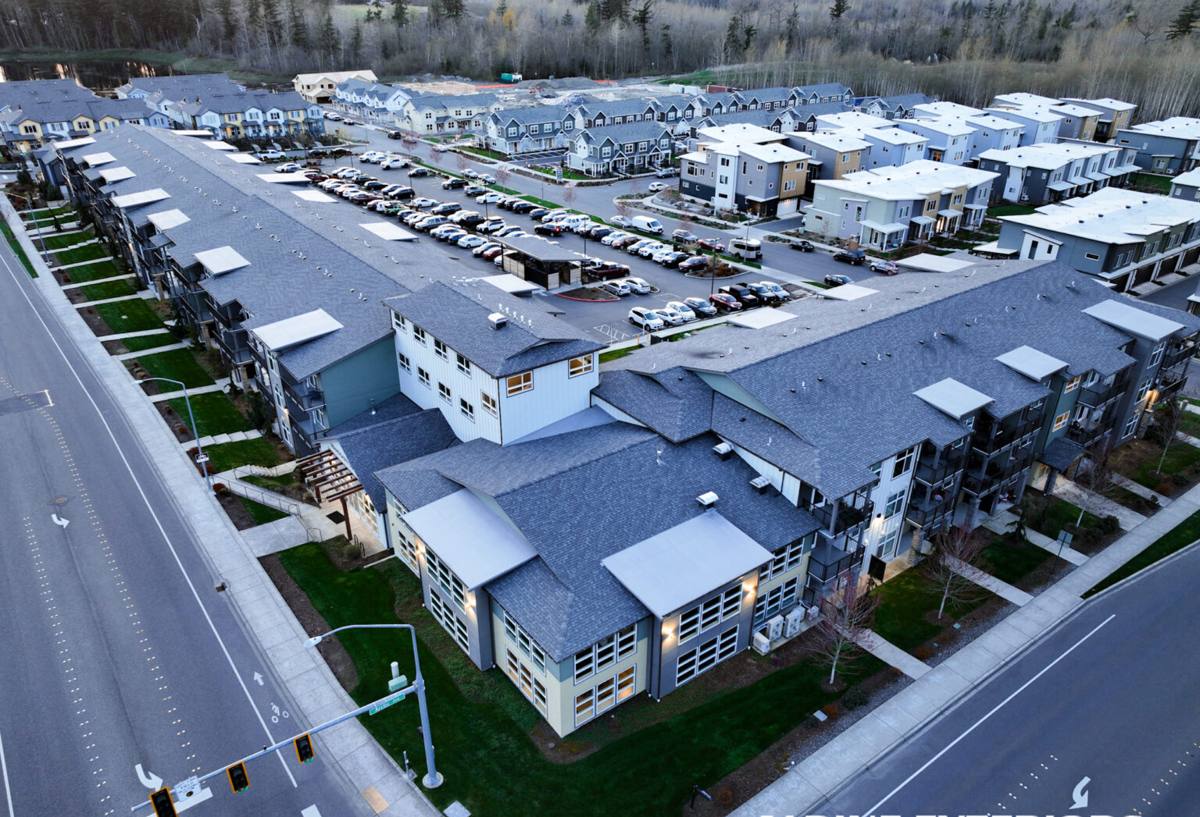
Common Siding Problems We Find on Sedro-Woolley Homes
Skagit County's siding problems tend to repeat themselves once you've seen enough of them. On Sedro-Woolley homes, four issues show up more than any others.
Moss and Algae Staining
Green and black staining isn't just cosmetic. On wood-based and some engineered sidings, the moisture that moss and algae hold against the surface keeps the material wet far longer than it should be, which speeds up rot underneath a stain that looks like it should just wash off.
Moisture Intrusion at Seams and Laps
Caulking and sealant have a limited lifespan in this climate — typically shorter than manufacturers advertise, because freeze-thaw cycles and near-constant humidity work the joints harder. Once a seam opens, water gets behind the siding rather than running off it, and that's where hidden damage starts.
Warping, Swelling, and Delamination
Wood and wood-composite sidings absorb moisture at cut edges and fastener points. Over a few wet seasons that shows up as swelling, bowing boards, or layers separating at the surface. Vinyl siding handles moisture differently but has its own failure points — cracking in cold snaps and buckling when it's fastened too tight for our temperature swings.
Fastener and Flashing Failures
Rust streaks below nail heads or gaps around window and door flashing are early warning signs. In a climate this wet, a small flashing gap that would be a minor issue in a dry region becomes a steady drip point that rots sheathing over a season or two.
Repair or Replace? How We Make That Call
Not every damaged section needs full replacement, but not every repair is worth doing either. We weigh four factors before recommending a direction, and none of them work alone — we look at them together for each specific section of wall, not the house as a whole.
| Factor | Favors Repair | Favors Replacement |
|---|---|---|
| Extent of damage | Isolated to one or two areas | Spread across multiple elevations |
| Moisture readings | Surface-level, sheathing reads dry | Elevated readings behind siding |
| Material age | Mid-life, finish still sound | Near or past expected service life |
| Match availability | Product and color still obtainable | Discontinued or badly weathered mismatch |
That last row matters more than most homeowners expect. Siding that's ten or fifteen years old often can't be matched in color or profile, which means even a technically sound repair leaves a visible patch. We'll tell you plainly when that's the case rather than sell you a repair that ends up looking worse than the damage did.
What a Correct Siding Repair Actually Involves
A repair that's done right addresses the cause, not just the symptom. That means:
Moisture Testing Before We Touch Anything
We check moisture content behind the siding, not just what's visible on the surface. A section that looks fine but reads wet behind it means the problem is bigger than the damaged board.
Removing Enough to See the Real Extent
Rot and moisture damage almost always travel further than the visible stain or crack. Cutting back to sound material — even if that means removing more than the homeowner expected — is what keeps a repair from failing again in a year.
Correcting Flashing and Water Management
If the original installation had a flashing gap or missing water-resistive barrier detail, replacing the siding without fixing that detail just resets the clock on the same failure. We correct the water management first, then reinstall.
Matching Material and Finish
Whenever possible we match existing siding for a seamless repair. When that's not realistic, we say so upfront and talk through options, including whether it's a better long-term move to re-side the affected elevation. Skipping any one of these steps is how a "repair" turns into a callback a year or two later.
Why We Steer Repairs Toward James Hardie Fiber Cement
We've worked on plenty of different siding types across Skagit County, but James Hardie fiber cement is the only product we install on new work, and it's usually what we recommend transitioning to when a repair on another material stops making sense. Here's the honest reasoning behind that.
Wood and wood-composite sidings are repairable, but the repair only lasts as long as the surrounding material stays dry — and in a climate with this much rain and moss pressure, that's an uphill fight. Vinyl siding is inexpensive to patch, but color-matching faded vinyl is nearly impossible since it fades unevenly over time, and cold-weather cracking tends to reappear in the same spots. Both are legitimate products with their place; we simply won't install them ourselves because of how they perform here over the long run.
James Hardie fiber cement holds up differently. It's non-combustible, it doesn't swell or delaminate from moisture the way wood-based products can, and its ColorPlus factory finish is engineered to resist the fading and moss-holding texture that plagues painted wood siding in wet climates. When a Hardie repair is needed, matching color and profile is far more consistent because the finish is factory-applied, and the HZ5 product line is specifically engineered for climates like ours. That's not a sales pitch — it's the reason our own crews stopped installing anything else.
Our Process for a Sedro-Woolley Repair
1. On-Site Inspection
We walk the exterior, check moisture levels at suspect areas, and look at flashing, caulking, and grade conditions that might be feeding the problem. This is also when we look at drainage and landscaping details that keep water sitting against the wall longer than it should.
2. Honest Diagnosis
You get a clear explanation of what's actually wrong, what caused it, and whether repair or replacement makes more sense for that section — with the reasoning, not just a recommendation. If a repair won't hold up, we'll tell you before any work starts, not after.
3. Written Estimate
A detailed scope of work and price before anything is scheduled, so there are no surprises once the crew is on-site. The estimate spells out exactly what's being removed, repaired, and replaced.
4. Repair Work
Damaged material is removed back to sound substrate, water management is corrected, matching material is installed, and the area is sealed and finished to blend with the rest of the wall. We clean up thoroughly before we consider the job done.
5. Final Walkthrough
We review the completed work with you before we consider the job finished, and answer any questions about maintenance going forward.
Why Timing Matters for Skagit County Repairs
Siding repair work is weather-dependent, and Skagit County doesn't hand out long dry windows. We plan repairs around realistic dry stretches so that new material, sealant, and finish work aren't compromised by rain before they've had a chance to cure properly. Rushing a repair between storms — or worse, working through steady rain — is one of the fastest ways to end up redoing the same section a year later.
That's also part of why an early call matters more than homeowners expect. A small area of damage caught in late summer can usually be scheduled and completed with room to spare. The same damage discovered mid-winter often has to wait for a dry window, which gives it more time to spread in the meantime.
Why It Matters to Hire a Crew That Already Works in Sedro-Woolley
Siding repair looks the same on paper everywhere, but the details that make a repair last are regional. A crew that works this part of Skagit County knows which elevations take the worst weather, how long caulking actually holds up here versus what the label promises, and which failure patterns show up first on homes with heavy tree cover or valley humidity. That local pattern recognition is the difference between a repair that's cosmetic and one that solves the actual problem.
Sedro-Woolley includes a mix of older homes and newer construction, and each era brings its own typical weak points — from outdated flashing details to siding that was never rated for this much sustained moisture. It also matters for practical reasons, like knowing which building conditions are common locally and being able to schedule around the wettest stretches of the year rather than working through them and compromising the repair.
Signs Your Siding Needs Attention Now
- Green, black, or dark streaking that keeps returning after cleaning
- Soft or spongy spots when you press on the siding surface
- Visible gaps, cracks, or missing caulk at seams and trim
- Paint that's bubbling, peeling, or failing faster than expected
- Warped, bowed, or separating boards or panels
- Rust streaking below fastener heads
- Interior wall staining or musty odors near exterior walls
- Rising utility bills that suggest air or moisture leaks through the wall
If any of these sound familiar, the earlier it's addressed, the smaller and less expensive the repair usually is.
If you're seeing any of these signs on a Sedro-Woolley home, we're happy to take a look and give you a straight answer — repair, replace, or leave it alone for now. Request a free, no-pressure estimate below and we'll walk the exterior with you and explain exactly what we find.