 Anacortes Siding
 Why Siding Repair Works Differently in West Anacortes
West Anacortes sits close to the water, which means its homes take on a different mix of weather stress than houses further inland in Skagit County. Marine air off the surrounding waterways carries salt that accelerates corrosion on fasteners and trim, driving rain — often wind-pushed — finds its way into any gap in flashing or caulk, and a long moss season stretching from fall through spring keeps shaded and low-clearance wall sections damp for weeks at a time. Any one of these factors will eventually show up as a siding problem. Together, they mean a repair that only addresses what's visible on the surface tends to come back within a year or two.
That's the difference between a patch and a repair. A patch covers the symptom. A repair addresses the moisture path, the material, and the finish together, so the fixed section performs as well as the rest of the wall for the long haul.
Signs Your Siding Needs Repair — Not Full Replacement
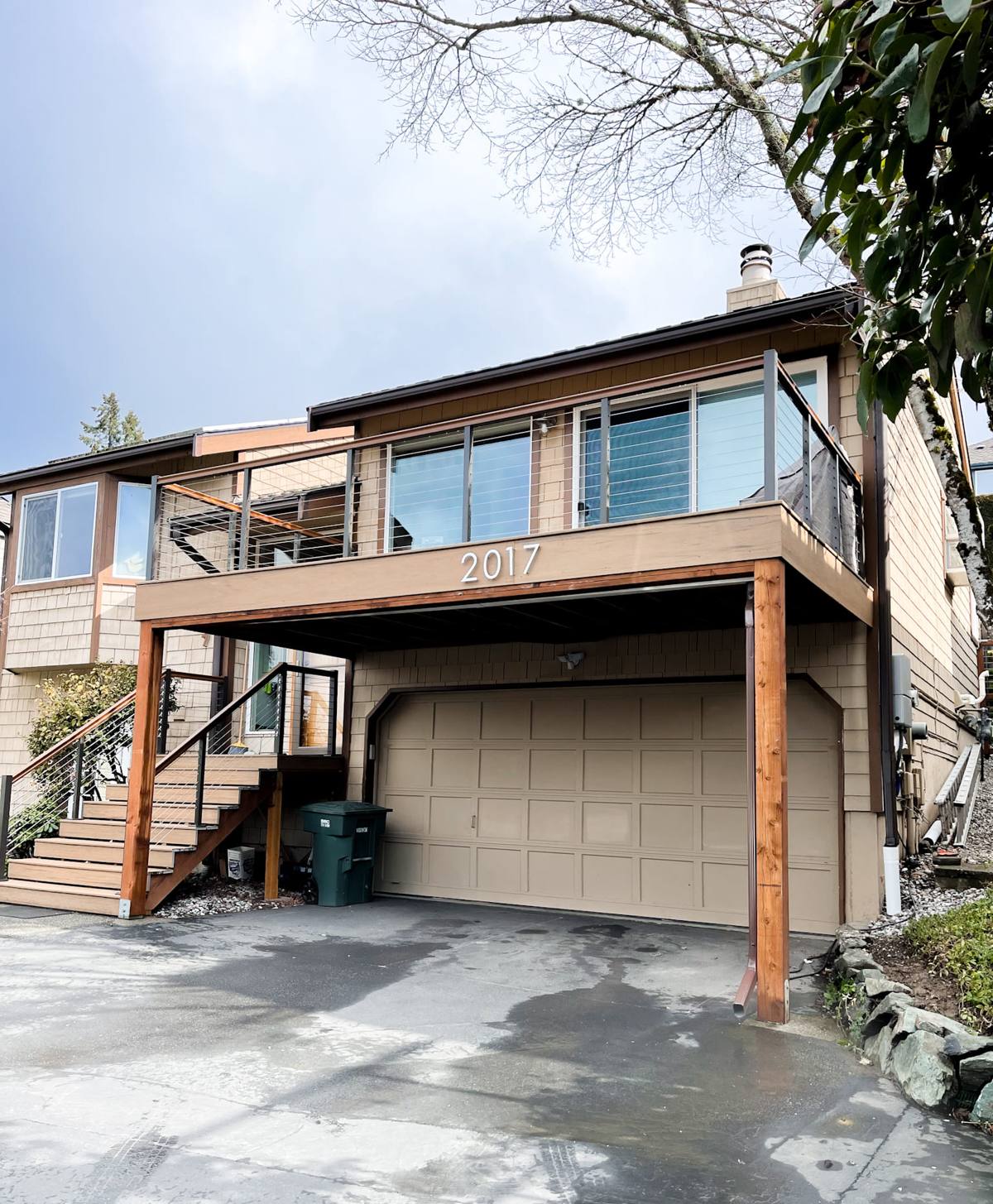
Most siding problems we see in West Anacortes are localized, not whole-house failures. Catching them early is what keeps a job a repair instead of a re-side. Look for:
- Soft or spongy spots when you press on a panel, especially near the bottom courses
- Cracking, splitting, or delamination isolated to a few boards rather than spread across the wall
- Paint or finish that's bubbling or peeling in specific zones while the rest still looks sound
- Dark streaking or heavier moss growth concentrated on shaded, wind-sheltered, or north-facing sections
- Gaps opening up at butt joints, corner boards, or window and door trim
- Nail pops or fasteners backing out, leaving small shadow lines or rust streaks
- Water staining on an interior wall that lines up with an exterior seam
If the damage is contained and the surrounding siding is still doing its job, repair is almost always the more sensible move — less cost, less disruption, and no reason to disturb wall sections that aren't failing.
Where We Typically Find Damage on West Anacortes Homes
Butt Joints and Trim Transitions
Every horizontal seam and every place siding meets trim, a window, or a door is a place water is trying to get behind the wall. In a driving-rain climate, these joints take repeated pressure from wind-driven water, and failed caulk or a joint that was never flashed correctly is one of the most common repair calls we get in this area.
Shaded, Wind-Sheltered Wall Sections
Walls that don't get direct sun or airflow — often the north or east side of a house, or sections tucked behind fencing, shrubs, or a neighboring structure — stay damp longer after rain. That's exactly where moss and algae take hold, and sustained moisture against a wall surface is what eventually leads to soft substrate, coating breakdown, or, on wood-based products, rot.
Ground-Level and Low-Clearance Siding
Siding installed too close to grade, or behind planting beds and mulch, absorbs splash-back moisture every time it rains and stays wetter longer than the rest of the wall. This is a common failure zone regardless of the siding material, but it's especially unforgiving for anything that isn't dimensionally stable when wet.
What a Correct Repair Actually Involves
Starting With a Moisture Check, Not Just a Patch
Before we touch a single board, we check what's happening behind the siding — not just what's visible on the face. Soft siding is often a symptom of a moisture path that's been active for a while, and replacing the board without finding and correcting that path just resets the clock on the same failure.
Matching Material and Butting In Cleanly
A repair section has to match the profile, exposure, and reveal of the surrounding siding, or it will read as an obvious patch and can create its own water-shedding problems at the transition. This takes more care than simply nailing up a replacement board.
Rebuilding the Water Management, Not Just the Surface
Correct flashing at joints and penetrations, continuous house wrap or weather-resistant barrier behind the repair, and sealant used only where sealant actually belongs — not as a substitute for flashing — are what make a repair last. Skipping this step is the single biggest reason repairs fail early.
Why We Repair With James Hardie Fiber Cement
We install James Hardie exclusively, and that includes repair work. When we open up a wall section, we don't patch it with whatever's convenient — we bring in Hardie board and, where color match matters, ColorPlus factory-finished product so the repaired section holds up the same way the rest of your siding does. Hardie's HZ5 formulation is engineered for exactly this kind of climate: wet, salt-influenced, freeze-thaw-adjacent conditions where dimensional stability and moisture resistance matter more than in a dry inland climate.
Here's how the common repair-patch materials compare for a wall that's already dealing with salt air, driving rain, and moss:
| Material | Moisture tolerance | Finish matching | Expected life of the repair |
|---|---|---|---|
| James Hardie fiber cement | Non-combustible, doesn't rot, engineered for wet climates | Factory ColorPlus finish matches consistently | Long-term, matches the rest of a Hardie wall |
| Vinyl | Won't rot but can warp or crack in temperature swings | Fades unevenly over time, hard to match older panels | Moderate — often visible as a patch within a few years |
| Cedar or primed wood | Absorbs moisture, needs a sound finish to perform | Can match well initially, ages differently than existing wood | Shorter — requires ongoing refinishing to hold up |
| LP SmartSide | Engineered wood strand — sensitive to unsealed cut edges and sustained moisture | Reasonable initial match | Moderate, dependent on edge sealing and maintenance |
This isn't a knock on any of these products used correctly elsewhere — it's why we standardized on one system we can install, repair, and warranty with confidence, rather than mixing materials on a wall where consistency matters.
Our Siding Repair Process
Inspection and Documentation
We walk the exterior, identify every affected area — not just the spot you called about — and check for moisture behind the siding at each one. Repairs are scoped off what we actually find, not guesswork.
Scope and Estimate
You get a clear explanation of what's failing, why, and what it will take to fix it correctly, with the cost broken out so you understand what you're paying for.
Repair and Finish Matching
We remove only what needs to come off, correct the underlying moisture issue, install matching Hardie material, and rebuild the flashing and sealant details so the section performs like the original installation.
Cleanup and Walkthrough
We clear debris, and before we leave we walk the repair with you so you can see exactly what was done and ask questions.
Repair or Full Re-Side? How We Help You Decide
Not every siding problem should be repaired, and we'll tell you that directly if it applies to your house. The questions that matter most are how much of the wall is affected, how old the existing siding is, whether there's a history of recurring moisture problems in more than one spot, and whether the material itself is nearing the end of its practical service life. A handful of isolated repairs on an otherwise sound wall is money well spent. Recurring failures across multiple wall sections are often a sign the whole system is wearing out, and at that point, continuing to patch it can cost more over time than addressing it once with a full re-side.
Why Hiring a Crew That Already Works in West Anacortes Matters
A repair crew that regularly works near the water in this part of Skagit County already knows which wall orientations take the worst of the wind-driven rain, where moss builds up fastest, and how salt air shortens the working life of exposed fasteners and cheaper finishes. That familiarity shows up in the details — the flashing choices, the fastener selection, where extra attention goes on a given wall — rather than treating every repair as a generic, one-size-fits-all fix.
Maintaining Your Siding After a Repair
A correct repair should hold up with normal upkeep. A few habits go a long way in this climate:
- Keep gutters clear so water isn't overflowing onto siding below
- Trim back vegetation that's shading or touching the wall, since airflow is what keeps moss from taking hold
- Rinse visible moss or algae growth before it gets heavy, rather than letting it sit through a whole wet season
- Check caulking at trim and window transitions annually and have any cracked or missing sealant replaced promptly
- Watch for the same warning signs listed earlier — spongy spots, new streaking, gaps at joints — so small issues get addressed before they spread
If you're seeing damage on your siding in West Anacortes, or you're just not sure whether what you're looking at is a quick repair or something bigger, we're happy to take a look. We offer a free, no-pressure estimate so you know exactly what's going on and what it would take to fix it right.