 Anacortes Siding
 Siding Replacement Built for Sedro-Woolley's Wet-Side Climate
Sedro-Woolley sits inland from the salt water of Fidalgo Bay and the Sound, but don't mistake "inland" for "dry." The Skagit Valley funnels the same marine air off the water through the valley floor, and homes here still deal with long stretches of driving rain, heavy fall and winter dew, and a fog-and-mist pattern that keeps exterior surfaces damp for days at a time. Add in mature tree cover on a lot of Sedro-Woolley properties — more shade than you'll find on the open, wind-scoured lots closer to the water — and you get a near-perpetual moss and mildew season on north-facing walls, fascia, and anything under a roofline that doesn't get direct sun.
That combination is hard on siding. Wood-based products swell, checks, and rots where moisture sits. Vinyl can't be painted to fight discoloration and gets brittle in our colder snaps. The siding that holds up in Skagit County has to shed water fast, resist moss and mildew growth on the surface, and keep its finish intact through years of freeze-thaw swings without cracking or delaminating.
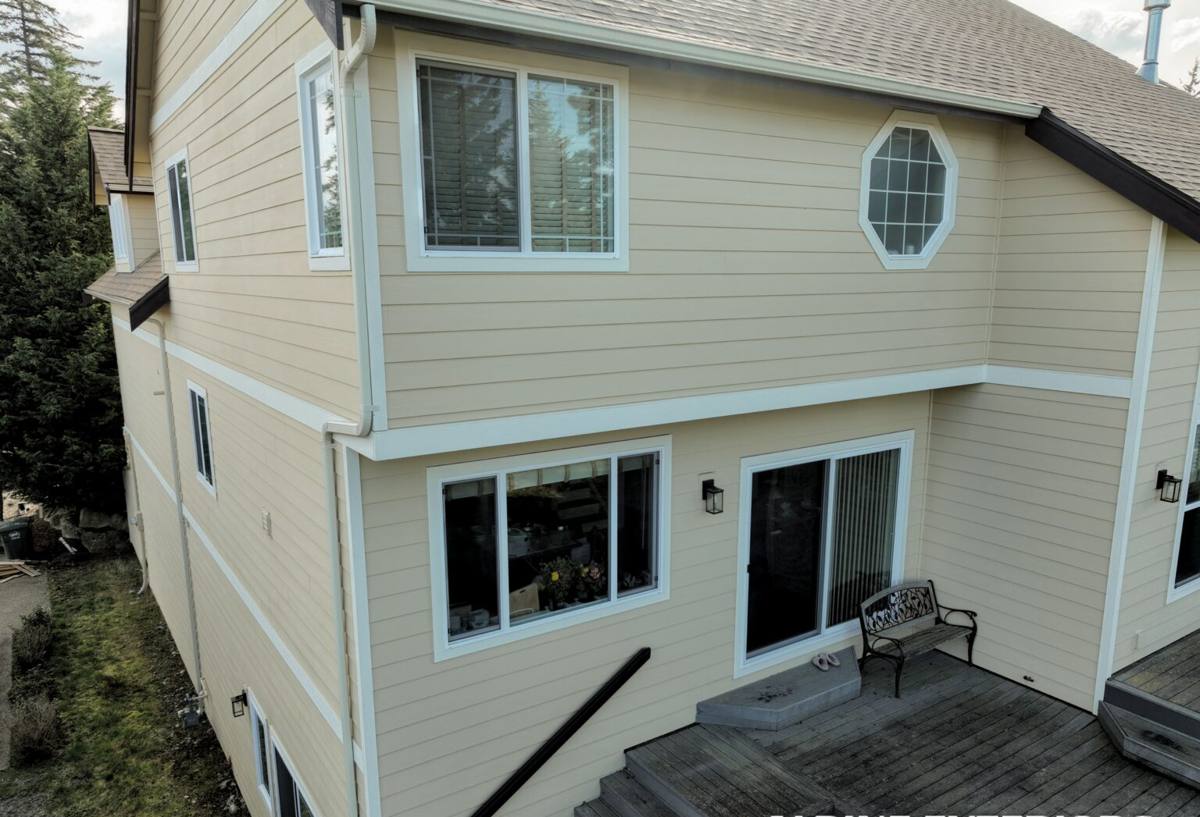
Signs a Sedro-Woolley Home Needs Siding Replacement
Most homeowners don't wake up one day and decide they need new siding — it's a slow accumulation of small problems that eventually add up to a bigger one. In our climate, watch for:
- Soft or spongy spots when you press on wood or hardboard siding, especially near the bottom courses and around window trim
- Persistent green or black staining that comes right back within weeks of pressure washing
- Paint that's peeling, bubbling, or chalking faster than a normal repaint cycle would explain
- Visible warping, cupping, or gaps opening up between boards
- Rising energy bills that track with drafts you can feel near exterior walls
- Siding that's original to a home built more than 20-25 years ago, particularly if it was never repainted or resealed on schedule
Any one of these on its own might be a repair. Several at once, or wood rot found once you pull a board, usually means it's time to talk about full replacement rather than another round of patching.
Why We Install Only James Hardie Fiber Cement
We get asked regularly why we don't offer vinyl, LP SmartSide, primed spruce or cedar, or off-brand fiber cement like Cemplank or Allura. The honest answer is that we've made a professional call: James Hardie is the product we're willing to put our name behind for the climate our customers live in.
Vinyl is inexpensive and low-maintenance in the sense that you don't paint it, but it can't be repainted to refresh its color, it expands and contracts with temperature swings in ways that stress fastening over time, and it doesn't stand up as well to sustained impact or UV fading as a factory-cured cement product. LP SmartSide and primed wood products are engineered wood or solid wood at their core — better than raw lumber siding of decades past, but still wood, which means the cut edges, fastener penetrations, and any breach in the factory coating are entry points for the exact moisture problems that define our climate. Cedar is beautiful and we understand the appeal, but it's a maintenance commitment — regular sealing and refinishing — that a lot of homeowners underestimate until they're a few years in.
James Hardie fiber cement is cement, sand, and cellulose fiber. It doesn't rot, it's not fuel for pests, and it's non-combustible, which matters given how many Skagit County properties border trees and brush. Hardie's ColorPlus factory finish is baked on under controlled conditions rather than field-painted, which gives it better adhesion and color retention than a job-site paint job, and Hardie backs its siding with a strong, transferable limited warranty. That's the product we stand behind in this valley.
Where Hardie Fits the Local Climate Specifically
Hardie engineers its plank and panel products for the climate they'll be installed in. The formulation typically specified for Pacific Northwest installations accounts for repeated wet-dry cycling and occasional freeze-thaw, which is exactly the pattern Skagit County sees — not the deep-freeze winters of the mountain interior, and not the dry heat of eastern Washington, but a temperate, moisture-heavy in-between that's tough on the wrong material and unremarkable for the right one.
What a Correct Siding Replacement Job Involves
Siding replacement isn't just removing old boards and nailing up new ones. Done right, it's a system, and skipping steps is where most siding failures — regardless of brand — actually start.
| Step | What It Involves | Why It Matters Here |
|---|---|---|
| Tear-off and inspection | Remove existing siding, inspect sheathing and framing for rot or damage | Hidden moisture damage is common under old siding in our climate and has to be addressed before new siding goes on |
| Water-resistive barrier | Install or repair the house wrap / weather barrier | This is the primary defense against driving rain getting behind the siding |
| Flashing and drainage plane | Proper flashing at windows, doors, and a rainscreen or drainage gap where called for | Lets any moisture that does get behind the siding drain and dry out instead of sitting against sheathing |
| Fastening to spec | Correct fastener type, spacing, and depth per Hardie's installation guidelines | Improper fastening is the leading cause of warranty issues on fiber cement |
| Joints and caulking | Proper board overlap, gapping, and sealant at seams and trim | Poorly sealed joints are where moss and moisture find their way in on north- and shade-facing walls |
| Trim and finish details | Corner boards, trim, and touch-up to factory finish | Clean detailing is what keeps water from tracking behind trim over the following winters |
Every one of those steps depends on the crew doing it, not just the material. Two homes can have identical Hardie siding and completely different outcomes ten years out based on how the flashing and fastening were handled.
How Our Process Works
We start with an on-site inspection, not a phone estimate — siding problems in Sedro-Woolley are often worse than they look from the curb because of what's hiding under existing material. We check for soft sheathing, look at how the current siding was flashed around windows and rooflines, and talk through what we're seeing before we talk about product or price.
From there we put together a scope that covers the full system: tear-off, sheathing repair if needed, weather barrier, Hardie product line and color selection, and trim. We give you a written estimate that spells out what's included, and we schedule around Skagit Valley weather rather than fighting it — there's no upside to installing siding during a stretch of driving rain, and we'd rather hold a start date a few days than compromise the install.
Because we work this area regularly, we already know the patterns that show up on Sedro-Woolley homes of a given age and construction type — which is different from what we see on a waterfront Anacortes property with direct wind and salt exposure, or a newer build on the edge of town. That familiarity means fewer surprises once tear-off starts.
Comparing Siding Materials for a Skagit County Home
| Material | Moisture / Moss Resistance | Refinishing | Typical Longevity Here |
|---|---|---|---|
| James Hardie fiber cement | Strong — non-combustible, doesn't absorb and swell like wood | Factory ColorPlus finish, repaintable when eventually needed | Decades with correct installation and normal upkeep |
| Vinyl | Fair — doesn't rot but traps moisture behind it if installed poorly | Cannot be repainted, only replaced | Variable; UV fading and brittleness are common over time |
| LP SmartSide / engineered wood | Moderate — better than raw wood but still wood-based at the core | Field-painted, needs maintenance on schedule | Shorter than fiber cement if moisture reaches the substrate |
| Cedar / primed spruce | Weak in a wet, shaded climate without diligent upkeep | Regular sealing/staining required | Maintenance-dependent; high owner time investment |
What Affects the Cost of a Siding Replacement
We don't publish blanket per-square-foot pricing because it isn't honest — the real cost drivers vary house to house. What we can tell you is what actually moves the number:
- How much of the sheathing underneath is damaged and needs repair before new siding can go on
- The size and complexity of the home — number of corners, dormers, and roof lines the crew has to trim around
- Whether you're replacing lap siding only or adding trim, soffit, or fascia work at the same time
- Which Hardie profile and color you choose, since plank, shingle-style, and panel products price differently
- Access — a single-story home on a flat lot is a faster, less expensive job than a multi-story home on a slope
The only way to get an accurate number is a walk-through of your specific home, which is what our estimate visit is for.
Keeping New Siding Looking Right in a Moss-Prone Climate
James Hardie siding is low-maintenance, not zero-maintenance. A few habits go a long way in Skagit County:
- Rinse shaded, north-facing walls periodically to keep moss and algae from establishing
- Keep gutters clear so overflow doesn't run down the siding face
- Trim back vegetation and tree limbs that keep a wall damp and shaded year-round
- Check caulking at trim and joints every couple of years and refresh it if it's cracking
- Address any impact damage or chipped finish promptly rather than letting moisture get behind it
None of that is heavy lifting compared to what wood or cedar siding demands, but a little attention keeps a Hardie installation looking factory-new for a long time.
Get a Free Estimate
If your Sedro-Woolley home is showing signs of wear, rot, or moss you can't keep ahead of, we're happy to come take a look. There's no pressure and no obligation — just a straight assessment of what your siding needs and what a correct James Hardie replacement would involve. Fill out the form below to schedule your free estimate.