 Anacortes Siding
 Why Similk Beach Roofs Wear Differently
Homes around Similk Beach sit close enough to saltwater that the air itself becomes part of the maintenance equation. Salt-laden moisture travels on the wind and settles on every exposed surface of a roof, including fasteners, flashing, and gutter hardware. Over time it accelerates corrosion in ways that inland Skagit County homes simply don't experience at the same rate. Add in driving rain that comes off the water at an angle rather than falling straight down, and you get wind-driven moisture working its way under shingle laps, around vent boots, and into eaves that would stay dry in a calmer setting.
Then there's the tree cover. Many lots in and around Similk Beach are shaded by fir and cedar, which keeps roofs damp longer after every rain and gives moss a head start. Washington's wet season already runs long; under a canopy, it runs longer. Moss doesn't just look bad — it holds water against the roofing material, works into nail heads, and lifts shingle edges enough for wind-driven rain to get underneath. The combination of salt air, driving rain, and shade-fed moss is why roofs in this specific pocket of Anacortes often need repair work sooner, and in different spots, than a generic roofing guide would suggest.
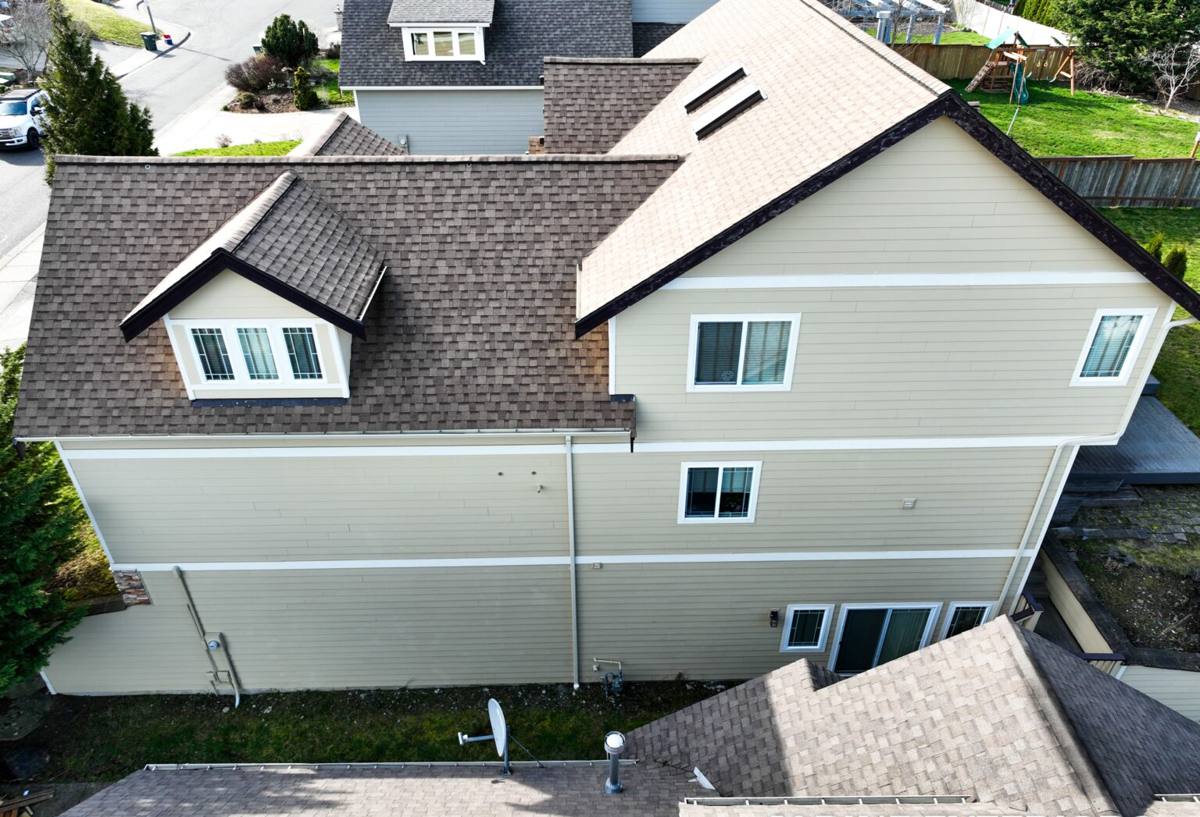
Signs a Similk Beach Roof Needs Repair Now
Inside the House
Ceiling stains near chimneys, skylights, or roof valleys are usually the first thing homeowners notice, and they almost always mean water has already been getting in for a while before it showed up indoors. A musty smell in an upstairs closet or attic access point is another early signal worth acting on.
Outside the House
- Shingles that are curling, cracked, or missing outright, especially on the side of the roof facing the water
- Moss mats thick enough to hide the shingle surface underneath, particularly on north-facing or shaded slopes
- Rust streaks or white corrosion residue running down from metal flashing or vent stacks
- Granules collecting in gutters and downspouts after a normal rain, not just after a storm
- Soft or spongy decking at the eaves, which usually means water has been sitting there for some time
In the Attic
A quick attic check can catch problems before they reach the living space: daylight visible through the roof deck, damp or discolored insulation, or damp rafters near a valley or chimney chase all point to a leak that hasn't fully announced itself yet.
What a Correct Repair Involves in This Area
Matching the Repair to the Existing System
A proper repair isn't just swapping out a few damaged shingles. It means tying new material into the existing underlayment and flashing so water sheds correctly across the whole assembly, not just at the patched spot. A repair that looks fine from the ground but doesn't integrate with the surrounding roofing system tends to leak again within a season or two.
Flashing Built for Salt Air
Given the corrosion pressure from nearby saltwater, flashing and fastener choice matters more here than it would further inland. We favor corrosion-resistant flashing and fasteners at chimneys, vent penetrations, and valleys, since standard galvanized hardware can start showing rust within a few years in this exposure.
Valley and Debris Management
Valleys collect both water and tree debris, and on a shaded lot that combination is a recipe for trapped moisture. Repair work in valleys needs to account for both proper water flow and a surface that doesn't hold onto needles and leaf litter.
Moss Removal Done Right
Pressure washing moss off a roof strips granules and shortens the life of the shingles left behind — it solves the cosmetic problem while creating a new one. A correct approach uses gentler removal methods and, where appropriate, zinc or copper control strips near the ridge that let rainwater carry moss-inhibiting minerals down the roof slope over time.
Checking Ventilation While We're Up There
Trapped attic moisture accelerates deck rot from underneath, which no amount of surface repair will fix. Any repair visit is also a chance to check that intake and exhaust ventilation are actually working as designed.
Common Roof Repair Issues We See Near Similk Beach
| Issue | Likely Cause | Typical Fix |
|---|---|---|
| Rusting flashing at chimney or vents | Salt air corrosion on standard metal hardware | Replace with corrosion-resistant flashing, reseal penetration |
| Lifted shingle edges | Moss growth prying up laps, wind-driven rain working underneath | Moss removal, shingle reset or replacement, edge resealing |
| Leak at a valley | Debris buildup blocking water flow, worn valley material | Clear debris, repair or replace valley flashing/membrane |
| Soft decking at eaves | Prolonged moisture from clogged gutters or ice damming | Replace damaged decking section, correct drainage or ventilation |
| Granule loss / bald patches | Age, sun and moisture cycling, prior pressure washing | Section replacement if isolated; full evaluation if widespread |
Our Repair Process
- Inspection. We walk the roof and the attic when accessible, looking at flashing, valleys, ventilation, and the areas most exposed to wind off the water.
- Honest scope and written estimate. We explain what we found, what needs fixing now, and what's worth watching. No pressure to add work that isn't necessary.
- Repair. We match materials and tie new work into the existing roof system properly rather than surface-patching.
- Site cleanup. Debris, old material, and fasteners are cleared from the roof, gutters, and ground before we leave.
- Follow-up. We let you know what to watch for and when it's worth a check-up, especially heading into the wetter months.
Repair or Replacement? How We Help You Decide
Not every roof that's showing problems needs to be replaced, and we won't tell you it does. The decision usually comes down to a few honest questions:
- How old is the roof relative to its expected lifespan for the material used?
- Is the damage isolated to one or two areas, or spread across multiple slopes?
- Is the decking underneath still sound, or has moisture been getting into the structure itself?
- Has this roof already had several repairs, suggesting the underlying system is failing rather than just aging normally?
If a roof is younger and the damage is localized, a targeted repair is usually the right call. If it's older, has had repeated leaks, or shows widespread granule loss and moss damage, we'll tell you plainly when a repair is just delaying an inevitable replacement, so you can plan and budget accordingly instead of being surprised later.
What Affects the Cost of a Repair Here
| Factor | Why It Matters |
|---|---|
| Roof pitch and access | Steeper roofs and difficult site access take more time and safety setup |
| Extent of moss and debris | Heavier buildup means more careful removal time before repair work can start |
| Material matching | Older or discontinued shingle lines can be harder to match closely |
| Decking condition | Rotted or soft decking sections add material and labor beyond the surface repair |
| Number and type of penetrations | Chimneys, skylights, and multiple vents each add flashing work |
Repairs commonly range from a modest cost for a small, isolated flashing or shingle fix up to several thousand dollars when decking replacement or extensive moss remediation is involved. We give a firm written number after inspection, not a phone-quote guess.
Keeping a Similk Beach Roof Healthy Between Repairs
- Clear gutters and downspouts at least twice a year, more often under heavy tree cover
- Trim back branches that overhang the roofline to reduce debris and shade-driven moss growth
- Walk the yard after major windstorms and look for lifted or displaced shingles from the ground
- Check the attic once a year for daylight, damp insulation, or musty odors
- Have moss treated before it forms thick mats, not after
- Ask about ventilation if you notice ice buildup or condensation issues in colder months
Why Local Experience in Similk Beach Matters
A roof repair crew that already works this stretch of Anacortes and Skagit County knows which slopes take the worst of the wind-driven rain, how fast moss builds back under shaded lots, and which flashing choices actually hold up against salt air instead of rusting out in a few seasons. That familiarity means fewer surprises during the inspection and a repair scope that addresses the real cause of a leak rather than just the visible symptom. It also means a crew that can respond promptly when a storm off the water causes sudden damage, instead of scheduling around a long drive from further inland.
If you're dealing with a leak, visible moss damage, or just want an honest read on the condition of your roof, we're happy to take a look. Reach out for a free, no-pressure estimate using the form below.