 Anacortes Siding
 Skyline sits close enough to the water that homes here take a different kind of weathering than roofs ten miles inland. Salt-laden air, near-constant winter rain, and a moss season that can run six months or more all work on an asphalt shingle roof in ways that shorten its life if the install or the maintenance isn't done right. This page covers what an asphalt shingle roof actually needs to hold up in Skyline, what a correct installation looks like, and how we approach the work.
Why Skyline's Location Changes the Roofing Equation
Skyline homes sit under a mix of tree cover and open exposure, with weather moving in off the water. That combination means two things happen at once: shingles stay damp longer after a storm because of shade and humidity, and they also take direct wind-driven rain off the strait when systems roll through. A roof built for a dry inland climate — thinner underlayment, minimal ventilation, standard granules — wears out faster here. A roof built with this specific exposure in mind lasts closer to its full rated life.
We're not describing a different roofing system so much as a different set of priorities during install: where the water goes, how the roof breathes, and what the shingle's granules are rated to resist.
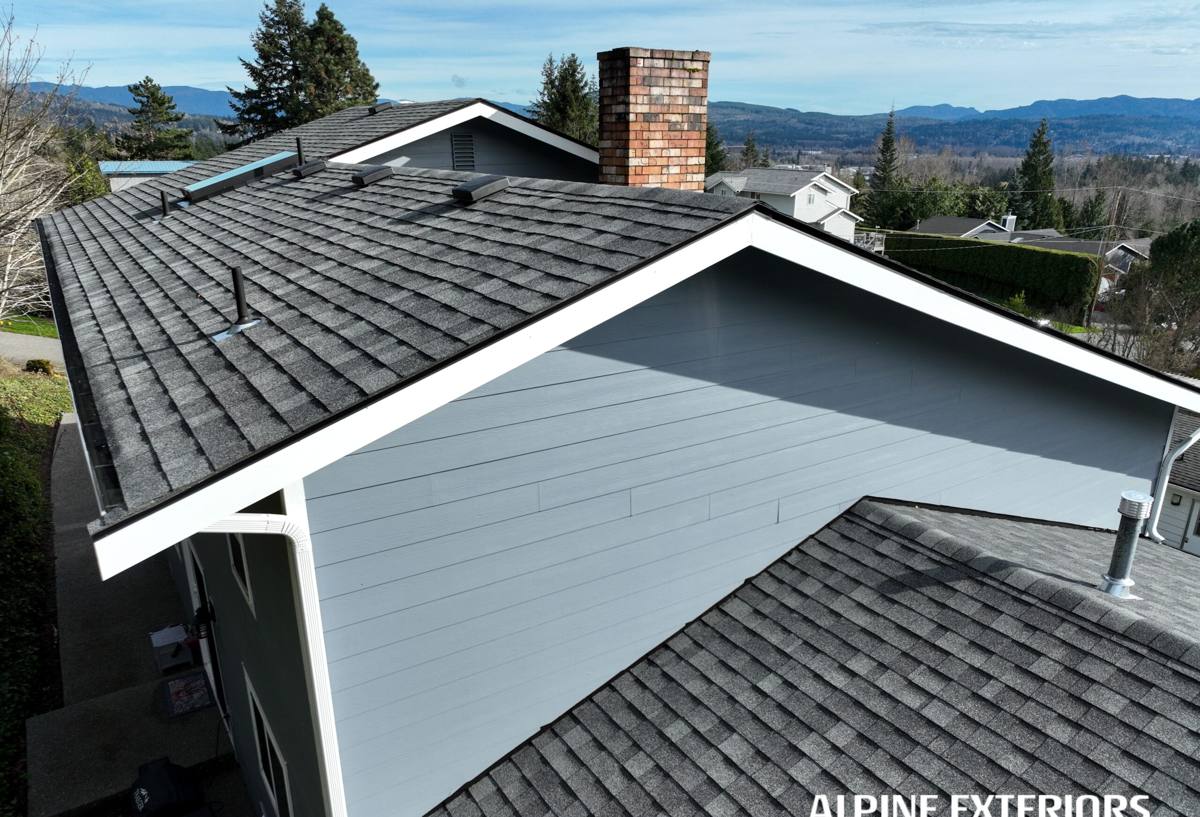
What Anacortes and Skagit County Weather Does to Asphalt Shingles
Salt Air
Salt air accelerates corrosion on any exposed metal — flashing, drip edge, roofing nails, vent stacks. On a shingle roof, the shingles themselves aren't directly harmed by salt the way metal roofing or fasteners are, but the metal components tied into the shingle system are. A roof with cheap galvanized flashing or exposed fasteners will show rust streaking and eventual failure at those points well before the shingles themselves are due for replacement.
Driving Rain
Wind-driven rain off the water pushes water sideways and upward under shingle edges, into valleys, and around penetrations like vent pipes and chimneys. This is where most leaks actually start — not from worn shingle surfaces, but from water finding a gap at a transition point. Correct underlayment, valley treatment, and flashing detail matter more here than in a calm, dry climate.
Moss Season
Skagit County's long, damp stretch from fall through spring is ideal moss and algae growth conditions, especially on north-facing slopes and shaded sections of roof. Moss isn't just cosmetic — its root structure lifts shingle edges, holds moisture against the roof deck, and accelerates granule loss. Left unaddressed for a few seasons, moss growth can cut meaningfully into a roof's expected lifespan.
What a Correct Asphalt Shingle Installation Involves
A shingle roof is a layered system, and every layer matters more in a marine climate than in a mild, dry one. A correct install for a Skyline home includes:
- Ice and water shield at vulnerable areas — eaves, valleys, and around penetrations, not just where code minimums require it
- Synthetic underlayment across the full deck, rated for extended exposure and wind resistance rather than the cheapest felt option
- Proper flashing at every wall intersection, chimney, and roof-to-roof transition, using corrosion-resistant metal given the salt air
- Balanced ventilation — intake at the eaves, exhaust at the ridge — so moisture from inside the home doesn't condense against the underside of the deck
- Correct nailing pattern matched to the shingle manufacturer's wind rating, not just "enough nails to hold it down"
- Starter strip and drip edge installed at every eave and rake, not just the front-facing edges
Skipping any one of these doesn't necessarily cause an immediate problem — it shows up two, five, or ten years later as a leak, premature granule loss, or a section of shingles that lifts in the first strong windstorm.
Choosing a Shingle for This Climate
Not every asphalt shingle product is a good match for a damp, shaded, salt-air environment. The table below compares the main categories we work with and how they hold up in Skyline conditions specifically.
| Shingle Type | Typical Lifespan | Moss/Algae Resistance | Best Fit |
|---|---|---|---|
| 3-tab (standard) | 15-20 years | Low unless algae-resistant granules specified | Budget-conscious projects, less-shaded roof sections |
| Architectural (dimensional) | 25-30 years | Moderate to high with algae-resistant granules | Most Skyline homes — better wind rating and thicker profile |
| Impact-resistant / high-wind rated | 25-30+ years | Moderate to high with algae-resistant granules | Exposed lots, open water-facing slopes |
For most Skyline homes we recommend architectural shingles with algae-resistant (copper-infused) granules. The higher upfront cost is offset by meaningfully less moss growth over the life of the roof and a stronger wind rating for the gusts that come through during winter storms.
What Drives Roofing Cost on a Skyline Home
We won't quote a number without seeing the roof, but the factors below are what actually move the price on any asphalt shingle project in this area.
| Factor | Why It Matters |
|---|---|
| Roof pitch | Steeper roofs require more safety setup and take longer to work |
| Number of existing layers | Tear-off of multiple old layers adds labor and disposal cost |
| Deck condition | Rotted or soft decking found during tear-off needs replacement before shingles go down |
| Roof complexity | Valleys, dormers, and multiple penetrations add flashing labor |
| Access | Trees, tight lots, or limited driveway access affect staging and cleanup time |
| Shingle grade selected | Material cost scales with wind rating, thickness, and warranty length |
Moss and Algae: What Actually Helps
Once moss has established itself, scraping it off is only half the job — the granule damage underneath is already done. The better approach is preventing regrowth and catching moss early, before it has a chance to lift shingle tabs.
- Have shaded, north-facing roof sections checked at least once a year, ideally after the wettest months
- Keep gutters and valleys clear so water doesn't sit against the shingle surface
- Trim back overhanging branches that keep sections of roof shaded and damp
- Use zinc or copper control strips at the ridge on new installs, which release trace metals with rainwater to inhibit regrowth
- Avoid pressure washing shingles — it strips granules and does more damage than the moss itself
How Our Process Works
We keep the process straightforward and try not to waste a homeowner's time with unnecessary steps:
- Inspection: we walk the roof (or use a lift/drone where pitch or access makes that unsafe) and check the deck, flashing, ventilation, and shingle condition — not just what's visible from the ground
- Written estimate: a clear breakdown of what we found, what we recommend, and why — including whether repair is a reasonable option or replacement makes more sense
- Material selection: we walk through shingle options suited to the specific exposure of your roof, not a one-size-fits-all recommendation
- Tear-off and deck check: old material comes off, and we inspect the deck underneath before anything new goes down — this is where hidden rot or past leak damage gets caught
- Installation: underlayment, flashing, and shingles installed to manufacturer spec and matched to the wind and moisture conditions of the site
- Cleanup and final walkthrough: magnetic sweep for nails, debris hauled off, and a final review with the homeowner before we consider the job done
Repair or Replace? Signs to Watch For
Not every roofing issue means a full replacement. These are the signs worth having looked at, and roughly what they tend to indicate:
- Granules collecting in gutters — normal in small amounts on an older roof, but heavy accumulation signals accelerated wear
- Curling or cupping shingle edges — often a sign of ventilation problems or a roof nearing the end of its service life
- Dark streaking — usually algae growth rather than structural damage, but worth addressing before it spreads
- Moss buildup on shaded slopes — a maintenance issue if caught early, a bigger problem if it's been left for several seasons
- Soft spots or sagging — almost always a deck issue underneath, and worth an inspection before it gets worse
- Active leaks or staining on interior ceilings — needs attention regardless of the roof's age
A roof with isolated damage — a section lifted in a windstorm, a failed flashing detail, a localized leak — is often repairable. A roof showing widespread granule loss, multiple soft spots, or shingles original to a home built decades ago is usually more cost-effective to replace than to keep patching.
Why Local Experience in Skyline Matters
Roofing crews that haven't worked this specific stretch of Skagit County tend to underestimate two things: how much wind-driven rain actually gets pushed into edges and valleys off the water, and how aggressively moss establishes itself in shaded areas near the coast. That shows up later as callbacks — a leak at a valley that wasn't flashed generously enough, or moss regrowth within a year or two because no preventive measures were built into the install.
A crew that already works in this area brings that knowledge into the estimate and the install without needing to relearn it on your roof. That means fewer surprises during tear-off, flashing and underlayment choices that match the actual exposure of your home, and a maintenance plan that reflects how Anacortes weather behaves rather than a generic schedule.
Materials and What We Stand Behind
We install shingle systems from established manufacturers and follow their specified installation methods, because manufacturer warranties are typically only valid when the system is installed to spec — underlayment, ventilation, and nailing pattern included, not just the shingles themselves. We'll walk through the specific warranty terms, including material and labor coverage, as part of any estimate so there are no surprises about what's covered and for how long.
If your roof is showing wear, you're planning ahead, or you just want an honest read on its condition, we're happy to take a look. Reach out below for a free, no-pressure estimate on your Skyline home.