 Anacortes Siding
 Storm Damage Repair Built for Mount Vernon's Weather
Mount Vernon sits in the Skagit Valley, close enough to the water and open enough to farmland that it takes the full brunt of Pacific storm systems moving through Skagit County — driving rain, sustained wind, and the kind of low, wet weather that never really lets a roof dry out for long. When a storm rolls through, the damage isn't always the dramatic kind. Just as often it's a handful of lifted shingles, a strained flashing seam, or a soft spot in the decking that won't show itself as a leak until weeks later. We repair storm damage on Mount Vernon roofs with that pattern in mind — not just patching what's obviously broken, but checking the places storms quietly weaken first.
We're based in Anacortes, and we've built our storm repair process around the same regional weather Mount Vernon deals with: salt-laden air moving in off the Sound, wind events that come through the valley with little warning, and a moss season that runs longer here than most homeowners expect. A roof repair that ignores any of those factors tends to fail again within a season or two.
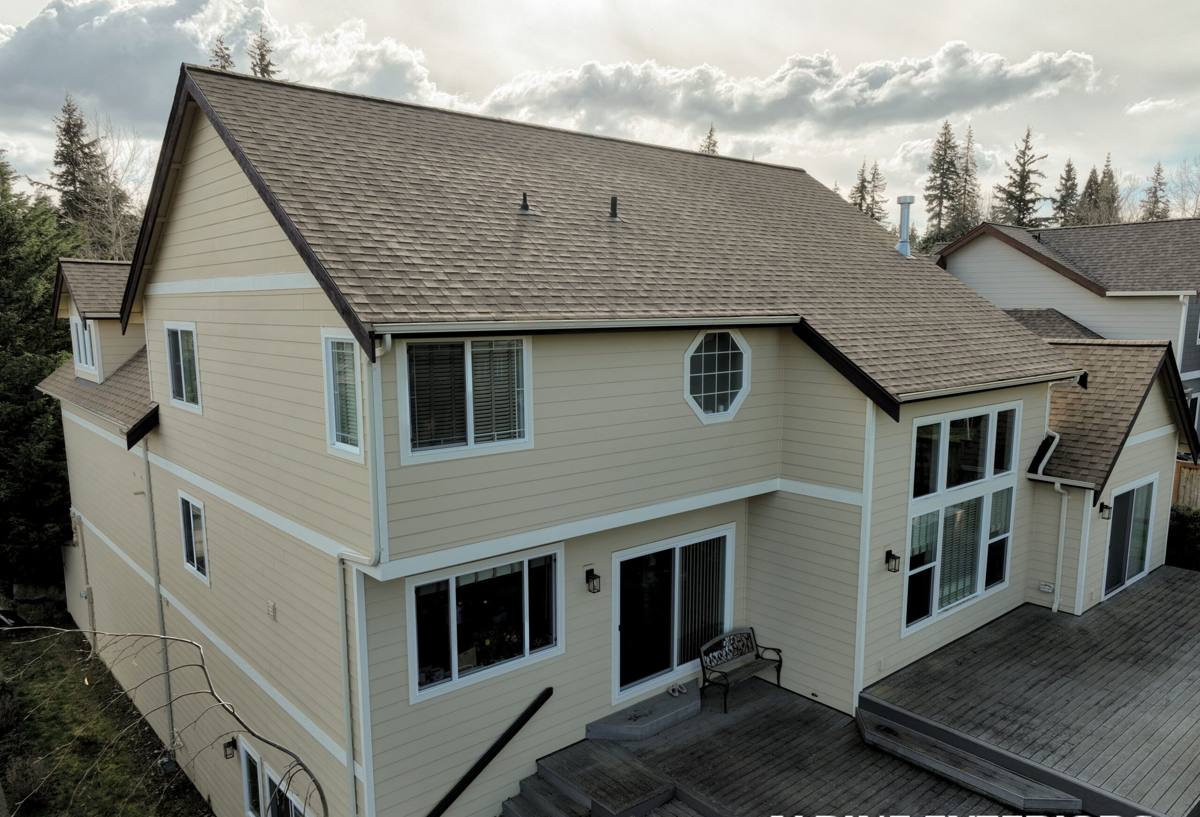
What Skagit County Storms Actually Do to a Roof
Wind and rain rarely destroy a roof outright — they exploit weak points that were already there. Understanding how storm damage develops helps explain why a proper repair takes more than nailing down a loose shingle.
Wind Uplift
Shingles are designed to shed wind, not fight it head-on. Gusts that get underneath a shingle edge — often at ridges, edges, and valleys first — can break the seal strip, crack the shingle at the nail line, or tear it off completely. Once one shingle lifts, it exposes the row below to the same wind, so damage tends to spread in a line rather than staying isolated.
Driving Rain
Rain that comes in sideways, which is common during Skagit County wind events, doesn't just run off a roof — it gets pushed under shingle edges, into flashing laps, and around vent boots that have started to shrink or crack with age. This is how a storm turns a small, pre-existing weakness into an active leak.
Debris Impact
Branches and debris carried by wind can bruise or puncture shingles, crack ridge caps, or knock granules loose in a way that isn't always visible from the ground but accelerates wear on that section of roof going forward.
Signs Your Roof Needs a Storm Damage Inspection
Storm damage isn't always obvious from the driveway. Homeowners in Mount Vernon should watch for these signs after any significant wind or rain event:
- Shingles that look curled, cracked, or missing altogether, especially along ridges and edges
- Granules collecting in gutters or at downspout outlets — a sign shingles are losing their protective surface
- New water stains on ceilings or in the attic, even faint ones
- Flashing around chimneys, skylights, or vent pipes that looks bent, lifted, or separated
- Sagging or soft-feeling sections when viewed from the attic side of the roof deck
- Debris buildup in valleys that's holding moisture against the roofline
None of these guarantee a major problem, but any one of them is worth a professional look before the next storm turns a small issue into a bigger repair.
Why Moss Season Complicates Storm Damage
Skagit County's moss season isn't a side issue from storm damage — the two compound each other. Moss holds moisture against the shingle surface long after a storm has passed, which slows drying, softens the shingle mat underneath, and makes that section more vulnerable to the next round of wind and rain. A roof that's been carrying a moss load through a wet fall and winter is simply weaker going into the next storm than one that's been kept clear.
This is why a proper storm damage repair on a Mount Vernon roof usually includes a look at moss and moisture buildup in shaded, north-facing, and tree-covered sections — not because moss itself caused the storm damage, but because it's often what let the damage happen in the first place, or what will undo the repair if it's left in place.
What a Correct Storm Damage Repair Involves
A Full Inspection, Not Just a Patch
We start every storm repair by inspecting the whole roof plane, not just the spot the homeowner called about. Wind damage tends to cluster along ridges, hips, valleys, and edges, and it's common to find a second weak area near the one that prompted the call. We also check the attic side where accessible, since water intrusion often shows up there before it reaches a ceiling.
Matching Materials, Not Just Colors
A repair that uses the wrong shingle profile, weight, or fastening pattern will telegraph as a visible patch and may not perform the same as the surrounding roof. Where an exact match isn't available — which happens on older roofs — we explain the trade-offs honestly rather than installing something that looks close but behaves differently in wind and rain.
Flashing and Underlayment, Not Just Shingles
Most storm-related leaks trace back to flashing or underlayment failure, not the shingle field itself. A repair that replaces the visible shingle but ignores compromised flashing or torn underlayment underneath is a repair that's likely to leak again in the next storm.
Deck Condition
If water has been getting into a section long enough, the plywood or OSB decking underneath can soften or delaminate. We check for this directly whenever we open up a repair area, because shingles installed over compromised decking won't hold a proper seal or fastener grip.
Our Storm Damage Repair Process
- Inspection and documentation. We assess the full roof, photograph the damage, and identify both the obvious problem and any related weak points nearby.
- Written scope and estimate. You get a clear explanation of what's damaged, what needs to be repaired versus what can wait, and an honest cost range before any work starts.
- Temporary protection if needed. If there's active water intrusion, we can install temporary protection to stop further damage while repair materials are sourced.
- Repair. We replace damaged shingles, flashing, and underlayment as needed, matching materials to the existing roof system wherever possible, and repair any compromised decking underneath.
- Cleanup and final check. We clear debris, check gutters and valleys for obstructions, and walk the repair with you before we consider the job done.
Repair or Replace? Cost Factors to Weigh
Not every storm-damaged roof needs full replacement, but not every roof is a good candidate for a targeted repair either. These are the factors that usually decide it:
| Factor | Favors Repair | Favors Replacement |
|---|---|---|
| Roof age | Under 12–15 years, materials still in good general condition | Near or past expected service life |
| Extent of damage | Isolated to one or two areas | Widespread across multiple roof planes |
| Decking condition | Solid, no rot or delamination found | Soft or compromised decking in multiple spots |
| Prior repair history | First significant repair on this roof | Several past repairs in different areas |
| Material availability | Matching shingles still available | Discontinued profile or color, no close match |
We'll always tell you plainly which side of this table your roof falls on. If a repair is the honest answer, we won't upsell a replacement — and if the damage or the roof's age means a repair is just delaying the inevitable, we'll say that too.
Storm Damage and Insurance Claims
Many storm repairs in Skagit County are at least partly covered by homeowners insurance, particularly when the cause is a documented wind or rain event rather than gradual wear. We can provide the kind of documentation — photos, a written damage assessment, and a clear scope of repair — that insurance adjusters typically ask for. We're not a public adjuster and we don't negotiate your claim for you, but a clear, honest repair estimate makes that process easier on your end, whichever way you choose to handle it.
Why It Matters to Hire a Crew That Already Works Mount Vernon
Storm damage repair isn't just a shingle-replacement skill — it's a judgment call about what's regionally normal wear versus what's actually storm-related, and that judgment gets sharper with local experience. A crew that regularly works roofs across Skagit County, including Mount Vernon, has already seen how local wind patterns, rain volume, and moss growth interact on this style of roof and this type of weather exposure. That means fewer surprises, a more accurate first estimate, and a repair that's built for the storms this area actually gets — not a generic patch job.
It also means faster response. After a significant storm, roofing crews get busy fast, and a company with an established presence in the area can typically get to a Mount Vernon roof sooner than one that's traveling in from farther away.
Reducing Storm Damage Before the Next One Hits
A little seasonal attention goes a long way toward keeping a roof storm-ready. Before the next round of Skagit County weather moves through, it's worth running through this checklist:
- Clear gutters and downspouts so rain has somewhere to go instead of backing up under the roof edge
- Trim back tree limbs that overhang the roof or rub against it in wind
- Have visible moss growth treated before it spreads across a full slope
- Check attic ventilation — poor airflow traps moisture and accelerates deck and shingle wear
- Do a ground-level walk-around after any major storm, looking for shingles in the yard or gutters
- Schedule a professional inspection every year or two, even with no known damage
None of this prevents storm damage entirely — no maintenance schedule can — but it reduces how much damage a given storm can do, and it means smaller, cheaper repairs instead of one big one.
If a recent storm has left your Mount Vernon roof with missing shingles, a new leak, or damage you're not sure about, we're glad to take a look. Use the form below to request a free, no-pressure estimate and we'll give you an honest read on what's actually going on up there.