 Anacortes Siding
 West Anacortes sits closer to open water than most of Skagit County, and that changes what a house needs from its siding. Homes along this side of town face Rosario Strait and Guemes Channel more or less head-on, which means more salt-laden air, more wind-driven rain hitting the walls directly instead of at an angle, and a moss season that runs longer than it does a few miles inland. Siding here isn't just a cosmetic layer — it's the first thing standing between the house and a climate that's actively working to get past it.
We install James Hardie fiber cement siding exclusively, and West Anacortes is one of the clearer examples of why. This page covers what the local exposure actually does to a house, what correct Hardie installation looks like in this setting, and what to expect if you're getting an estimate for a West Anacortes home.
What West Anacortes' Location Does to a House
Proximity to the water cuts both ways. It's part of why people want to live here, and it's also why exterior materials take more abuse here than they would on a sheltered lot farther from the shoreline. Three things stand out in this specific location:
- Salt air: Airborne salt from the strait accelerates corrosion on fasteners, flashing, and any hardware that isn't rated for coastal exposure, and it degrades coatings and finishes faster than an inland environment would.
- Driving rain: Storms coming off the water tend to hit walls at an angle instead of falling straight down, which pushes moisture into seams, laps, and trim joints that would stay dry on a more sheltered elevation.
- Moss season: Cool, damp conditions persist longer here than in drier parts of the county, and shaded or north-facing walls stay wet enough, long enough, for moss and algae to get established if the siding and drainage details aren't right.
None of these are exotic problems — they show up all over western Washington. What's different in West Anacortes is the degree. A wall facing the water is dealing with a heavier, more sustained version of the same weather a home a mile inland only gets occasionally.
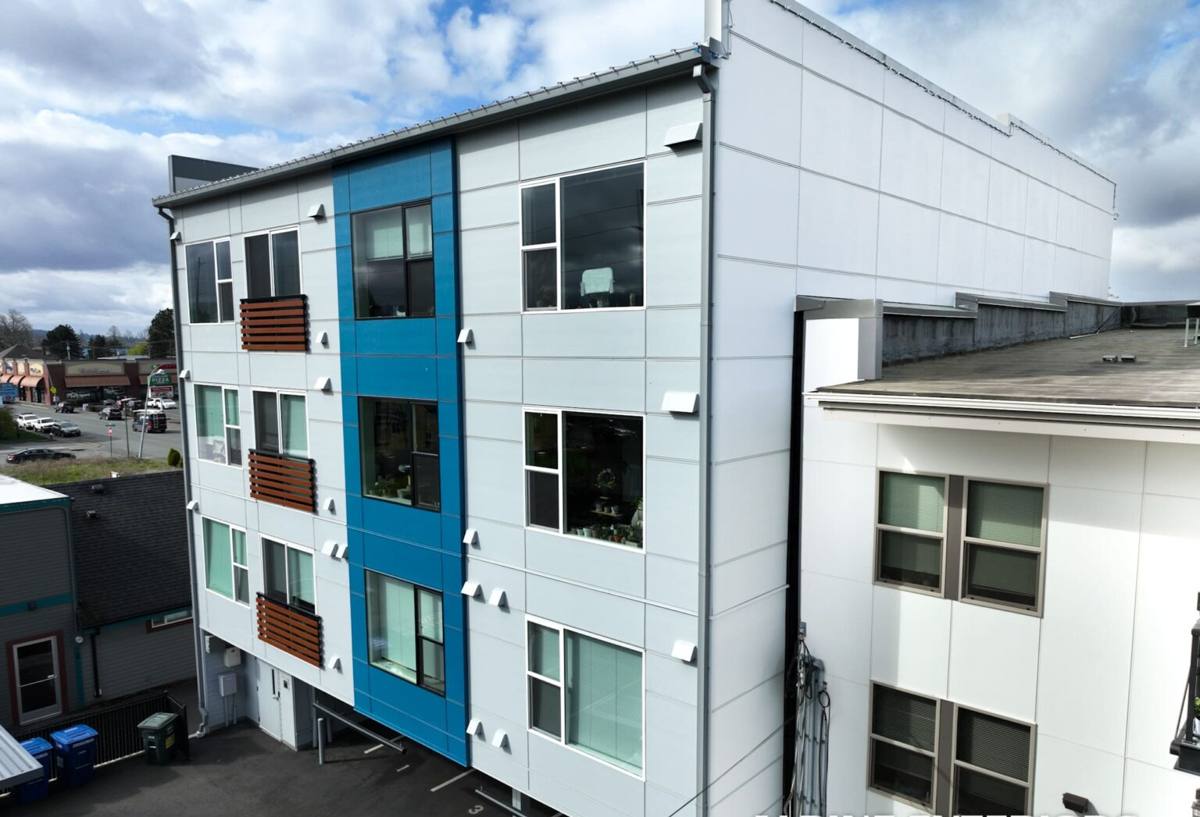
Where Siding Actually Fails in This Climate
When we inspect older siding on West Anacortes homes, the failures usually trace back to one of a few things: paint or coating breakdown from repeated wet-dry cycling, joints and caulk lines that opened up as the material moved with moisture, fasteners or flashing that corroded faster than expected, or moisture getting trapped behind the siding with nowhere to dry out. Wood-based products are especially vulnerable here because they depend on a maintenance schedule — repainting, resealing, checking for soft spots — that's easy to fall behind on, and falling behind in this climate has consequences faster than it would somewhere drier.
Vinyl siding has a different problem: it isn't a water barrier by itself, and it can go brittle with age and UV exposure. On a wall that regularly takes wind-driven rain, that puts a lot of weight on the assembly behind the siding to do the actual work of keeping water out — and on older installations, that assembly often wasn't detailed for this level of exposure to begin with.
Why James Hardie Fits This Environment
Fiber cement doesn't share the failure modes above. It's non-combustible, dimensionally stable across temperature and moisture swings, and it resists moss and pest damage in a way wood products can't. That combination matters anywhere in western Washington, but it matters more directly on a wall that's facing the water.
The HZ5 Climate-Engineered Line
James Hardie makes region-specific formulations, and the HZ5 line is engineered for the wetter, harsher climate zones the Pacific Northwest falls into — including coastal Skagit County. It's built to hold up against sustained moisture exposure better than a generic, one-size-fits-all fiber cement product would. For a West Anacortes home, that regional engineering isn't a marketing detail — it's the difference between siding that's suited to this specific exposure and siding that's merely adequate somewhere drier.
ColorPlus Factory Finish vs. Field-Applied Paint
Most Hardie siding we install goes on with a ColorPlus factory finish rather than field-applied paint. The finish is baked on under controlled conditions, which gives it better color retention and adhesion than paint applied on-site can match — and it comes with its own finish warranty. In a climate where UV, salt, and moisture all work against a painted surface, starting with a factory finish takes one whole maintenance cycle off your plate for years.
What a Correct James Hardie Installation Involves
Hardie siding performs the way it's supposed to only when it's installed to spec — the product itself doesn't guarantee good results if the details behind it are cut short. On a West Anacortes home, we pay particular attention to the parts of the job that matter most in a wind-driven-rain, high-moisture setting:
- Correct gapping at butt joints and around windows, doors, and trim, so the material has room to move without stressing the caulk lines
- Proper weather-resistive barrier and flashing integration behind the siding, especially at windows, doors, and any wall penetrations, so water that does get past the surface has a clear path back out
- Fasteners and flashing rated for coastal exposure, not standard-grade hardware that will corrode faster in salt air
- Correct starter strip and clearance at the base of the wall, keeping siding off grade, decks, and roof lines where it could stay wet longer
- Kick-out flashing at roof-to-wall intersections, a small detail that's frequently missed and a common source of hidden water damage when it is
- Manufacturer-specified fastening patterns and nailing lines, since under- or over-driven fasteners are one of the most common causes of premature siding failure
Every one of these is a spec-sheet requirement, not a judgment call — but they're also exactly the details that get skipped when a crew is unfamiliar with the product or rushing a job. That's the gap between siding that looks right on installation day and siding that still looks right in ten years.
What Affects the Cost of a West Anacortes Siding Job
Every home is different, but the same handful of factors drive most of the variation we see in estimates for this area. We'll always give you specifics for your house, but this is a general sense of what moves the number:
| Factor | Why It Matters Here |
|---|---|
| Existing wall condition | Moisture-damaged sheathing found during tear-off adds repair work before new siding can go on |
| Wall exposure | Sides facing the water often need more attention to flashing and fastener spec than sheltered elevations |
| Trim and detail complexity | Homes with more windows, corners, and architectural trim take more labor per square foot |
| Siding profile chosen | Lap, shingle, and panel products differ in material cost and install time |
| Tear-off vs. new construction | Removing and disposing of old siding adds cost that a bare-wall install doesn't have |
| Access and site conditions | Slope, tree cover, and staging space affect scaffolding and material handling |
Our Process, Start to Finish
We start with a walk-around of the house, looking at current siding condition, trim, and anything that points to a moisture problem before we ever talk products. From there we check what's happening behind the existing siding where we have access, since that tells us whether we're dealing with a straightforward re-side or a wall that needs sheathing or framing repair first. We'll walk you through product and color options, give you a written estimate, and once you're ready, we handle tear-off, any necessary sheathing or moisture-barrier repair, and the full Hardie installation to manufacturer spec — flashing, fastening, and clearances included, not just the visible lap lines. When the job's done, we register your material and labor warranty so it's on file if you ever need it.
Living With Hardie Siding in a Marine Climate
Fiber cement is low-maintenance compared to wood or vinyl, but "low-maintenance" isn't "no-maintenance" in a climate like this one. A periodic rinse-down knocks back the salt film and organic buildup that accumulates on walls facing the water. Keeping gutters clear and trimming back vegetation that shades north-facing walls helps limit the conditions moss needs to take hold. Checking caulk lines at trim and penetrations every year or two catches small gaps before they become a moisture path. None of this is heavy lifting, but staying on top of it is what keeps a correctly installed Hardie exterior looking and performing the way it should for the long haul.
Why Hire a Crew That Already Works This Neighborhood
Skagit County's coastal microclimates aren't uniform — a sheltered lot a few blocks inland and an exposed wall facing the strait can age at very different rates even on similar-age homes. Working in West Anacortes repeatedly means we already know which elevations take the brunt of winter storms, where moss keeps coming back no matter what, and which flashing details are worth extra attention versus which are just code minimums. That's knowledge you build by doing the work here, not by reading a spec sheet, and it shapes how we scope a job before a single board goes up.
If you're weighing a siding project on a West Anacortes home, we're happy to take a look and give you a straight read on what your walls actually need — no pressure, no obligation. Reach out through the form below to schedule a free estimate.