 Anacortes Siding
 Why West Anacortes Roofs Age Differently
Homes on the west side of Fidalgo Island sit closer to open water than almost anywhere else in Skagit County, and that location shapes how a roof ages here. Salt-laden air off the water accelerates corrosion on fasteners, flashing, and any exposed metal. Wind-driven rain off the strait doesn't just fall on a roof — it gets pushed sideways and upward under shingle edges and around penetrations that would stay dry in a more sheltered inland location. Add a long, wet moss season that runs from fall through spring, and you have three separate stressors working on the same roof at the same time, year after year.
None of that means West Anacortes roofs fail faster than they should. It means they need to be built and maintained with those specific conditions in mind. A roof replacement done to a generic standard, without accounting for salt exposure, wind uplift, and moss-friendly moisture, tends to show problems years before it should. A roof replacement done correctly for this specific location tends to outperform its rated lifespan.
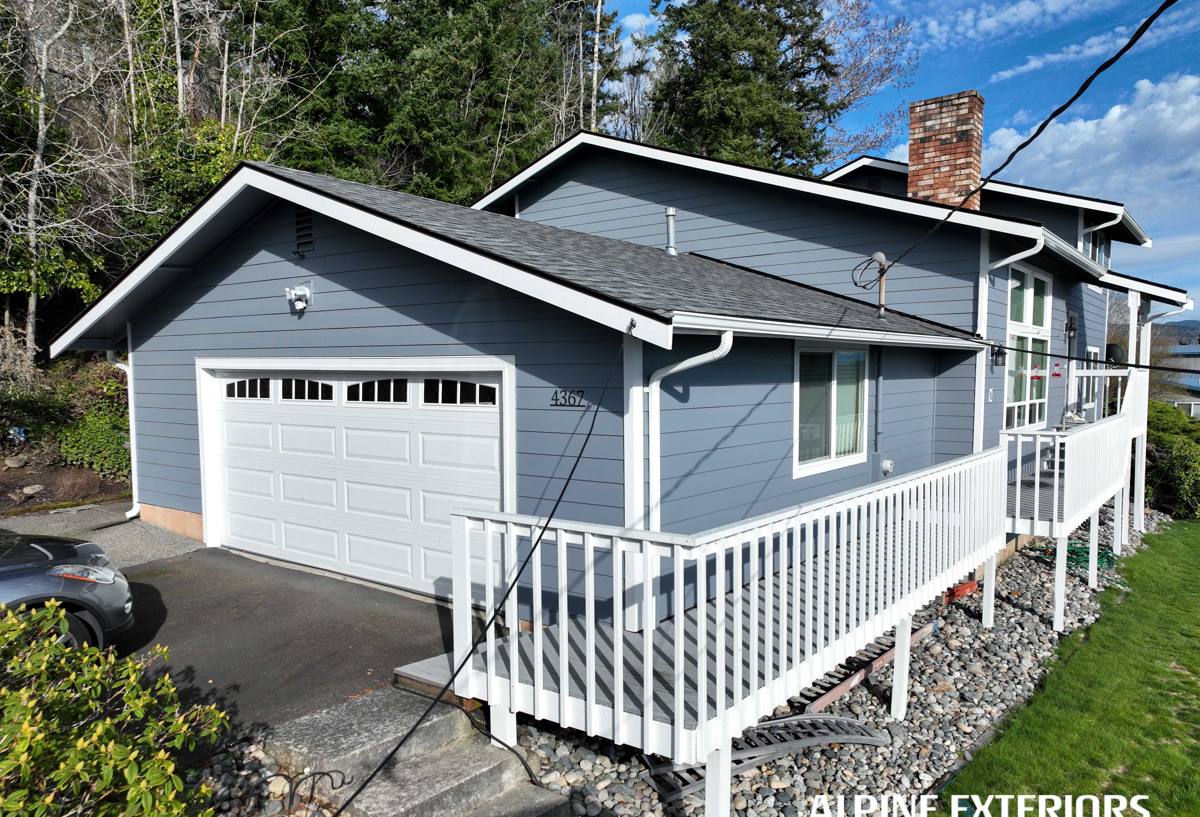
Signs a Roof Needs Replacing, Not Patching
Not every roof problem calls for a full replacement, and we won't tell you it does. But there's a point where repeated repairs stop making financial sense and a full tear-off becomes the honest recommendation. Common signs we look for on West Anacortes homes include:
- Granule loss heavy enough that you're finding shingle grit in gutters and downspouts
- Shingles that are curling, cupping, or cracking, especially on west- and south-facing slopes that take the brunt of wind and rain
- Soft or spongy decking underfoot, usually a sign moisture has been getting through for a while
- Moss that keeps returning within a season or two of cleaning, even after treatment
- Rust staining or corrosion around flashing, vents, or metal valleys
- Daylight visible through the roof deck from inside the attic, or water stains on ceilings
- A roof that's simply reached the end of its material's rated service life, even if it looks okay from the ground
If a roof is showing two or three of these at once, patch work usually just delays the same conversation by a year or two, at a cost that starts adding up to a meaningful chunk of what a replacement would run.
What a Correct Roof Replacement Actually Involves
A roof replacement is more than swapping old shingles for new ones. On a home exposed to marine weather, the parts you don't see matter as much as the parts you do.
Tear-Off and Deck Inspection
We remove the existing roofing down to the deck rather than layering over it. That's the only way to actually see the condition of the sheathing underneath — soft spots, rot around old penetrations, and past leak damage don't show up until the old material is off. Any compromised decking gets replaced before anything new goes down; installing new roofing over a weak deck just hides the problem.
Underlayment and Ice/Water Protection
Given how much wind-driven rain this area sees, underlayment choice matters more here than in a sheltered location. We use synthetic underlayment as the standard water-resistive barrier, with self-adhering ice-and-water membrane at eaves, valleys, and around every penetration — the places wind-driven rain is most likely to find a way in.
Flashing
Flashing around chimneys, skylights, vent pipes, and roof-to-wall transitions is one of the most common failure points on any roof, and salt air makes it worse by corroding lower-grade metal faster. We use corrosion-resistant flashing material and take the time to integrate it properly with the underlayment, rather than relying on caulk to make up for a shortcut.
Ventilation
A roof deck that can't breathe traps moisture, and trapped moisture is what feeds rot and shortens material life. We check and correct intake and exhaust ventilation as part of every replacement, not as an upsell after the fact.
Roofing Materials That Hold Up in This Climate
There's no single "best" roofing material for West Anacortes — it depends on budget, the home's style, and how much long-term maintenance you want to take on. Here's how the common options actually compare for this location:
| Material | Typical Lifespan | How It Handles Salt Air & Moisture | Moss Resistance |
|---|---|---|---|
| Architectural (dimensional) asphalt shingle | 25–30 years | Good with proper flashing and fasteners; standard corrosion-resistant nails recommended | Moderate — benefits from periodic cleaning |
| Three-tab asphalt shingle | 15–20 years | Adequate, but thinner profile is more prone to wind lift in exposed locations | Moderate |
| Standing seam metal | 40–50+ years | Excellent when properly coated and fastened; sheds water and debris fast | High — moss struggles to get a foothold |
| Wood shake/shingle | 20–30 years | Requires diligent maintenance in a wet marine climate; higher upkeep burden | Low — needs regular treatment |
For most West Anacortes homes, we recommend architectural asphalt shingle as the balance of cost, appearance, and durability, or standing seam metal for owners who want to minimize long-term maintenance and are comfortable with the higher upfront cost. We'll walk through the honest trade-offs of each for your specific roof rather than pushing whichever product happens to be easiest to install.
Moss, Algae, and Moisture Control
Moss isn't just a cosmetic issue. It holds moisture against the roof surface, works its way under shingle edges as it grows, and can lift material over time. In a climate with as many wet, shaded, moss-friendly months as this one, controlling it starts at installation, not after the fact.
Zinc or copper strips near the ridge are a proven, low-maintenance way to inhibit moss and algae growth on new roofing, using rainwater to carry trace metal down the roof surface. We also make sure tree cover and roof design don't trap unnecessary moisture where it's avoidable, and we're straightforward about which parts of a roof will always need periodic cleaning regardless of material — usually the shaded, north-facing slopes.
Our Roof Replacement Process
We keep the process straightforward and communicate clearly at each step so there are no surprises:
- On-site inspection and honest assessment of whether repair or replacement is the right call
- Written estimate covering materials, scope, and timeline — no vague allowances
- Material selection walkthrough based on your budget and how long you plan to stay in the home
- Full tear-off and deck inspection, with any rot or damage addressed before new material goes down
- Underlayment, flashing, and ventilation installed to standards suited for this climate
- New roofing installed per manufacturer specification to keep warranty coverage intact
- Final walkthrough and cleanup, including magnetic sweep for stray fasteners
We also carry proper insurance and pull the required permits for the work — steps that protect you if anything ever needs to be addressed down the line, and that some lower-cost operators skip.
Why Local Experience on West Anacortes Roofs Matters
A crew that's worked roofs on the west side of Fidalgo Island already knows which slopes take the worst of the wind-driven rain, which fastener and flashing grades actually hold up against salt air over time, and which areas of a given roof design tend to collect moss first. That's the kind of judgment that comes from doing the work in this specific location repeatedly, not from a general roofing checklist. It shows up in small decisions — where to add extra ice-and-water membrane, how tight to run fastener schedules for wind exposure, which flashing details need extra attention — that add years to a roof's life without adding meaningfully to the cost.
What Affects the Cost of a Roof Replacement
Every roof is different, and we'll always give you a specific written number after an on-site look rather than a rough guess. In general, these are the factors that move the price:
| Factor | Why It Matters |
|---|---|
| Roof size and pitch | Steeper roofs take longer and require more safety setup |
| Number of layers to remove | Tearing off multiple old layers adds labor and disposal cost |
| Deck condition | Rotted or soft sheathing needs replacement before new roofing goes on |
| Material choice | Asphalt, metal, and wood carry very different material and labor costs |
| Roof complexity | Valleys, dormers, skylights, and chimneys all add flashing detail and time |
| Access | Difficult access for equipment and material staging can add labor time |
We break all of this down in plain language in our estimate so you know exactly what you're paying for and why — no vague line items.
Get a Straight Answer on Your Roof
If your West Anacortes roof is showing its age, dealing with recurring moss, or just due for an honest look, we're happy to come take a look and tell you what we actually see — repair, replacement, or somewhere in between. There's no pressure and no obligation. Fill out the form below to schedule a free estimate.