 Anacortes Siding
 Why La Conner's Waterfront Climate Is Hard on Decks
La Conner sits right where Skagit County's farmland meets the Swinomish Channel, and that location cuts both ways. The water views are the whole reason people build a deck out here, but that same water is what wears one down. Salt-laden air drifts off the channel and settles on every exposed surface, driving rain comes in sideways off Puget Sound storms, and the long gray stretch from fall through spring keeps everything damp enough for moss and algae to get a foothold on anything that doesn't drain and dry quickly.
A deck built without that combination in mind — salt, moisture, and shade from surrounding trees or a north-facing lot — tends to show its age fast. Wood decks gray unevenly, splinter, and need re-staining more often than most homeowners expect. Fasteners corrode. Framing that stays damp too long starts to soften years before it should. None of that is a defect in any one product; it's just what happens when a deck isn't matched to the site it's built on.
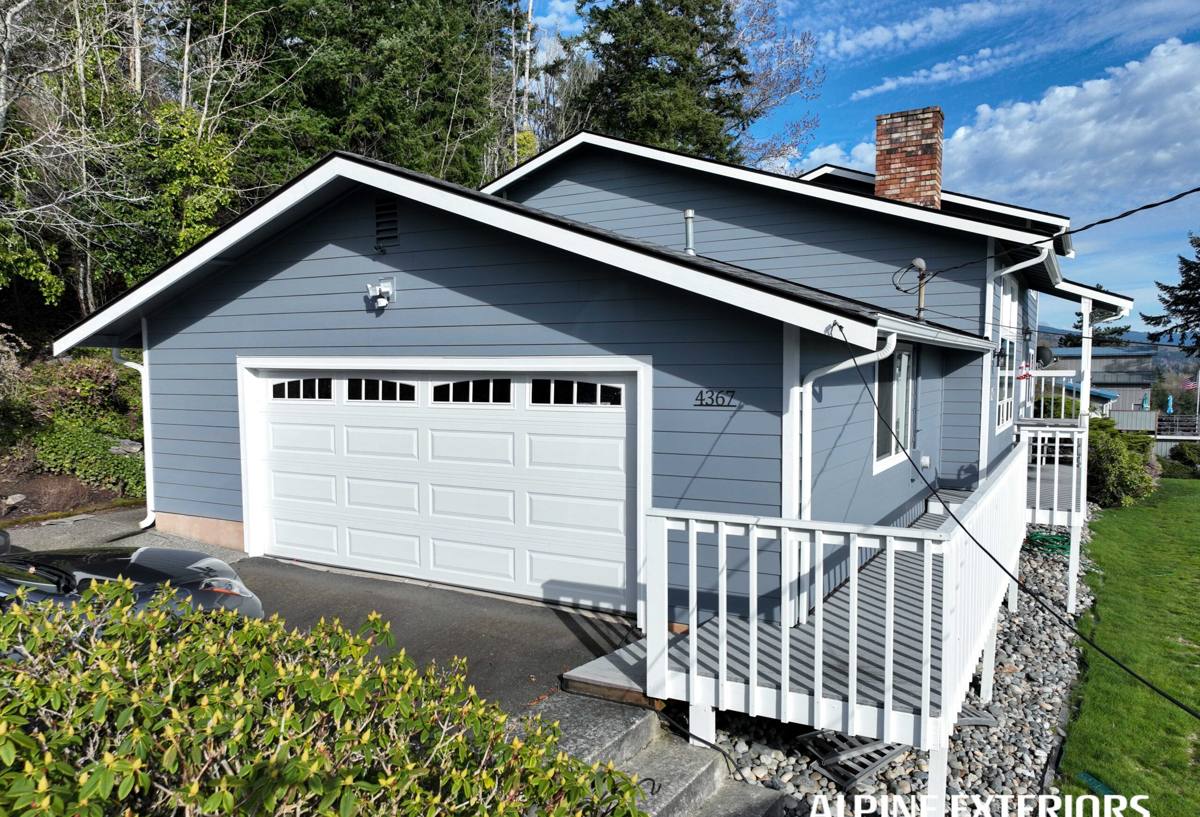
What Composite Decking Actually Solves Here
Composite decking — a blend of wood fiber and recycled plastic, usually capped with a protective polymer shell — was built for exactly this kind of exposure. It doesn't absorb water the way solid wood does, so it resists the swelling, splintering, and rot that show up first on a waterfront property. It doesn't need annual staining or sealing. And a capped composite board sheds the mold and algae film that builds up on porous surfaces during a wet Skagit County winter far more easily than wood does — a hose and a stiff brush usually does the job.
That said, composite isn't magic, and we won't tell a homeowner it's maintenance-free. It still needs to be installed with real airflow underneath, real drainage away from the ledger and posts, and hardware that won't corrode faster than the boards last. Composite decking fails early almost exclusively because of how it was installed, not because of the material itself. That's the part of the job that actually determines whether a deck looks good in year one and still looks good in year fifteen.
Where Composite Still Needs Attention
- Shaded, moisture-trapping areas under trees still grow a light film of algae on any decking material — composite just cleans off faster than wood.
- Dark-colored boards absorb more heat and can feel warm underfoot on a rare sunny Skagit afternoon — worth thinking about for barefoot family use.
- Composite expands and contracts with temperature swings, so gapping and fastening have to account for that or boards will buckle over time.
- Cheaper, non-capped composite boards absorb moisture at the core and can swell at cut ends if those ends aren't sealed — this is a real product-tier difference, not a brand knock.
Choosing the Right Board for a Waterfront Lot
Not all composite decking is built the same, and on a property exposed to channel air and driving rain, the tier of board matters more than it would on a sheltered inland lot. We walk homeowners through the trade-offs honestly rather than steering everyone toward the most expensive option.
| Board Type | How It Handles Salt Air & Rain | Maintenance | Typical Lifespan |
|---|---|---|---|
| Uncapped composite | Absorbs some moisture at the core over time; fine on covered or sheltered decks | Occasional cleaning; watch cut ends and fastener holes | 15–20 years |
| Capped composite (cap on top only) | Good surface protection; edges still vulnerable if not detailed correctly | Low; rinse off salt film seasonally | 20–25 years |
| Fully capped composite (cap all sides) | Best resistance to salt spray, standing water, and moss growth on all faces | Lowest; occasional wash | 25+ years, often with longer warranties |
| PVC decking | No wood fiber at all, so it's essentially immune to moisture absorption | Very low | 25+ years |
For a deck within direct view or wind path of the channel, we generally steer homeowners toward fully capped composite or PVC. It costs more up front than uncapped composite, but on this kind of site the difference in how the board ages is worth the conversation before boards go down, not after.
Where Most Deck Failures Actually Start: The Substructure
Homeowners usually focus on the decking board itself, but the framing underneath is what determines whether that board performs the way it's supposed to. On a La Conner lot with heavy rain and persistent damp air, we pay particular attention to a few things most crews rush past:
- Ledger flashing where the deck attaches to the house — this is the single most common source of hidden rot on older decks in this area, and it's invisible until the damage is already done.
- Joist tape or protective coating on framing lumber, so the wood underneath the composite decking isn't left to absorb every rain event directly.
- Post base standoffs that keep posts from sitting in standing water at grade.
- Proper slope and airflow underneath the deck so water doesn't pool and moss doesn't get the still, damp conditions it needs to spread.
A composite board over a poorly built substructure will still look fine on the surface for a while, but the frame underneath is doing the real work of holding up the deck, and that's where corner-cutting shows up years later as soft spots, sag, or a ledger connection that's failed quietly out of sight.
Our Installation Process
1. Site Walk and Design
We look at sun exposure, prevailing wind and rain direction off the channel, existing drainage, and how the deck ties into the house before recommending a board tier or layout. A deck on a north-facing, tree-shaded lot gets different recommendations than one facing open water.
2. Framing and Flashing
We build or reinforce the substructure to current code, with proper ledger flashing, joist protection, and post bases rated for ground contact and moisture exposure — the part of the job that doesn't show but matters most over the deck's lifespan.
3. Board Installation
Boards go down with the fastening system, gap spacing, and expansion allowance specified for that product — composite decking that's fastened too tight will buckle when it expands in warm weather, and gapped too loose looks sloppy and traps debris.
4. Railings, Trim, and Hardware
All exposed fasteners, brackets, and railing hardware are matched to the exposure level of the site — stainless or coated hardware where salt air is a real factor, not just whatever's cheapest at the supply house.
5. Final Walkthrough
We check board alignment, railing stability, drainage flow, and give the homeowner a plain-English rundown of what upkeep actually looks like for the specific product installed.
Keeping a Composite Deck Clean Through Moss Season
Skagit County's wet season runs long, and any horizontal surface near the water is going to see some moss and algae growth eventually — composite just doesn't give it as much to hold onto as wood. A little seasonal attention keeps a La Conner deck looking like new for years.
- Sweep debris off the deck regularly in fall — wet leaves sitting on boards is the number one cause of surface staining and slow spots for moss to start.
- Rinse with a garden hose every few weeks during the wettest months to clear salt film and organic buildup before it sets in.
- Use a soft-bristle brush and a composite-safe cleaner for any visible moss or algae — avoid pressure washers on close settings, which can etch or fray the board's surface texture.
- Check that gaps between boards stay clear so water keeps draining through rather than pooling.
- Inspect railing posts and ledger flashing once a year for any signs of movement or trapped moisture.
Permits and Practical Considerations for La Conner Properties
Deck projects in and around La Conner typically fall under Skagit County or Town of La Conner permitting depending on the exact location, and requirements can shift based on deck height, proximity to the shoreline, and whether the structure attaches to the home. Shoreline-adjacent properties in this area sometimes carry additional review. We handle the permitting conversation as part of the project rather than leaving a homeowner to sort it out, and we build to the load and railing codes that apply regardless of whether a permit is required for a given project's size.
What a Composite Deck Costs to Do Right
Pricing on any deck project depends on size, board tier, substructure condition, and site access, but the factors below are what actually move the number for a La Conner-area project.
| Cost Factor | Why It Matters Here |
|---|---|
| Board tier (uncapped vs. fully capped/PVC) | Higher-tier boards cost more per square foot but hold up better against salt air and rain exposure |
| Substructure condition | Replacing rotted or undersized framing adds cost but is not optional if the existing structure is compromised |
| Height and railing requirements | Elevated decks near sloped or waterfront lots often need more substantial railing systems |
| Site access | Waterfront and older-lot properties can have tighter access, which affects labor time |
| Permitting scope | Shoreline-adjacent projects may require additional review time, which affects project timeline more than raw cost |
We give a written, itemized quote before any work starts, broken down by these factors, so a homeowner can see exactly where the money is going rather than getting a single lump number.
Why It Matters That We Already Work in La Conner
A lot of siding and decking companies will quote a job anywhere in the region, but the specifics of building near the Swinomish Channel — how far salt spray actually reaches, which lots hold moisture longest, what the local permitting process expects — aren't things you pick up from a general contractor manual. They come from having built and maintained decks on this stretch of Skagit County water long enough to know which shortcuts show up as problems two winters later.
That local knowledge shapes real decisions on every project: which board tier actually makes sense for a given lot's exposure, where extra flashing attention is worth the time, and how to frame a deck so it drains the way this climate demands rather than the way a generic spec sheet assumes. It's the difference between a deck that's technically installed correctly and one that's built for the specific conditions it's going to sit in year-round.
If you're planning a new composite deck or replacing an aging one on your La Conner property, we're happy to walk the site, talk through board options honestly, and put together a straightforward estimate — no pressure, no obligation. Just fill out the form below to get started.