 Anacortes Siding
 Composite Decking for Similk Beach Homes
Similk Beach sits close enough to the water that every deck built out here has to answer to salt-laden air, wind-driven rain off the Sound, and a moss season that can stretch from October through May. A deck that looks great going in but wasn't built with those conditions in mind will show it within a couple of seasons — soft spots at the ledger, green film on the boards by February, fasteners bleeding rust through the surface. Composite decking, installed correctly, holds up well against all of that. Installed carelessly, it fails in different but equally frustrating ways than wood does.
This page is about doing composite decking right for this specific stretch of Skagit County — what the climate actually does to a deck here, what a correct build looks like from the framing up, and why it matters to hire a crew that already knows this neighborhood rather than one working from a generic spec sheet.
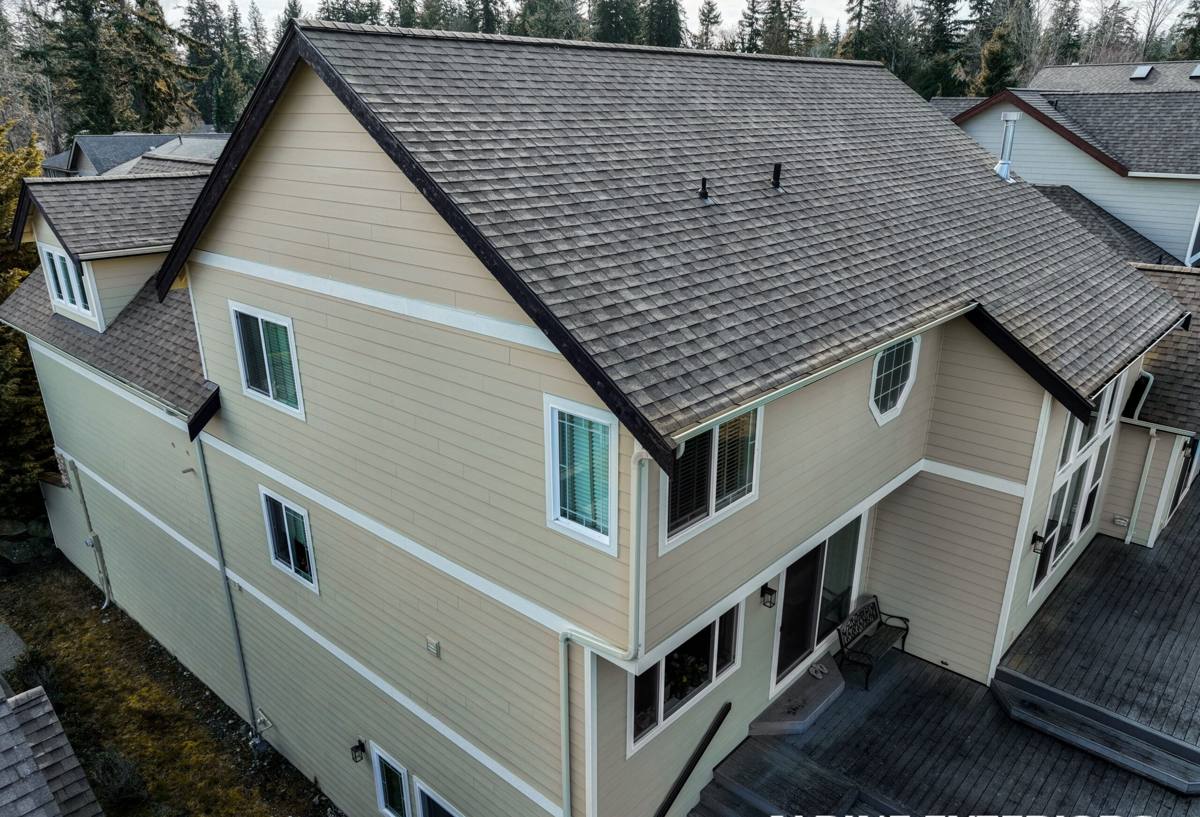
What Similk Beach's Climate Actually Does to a Deck
Three things drive almost every deck problem we see in this area, and they compound each other.
Salt Air
Proximity to Similk Bay and the Sound means airborne salt settles on every exposed surface, including fasteners, flashing, and railing hardware. Standard zinc-plated screws and brackets corrode faster here than they would twenty miles inland. Corrosion doesn't just stain — a corroded fastener loses grip strength over time, which is how boards start to lift or squeak years before the decking itself is worn out.
Driving Rain
Storms coming off the water tend to arrive sideways, not straight down. That matters because it pushes water into joints, under rail posts, and against the house wall at the ledger board in ways a calmer rain pattern wouldn't. A deck built to "normal" drainage assumptions can still trap water in exactly the spots where driving rain concentrates.
Moss and Sustained Moisture
Skagit County's long wet season keeps surfaces damp for extended stretches, and moss and algae take hold anywhere air and light can't get underneath the boards to dry them out. Moss isn't just cosmetic — it holds moisture against the deck surface and substructure long after the rain has stopped, which is exactly the condition that accelerates rot in any wood components and staining on composite boards that aren't ventilated properly.
What a Correct Composite Deck Build Involves
Composite boards themselves are not the weak point in most decks that fail early — the substructure and details underneath are. A correct build for this area includes:
Framing and Substructure
Pressure-treated joists rated for ground contact where relevant, spaced to the composite manufacturer's specification (composite typically needs tighter joist spacing than wood, especially for diagonal or picture-frame patterns). Joist tape or a comparable moisture barrier over the framing keeps standing water off the wood joists themselves, which matters more here than in a drier climate.
Ledger Flashing
Where the deck attaches to the house, proper flashing — installed so water sheds away from the wall, not into it — is the single most important detail on the whole project. This is the joint that takes the worst of the driving rain, and it's the one homeowners can't see once the decking is down. Get it wrong and the damage happens inside the wall assembly, not on the surface.
Ventilation and Airflow
Composite decking needs airflow underneath to dry out after rain and to keep moss and algae from taking hold on the board surface. Decks built too close to grade, or with skirting that seals off airflow completely, hold moisture longer and moss longer. We build in ventilation gaps and, where skirting is wanted, vented skirting rather than solid panels.
Fasteners and Hardware
Stainless steel or coated fasteners rated for coastal/marine exposure, hidden fastener clip systems where the board profile allows it, and corrosion-resistant hardware on railings and post bases. This costs more up front than standard hardware and is worth it every time on a deck this close to salt air.
Composite vs. Other Decking Materials for This Climate
| Material | Salt Air Behavior | Moss/Moisture Behavior | Maintenance |
|---|---|---|---|
| Composite decking | Doesn't corrode; hardware still needs to be marine-rated | Resists rot; can still grow surface moss/algae without airflow | Periodic cleaning, no staining or sealing |
| Pressure-treated wood | Fasteners corrode faster; wood itself is chemically treated against rot | Prone to moss growth and surface graying; needs cleaning and re-sealing | Annual cleaning, re-staining every 2-3 years |
| Cedar | Naturally rot-resistant but softer; fasteners still a concern | Grays and can host moss without regular care | Regular sealing/oiling, higher upkeep |
| Aluminum decking | Excellent corrosion resistance | Sheds water fast, low moss risk | Low maintenance, higher material cost |
We install composite on most Similk Beach projects because it offers the best balance of low maintenance and durability for the price, but we'll walk through aluminum as an option for homeowners who want to minimize upkeep even further, and we're honest when wood is genuinely the better fit for a homeowner's budget or aesthetic preference.
Why We Don't Cut Corners on Composite Brands and Fastening Systems
Not every composite board is built the same, and not every installer fastens it the same way. Some lower-cost boards use a cap-stock (protective outer layer) that's thinner or less consistent, which shows up as fading or surface wear sooner in a high-UV, high-salt environment. We stick with composite lines that have a solid track record in coastal Pacific Northwest conditions and a warranty structure that actually covers fading, staining, and moisture-related issues — not just structural failure.
On the installation side, hidden fastener clip systems generally outperform face-screwing for this climate: fewer penetration points for water and salt to work into, and a cleaner surface with less crevice space for moss to establish. Where a board profile requires face fastening, we use fasteners rated for the exposure rather than whatever's cheapest at the supply house.
Our Process From Estimate to Finished Deck
- On-site assessment: we look at the existing structure (if replacing a deck), grade, drainage path, and exposure to prevailing wind and rain direction.
- Design and material selection: board pattern, color, railing style, and any skirting or under-deck considerations, matched to your home and budget.
- Permitting: most deck work in Skagit County requires a permit; we handle that process rather than leaving it to you.
- Substructure build: framing, ledger flashing, and joist protection done to the standard described above — this is the part that determines how the deck ages, not just how it looks on day one.
- Decking and railing installation: boards, fascia, and railing installed with corrosion-rated hardware.
- Final walkthrough: we go over care and cleaning specific to your deck's exposure before we consider the job done.
Maintaining a Composite Deck in a Moss-Prone, Salt-Air Area
Composite is low-maintenance, not no-maintenance. In this climate, a few habits go a long way:
- Sweep debris (leaves, needles) off the deck regularly so damp organic material doesn't sit in one spot and feed moss growth
- Rinse salt film off the surface and railings periodically, especially after storms with strong onshore wind
- Wash the deck surface with a soft-bristle brush and a composite-safe cleaner once or twice a year to keep moss and algae from establishing
- Check that gaps between boards and any under-deck vents stay clear so airflow keeps working the way it was designed to
- Inspect railing hardware and post bases annually for early corrosion, and address it before it spreads
- Avoid pressure-washing at close range or high PSI directly into board seams, which can force water where it shouldn't go
Cost Factors for a Similk Beach Composite Deck
| Factor | Why It Affects Cost |
|---|---|
| Deck size and shape | More linear footage of framing, decking, and fascia; complex shapes add cutting and waste |
| Height off grade | Taller decks need more substructure, stairs, and often engineered railing |
| Board tier and brand | Composite lines vary in cap-stock quality, color options, and warranty coverage |
| Fastening system | Hidden clip systems cost more in labor and hardware than face-screwing |
| Railing style | Composite, aluminum, cable, and glass railing all price differently |
| Demolition and disposal | Removing and hauling away an old deck adds to the project scope |
| Ledger and flashing work | Older homes sometimes need siding or sheathing repair at the ledger before decking can go on |
We give a real number after seeing the site, not a phone estimate — grade, existing structure condition, and access all affect labor in ways you can't judge from a description alone.
Why Hire a Crew That Already Works Similk Beach
A lot of decking problems in this area trace back to a crew that built the deck the same way they'd build one in a drier, calmer inland climate. The framing details, fastener choices, and ventilation planning that matter here aren't universal best practices — they're specific to what salt air, driving rain, and a long moss season do to a structure over years, not months. We work in Anacortes and the surrounding Skagit County waterfront neighborhoods regularly, so the coastal-specific details — flashing orientation for the prevailing wind, fastener grade, airflow under the decking — are standard practice for us, not an afterthought we have to be reminded about.
If you're planning a new deck or replacing one that's showing its age, we'd rather walk the site and give you an honest read on what it needs than guess from a distance. Reach out for a free, no-pressure estimate — the form below gets you a real answer, not a sales pitch.