 Anacortes Siding
 Guemes Island Puts Real Stress on a House's Siding
Guemes Island sits just across the channel from Anacortes, reachable only by a short ferry ride, and that separation shapes everything about how a home there needs to be built and maintained. Homes on the island face the same Skagit County weather as the mainland, but often with less shelter — more open shoreline, more wind, more direct salt spray off the water. Siding on Guemes Island isn't just a cosmetic layer. It's the first line of defense against a climate that doesn't let up for long stretches of the year.
We work Guemes Island regularly, which means we've seen firsthand what holds up out there and what doesn't. This page focuses specifically on installing James Hardie fiber cement siding on Guemes Island homes — what the climate demands, what a correct installation actually involves, and why the logistics of island work matter as much as the product itself.
What Salt Air, Driving Rain, and a Long Moss Season Do to Siding
Salt Air and Corrosion
Homes closer to the water pick up airborne salt that settles on every exterior surface. Over time, salt exposure accelerates corrosion in anything metal — fasteners, flashing, trim edges, hose bibs. It also breaks down lower-grade paint finishes faster than an inland home would ever experience. A siding product and installation that isn't specified for this kind of exposure will show it first at the fasteners and joints, long before the field of the siding itself fails.
Wind-Driven Rain
Puget Sound weather doesn't just rain straight down — storms push moisture sideways into walls, especially on homes with less tree cover or more open water views, which describes a lot of Guemes Island. Wind-driven rain finds every gap in flashing, every under-caulked joint, and every place where a weather-resistive barrier was installed as an afterthought rather than a system. Siding that looks fine from the driveway can still be letting water behind it if the assembly underneath wasn't done right.
The Long Moss and Algae Season
Western Washington's wet season stretches for months, and that's plenty of time for moss, algae, and mildew to take hold on north-facing walls, shaded siding, and anywhere moisture lingers instead of shedding. Field-painted or lower-quality siding surfaces are more porous and give moss and algae something to grip. What holds a factory-cured finish together over years of that cycle is a real difference-maker, not a marketing detail.
Why We Install James Hardie Fiber Cement on Guemes Island Homes
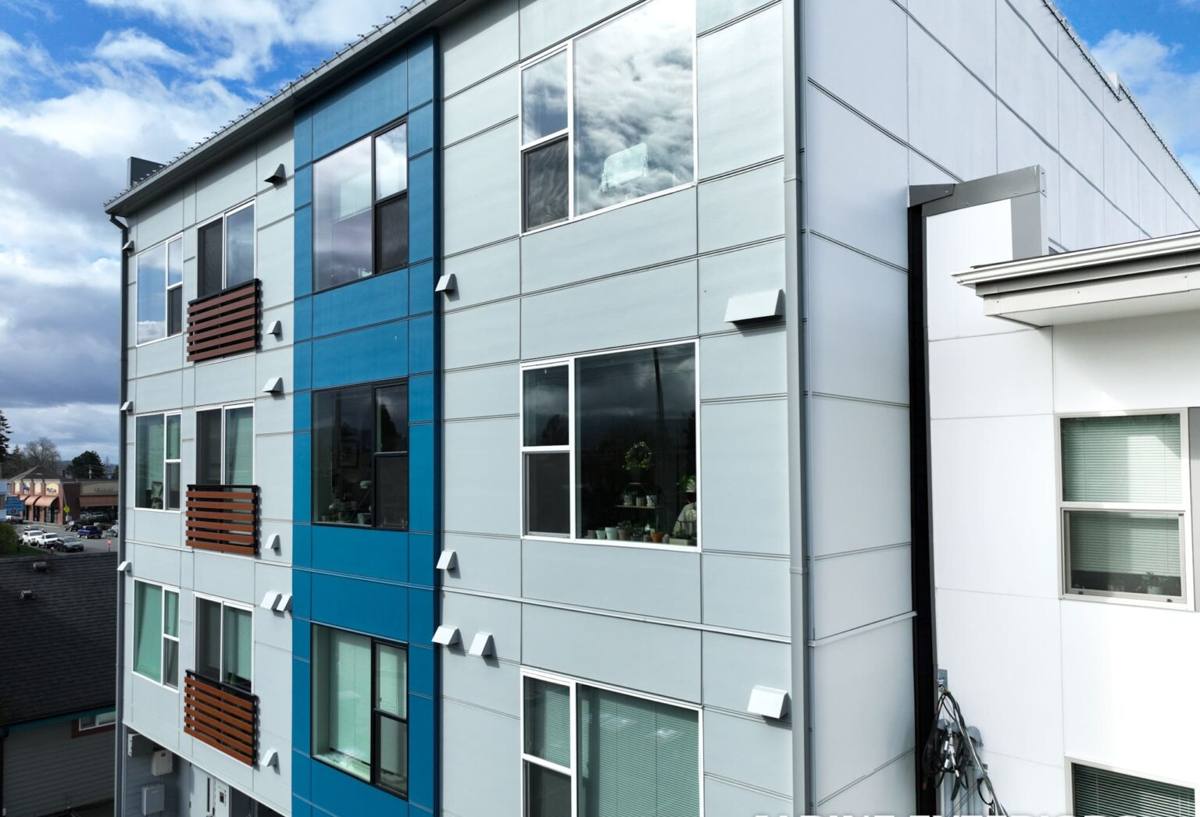
We install James Hardie fiber cement exclusively — not LP SmartSide, not vinyl, not cedar, not primed spruce — and Guemes Island's climate is exactly the kind of environment that makes the case for it. Fiber cement is non-combustible and dimensionally stable, meaning it doesn't expand, contract, warp, or rot the way wood-based siding can when it's cycling through wet winters and salt exposure year after year.
James Hardie's ColorPlus factory finish is baked on under controlled conditions rather than sprayed on site, which gives it stronger resistance to fading, chipping, and the kind of mildew and algae staining that shows up fast in a moss-prone climate. Hardie also engineers its HardieZone products by region — HZ5 for northern, wetter climates like ours, versus the HZ10 line built for hot, humid southern regions. That's a meaningful distinction: the product specified for Guemes Island isn't the same as what gets installed in Arizona or Florida, and it shouldn't be.
None of that replaces good installation. Fiber cement is a system — substrate, water management, flashing, and finish working together — and it only performs as designed when every part of that system is done correctly.
What a Correct Installation Involves Here
On a home exposed to salt air and driving rain, the details matter more than they would on a sheltered, inland lot. A correct James Hardie installation on Guemes Island includes:
- A continuous weather-resistive barrier installed and lapped correctly, with no gaps at seams or penetrations
- A drainage gap (rainscreen) behind the siding so any moisture that does get past the surface can escape instead of sitting against the wall
- Corrosion-resistant fasteners and flashing, sized and spaced to Hardie's published specifications rather than shortcuts
- Proper flashing and sealant detail around windows, doors, and any wall penetration — the places wind-driven rain actually finds a way in
- Correct board spacing and fastener placement so the siding can handle normal expansion and contraction without cracking caulk lines
- Factory-cut and factory-finished edges wherever possible, with field cuts sealed per manufacturer instructions to protect against moisture wicking
Skip any one of these steps and the siding may look right for a season or two before problems show up — usually at the joints and penetrations first, which is exactly where salt air and wind-driven rain do their damage.
Working on an Island: Why It Matters That We Already Work Guemes
Guemes Island isn't a mainland job site. Every crew, every material delivery, and every piece of equipment has to cross by ferry, and the ferry runs on its own schedule, not the job's. A contractor who doesn't regularly work the island tends to underestimate this — showing up short a material delivery, missing a ferry window, or planning a job the same way they would a job five minutes from their shop.
Because we already work Guemes Island, we plan around the realities that come with it: staging materials ahead of time instead of making multiple last-minute runs, scheduling crew days around ferry sailing times so the workday isn't cut short, and understanding that Guemes Island falls under unincorporated Skagit County jurisdiction rather than the City of Anacortes for permitting purposes. That familiarity translates directly into fewer wasted trips, fewer scheduling surprises, and a job that runs closer to the timeline we quote.
It also means we're used to the kind of properties common on the island — many close to the shoreline, some with well and septic systems that require a bit more care when staging equipment and material around the site. A crew seeing that for the first time on your job is learning on your dime. We're not.
Our Process, Start to Finish
A Guemes Island siding project follows the same core steps as any of our jobs, with the island logistics built into the plan from day one rather than figured out as we go.
- Site visit and assessment — we look at existing siding condition, exposure (waterfront vs. more sheltered), trim and flashing condition, and any moisture or moss damage already present
- Scope and material plan — we specify the correct Hardie product line, profile, and ColorPlus color, and plan the delivery and staging schedule around ferry logistics
- Tear-off and prep — removing old siding, inspecting sheathing for hidden moisture damage, and correcting anything found before new material goes up
- Weather barrier and flashing installation — the unglamorous part that determines whether the finished siding actually keeps water out
- Siding installation to manufacturer spec — correct fasteners, spacing, and sealant details for the exposure level of your specific home
- Final walkthrough — checking joints, trim, and flashing details before we call the job finished
What Affects Cost and Scope on a Guemes Island Job
Every home is different, but a few factors consistently move the cost and timeline of a fiber cement siding project on Guemes Island specifically:
| Factor | Why It Matters |
|---|---|
| Shoreline exposure | Homes closer to open water take more direct salt spray and wind-driven rain, which can call for more careful flashing and trim detail |
| Existing siding condition | Hidden moisture or rot found during tear-off adds sheathing repair before new siding can go on |
| Material staging and ferry scheduling | Coordinating deliveries around sailing times affects project sequencing, not the quality of the work |
| Site access | Driveway, well/septic layout, and how close equipment can get to the house affect labor time |
| Trim and detail work | Homes with more windows, dormers, or architectural detail require more flashing and cutting time |
Keeping Fiber Cement Siding Looking Right Through Moss Season
Fiber cement is low-maintenance compared to wood siding, but "low-maintenance" doesn't mean "no maintenance" in a climate like this one. A little attention each year goes a long way:
- Rinse siding periodically, especially on shaded or north-facing walls where moss and algae take hold first
- Keep gutters clear so overflow isn't running down the siding face during heavy rain
- Trim back vegetation and tree cover that keeps a wall shaded and damp longer than it should be
- Check caulk lines around windows and trim yearly for cracking or separation, since that's where wind-driven rain gets in first
- Watch for soft spots, staining, or bubbling paint, which usually point to moisture getting behind the siding rather than a surface problem
Catching a small flashing or caulk issue early is a lot cheaper than dealing with sheathing damage after a wet winter finds its way in.
If you're weighing a siding replacement or repair on Guemes Island, we're happy to take a look and give you a straightforward, no-pressure estimate — including what your specific exposure and site access mean for the job. Reach out through the form below to get started.